Applying AI to English language teaching.
There were nights when Mr. Nguyen Luu, a computer science teacher at Phong Hoa Secondary School, stayed up almost all night in front of his computer screen searching for a new AI platform to help teachers create English lessons for students. When familiar software was no longer free, the first thing he thought about wasn't his own difficulties, but how to ensure that the learning videos for students wouldn't be interrupted.
“When Grok software stopped offering free support, I faced many difficulties in creating video lectures. Not wanting my teaching to be interrupted, I spent many nights researching and experimenting with different AI tools. There were days when I stayed up almost all night tinkering and finally found a suitable AI platform to continue creating English videos for my students,” Mr. Luu shared.
 |
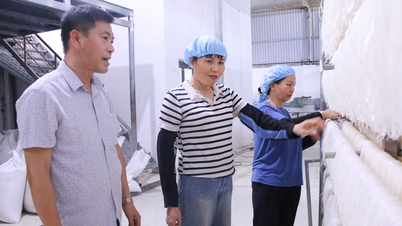
| Applying artificial intelligence in teaching English at Phong Hoa Secondary School, Tuyen Binh commune - Photo: QN |
At Phong Hoa Secondary School, video lectures are created using AI technology, allowing students to review lessons at home with visuals and clear pronunciation. Mr. Luu's biggest goal is to help students in mountainous areas access more engaging lessons, thereby improving their English listening and communication skills.
As one of the students who regularly uses the school's learning videos, Nguyen Phuc Hieu, a student in class 8/2, expressed: "We know that to create a complete video lecture, teachers have to spend a lot of time preparing the content, images, and illustrations. Thanks to these videos, we can review the lessons at home, especially the parts we didn't understand in class."
The application of digital technology has now been implemented by many teachers at the school in their teaching and educational activities, contributing to making lessons more visual and engaging for students.
Confidence in the digital environment


Innovations in teaching methods are creating positive changes in students' learning and development. Currently, 100% of students at Phong Hoa Secondary School are guided in using digital learning devices. Over 90% of students know how to use smartphones or computers to search for materials, study online, and complete assignments on digital platforms. More than 80% of students know how to utilize digital learning resources and search for information to support their studies.
As one of the high-achieving students in English, Ho Thi Dieu Chau, a student in class 8/1, said: “The video lectures make learning easier, especially listening and pronunciation skills. I can review the content I didn't understand in class multiple times at home, which builds my confidence in participating in learning activities and communicating in English. This also makes me love English more.”
These changes are clearly visible in every lesson. While previously many students were passive in accessing knowledge, now they are more proactive in searching for materials, utilizing digital resources, and learning on online platforms. Along with this, assessment methods have also been reformed to utilize digital platforms such as Quizizz, Google Forms, and Azota..., making evaluations more frequent, timely, and objective.
More importantly, the assessment results are used to adjust teaching and learning activities, forming a closed cycle: Teaching - learning - testing - adjustment - improvement, contributing to a substantial improvement in the quality of education. Many students have begun to create video products using technology to participate in competitions inside and outside the school.
Ms. Truong Thi Thuong, Principal of Phong Hoa Secondary School, observed: “One of the important tasks today is equipping students with safe digital skills. In reality, many students still have limitations in choosing information, identifying harmful content, or behaving appropriately online. To overcome this, the school regularly integrates digital skills education into learning activities and group activities; guiding students to identify unverified information, avoid harmful content, and build habits of civilized behavior in cyberspace.”
With the support of the police force, the Youth Union, and local authorities, activities promoting safe internet use have been regularly maintained. As a result, the school has not recorded any cases of teachers or students sharing unverified information on social media recently.
For local authorities, the greatest aspiration is for students in mountainous areas to have more opportunities to access knowledge, confidently use technology to support their learning, and gradually narrow the gap with students in more privileged areas.
Mr. Nguyen Thanh Phong, Vice Chairman of the People's Committee of Tuyen Binh commune, said: "Digital transformation is contributing to narrowing the gap in access to knowledge between students in mountainous areas and those in more developed regions."
However, behind these initial results, there are still gaps that are not easily filled. Many students in mountainous areas still lack learning equipment, access to modern learning materials, and a favorable environment to develop their foreign language skills.



"The most important thing for students in the digital age is a spirit of self-learning and the ability to adapt to technology. By knowing how to effectively utilize digital tools, they will have more opportunities to access knowledge, narrow the gap with students in more privileged areas, and confidently integrate into the future," teacher Nguyen Luu shared.
From AI-powered video lectures to digital learning sessions, technology is gradually becoming a new tool for students. This tool is nurtured by the dedication of teachers, the learning aspirations of students, and the belief that knowledge can reach every child, no matter where they are.
Quang Ngoc
Source: https://baoquangtri.vn/giao-duc/202606/hanh-trang-so-cho-hoc-sinh-mien-nui-4cd27e3/

![[Photo] Strengthening character and expertise: Intense training for artillery soldiers.](https://vphoto.vietnam.vn/thumb/1200x675/vietnam/resource/IMAGE/2026/06/30/1782815602541_lu-368-1875-4571-jpg.webp)