|
Harvard University. Photo: Harvard University . |
After more than a decade at the top of Nature Index's Research Leaders rankings, Harvard University has officially lost its number one position to Zhejiang University (China). If research institutes, government organizations, and medical facilities are included, Harvard even ranks only third, behind the two Chinese representatives.
This drop in ranking is not only shocking to the global academic community, but it also reflects the growing difficulties facing the American research system, including Harvard University.
Harvard's scientific stronghold is shaking.
The change in Harvard University's ranking comes as the nearly 400-year-old institution is embroiled in a confrontation with the administration of President Donald Trump. After the university refused to comply with reform demands from the White House, more than $2.7 billion in federal research funding for Harvard was frozen.
Immediately afterward, the ripple effects spread rapidly, from laboratories to training programs and research networks spanning decades.
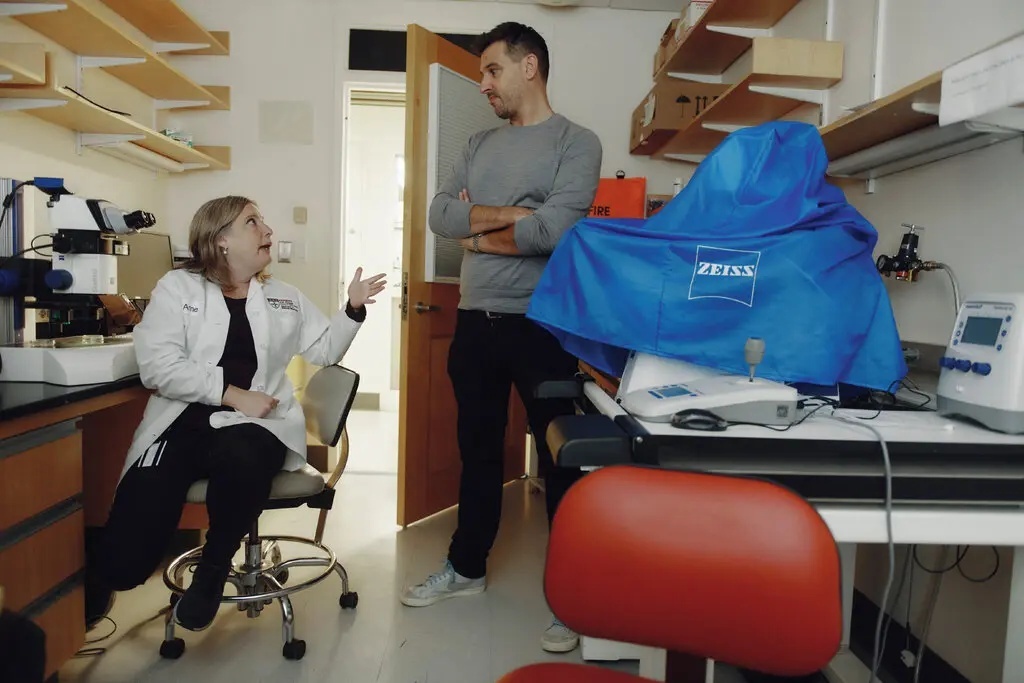 |
Professor Will Mair's research lab. Photo: New York Times . |
Will Mair, a professor of aging research at the Harvard TH Chan School of Public Health, still remembers the moment he received an email informing him his project's funding had been terminated right before a scientific seminar. Within minutes, he realized many of his colleagues were in the same situation.
Professor Mair's story is just a small part of a larger picture. At Harvard, many research projects on aging, dementia, public health, the environment, and healthcare workforce training have been forced to scale back or be postponed. Some research groups have had to stop hiring, cut staff, or find alternative funding sources to stay afloat.
The financial pressure is also evident in the university's annual report. Harvard recorded a deficit of $113 million in 2025 – its largest loss since 2011, according to the New York Times . The university has had to implement a series of emergency measures such as freezing hiring, limiting salary increases, and cutting spending.
For scientists, the most worrying issue is not just the lack of funding, but also the risk of disruption to long-term research programs.
Walter Willett, a professor of epidemiology and nutrition at Harvard, said his team is managing data and biological samples collected over 45 years from more than 200,000 participants across the United States. This is a vital data source for research into cancer, cardiovascular disease, dementia, and many other public health issues.

Meanwhile, many programs training the next generation of scientists have also been affected. Pamela Silver, a professor at Harvard Medical School, said her lab had to cancel a new research initiative and was unable to accept undergraduate students for summer research as usual. The professor said this disruption could have a lasting impact on the future scientific workforce.
These difficulties arose precisely at a time when Harvard was losing its edge in global research rankings. While the university's research growth rate was relatively modest, many Chinese universities were expanding rapidly in scale and publication output.
As a result, for the first time since 2015, Harvard no longer holds the number one position among universities in Nature Index's Research Leaders ranking.
The contrasting landscape of the US and China.
If financial and political instability has hampered Harvard's growth, the remaining factor is the powerful rise of the Chinese research system.
According to the Nature Index 2026, Chinese institutions now occupy 9 of the top 10 positions globally in terms of high-quality research output. Zhejiang University surpassed Harvard for the first time to become the world's number one university, while the Chinese Academy of Sciences continues to maintain its leading position in the overall ranking.
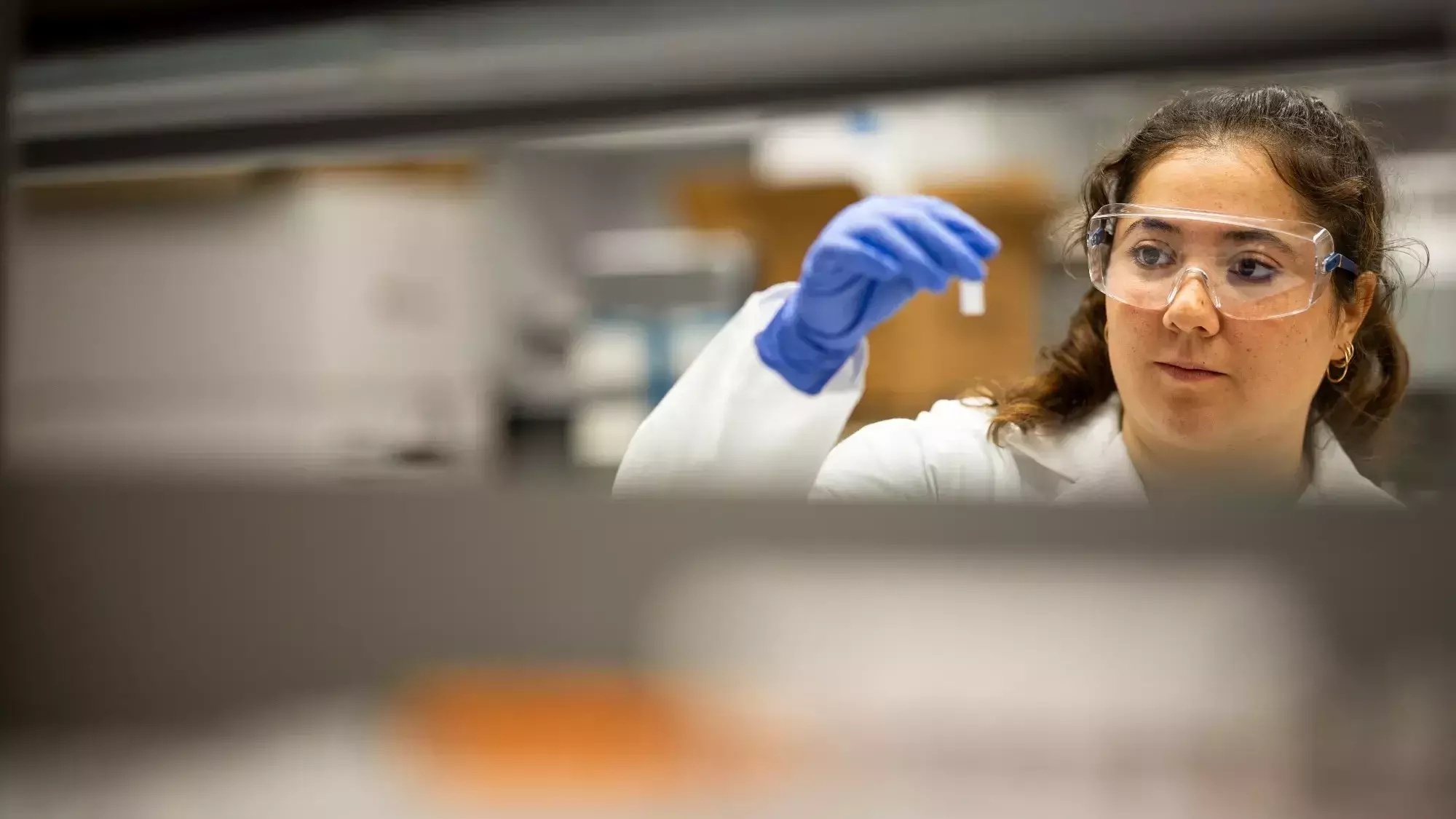 |
A researcher at Harvard University. Photo: Harvard . |
This progress stems not only from an increase in the number of scientific publications but also from a strong investment strategy in key areas such as applied science, artificial intelligence, new materials, quantum technology, and environmental science.
While Chinese universities and research institutions are benefiting from increasing investment, many American research facilities face financial instability.
Harvard is a prime example. According to the Harvard Gazette , many Harvard scientists are spending a significant amount of time seeking funding instead of focusing entirely on research.
After losing federal funding, Professor Will Mair was forced to use his personal reserve fund to keep the lab running. He canceled plans to purchase $250,000 worth of research equipment in order to prioritize retaining his colleagues.
"Ultimately, it's a choice between modern equipment and keeping people here," he shared sadly.
Professor Mair is not alone; many departments at Harvard are seeking to diversify their funding sources, increasing their access to private funds, non-profit organizations, and individual donors. According to faculty members, over-reliance on federal funding has now become a real risk.
Scientists are also concerned about the long-term impact on America's scientific standing. Professor Robin Wordsworth warns that cuts to funding for basic research could cause the U.S. to lose the advantage it has built up over decades.
According to him, if this trend continues, China and Europe will increasingly widen the gap in many areas of strategic research.
Despite funding cuts and research difficulties, the vast majority of Harvard scientists have chosen to remain. Many view the current period as a test of the resilience of the American academic research system.
After months of waiting, Will Mair finally received a $1.6 million grant from the U.S. National Institutes of Health (NIH) for his next five-year research project.
This funding wasn't enough to erase the turmoil engulfing Harvard, but it gave his lab more time to remain operational. More importantly, it reflected the reality that American science was entering a new era, and securing funding was no longer the foregone conclusion it once was.
Source: https://znews.vn/harvard-chao-dao-post1660222.html
![[Photo] Opening Ceremony of the 13th National Congress of the Ho Chi Minh Communist Youth Union](https://vphoto.vietnam.vn/thumb/1200x675/vietnam/resource/IMAGE/2026/06/24/1782286753905_ndo_br_1-8510-jpg.webp)


![[Photo] The 13th National Congress of the Youth Union conducts personnel work.](https://vphoto.vietnam.vn/thumb/1200x675/vietnam/resource/IMAGE/2026/06/24/1782299943080_ndo_br_1-6868-jpg.webp)
![[Photo] General Secretary and President To Lam attends the Central Public Security Party Committee Conference](https://vphoto.vietnam.vn/thumb/1200x675/vietnam/resource/IMAGE/2026/06/24/1782302063612_a1-bnd-9302-9166-jpg.webp)