

Metro Line 1 marks the beginning of a new journey, laying the groundwork for the development of Ho Chi Minh City's urban rail system over the next 10 years.
At a meeting with the Ho Chi Minh City Urban Railway Management Board on the afternoon of December 27, Chairman of the Ho Chi Minh City People's Committee Phan Van Mai announced that the Politburo had approved the Ho Chi Minh City Urban Railway Development Plan until 2035. Accordingly, in the next 10 years, Ho Chi Minh City will develop an additional 355 km of metro.
There will be 7 more routes.
Chairman Phan Van Mai emphasized that this is a heavy and challenging task, but with determination and the right approach, Ho Chi Minh City can accomplish it. In particular, the official commercial operation of Metro Line 1 (Ben Thanh - Suoi Tien) is a significant milestone, marking a turning point in the development of Ho Chi Minh City's transportation system and creating momentum for the development of Metro Line 2 (Ben Thanh - Tham Luong) as well as other metro lines.
Recognizing the urban railway system as the "backbone" of Ho Chi Minh City's transportation infrastructure, Mr. Phan Cong Bang, Head of the Ho Chi Minh City Urban Railway Management Board (MAUR), stated that according to the plan, by 2035, this mode of transport will account for 40%-50% of the public passenger transport market share, increasing to 50%-60% ten years later.
Specifically, after metro line 1, the city will build 7 metro lines including: Line 1 (Long Binh depot - Ben Thanh - An Ha) 40.8 km long; Line 2 (Cu Chi - National Highway 22 - An Suong - Ben Thanh - Thu Thiem) 62.2 km long; Line 3 (Hiep Binh Phuoc - Binh Trieu - Cong Hoa Intersection - Tan Kien - An Ha) 45.8 km long; Line 4 (Dong Thanh - Tan Son Nhat Airport - Ben Thanh - Nguyen Huu Tho - Hiep Phuoc Urban Area) 47.3 km long; Line 5 (Long Truong - Hanoi Highway - Saigon Bridge - Bay Hien - Da Phuoc depot) 53.9 km long; Line 6 Inner Ring Road 53.8 km long; Line 7 (Tan Kien - Nguyen Van Linh - Thu Thiem - Thao Dien - Thanh Da - High-Tech Park - Vinhomes Grand Park) 51.2 km long.
"To achieve this goal, we need to change the approach and procedures, unlike with Metro Line 1. Specifically, for this project, Ho Chi Minh City has proposed 43 special mechanisms belonging to various groups related to planning; capital mobilization policies; procedures; land clearance; technical and technological standards and regulations; management and operation… as well as considering the establishment of an Urban Railway Corporation with functions of capital mobilization and investment management for metro projects… With this new, proactive approach, we hope to shorten the construction time of the 7 metro lines to 2035 as planned," Mr. Phan Cong Bang informed.
According to Mr. Bang, in the immediate future, in 2024-2025, MAUR will urgently complete the procedures for the commencement of construction of metro line 2, with land clearance expected to be completed by the end of 2024 and the relocation of technical infrastructure completed in the second quarter of 2025.
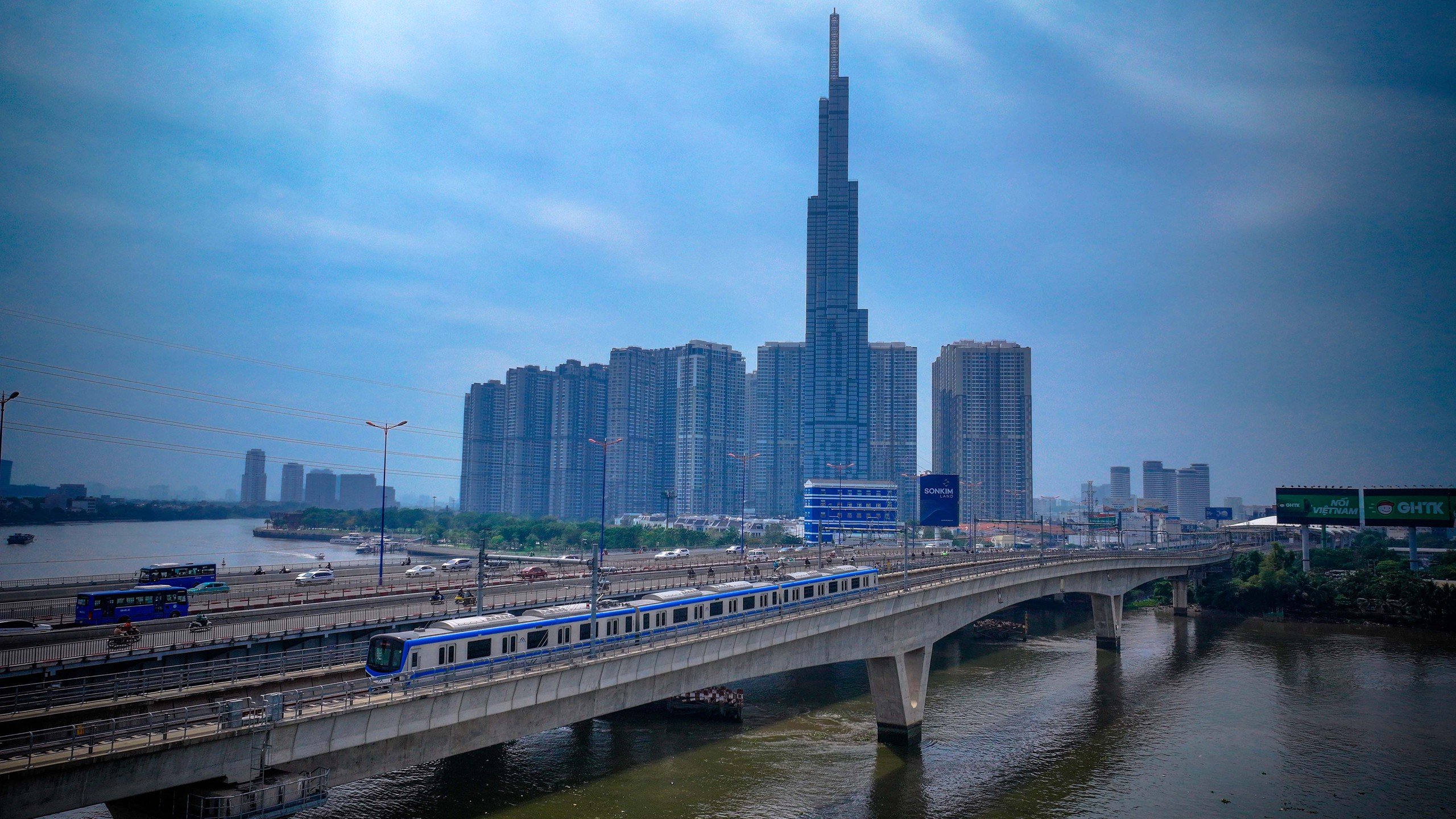
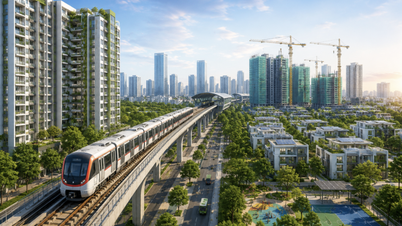
Over the next 10 years, Ho Chi Minh City will develop seven more metro lines with a total length of 355 km.
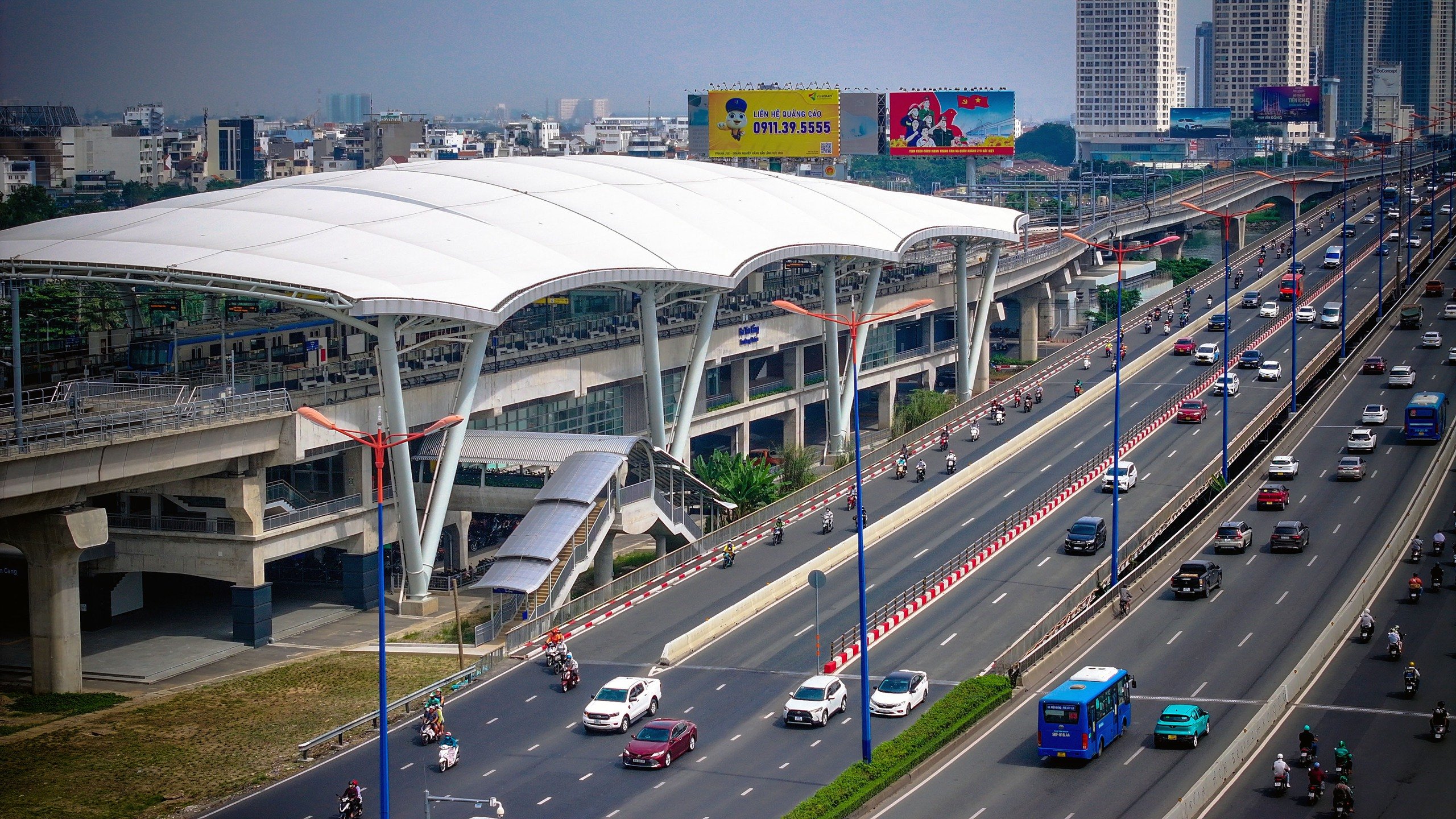
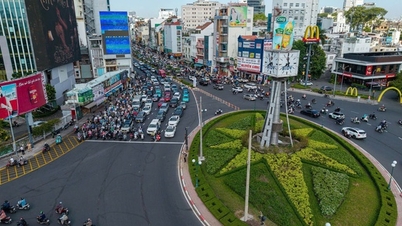
The urban rail system will be the "backbone" of Ho Chi Minh City's transportation infrastructure. (Photo: Hoang Trieu)
Metro development linked to TOD
Architect and Doctor of Science Ngo Viet Nam Son noted that after nearly 20 years of construction with many difficulties and challenges, Ho Chi Minh City's first metro line has become operational, marking an important milestone in the history of public transport development in the city. This is just the beginning of a new, longer journey; the challenge now is how to effectively utilize this railway line to become a driving force for socio-economic development, connect urban spaces, and shape a new lifestyle.
According to Mr. Ngo Viet Nam Son, the lessons learned from the construction of Metro Line 1 will serve as an important basis for implementing subsequent lines more quickly and efficiently, avoiding the delays and difficulties of the past, in order to realize the plan to build 7 metro lines in the next 10 years. Although this is a challenging task, it is entirely achievable with thorough preparation. Before implementation, time should be spent researching and developing a systematic TOD (Transit-Oriented Development) urban development strategy.
Regarding the TOD model, architect Ngo Viet Nam Son suggests that the city should focus on two major tasks: Firstly, completing the TOD project along metro line 1, as there is significant potential for developing new urban areas based on the TOD model. Secondly, reviewing the entire TOD plan, as the current plan is primarily based on outdated thinking that focuses only on transportation functions and relies on the existing road transport system.
However, by applying the TOD (Transit-Oriented Development) mindset, the city can better integrate transportation development with urban development, alleviate population density, increase budget revenue, and reduce compensation and relocation costs. Although already approved, the city needs to boldly continue researching and adjusting the routes and locations of unbuilt metro stations according to the TOD spirit, to help utilize metro lines more efficiently and reduce resource waste.
"Furthermore, an efficient public transportation system based on the TOD model should not be limited to the metro but should be diversified, including high-speed rail, monorail, tramway, buses, and even river buses. All must be connected into a synchronized network, making it easy for people to travel between points in the city. When each public transport option is integrated with the central metro system, people will save time and money, and safety will be ensured," proposed architect Ngo Viet Nam Son.
Ho Chi Minh City must be given the right to self-determination and autonomy.
Dr. Phan Huu Duy Quoc, a member of the Advisory Council for the Ho Chi Minh City Urban Railway System Development Project, believes that in the next 10 years, for the city to essentially complete the metro system as planned, a change in approach is necessary. Accordingly, the Ho Chi Minh City People's Committee and the Urban Railway Management Board should be given greater autonomy and decision-making power. If the construction process continues to involve multiple agencies for permits and ongoing control as it does now, this ambitious plan will certainly be impossible to achieve.
According to Mr. Quoc, along with granting autonomy and self-determination in the implementation process, the city government needs to be self-reliant in funding, reduce dependence on ODA loans, be self-reliant in technical standards, and gradually develop domestic resources, from locomotives and carriages to technical systems. "Only when all these factors are present can the ambition to complete the metro network within 10 years become a reality," Mr. Quoc said.
Proposing 43 breakthrough policy mechanisms.
According to the Ho Chi Minh City Urban Railway Development Plan, the city proposes investing in 7 metro lines with a total length of approximately 355 km, to be completed by 2035, with an investment of about 40.21 billion USD. By 2045, an additional 155 km will be completed, bringing the total length to approximately 510 km.
To successfully implement and achieve the goals early, the project proposes a total of 43 breakthrough policy mechanisms. These include 32 mechanisms under the authority of the National Assembly and 13 mechanisms under the authority of the Government.
Regarding budgetary funding, the city will mobilize resources from the medium-term capital plan, surplus revenue, funds from land development (TOD), and the issuance of local government bonds. In addition, it will mobilize loans, funds from BT contracts (paid with the budget or land fund), central government support funds, and other legitimate sources of capital.
Source: https://nld.com.vn/hien-thuc-hoa-giac-mo-19624123119252228.htm









































































Comment (0)