


The construction and maintenance of large-scale rice fields is a focus of many localities. These large fields typically have an average area of 10-30 hectares or more, with uniform planting of the same variety, same planting season, and same care procedures. Simultaneously, they apply and expand the synchronized mechanization of production processes, forming a product consumption chain linked with businesses. For example, areas producing and consuming high-quality rice and rice seeds (BT7, ST25 varieties, etc.) cover a total area of over 1,500 hectares in several southern communes of the province (Nam Dong, Truc Ninh, Quang Hung, Hai Hung, Nghia Hung, Dong Thinh, Xuan Truong, etc.); while areas producing rice seeds and commercial rice in some northern localities of the province, such as Binh Son, Binh Giang, Binh Luc, Binh An communes, etc., cover over 500 hectares.
In reality, many localities and agricultural cooperatives have identified large-scale rice production as the main direction for agricultural development. For many years, Nguyen Uy ward has maintained 5 large-scale rice fields, each with an area of 30 hectares, of which 4 fields are linked to the production of purebred rice varieties (DT37 and ND502) with Nam Duong Co., Ltd. The ward's large-scale fields have basically applied mechanization in the sowing and transplanting process (tray seedling method, machine transplanting), helping to concentrate and synchronize production…
The Tran Phu Agricultural Production and Service Cooperative (Nam Minh commune) has 100 hectares of rice land. To enhance the value and efficiency of production, the cooperative has planned a large-scale, compact field covering 31 hectares, accounting for 30% of the cultivated area, mainly through production linkages with Toan Xuan Co., Ltd. (Van Thang commune). On this large field, the cooperative focuses on producing the high-quality Dai Thom 8 rice variety and has developed an OCOP product that was recognized in 2023. Mr. Vu Quang Viet, Director of the Tran Phu Agricultural Production and Service Cooperative, said: "To maximize production efficiency, it is essential to organize concentrated production according to the large-scale field model. Currently, some households in the area have consolidated their land by renting or borrowing land to produce on a scale of 4-5 hectares, helping to exploit the strengths of the fields and increase income..."
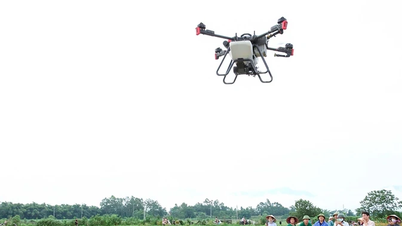
Large-scale farming yields high efficiency when combined with synchronized technical and mechanized methods. Accordingly, most large-scale fields in the province are dedicated to cultivating high-yielding, high-quality rice varieties that are favored by the market. Mechanization in production stages on large-scale fields has been significantly promoted: Mechanization of land preparation and harvesting has reached 100% of the area, and over 60% of large-scale fields have mechanized seedling and transplanting. Many large-scale fields utilize synchronized machinery in all production stages (land preparation, planting, fertilizing, pesticide application, and harvesting). The application of mechanization reduces costs by 40% compared to manual labor and shortens production time by only 10-20%. This addresses the pressure of labor and seasonal constraints compared to traditional manual production. Rice yields on large-scale fields increase by an average of 10-15% compared to fields outside the model. Profits increased by approximately 15% compared to the previous manual, small-scale methods.
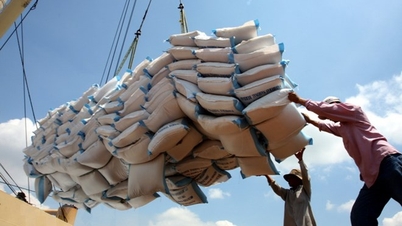
More importantly, rice products have become commodities thanks to businesses that have established linkages to purchase them. According to Mr. Dang Phan Son, Head of the Crop Production and Plant Protection Sub-Department (Department of Agriculture and Environment), with the current rice production area in the province, in addition to ensuring food supply for local needs, a significant portion becomes a commodity. The formation of large rice fields helps organize production in a concentrated manner, creating large raw material areas to serve the processing needs of businesses. These large rice fields are still being maintained in both number and area. Based on the existing large rice fields, the unit continues to advise the Department and the Provincial People's Committee to direct and expand more large rice fields in the province in the coming years.
The effectiveness of large-scale farming has been clearly demonstrated by the transformation of production methods (from small-scale to concentrated), the synchronized application of science and technology, and mechanization in the fields. To further expand and enhance the effectiveness of the large-scale farming model, it is necessary to implement synchronized measures from the grassroots level. These include promoting awareness of the benefits of large-scale, concentrated production; encouraging households no longer needing land for farming to lease or borrow land within the planned large-scale farming areas. Simultaneously, it is crucial to strengthen training and technical guidance for households with land in large-scale farming areas, especially regarding strict adherence to planting the same varieties and times, applying the same care procedures, and applying mechanization to all stages of production. Agricultural service cooperatives need to improve their role in managing essential services supporting production; and organize services related to mechanization (land preparation, sowing, fertilizing, spraying pesticides, harvesting). In particular, cooperatives play a bridging role, signing contracts and forming production linkages with businesses on large farms… Thereby contributing to the industrialization and modernization of agriculture in the province during the new development phase.
Source: https://baoninhbinh.org.vn/hieu-qua-canh-dong-lon-trong-san-xuat-lua-260313080757602.html
![[Photo] General Secretary To Lam attends the ceremony commemorating the 75th anniversary of the founding of the Central Military Hospital 108.](https://vphoto.vietnam.vn/thumb/1200x675/vietnam/resource/IMAGE/2026/03/30/1774866343623_a1-bnd-5435-7415-jpg.webp)
















































































Comment (0)