Understanding the language of the people strengthens the people's hearts and minds.
The fact that officers and soldiers of the armed forces in Lam Dong province are learning the languages of ethnic minorities not only contributes to improving the effectiveness of their work, but also serves as an important bridge to strengthen the people's trust and build a solid foundation of popular support from the grassroots level.
Báo Lâm Đồng•05/06/2026
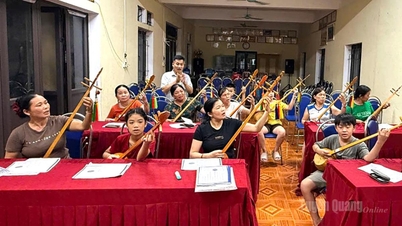
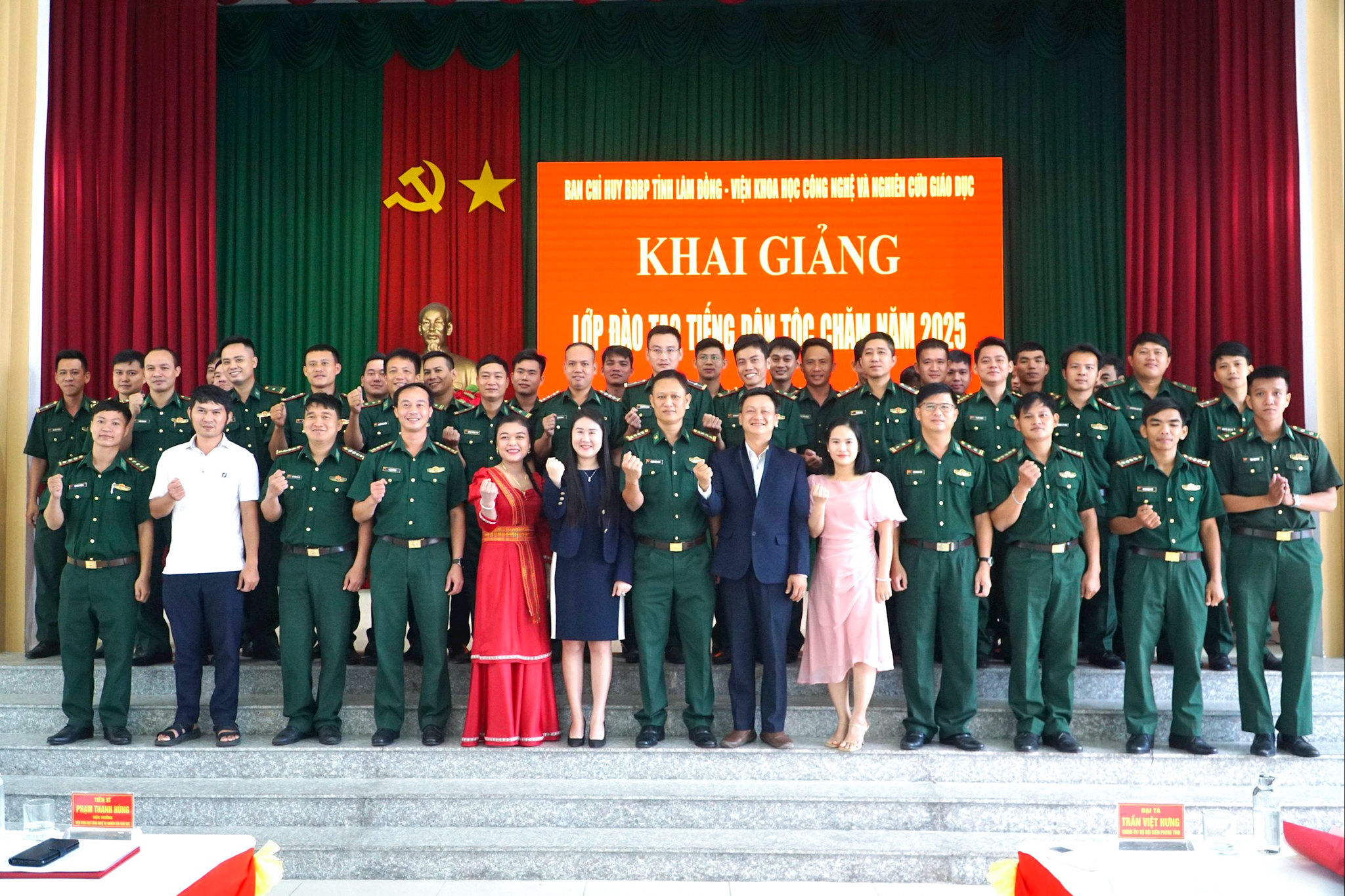
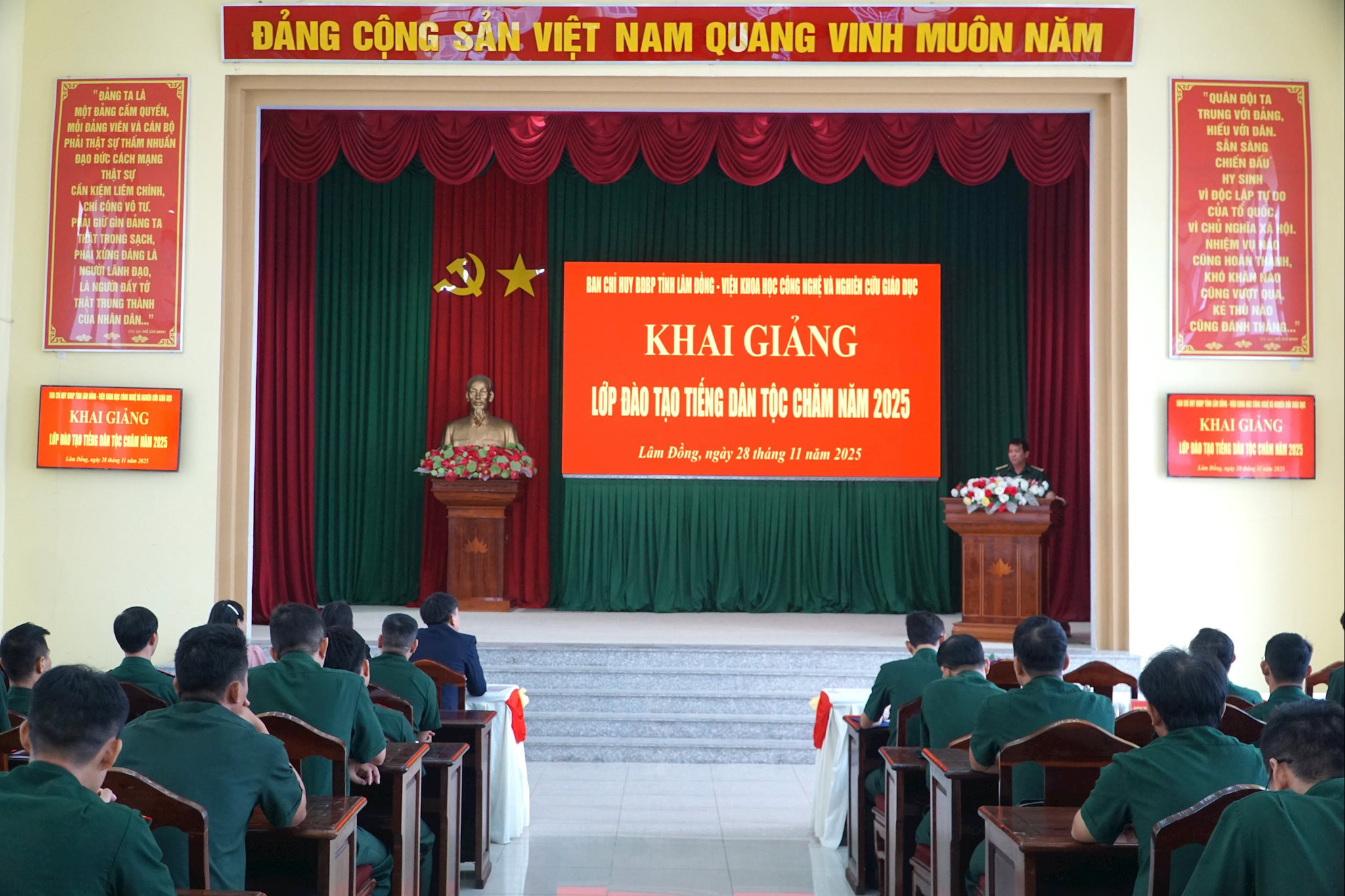
Delegates and trainees of the Provincial Border Guard pose for a commemorative photo at the opening ceremony of the Cham ethnic language class.
Language - A bridge connecting with ethnic minority communities.
After the merger , Lam Dong province is large in scale and has a large population with 49 ethnic groups living together. Therefore, the need to build a team of armed forces officers in the province who are close to the people, understand the people, and are connected to the people has become even more urgent.
Besides professional competence, understanding the language, culture, and customs of ethnic minority communities is a crucial factor in helping officers and soldiers effectively carry out propaganda and mobilization work among the masses, as well as ensuring security and national defense in the area.
Scenes from the opening ceremony of the Cham ethnic language training course.
At the end of May 2026, the Lam Dong Provincial Police Department, in coordination with the Tra Vinh Center for Continuing Education , will inaugurate a Khmer language training course for 71 trainees, including police officers and soldiers from various units and localities in the province. The program will equip trainees with listening, speaking, reading, and writing skills in Khmer, while also providing them with knowledge about the culture, customs, and traditions of the Khmer people.
Colonel Tran Van Muoi, Deputy Director of the Provincial Police, affirmed that the purpose of organizing the training course is to improve the communication skills of officers and soldiers; and at the same time contribute to the effective implementation of the national target program for socio-economic development in ethnic minority and mountainous areas in the period 2021 - 2030.
"
By understanding the language and cultural life of the people, the police force will be better able to gather information, resolve issues arising from the grassroots level, and build close and trusting relationships with the people.
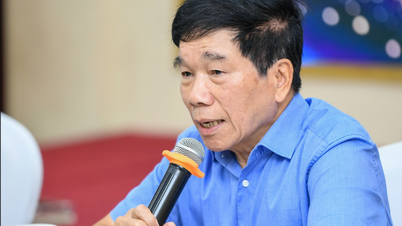
Colonel Tran Van Muoi, Deputy Director of the Provincial Police, delivered a speech at the opening ceremony of the training course for ethnic minorities.
You may also like
Enhancing the role of commune-level military commands in building a "people's defense posture" in accordance with the spirit of the 14th Party Congress.TCCS - Building a "people's defense posture" is a strategic requirement in the cause of national defense. Given the rapidly changing and complex global, regional, and domestic situations, the task of building a national defense system linked to a people's security posture demands even greater consolidation from the grassroots level. In this context, the commune-level military command – acting as the direct advisory body on local defense and military affairs – plays a core role in organizing and implementing the task of building a "people's defense posture" at the grassroots level.
In reality, in many remote and rural areas where ethnic minorities live in concentrated communities, the language barrier remains one of the most significant difficulties in disseminating legal information and mobilizing people to participate in local movements.
Therefore, when each official learns an additional ethnic language, it not only enhances their personal skills but also creates a bridge connecting the government, law enforcement agencies, and the people.
Along with the police, the Provincial Border Guard is also one of the pioneering units in improving the language skills of ethnic minority groups for officers working in mass mobilization.
At the end of 2025, the Provincial Border Guard Command, in coordination with the Institute of Science, Technology and Educational Research, will organize a training course in the Cham language for 85 officers working in mass mobilization at coastal units.
The course was implemented with the goal of helping border guards improve their communication skills in the Cham language and gain a deeper understanding of the culture, beliefs, customs, and traditions of the Cham people.
According to the Provincial Border Guard Command, effective mobilization must begin with understanding, and that understanding needs to be built through the voices of the local people. From there, it can be effectively applied in propaganda and mobilization efforts to encourage people to participate in socio-economic development, protect territorial sovereignty, and maintain security in border and coastal areas.
Buildinga strong foundation of public support.
Beyond just language learning, over the years, the provincial armed forces have also implemented many practical models and activities focused on the grassroots, placing the people at the center of all their work.
For example, in Song Luy commune, an area with a large ethnic minority population, the commune police regularly meet and exchange information with village elders and influential people to understand the situation, thoughts, and aspirations of the people. Through these influential people, much important information related to security and order is promptly reported, helping functional forces to proactively prevent and handle issues early and from afar.
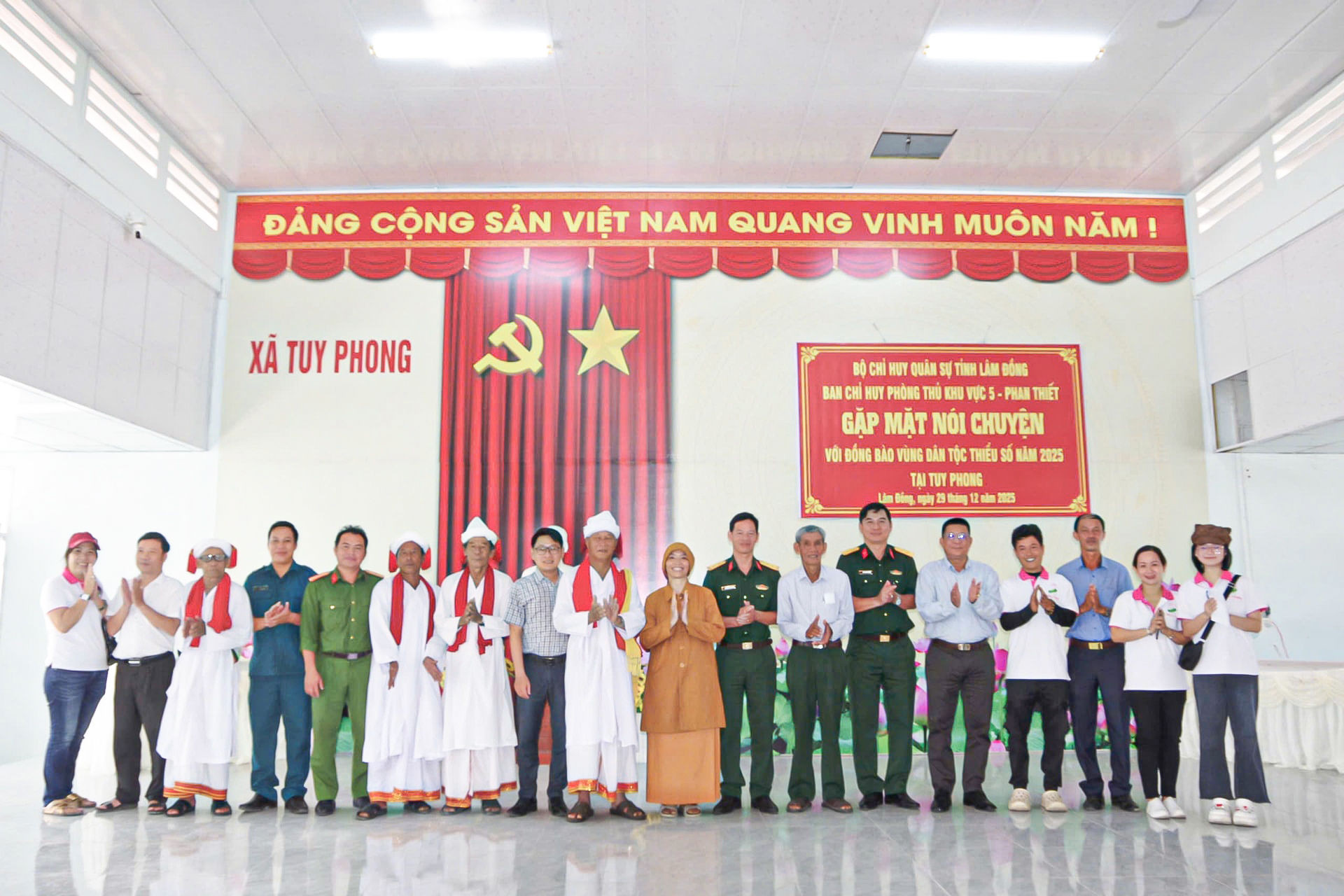
Representatives from the Command of Defense Zone 5, Tuy Phong commune, and the Understanding and Compassion Charity Association took a commemorative photo with village elders and influential figures at a meeting and discussion with ethnic minority communities.
In Dong Giang commune, where the majority of the population are ethnic minorities, the commune's police force consistently adheres to the principle of "staying close to the people and the grassroots." Officers and soldiers regularly visit villages to disseminate legal information, encourage people to participate in the "All People Protect National Security" movement, and coordinate with village elders and religious leaders to mediate conflicts arising within the community.
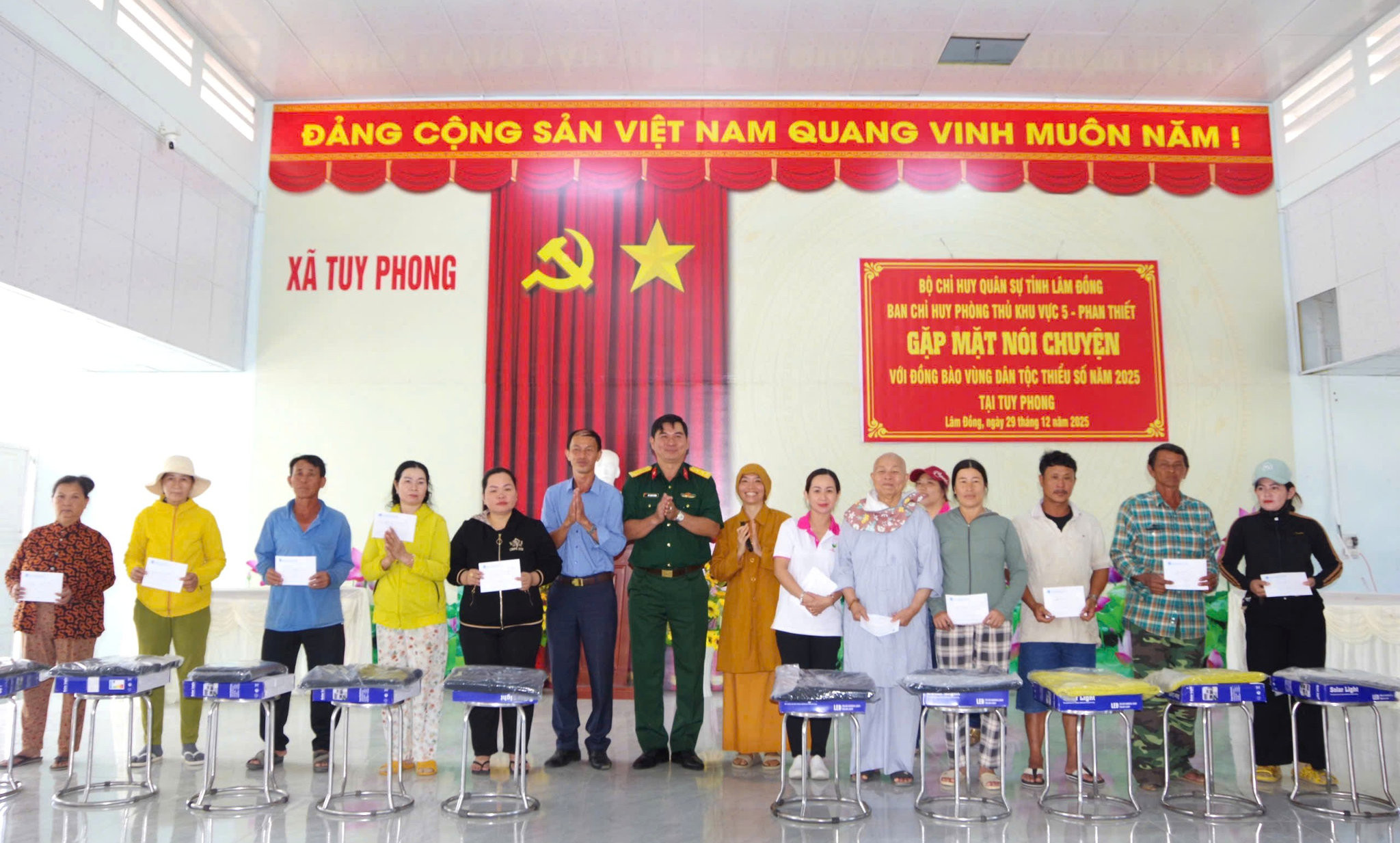
Representatives from the Command of Defense Zone 5 coordinated the presentation of gifts to disadvantaged households during a meeting with ethnic minority people in Tuy Phong commune.
Vietnam encourages US businesses to expand investment in high technology.On the morning of June 26th, at the Government Headquarters, Deputy Prime Minister Ho Quoc Dung received Mr. Jeff Place, Supply Chain Director of Coherent Group (USA). During the meeting, the Deputy Prime Minister affirmed that Vietnam encourages US businesses to expand investment, especially in high-tech, innovation, and semiconductor industries.
In addition, police officers and soldiers also directly participate in activities to support the people, such as demolishing temporary or dilapidated houses, helping people overcome the consequences of natural disasters, and guiding them through administrative procedures. These specific and practical actions have contributed to building a positive image of police officers in the hearts of the people.
Along with the police force, military units also actively contribute to building a strong foundation of public support. The Command of Defense Zone 5 - Phan Thiet regularly organizes meetings, visits, and gift-giving to ethnic minority communities; at the same time, they disseminate the Party's guidelines, the State's policies and laws, share experiences in economic development, and listen to the thoughts and aspirations of the people.
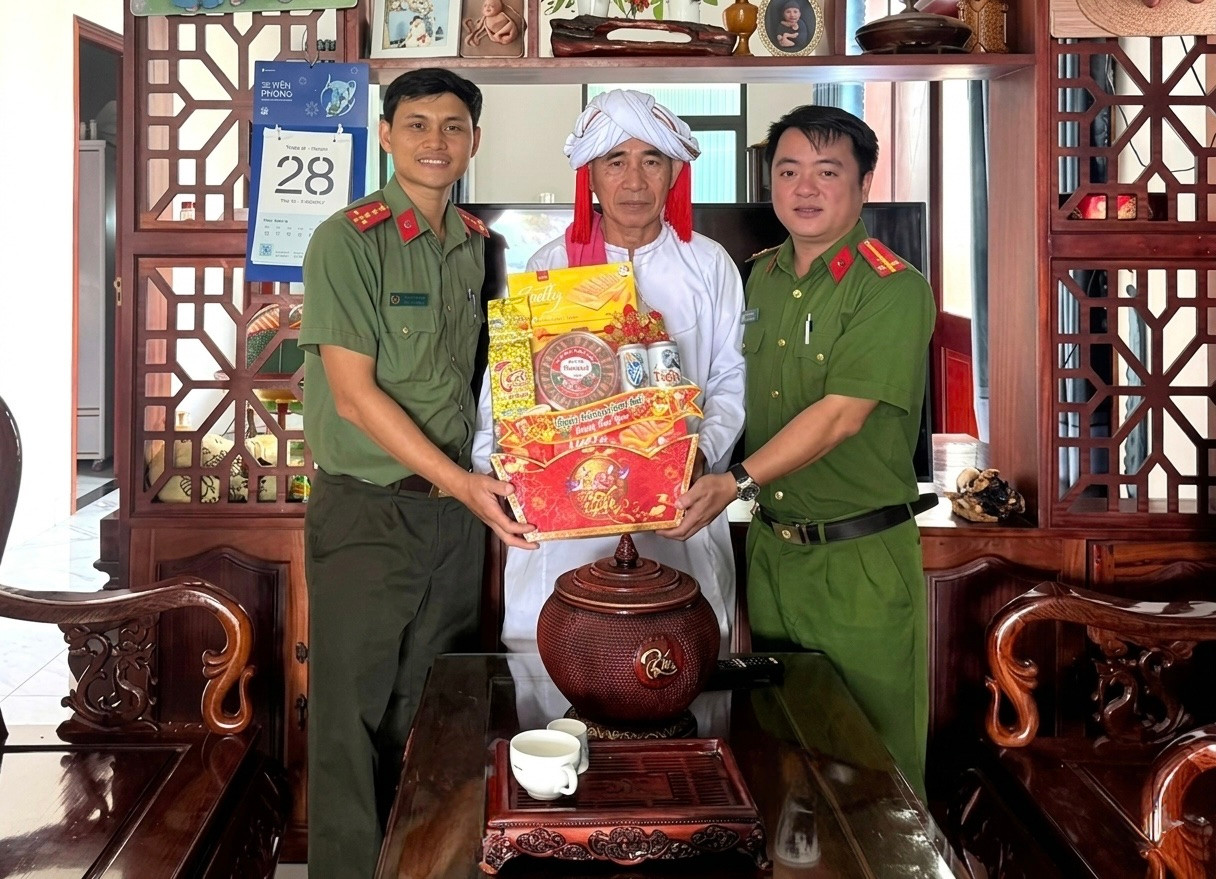
The Tánh Linh commune police presented gifts to influential figures in the Cham ethnic community in the area.
Experience shows that when officers and soldiers understand the language, customs, and traditions of the people and work alongside them in their daily lives, the close relationship between the functional forces and the people is increasingly strengthened. From there, trust and social consensus are built, creating a solid foundation for maintaining national defense and security, and promoting sustainable development in Lam Dong province, a land rich in cultural identity and traditions of ethnic solidarity.


.jpg)