|
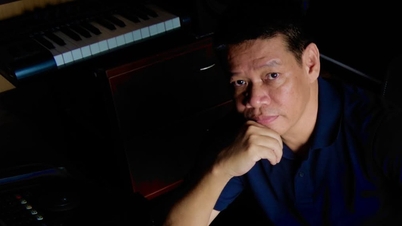
| Artisan Nguyen Xuan Huu instructs students on how to play the Tinh instrument in Na La village, Minh Ngoc commune. |
The sound of the Tinh lute heralds the arrival of summer.
Every day at 8 PM, when many families have gathered after dinner, the cultural center of Na La village, Minh Ngoc commune, is filled with the lively sounds of the Tinh lute mingling with the chirping of cicadas in the summer. From various directions, the elderly, young people, and children all come to class with eager anticipation. The class, organized by artisan Nguyen Xuan Huu in collaboration with the People's Committee of the commune, has been running since the beginning of June. Although born in 1990, Mr. Huu has been involved with Then singing for 15 years and has won numerous awards and medals at art festivals nationwide.
The class, taught by Mr. Nguyen Xuan Huu, covers everything from fundamental knowledge of Then singing and Tinh playing to practical skills. From how to hold the instrument, tune the strings, press the keys, play in the correct rhythm, maintain the tempo, to breathing techniques and enunciation when singing Then, everything is meticulously explained. In addition, he introduces the origins and artistic significance of the art, and teaches some familiar ancient Then melodies and songs associated with the life, work, and cultural activities of the Tay people. Each lesson is not only a time for practicing the instrument and singing, but also an opportunity for students to better understand the value of this heritage, thereby fostering a greater love for and awareness of preserving and promoting their ethnic cultural identity.
The class in Na La village has 20 members, ranging from young children in elementary school to young adults and even students in their 50s. They come to class with a shared desire to preserve the Then songs and music of the Tay ethnic group. Sitting in the same row, young Hoang Minh Tri sits next to Ms. Nguyen Thi Long, a 56-year-old retired teacher. The nearly half-century age gap seems to disappear as everyone attentively follows each strumming note and each Then melody sung by "teacher" Huu. Ms. Long shared that she had heard her grandparents and parents sing Then songs since childhood, so those melodies have become a part of her memories. When she learned that the commune was opening a class, even though she was retired, she still registered to participate, hoping to better understand and sing the Then songs with the correct style of the Tay people herself.
Beyond simply teaching a form of folk art, Nguyen Xuan Huu's class is contributing to extending the cultural heritage of the Tay ethnic group through the love and initiative of the people themselves. In doing so, the Then singing tradition is no longer confined to memory or the stage, but is present in everyday life.
 |
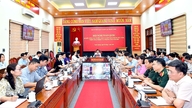
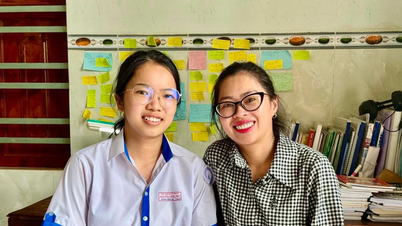
| Free English classes in Then Pa village help students and people in the highlands become more confident in communication. |
"Free" English Class
While the Then folk songs are deeply rooted in ethnic culture, the summer learning journey in the highlands takes on a different character. In the northernmost region of Vietnam, free English classes are helping children and local people become more confident in communication, opening up more opportunities for integration within their own villages.
In Lung Cu commune, there are currently two free English classes with nearly 60 students from Lo Lo Chai and Then Pa villages participating. These special classes have been held regularly every summer since 2021, becoming a familiar meeting place for many children and locals who love foreign languages.
The class in Then Pa village has 35 students and is held every evening from 7:30 PM to 9:00 PM. Besides teaching directly, Mr. Son – a local businessman – also connects with foreign teachers and international tourists to participate in the class, creating opportunities for students to practice communication in a friendly and lively environment.
James Wilson, a tourist from England on an extended holiday in the Stone Plateau, learned about the class and volunteered to teach. Accompanying the children in Then Pa village, he guided them in pronunciation, communication skills, and organized many games in English to create a lively atmosphere. “I wanted to give the children a feeling of closeness and friendliness so that they would be less shy and more confident in communicating. Seeing them become more confident in their pronunciation, eagerly raising their hands to speak, and actively engaging in conversations, makes me very happy.”
“Hello! Nice to meet you!” – 9-year-old Giang Mi Cuong's clear and confident English greeting drew applause from the class. This confidence was the result of regular lessons at the "free" English class. Cuong excitedly said, “I really enjoy coming to English class because I learn through games, songs, and conversations with the teachers and foreign adults. Initially, I was very shy and didn't dare speak, but now I know how to greet people, introduce myself, and answer simple questions in English. I will try my best to study well so that I can talk to many tourists who come to Lung Cu in the future.”


One classroom opens the door to integration, another preserves roots. Two different journeys, yet sharing a common goal: sowing seeds of knowledge, nurturing identity, and inspiring aspirations for progress. And these special classrooms in the highlands will continue to shine their lights, cultivating lasting values for the community.
Text and photos: Pham Hoan
Source: https://baotuyenquang.com.vn/xa-hoi/202607/lop-hoc-dac-biet-ngay-he-a33201d/






































































![[Infographic] Which types of behaviors are strictly prohibited in digital transformation from July 1, 2026?](https://vphoto.vietnam.vn/thumb/402x226/vietnam/resource/IMAGE/2026/07/02/1783004068098_thumb_5_hanh_vi_nghiem_cam_20260702184923.jpeg)