After days of back-and-forth fighting around the Strait of Hormuz, the US and Iran have agreed to halt attacks and prepare to resume negotiations. This signals that both sides still want to preserve the peace process that has just begun.
But what just happened also exposed the agreement's biggest weakness: a document vague enough for both sides to sign, but not clear enough to prevent recurring conflicts.
At the heart of this tension is the Strait of Hormuz, a shipping lane that once carried approximately 20% of the world's crude oil.
In the memorandum signed on June 17, Iran was asked to “make arrangements to the best of its ability” to ensure the safe passage of commercial vessels for 60 days. However, the agreement did not clarify some specific details.
That gap immediately became the point of impact.
Washington interprets this provision as meaning Iran has a responsibility to support the restoration of freedom of navigation, but no control over international shipping lanes. Conversely, Tehran argues that it has the authority to manage the reopening of the strait and decide how ships pass through Hormuz.
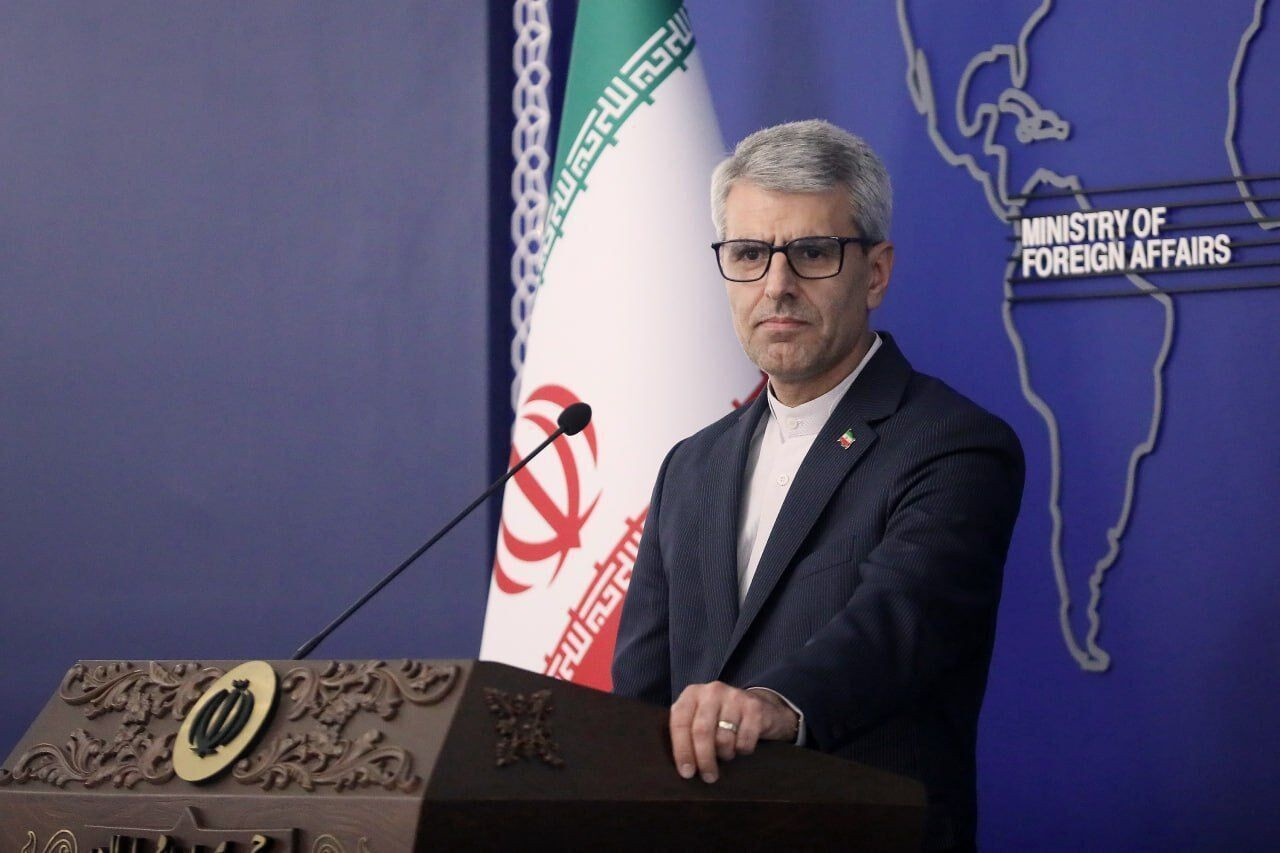
Iranian Foreign Minister Abbas Araghchi made this position clear when he declared that managing and fully restoring maritime traffic in Hormuz is Iran's responsibility, while warning that any attempts to create arrangements different from what Tehran is pursuing would only complicate the situation, delay the restoration of normalcy, and increase tensions.
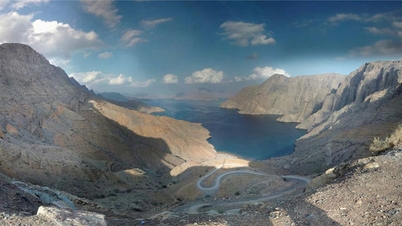
Therefore, when Oman collaborated with the International Maritime Organization to establish a new route through Omani waters, bypassing Iranian waters, Tehran viewed this as a move that would weaken its strategic leverage.


Attacks targeting commercial ships using this route, although Iran did not directly claim responsibility, quickly triggered retaliatory strikes by the US against military facilities along the strait. Iran then attacked targets linked to the US and several Gulf states such as Bahrain and Kuwait.
It is noteworthy that these escalations occurred just days after the two sides reached a preliminary peace memorandum. This suggests that the conflict did not necessarily erupt because the agreement was rejected, but rather because each side was trying to impose its most advantageous interpretation before entering a phase of deeper negotiations.
For Iran, Hormuz is now a card they cannot afford to lose.
For years, the nuclear program was seen as Tehran's primary deterrent. But following the recent war, the ability to disrupt shipping at Hormuz has emerged as a more direct leverage point, with immediate implications for energy markets, international trade, and Washington's political calculations.
If Iran is forced to compromise on its highly enriched uranium stockpile in a future nuclear deal, it will need to hold onto Hormuz as a bargaining chip to secure sanctions relief, free oil exports, and the release of frozen assets. From Tehran's perspective, having the ships follow a U.S.-backed route outside of Iranian control would mean allowing its most crucial leverage point to erode right at the negotiating table.
Conversely, the US cannot easily accept Iran's interpretation. If Washington were to implicitly allow Tehran to decide the routes of commercial ships, it would set a dangerous precedent for the principle of freedom of navigation at one of the most important choke points in the global economy. Therefore, the US is both pushing for a resumption of negotiations and asserting that it will retaliate if Iran continues to attack commercial ships or US bases and interests in the region.
The Hormuz crisis was therefore a test of limits. Iran wanted to demonstrate that there can be no lasting peace if its role in the strait is ignored. The U.S. wanted to prove that a ceasefire cannot become a license for Tehran to impose its own rules on international shipping lanes.
The worrying aspect is that the de-escalation mechanism is not yet sufficiently robust. According to sources involved in the negotiations, the US and Iran had agreed to establish a communication channel to avoid clashes in the Strait of Hormuz, but this mechanism has not been activated. Meanwhile, the tit-for-tat attacks have reduced shipping traffic through the strait, causing concern among shipowners and escalating the risk to maritime security.
Nevertheless, the agreement to halt hostilities and prepare for a resumption of negotiations, possibly in Doha, shows that both Washington and Tehran understand the cost of a new war. For the US, a prolonged war would put pressure on energy prices, inflation, and domestic politics. For Iran, its economy, already battered by sanctions, needs a way out, especially since oil waivers and access to frozen assets are significant benefits.



The problem is that from now on, the US-Iran peace process risks being dragged into a cycle of ongoing crisis management. Instead of focusing on core issues such as the nuclear program, the roadmap for lifting sanctions, or ensuring regional security, negotiators may have to spend a lot of time arguing about the ship's route, control of the Hormuz, monitoring mechanisms, and responses to each new collision.
This is the paradox of crisis diplomacy. Ambiguous language can help parties overcome initial impasses and sign an agreement. But if that ambiguity isn't quickly replaced with clear rules, it becomes the source of further crises.
Hormuz is therefore not just a bottleneck in the global energy flow. Following the latest developments, the strait has become a test of the ability to transform a fragile ceasefire into a genuine peace between the US and Iran.
Source: https://hanoimoi.vn/hoa-binh-mong-manh-duoi-bong-hormuz-1209667.html
![[Photo] Strengthening character and expertise: Intense training for artillery soldiers.](https://vphoto.vietnam.vn/thumb/1200x675/vietnam/resource/IMAGE/2026/06/30/1782815602541_lu-368-1875-4571-jpg.webp)