

The patina of time on the roof of the ancient temple.
Located on Cu Lao Pho island, now part of Tran Bien ward, Dong Nai province, That Phu Ancient Temple – also known as Ong Temple – is one of the oldest religious relics, typical of the cultural exchange between Vietnam and China in the Southern region of Vietnam.
According to historical records, the temple was originally named Vọng Hải Quan Đế Temple, built in 1684, just five years after General Trần Thượng Xuyên led more than 3,000 Chinese people on 50 ships to Đàng Trong to pledge allegiance and was granted permission by Lord Nguyễn Phước Tần to settle in this area.
According to Mr. Tran Quang Toai, a member of the Advisory Board of That Phu Ancient Temple, over time, the temple has retained its traditional architecture from hundreds of years ago. The main building materials are Buu Long blue stone, bricks, ceramics, and a yin-yang tile roof system. The overall layout follows the "inner courtyard - outer enclosure" style, consisting of a front hall, middle hall, and rear hall connected to each other; on either side are rows of left and right side buildings arranged symmetrically, demonstrating a tight and harmonious architectural structure.
A particularly striking feature of the main hall is the elaborate decorative system of hundreds of ceramic figures adorning the roof, made of blue glazed ceramic by Buu Nguyen – a famous pottery kiln in Saigon (Cholon) – in the year of Giap Ngo (1894). This style is called "miniature statues" or animal figurines. The statues depict and recreate scenes from stories and daily life vividly, "just like the real thing," only smaller in size (about 20cm).
However, some argue that the name of this type of decoration, "jiao shuang" or "ji shuang," means "joyful statue." This is because the statues are all created with smiling expressions and cheerful, lively demeanors. The word "jiao" means laughter, emphasizing the relatable, everyday expressions of the characters. The term "jiao shuang" only refers to the small size and does not fully reflect the artistic value and expressive spirit of these small, whimsical, and unique statues.
Besides the reliefs depicting people in daily life, the decorative sculptures on the roof of Ong Pagoda also feature symbolic images with profound meanings. In the center of the roof is the image of a dragon-fish playing with a pearl, a carp seemingly leaping above the surging waves – five waves rising to support a pearl. Symmetrically flanked are two "carp transforming into dragons" (fish tails, dragon heads), extending further towards the ends of the roof are a pair of "phoenixes holding books," turning their heads to look at the pearl.
Particularly noteworthy are the statues of two deities at the two ends of the roof: Ông Nhật (Mr. Sun) and Bà Nguyệt (Mrs. Moon). Ông Nhật is depicted as an old man with a long, white beard, one leg raised high, stroking his beard, and holding up a circular mirror with the word "Nhật" (sun) inscribed on it. Bà Nguyệt is depicted as a woman, her left hand on her hip, her right hand holding a golden moon with the word "Nguyệt" (moon) inscribed on it. The imagery of the Sun and Moon reflects the philosophy of the cosmic order of yin and yang, the cyclical nature of day and night, expressing the desire for harmony and protection for the people to have a stable and peaceful life.


Beyond their decorative value, the ceramic tiles on the roof of Ong Pagoda reflect the aesthetic sense, exquisite craftsmanship, and cultural exchange within the religious architecture of Southern Vietnam. Over hundreds of years, enduring the elements and the vicissitudes of time, these ceramic tiles have become "living documents," "treasures of time," contributing to the unique historical and artistic value of the Thất Phủ Ancient Temple.
A cultural destination every spring.
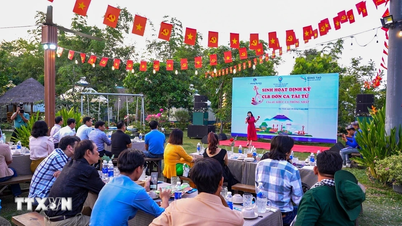
Every year at the beginning of the year, Thất Phủ Cổ Miếu – Chùa Ông becomes a center of religious and cultural activity for both the Chinese and Vietnamese communities. Locals and tourists come to offer incense, pray for peace and good fortune at the start of the year, and perform traditional rituals hoping for a peaceful and prosperous new year. In the vibrant spring atmosphere, activities such as calligraphy writing, releasing floating lanterns, and lion and dragon dance performances take place within the temple grounds and surrounding areas, creating a lively atmosphere and symbolizing the warding off of evil and welcoming good luck at the beginning of the year.
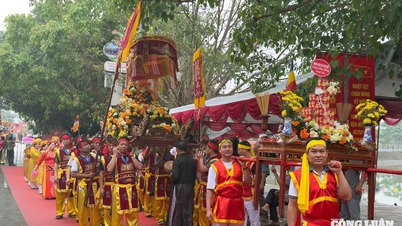
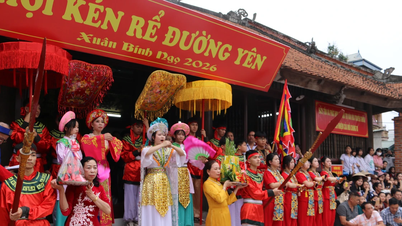
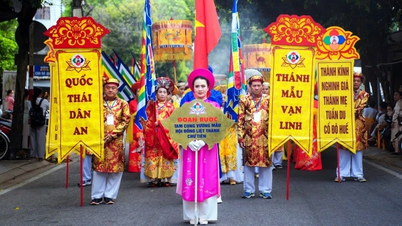
Furthermore, every year, the Quan Thanh De Quan festival is celebrated solemnly with full traditional rituals such as sacrificial ceremonies, lion and dragon dances, and the procession of Quan Cong's palanquin. These festival activities not only fulfill religious needs but also contribute to strengthening solidarity between the Chinese and Vietnamese communities, and have become a distinctive cultural product of the Tran Bien - Dong Nai region.

Many visitors say that visiting Ong Pagoda at the beginning of the year has become a cultural tradition. "Every Tet holiday, my family and I come to the pagoda to offer incense and pray for a peaceful and prosperous new year. The atmosphere here is solemn yet very welcoming," shared Mr. Pham Khanh Nguyen (a resident of Long Thanh commune, Dong Nai province).
According to Mr. Thai Huu Nghia, Head of the Management Board of That Phu Ancient Temple, in the context of rapid urbanization in Dong Nai province, the preservation and promotion of the value of historical relics is facing many challenges. Despite undergoing many restoration efforts, some items such as wooden details, statues, horizontal plaques, and ancient couplets still face the risk of deterioration over time.
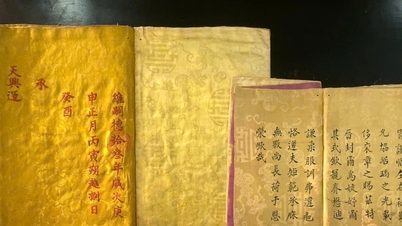
For long-term preservation, experts and the Management Board propose implementing comprehensive conservation measures linked to the application of digital technology , such as digitizing Han Nom documents, creating 3D architectural profiles, and reconstructing festival rituals using virtual reality technology. Simultaneously, landscape enhancement and the development of cultural and spiritual tourism need to be carried out systematically and with a clear direction. Thất Phủ Cổ Miếu is expected to become a highlight in the "Cù Lao Phố – Thất Phủ Cổ Miếu – Đình Bình Trước – Chùa Long Sơn Thạch Động" tourist route, contributing to the formation of a unique and distinctive tourism product for Đồng Nai every spring.
In 2001, Thất Phủ Cổ Miếu (Ông Pagoda) was classified as a National Historical and Cultural Monument by the Ministry of Culture and Information. In 2023, the Ministry of Culture, Sports and Tourism recognized the traditional Ông Pagoda Festival as a National Intangible Cultural Heritage.
Source: https://baophapluat.vn/hoan-hi-tieu-tuong-chua-ong.html



























































Comment (0)