The power supply flows continuously.
For a long time, Bac Ninh - Kinh Bac has been known as the land of festivals and celebrations, where the sounds of drums and Quan Ho folk songs resonate throughout the four seasons. According to preliminary statistics, the province currently has more than 1,400 traditional festivals taking place year-round. This is an important resource contributing to socio -economic development and nurturing the spiritual life of all segments of the population.
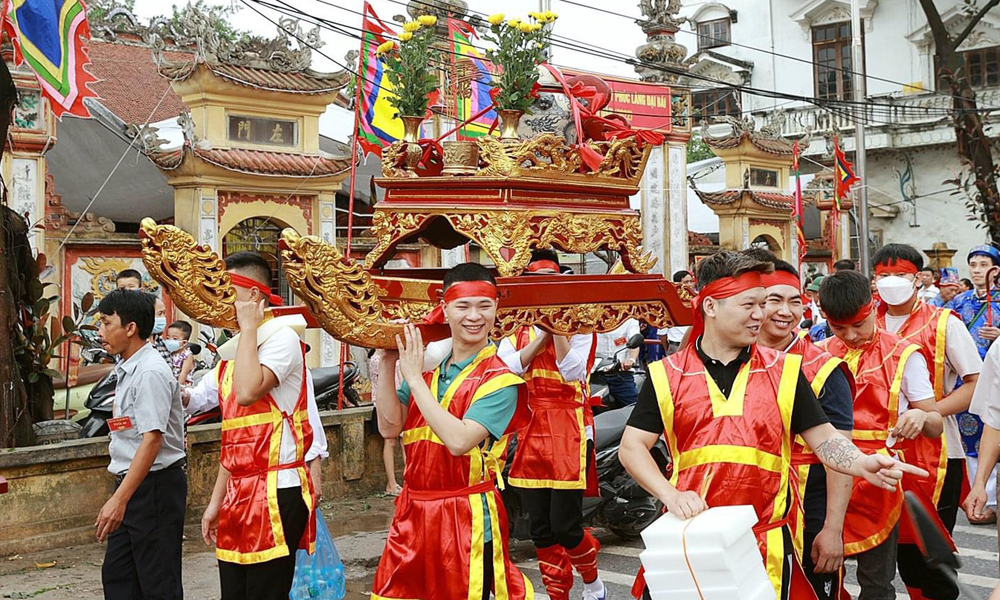 |
The procession of palanquins during the autumn village festival in Dai Bai (Gia Binh commune). Archival photo. |
According to cultural researchers, Bac Ninh - Kinh Bac has two distinct festival seasons: spring and autumn. The spring festival begins from the 4th day of the first lunar month and lasts until the end of the third or beginning of the fourth lunar month. This is a time of agricultural leisure, allowing people to celebrate, pray for blessings, prosperity, and peace after a year of hard work. The autumn festival, on the other hand, has a more solemn and sacred character and usually takes place in the eighth or ninth lunar month, when the countryside enters a period of rest between the two rice harvests. During this time, people dedicate their efforts to rituals and ceremonies to honor their ancestors, a tradition commonly known as the "spring and autumn festivals."
| The autumn village festival in Bac Ninh primarily focuses on the ceremonial aspects, with solemn rituals expressing the community's respect and remembrance of prominent figures and deities worshipped in the sacred spaces of communal houses, temples, and pagodas. Through incense offerings and rituals honoring the Saints, the achievements, virtues, and accomplishments of our ancestors are recalled, preserved, and disseminated within the community's consciousness, reviving the precious tradition of "drinking water, remembering the source" of the nation. |
While spring festivals are vibrant with boisterous processions, performances, singing contests, and lively folk games, autumn village festivals in Bac Ninh are steeped in an atmosphere of reverence and tranquility. Villages often open their communal houses, temples, and pagodas to hold ceremonies and offer incense to the gods and Buddha.
Some of the autumn festivals in Bac Ninh include: the traditional Thi Cau festival on August 8th; the Phuc Son and Thanh Son communal house festivals (Vu Ninh ward) on August 10th; the Lo Hanh communal house festival (Hiep Hoa commune) on August 12th; the Pha Lai temple and pagoda festival (Phu Lang commune) from August 12th to 14th; the Long Kham village festival (Lien Bao commune) commemorating Hung Dao Dai Vuong Tran Quoc Tuan on August 20th; the ancestral commemoration ceremony for the bronze casting craft in Quang Bo (Lam Thao commune) on August 23rd; the Dam Pagoda festival (Nam Son ward) on September 8th; the Bo Da Pagoda festival and the fire-making rope-pulling competition in Yen Vi village (Tam Giang commune) on September 12th; and the ancestral commemoration ceremony for the bronze casting craft in Dai Bai village (Gia Binh commune) on September 29th...



The autumn village festival in Bac Ninh primarily focuses on the ceremonial aspects, with solemn rituals expressing the community's respect and remembrance of prominent figures and deities worshipped in the sacred spaces of communal houses, temples, and pagodas. Through incense offerings and rituals honoring the Saints, the achievements, virtues, and accomplishments of our ancestors are recalled, preserved, and disseminated within the community's consciousness, reviving the precious tradition of "drinking water, remembering the source" of the nation.
As a vivid reflection of the historical and cultural traditions of the homeland, each autumn village festival is a persistent source of culture that flows on forever... Amidst the rhythm of modern life, the sound of the autumn festival drums still resonates, reminding people today of the cultured Kinh Bac region, where culture and beliefs blend to create a unique character, contributing to enriching the cultural identity of the Vietnamese nation.
Preserving the beauty of the "spring and autumn seasons"
The rituals in the autumn village festivals and celebrations in Bac Ninh are still cherished and passed down from generation to generation as an indispensable part of the spiritual life of the people of Kinh Bac. Visiting the Lo Hanh communal house (Hiep Hoa commune), a national historical site, on the 12th day of the 8th lunar month, the anniversary of the death of the Holy Saint, we witnessed a solemn ceremony performed by the village elders of the three villages of Cham, Chung, and Khoat. This ancient communal house, built in 1576, is the earliest in the Kinh Bac region and is dedicated to the deities Cao Son Dai Vuong and Phuong Dung Tien Chua.
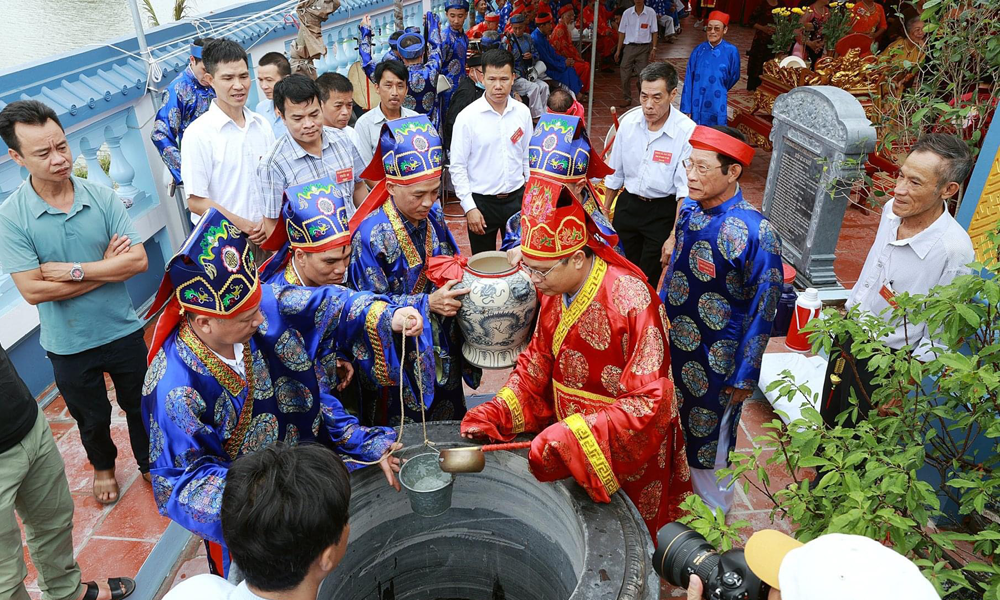 |
The ritual of drawing water from the Dragon Well during the autumn festival in Dai Bai village (Gia Binh commune). Archival photo. |
According to Mr. Do Xuan Lai, Head of the Organizing Committee of the Lo Hanh communal temple festival, the Lo Hanh communal temple traditionally holds two major festivals a year, known as the "spring and autumn festivals." January marks the birth of the deity, and August marks the anniversary of his deity's passing. The spring festival runs from the afternoon of the 9th to the 12th with many performances and folk games; while the autumn festival only includes traditional rituals. Officials from the three villages organize two ceremonies, one for the initiation and one for the farewell, to commemorate the merits of their ancestors. These rituals are not only spiritual and religious activities but also "living history lessons," helping the younger generation understand their roots more deeply, fostering pride and love for their homeland.
Traditionally, from the 12th to the 14th of August in the lunar calendar, the Pha Lai Temple and Pagoda Festival takes place in Phu Lang commune. Legend says that in the past, the water procession involved hundreds of people and dozens of boats adorned with flags and drums, creating a majestic atmosphere that echoed throughout the Pha Lai region. The procession fetched water from the Vuc Chuong section of the river – where it is believed the Ly Dynasty temple bell sank. The water was then scooped into jars and carried back for year-round offerings. Today, although the Pha Lai Temple Festival is not as long as it used to be, and some folk games and rituals have been simplified, it remains solemn and unique. Every year, as the Mid-Autumn Festival approaches in August, locals and tourists flock to the Pha Lai Temple Festival, and then proceed to the Con Son Kiet Bac Festival – a large-scale autumn festival in the Luc Dau Giang river region.

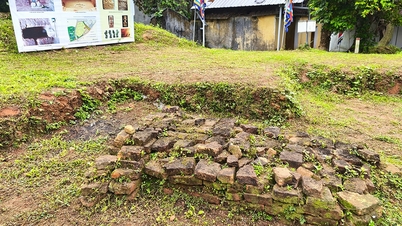
On the 8th day of the 9th lunar month, the villages around Dạm Mountain (Nam Sơn Ward) joyfully celebrate the Dạm Pagoda Festival. This "royal pagoda" was once a famous landmark built during the reign of King Lý Nhân Tông (1086). Legend says that the Lý kings frequently came here to rest and sightsee. Valuable archaeological remains, representing significant historical and cultural value, are still preserved underground at all four levels of the site's foundation. Since 2015, Bắc Ninh province has mobilized resources to restore the pagoda, completing the main hall, the Mother Goddess house, the Ancestor house, the monks' quarters, and the shrine of Empress Nguyên Phi Ỷ Lan... In the gentle autumn sunlight, along the slopes of Dạm Mountain, a large number of locals and tourists from all over the country sincerely pray to Buddha, admire the beauty of the ancient pagoda, and immerse themselves in the sacred atmosphere amidst the mountains, rivers, and vast fields...
The autumn village festivals in Bac Ninh, whether large or small in scale, are imbued with the principle of "drinking water, remembering the source." Each festival is an occasion to express gratitude to those who contributed to the founding and development of villages, fought to defend the country, or to honor the founders of traditional crafts... This is a unique form of community cultural activity that contributes to nurturing identity and preserving the sacred connection between the people of Bac Ninh today and the thousand-year-old cultural traditions of the Kinh Bac region.
Source: https://baobacninhtv.vn/hoi-lang-mua-thu-postid428553.bbg