

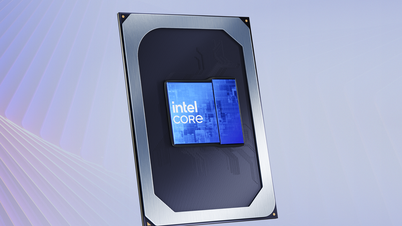
If the report is accurate, it means Huawei will be unable to use chips from Qualcomm or Intel in the future, meaning the company will be unable to produce any more laptops unless it finds some alternative.

The production of the MateBook X Pro (2024) was severely impacted by the license revocation.
The license revocation will take effect immediately, raising the question of how many of the recently announced MateBook X Pro laptops Huawei will be able to sell. Essentially, this will depend on the number of Intel chips Huawei already possesses, but that number may not be significant.
Neither Qualcomm, Intel, nor Huawei have yet responded to the Reuters report, but the truth may soon be revealed. Not long ago, the Chinese Foreign Ministry issued a statement saying that the country "resolutely opposes the US overemphasizing the concept of national security and abusing export controls to suppress Chinese companies without justifiable reason."
Huawei's difficulties began in 2019 when the company was placed on the U.S. Commerce Department's blacklist, a move justified by the Trump administration as stemming from concerns that the Chinese company could spy on Americans. Following that move, Huawei's suppliers had to seek a special license from the U.S. government , which proved very difficult to obtain.
Qualcomm and Intel were among the companies that received this special license in 2020, with Qualcomm only allowed to sell older 4G chips to Huawei. Even so, the Chinese company still pays Qualcomm for licensing its 5G technology portfolio, part of which is set to expire in Qualcomm's fiscal year 2025. It remains unclear whether this agreement includes the next-generation Kirin chips for the smartphones that Huawei is introducing.
Source: https://thanhnien.vn/huawei-bi-cut-dut-nguon-cung-chip-qualcomm-va-intel-185240508233454755.htm


![[Photo] “Red Journey” 2026: Vietnamese Youth Continue Building the Bridge of Friendship Between Vietnam and China](https://vphoto.vietnam.vn/thumb/1200x675/vietnam/resource/IMAGE/2026/04/20/1776629730866_4055880775670638308-9618-4200-jpg.webp)





















































































Comment (0)