Shaping a multipolar urban space.
The Khánh Hòa Urban Master Plan until 2050, with a vision to 2075, covers the entire Khánh Hòa province after the merger, encompassing over 8,706 km² of land and a sea area within 6 nautical miles. According to the plan, the overarching goal is to develop Khánh Hòa into a modern, smart, green, and sustainable Class I city, a centrally-governed city, a crucial growth pole for the country, and a highly competitive international gateway coastal city. Simultaneously, it aims to create a multi-polar, multi-center urban structure, leveraging the role of dynamic areas, developing integrated technical and social infrastructure, and using the marine economy , logistics, services, tourism, high-tech industries, clean energy, and innovation as drivers of growth.
The project identifies many outstanding advantages of Khanh Hoa after the merger. These include the system of bays Nha Trang , Van Phong, Cam Ranh, and Vinh Hy; the two national parks Nui Chua and Phuoc Binh; the Hon Ba conservation area; the system of seaports, airports, gateways connecting to the Central Highlands, and the unique Cham cultural values. This is considered the foundation for building a model of coastal urban development with its own identity, harmoniously combining economic development with the conservation of natural resources.
 |
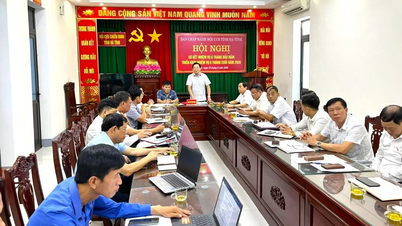
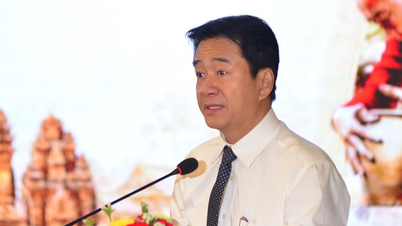
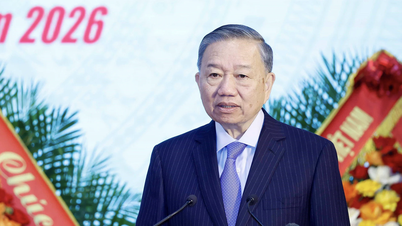
| Comrade Tran Hoa Nam and the delegates chaired the workshop. |
Besides defining the development space, the plan also presents rather ambitious forecast targets. According to the research plan, by 2050, the total urban population is expected to reach approximately 5 million people, leading to a demand for over 166,000 hectares of urban development land; simultaneously, the plan includes the planning of transportation systems, underground spaces, digital infrastructure, water supply, drainage, energy, and waste treatment in a synchronized and modern manner to meet long-term development requirements. The highlight of the plan lies not only in its unprecedented scale but also in its integrated approach after the merger. Instead of developing each city separately, the plan aims to form a unified whole, simultaneously exploiting the advantages of the sea, islands, mountains, plains, and new growth poles to create a linked development space across the entire province.
Coastal cities must become a new engine of growth.
One point that many experts agree on is that Khanh Hoa needs to more strongly exploit the advantages of being a large-scale coastal city. According to Associate Professor Dr. Do Tu Lan - former Deputy Director of the Urban Development Department, Ministry of Construction, the initial plan has formed many ideas for urban spatial development towards the goal of becoming a centrally-governed city. However, the development strategy needs to be further elevated based on fully utilizing Khanh Hoa's unique potential. Associate Professor Dr. Do Tu Lan proposed strengthening regional linkages domestically and internationally; developing a comprehensive range of key economic sectors such as industry, services, tourism, energy, and fisheries; and simultaneously forming dynamic urban centers in the direction of coastal and riverine ecology, with Cam Lam and Cam Ranh as new development hubs. This perspective aligns with the objectives of the Master Plan, which identifies Khanh Hoa as developing centers for maritime economy, logistics, high-tech industries, clean energy, trade, finance, innovation, and digital transformation, creating competitiveness at the regional and international levels.
Dr. Ngo Viet Nam Son, Chairman of NgoViet Architects & Planners, believes that, regarding spatial development orientation, planning needs a more balanced approach between coastal and mountainous areas. According to Dr. Ngo Viet Nam Son, the plan should organize development zones along an East-West axis, connecting the coastal economic zone with border areas and the western region. This will gradually narrow the development gap between regions, allowing people in mountainous areas to benefit from infrastructure and services of comparable quality to those in coastal areas. Regarding green spaces, the plan needs to clarify targets and long-term land use orientations, ensuring a minimum of 15 to 20 m² of green space per person. Simultaneously, it is necessary to allocate land for future generations, avoiding the situation of exhausting all available land for development in the immediate future.
Regarding urban development, Dr. Ngo Viet Nam Son, an architect and scientist, proposed the formation of high-density urban centers around train stations, developing according to the Transport-Oriented Development (TOD) model, and simultaneously building a convenient public transport network connecting different areas within the province to reduce pressure on road traffic and improve infrastructure efficiency. In addition, he suggested a more specific study outlining the development orientation for the Truong Sa Special Economic Zone, selecting a central area to concentrate investment in essential infrastructure such as schools, public services, and other public facilities, contributing to the development of the marine economy while ensuring national sovereignty.
According to many experts, modern coastal cities cannot rely solely on coastal expansion but must harmoniously utilize the sea, rivers, ecosystems, and landscapes. This is also a distinct advantage that few localities possess.
 |
| A view of the urban area of Nha Trang. Photo: VUONG MANH CUONG |
Ensuring consistency and alignment with other plans.
At the workshop, Comrade Tran Hoa Nam emphasized that the objective of the Khanh Hoa Urban Master Plan until 2050, with a vision to 2075, is to concretize the orientations, strategies, plans, and development programs of the Central Government, the region, and the province regarding the development of Khanh Hoa urban area; to serve as an important legal basis for urban development management, attracting investment, and implementing key projects; and to provide a basis for the preparation and adjustment of sub-area plans, detailed plans, urban development programs, and the management of construction investment according to the plan.
Comrade Tran Hoa Nam requested the Department of Construction, in its role as the lead agency advising and coordinating with the consulting unit and relevant departments, sectors, and localities, to promptly compile all opinions from the workshop; classify, research, and incorporate them on a scientific, practical basis and current regulations to complete the planning dossier with the highest quality. In particular, attention should be paid to several points such as: Continuing to review to ensure consistency and synchronization between the Khanh Hoa Urban Master Plan and the Khanh Hoa Provincial Planning for the period 2021-2030, with a vision to 2050, the National Master Plan, regional plans, and relevant sectoral plans. At the same time, clarify the urban spatial development model of the province towards leveraging the advantages of the coastal urban system; strengthen linkages between Van Phong, Nha Trang, Cam Lam, Cam Ranh, Phan Rang, and other dynamic areas, ensuring harmonious development between urban, rural, and mountainous areas; Complete the orientations regarding technical infrastructure, social infrastructure, transportation, water supply, drainage, waste treatment, energy, and digital infrastructure in a synchronized and modern manner, meeting the requirements of long-term development.



Comrade Tran Hoa Nam also requested the Department of Construction and the consulting unit to pay attention to solutions for environmental protection, conservation of marine ecosystems, forests and characteristic landscapes; improving the ability to adapt to climate change, sea level rise and minimizing natural disaster risks in the urban development process. At the same time, he proposed feasible solutions for implementing the plan, identifying priority programs and projects, investment roadmap and mechanisms for mobilizing resources, ensuring that the plan, once approved, can be effectively implemented.
MANH HUNG
Source: https://baokhanhhoa.vn/kinh-te/202606/huong-toi-do-thi-bien-hien-dai-6d30012/
![[Image] A look back at the capital's preparations for the century-long master plan.](https://vphoto.vietnam.vn/thumb/1200x675/vietnam/resource/IMAGE/2026/06/29/1782750453122_quy-hoach-100-nam-minh-duy-1-2118-jpg.webp)
![[Photo] General Secretary and President To Lam works with the Party Committee of the Government on the work of preventing and combating storms, floods, extreme natural disasters and climate change.](https://vphoto.vietnam.vn/thumb/1200x675/vietnam/resource/IMAGE/2026/06/29/1782729441945_a1-bnd-0385-9454-jpg.webp)
![[Photo] National Assembly Chairman Tran Thanh Man attends the Conference to announce the Master Plan for Hanoi Capital City with a 100-year vision.](https://vphoto.vietnam.vn/thumb/1200x675/vietnam/resource/IMAGE/2026/06/29/1782709639728_ndo_br_1-jpg.webp)













































![[Image] Building an elevated road through the Ma Da forest.](https://vphoto.vietnam.vn/thumb/402x226/vietnam/resource/IMAGE/2026/06/29/1782724737750_anh-man-hinh-2026-06-29-luc-16-18-43.png)