

The 2013 Land Law distinguishes between "domestic individuals" and "Vietnamese people residing abroad" regarding access to land. However, Clause 3, Article 4 of the amended Land Law stipulates that Vietnamese people residing abroad, being Vietnamese citizens, have all the same land-related rights as Vietnamese citizens residing in the country.
According to experts, expanding land use rights for Vietnamese citizens residing abroad, including regulations on acquiring land use rights and facilitating their direct participation in domestic real estate transactions, avoids the previous problems where overseas Vietnamese had to rely on relatives in Vietnam to register and manage land use rights in their names. This practice led to numerous disputes arising from the practice of having someone else register and manage land use rights in their name.
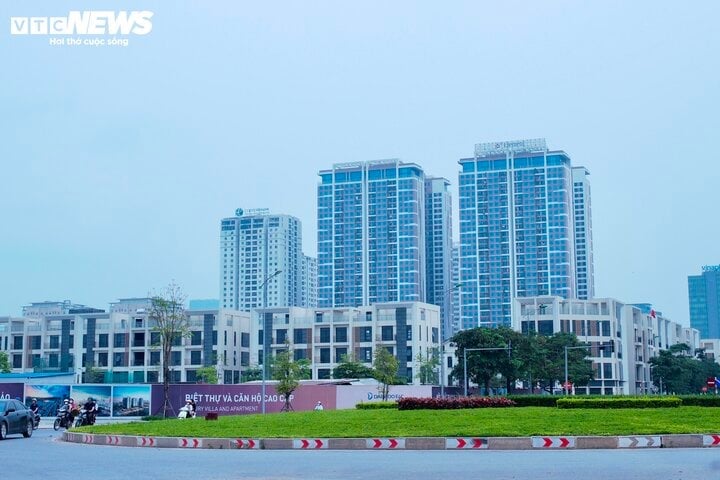
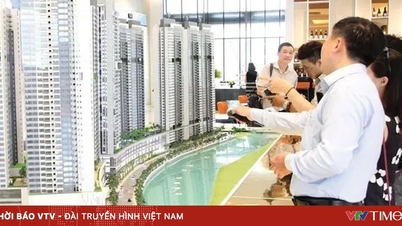
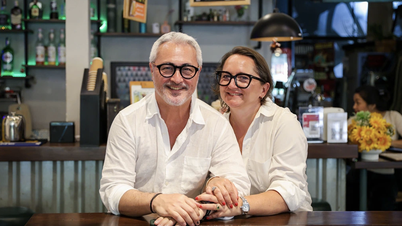
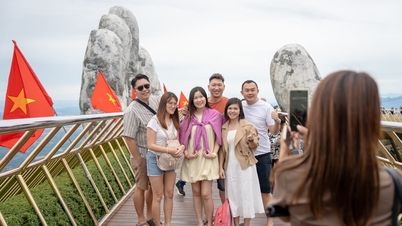
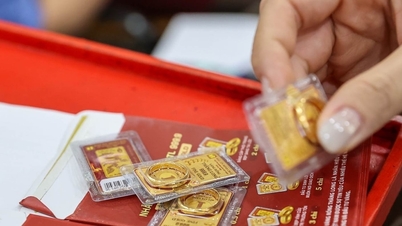
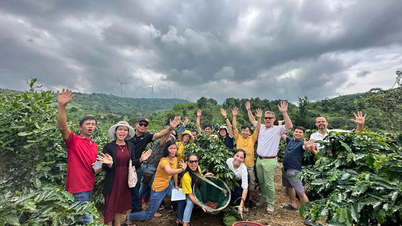
The amended Land Law will attract more investment from overseas Vietnamese. (Illustrative image: Cong Hieu).
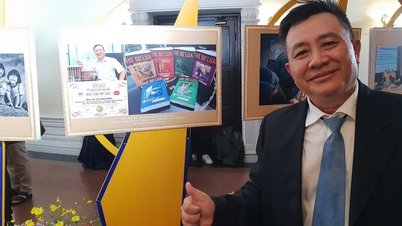
At a 2023 seminar on home buying for foreigners and overseas Vietnamese, Mr. Peter Hong, Permanent Vice President of the Association of Vietnamese Businesspeople Abroad, said that many overseas Vietnamese want to return to Vietnam to settle and invest but do not know how to own real estate.
According to him, there are approximately 5.5 million Vietnamese people living abroad and over 1 million second and third-generation (F2 and F3) individuals whose parents or grandparents are Vietnamese. Of these, more than 20% have reached retirement age, and the majority wish to return to their homeland to live, invest, and connect with their roots in their later years.
A survey by the Ho Chi Minh City Real Estate Club (HREC) also showed that approximately 3 million overseas Vietnamese have a need to own real estate when they return to live in Vietnam, with the majority choosing Ho Chi Minh City.
According to the Association of Vietnamese Businesspeople Abroad, there are currently 600,000 to 700,000 overseas Vietnamese who are entrepreneurs and highly qualified intellectuals (accounting for 10-12% of the Vietnamese community abroad).
Many overseas Vietnamese wish to return to their homeland to invest, do business, or live, resulting in a huge demand for housing in Vietnam. With more open policies, remittances could be used more extensively in the real estate market. Currently, many overseas Vietnamese desire to settle in Vietnam, but they face difficulties in buying a house, lacking knowledge about where to buy, prices, and ownership rights.
Real estate legal expert Nguyen Van Dinh commented that this regulation is consistent with the draft revised Land Law. Accordingly, Vietnamese people residing abroad who still retain their citizenship have the right to conduct real estate business, and to buy, rent, or lease-purchase houses and construction works like Vietnamese citizens in the country.
This will make it easier for Vietnamese people living abroad to own real estate in the country, contributing to the development of the real estate market and increasing demand, Mr. Dinh analyzed.
Previously, to purchase real estate in Vietnam, many overseas Vietnamese had to rely on relatives to register the property in their names, leading to legal issues and disputes due to a lack of transparency. This amendment to the Law on Real Estate Business has created equality between domestic citizens and overseas Vietnamese in the purchase of real estate.
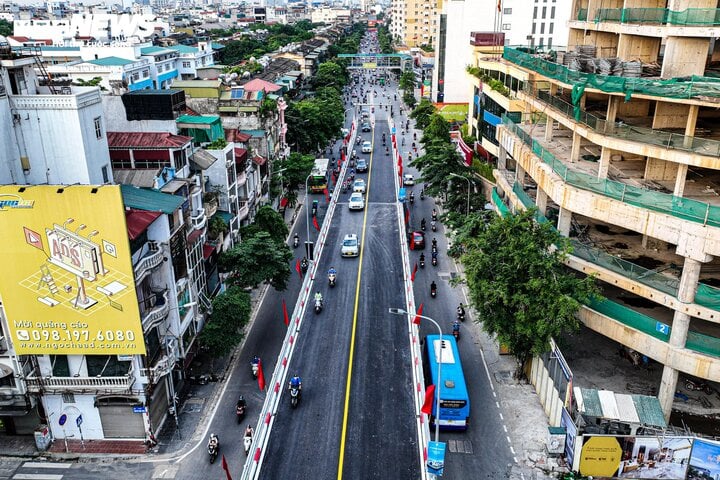
With the influx of capital from overseas Vietnamese, the real estate market will show more positive signs.
Assessing the demand for housing in Vietnam from overseas Vietnamese, Mr. Vo Huynh Tuan Kiet, Business Director of CBRE Vietnam, said that the demand for housing from remittances is very high. In the past nearly 10 years, with almost 5,000 transactions completed by CBRE, up to 45% belonged to foreign customers and overseas Vietnamese.
“ In recent times, the supply of high-end housing has accounted for a large proportion. Relaxing the conditions to allow foreigners to own property would strongly stimulate demand in this segment. Not to mention, this is also a solution to attract skilled labor and talent. When talented people come to Vietnam to work and stay long-term, they will certainly have a need for housing, thereby stimulating real estate investment ,” Mr. Kiet commented.
Economist Dr. Dinh The Hien also assessed that previously, Vietnamese people living abroad without Vietnamese citizenship did not have the same rights as those with Vietnamese citizenship. However, the new regulations in the amended Land Law have created favorable conditions for overseas Vietnamese to invest in and purchase housing.
According to Mr. Hien, current law allows overseas Vietnamese to buy houses in Vietnam. However, the difficulty lies in the complicated procedures and paperwork required to prove Vietnamese origin, which has discouraged overseas Vietnamese.
Furthermore, although regulations allow overseas Vietnamese to purchase real estate in Vietnam, many have to authorize relatives to act as property owners. Therefore, Mr. Hien commented that the amendments to the Land Law and, before that, the Real Estate Business Law and the Housing Law (amended) have created equality between domestic individuals and overseas Vietnamese in real estate investment and business.
According to Mr. Nguyen Anh Que, Chairman of the Board of Directors of G6 Group, expanding the regulations will create equality between domestic citizens and overseas Vietnamese in land ownership. When they are allowed to buy houses, have the right to own housing and the right to use land like domestic citizens, they will transfer money back to invest and buy houses in Vietnam.
Thus, the real estate market will see increased demand from overseas Vietnamese, providing an outlet for the oversupply of high-end housing. These individuals will invest in the construction of houses and buildings for sale, rent, or lease-purchase; and in the construction of technical infrastructure within real estate projects for resale or lease.
Chau Anh
Source
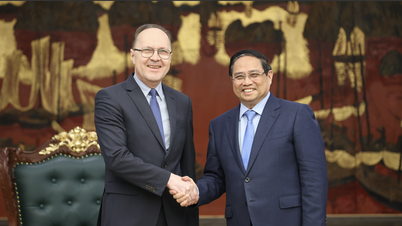
![[Photo] Prime Minister Pham Minh Chinh receives the Director of RMIT University Melbourne (Australia)](https://vphoto.vietnam.vn/thumb/1200x675/vietnam/resource/IMAGE/2026/04/02/1775142120087_thiet-ke-chua-co-ten-2026-04-02t214220784-png.webp)



















































Comment (0)