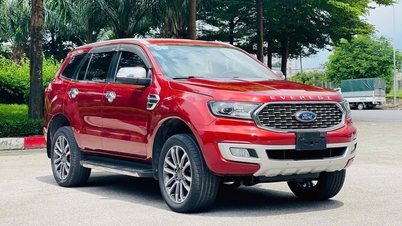
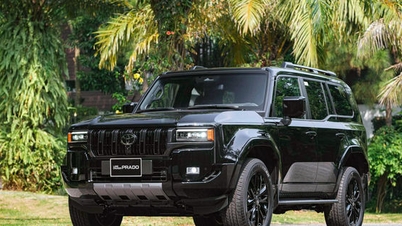
The rapid development of technology makes many older car models seem outdated, especially as buyers increasingly prioritize safety, performance, and convenience. However, an older car doesn't necessarily mean it's obsolete if it's still useful, easy to use, and maintainable.
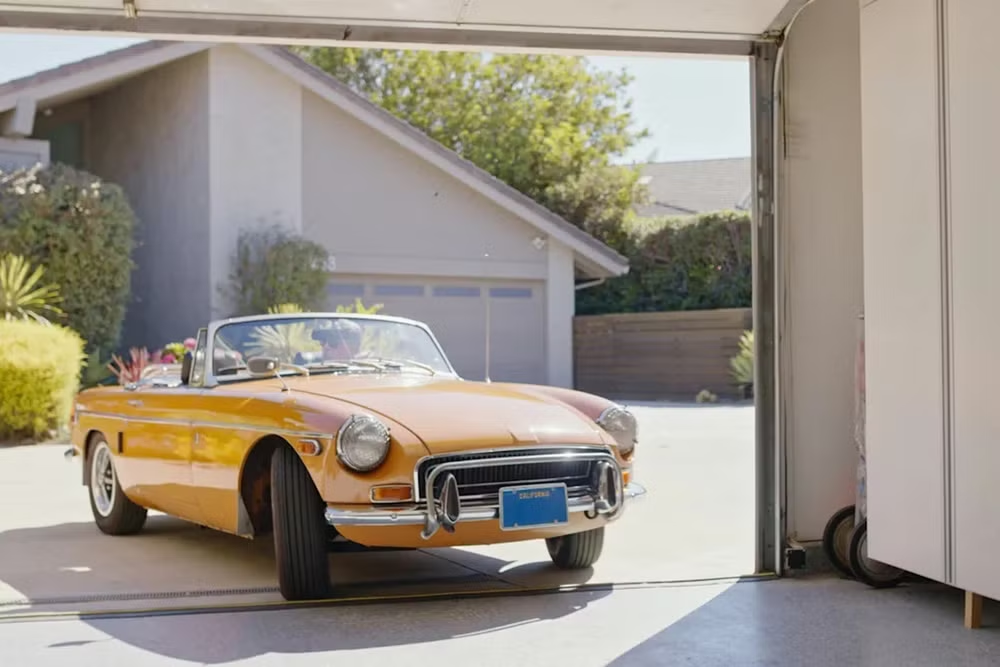
In the automotive industry, numerous innovations have completely changed operating standards, from the widespread use of disc brakes to Volvo's three-point seatbelts. As new technologies constantly emerge, older models are often perceived as less attractive due to a lack of features, slower performance, or lower safety standards compared to modern vehicles.
However, it's important to distinguish between the concepts of "old" and "obsolete." An old item can still function properly, just like a decades-old mechanical watch can still tell time and be repaired. Conversely, floppy disks are almost no longer accepted by modern computers, and have therefore lost their usefulness in everyday life.
This perspective also applies to cars. A car model only truly becomes obsolete when its use or maintenance becomes too inconvenient for the majority of users, outside of the group of enthusiasts willing to accept its limitations. This doesn't depend entirely on the year of manufacture, but rather on how practical the car remains.



Some early electric vehicles are approaching this point. The Peugeot iOn, Citroen C Zero, and Mitsubishi i MiEV, small electric vehicles launched in the early 2010s, were among the first mainstream electric vehicles. These cars used 16 kWh batteries with a claimed range of 93 miles, but in real-world mixed driving conditions, many owners only achieved around 45 to 80 miles.
As batteries degrade over time or in harsh weather conditions, driving range can be further reduced. Combined with early-generation charging technology, these electric vehicles are easily considered unsuitable for current transportation needs, even though they are relatively new compared to many older gasoline-powered cars.
Conversely, the Ford Model T demonstrates that even a very old car can retain a certain level of usability. Over 15 million Model Ts were produced between 1908 and 1927. While not suitable for daily commuting due to its top speed of around 40 miles per hour and lack of modern safety features, it was still capable of handling challenging terrain.
In 1911, the son of a Ford dealer once took a Model T up Ben Nevis, the highest mountain in the United Kingdom. To this day, some car enthusiasts still use the Model T on off-road routes, demonstrating that technological limitations do not necessarily mean the car has completely lost its practical value.
Many other older car models have also avoided obsolescence thanks to their durability and maintainability. The first-generation Mercedes W123 or Lexus LS400 may be less powerful, more fuel-inefficient, and lack modern entertainment systems compared to newer models, but they are renowned for their reliability. For some users, the pure mechanical feel and the ability to self-repair are also values that many complex modern cars no longer easily offer.



Therefore, age is only part of the story. A car can be old but still usable if it remains reliable, practical, and suitable for specific needs. Conversely, a relatively new model can become outdated if its underlying technology no longer meets current operating standards.
Source: https://congluan.vn/khac-biet-giua-xe-cu-va-xe-loi-thoi-post351736.html





![[Photo] Strengthening character and expertise: Intense training for artillery soldiers.](https://vphoto.vietnam.vn/thumb/1200x675/vietnam/resource/IMAGE/2026/06/30/1782815602541_lu-368-1875-4571-jpg.webp)