

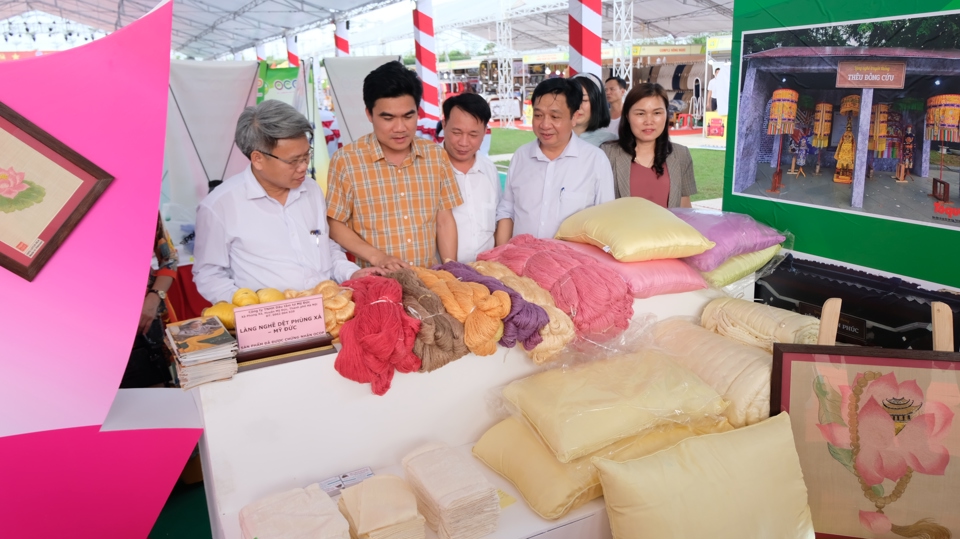
The essence of the lotus flower
According to statistics from the Hanoi Department of Agriculture and Rural Development, the city currently has over 600 hectares of lotus cultivation, mainly concentrated in the districts of My Duc, Ba Vi, Me Linh, Phuc Tho, Ung Hoa, Bac Tu Liem, and Tay Ho…
In particular, the hundred-petaled lotus of West Lake (Tay Ho District), with its large flowers of about 100 petals and distinctive fragrance unlike other lotus species, is classified as a rare and valuable genetic resource that needs to be preserved and developed nationwide.
According to Nguyen Van Chi, Deputy Head of the Standing Office of the Hanoi New Rural Development Coordination Office, in recent years, many exquisite specialties made from lotus have brought both economic value and unique cultural features to the people of Hanoi. Among these, 18 products from the lotus plant have been evaluated and classified in the One Commune One Product (OCOP) program.
In addition, there are OCOP products made from lotus that are bringing high economic value, such as: Hien Xiem lotus tea and Quang An lotus tea in Tay Ho district; Dam Long lotus seeds in Ba Vi district; lotus leaf tea in Soc Son district; lotus heart tea in Thanh Tri district; Ngo Thuc lotus seed sticky rice in Nam Tu Liem district...
The cultivation of lotus plants brings significant revenue to localities, while also increasing income and improving the lives of the people. However, the exploitation of the economic value of lotus is considered to be not commensurate with its potential and advantages, especially in the tourism aspect.
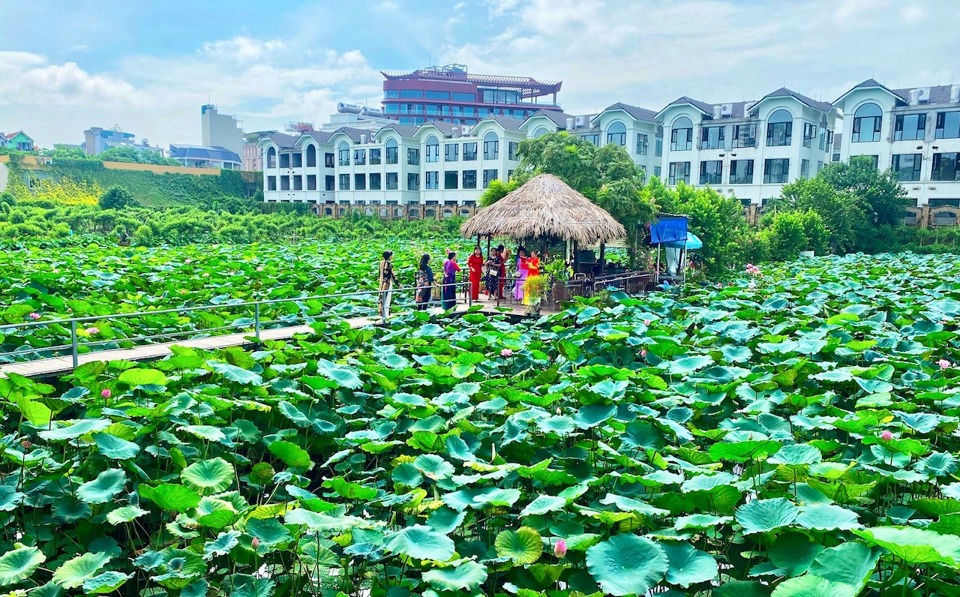
Great potential for tourism development.
According to the Director of the Hanoi Department of Tourism, Dang Huong Giang, many provinces and cities across the country are currently developing tourism products based on flowers very effectively. For example, Hai Phong City has the Red Flamboyant Flower Festival; Ha Giang province has the Buckwheat Flower Festival; Gia Lai province has the Wild Sunflower Festival…
“Hanoi has a large area for lotus cultivation and many OCOP products derived from lotus plants, so it is entirely possible to develop effective lotus-related tourism products. In particular, some localities could become distinctive tourist destinations of Hanoi, such as Tay Ho district…” - Ms. Dang Huong Giang commented.
On July 13th, the Hanoi Department of Tourism conducted a survey of several tourist destinations in Tay Ho district, including the Dong Co Temple historical site (Buoi ward), Kim Lien Pagoda (Quang An ward), Nhat Tan communal house, and the Nhat Tan tourist area. The activity involved many travel agencies, contributing to strengthening destination linkages and creating attractive tours and experiences for tourists visiting Hanoi.
Sharing the same view on the advantages of Tay Ho district, Chairman of the Hanoi Tourism Association Le Thanh Thao suggested that Tay Ho could develop tours and routes associated with the Hanoi Lotus Festival to create a unique branded product for itself as well as for the tourism brand of the capital city.
However, to develop tourism products that truly reflect the essence of Hanoi's lotus culture, Tay Ho district needs to focus on developing more cultural and culinary activities and products related to lotus. For example, introducing the finest lotus-infused tea; encouraging food establishments and restaurants to create more lotus-based dishes…
According to Nguyen Dinh Hoa, Deputy Director of the Hanoi Department of Agriculture and Rural Development, in order to preserve and promote the value of the lotus plant, the Department has collaborated with the Institute of Vegetable and Fruit Research to conduct trial plantings of more than 30 new lotus varieties. As a result, nearly 20 lotus varieties have been selected that adapt well to Hanoi's soil conditions.
"Thanks to the application of science and technology, Hanoi now has many new lotus varieties, helping the lotus season in Hanoi last from April to November every year, contributing to enhancing the experience and attracting more tourists to Hanoi to admire the lotus..." - Mr. Nguyen Dinh Hoa added.
In the coming time, Hanoi will continue to develop unique products to attract tourists to visit and experience lotus, contributing to the socio-economic development of the capital city and preserving the traditional culture in Vietnamese lotus products in general and Hanoi lotus in particular.
“Over the years, due to urbanization, the area for lotus cultivation in the district has shrunk. To preserve and develop this precious lotus variety, the district is implementing a project to restore the cultivation of the hundred-petaled lotus in 18 lakes in the district. Along with that, the district continues to promote information and communication to help people understand the potential, advantages, and role of lotus cultivation. This will contribute to promoting economic development, tourism, and traditional craft village culture in the district…” - Secretary of the Tay Ho District Party Committee , Le Thi Thu Hang .
Source: https://kinhtedothi.vn/ha-noi-khai-thac-chuoi-gia-tri-tu-cay-hoa-sen.html
![[Image] National Assembly discusses the implementation of the socio-economic development plan.](https://vphoto.vietnam.vn/thumb/1200x675/vietnam/resource/IMAGE/2026/04/20/1776696707422_ndo_br_img-20260420-185419-jpg.webp)

![[Photo] General Secretary and President To Lam meets with National Assembly delegates from ethnic minorities.](https://vphoto.vietnam.vn/thumb/1200x675/vietnam/resource/IMAGE/2026/04/20/1776696701056_a1-bnd-8331-3342-jpg.webp)





































































Comment (0)