

With its solid foundations and appropriate development strategy, Vietnam continues to affirm its position as one of the outstanding bright spots in Southeast Asia and the world .
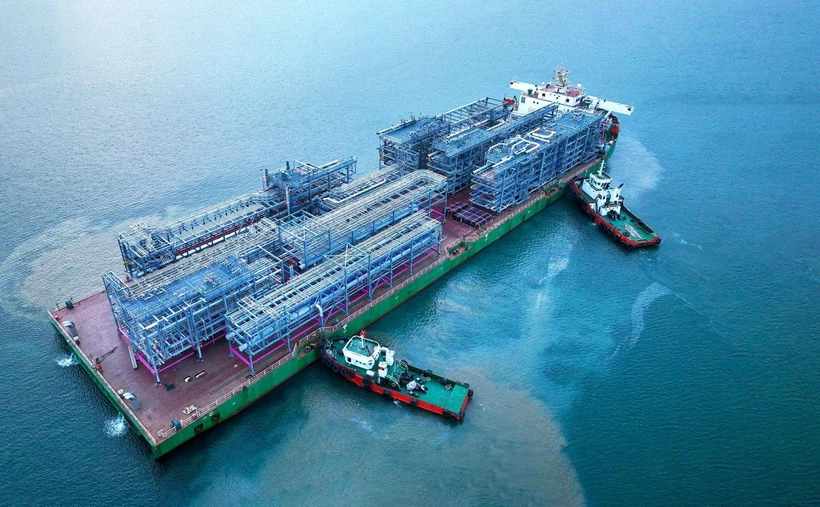
2024 is not only a story of Vietnam's economic recovery and growth, but also a testament to the adaptability and innovation of a nation rising strongly in the global economic landscape.
With its solid foundations and appropriate development strategy, Vietnam continues to affirm its position as one of the outstanding bright spots in Southeast Asia and the world.
Positive growth outlook
Leading international financial institutions, such as the World Bank (WB) and the Asian Development Bank (ADB), have consistently raised their economic growth forecasts for Vietnam in 2024 and 2025.
According to the ADB, Vietnam's Gross Domestic Product (GDP) growth is projected to reach 6.4% in 2024 and 6.6% in 2025, driven by a strong recovery in manufacturing and trade, along with supportive fiscal measures.
Similarly, the World Bank also raised its forecast for Vietnam's economic growth to 6.1% in 2024 and 6.5% in 2025.
Andrea Coppola, Chief Economist and Program Manager for Equitable Growth, Finance and Institutions at the World Bank in Vietnam, Laos, and Cambodia, emphasized that amidst global economic challenges such as inflation, geopolitical instability, and natural disasters, Vietnam's economy in 2024 continues to affirm its position as one of the fastest-growing economies in the East Asia-Pacific region.
Mr. Coppola argued that the stability of the business environment and ongoing reforms are key factors driving Vietnam's economic growth and attracting foreign investment. First, the fact that Vietnam's business environment provides stability for investors is particularly important.
Secondly, the international community highly appreciates the Vietnamese government's ongoing efforts to improve the business environment. This is also very important.
Third, Vietnam has effectively leveraged its strategic position as a "bridge" between the two superpowers, China and the United States. Thanks to all of these factors, Vietnam has been able to attract a large amount of foreign investment.
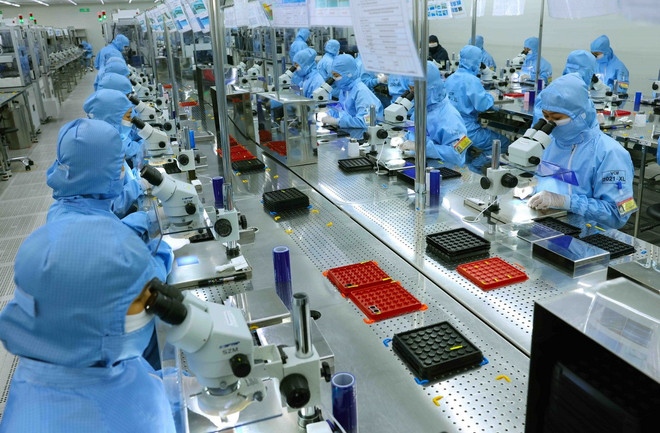
A bright spot in attracting investment and technology.
In 2024, Vietnam continued to be an attractive destination for international investors.
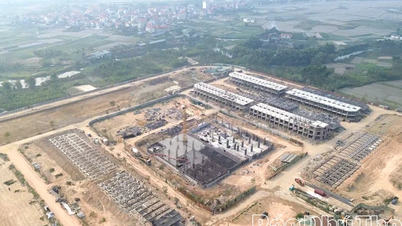
According to the General Statistics Office, foreign direct investment (FDI) in Vietnam during the first 11 months of 2024 reached US$21.68 billion, a 7.1% increase compared to the same period last year, marking the third consecutive year that this capital flow has exceeded US$20 billion. Sectors such as renewable energy, real estate, and high technology are preferred destinations for investors.
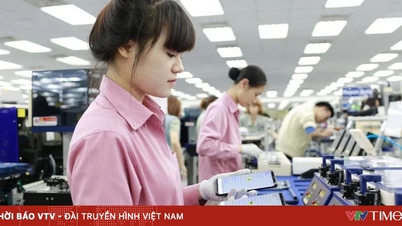
In December, Vietnam-briefing.com, an investment website of Dezan Shira & Associates, published an article stating that, in the technology sector, the strategic agreement with NVIDIA to develop artificial intelligence (AI) has affirmed Vietnam's position in the global supply chain.
According to the German market research firm Statista, the AI market in Vietnam is expected to reach US$753.4 million in 2024, with a compound annual growth rate of 28.36% during the 2024-2030 period. Vietnam's growth rate is comparable to the region's 28.53%. This demonstrates Vietnam's ability to catch up with the global technological transformation, driven by foreign investment.
Factors contributing to Vietnam's technological growth include a young, dynamic workforce and competitive costs. Vietnam ranks third in Southeast Asia in terms of investment deals and total startup capital. In recent years, many domestic tech unicorns and startups have achieved success in the AI sector.
An article on Vietnam-briefing.com emphasizes that NVIDIA's strategic investment in Vietnam marks a significant transformation in Vietnam's journey to becoming the future AI innovation hub of Southeast Asia.
NVIDIA's establishment of two AI centers in Vietnam and its partnerships with local companies such as VinBrain and FPT Group demonstrate Vietnam's increasingly prominent position in the global AI ecosystem.
Long-term vision
In November 2024, the World Bank published the report "Vietnam 2045: Enhancing Trade Position in a Changing World - A Path to a High-Income Future," which proposes a roadmap to help Vietnam improve its position in the global value chain, aiming to become a high-income country by 2045.
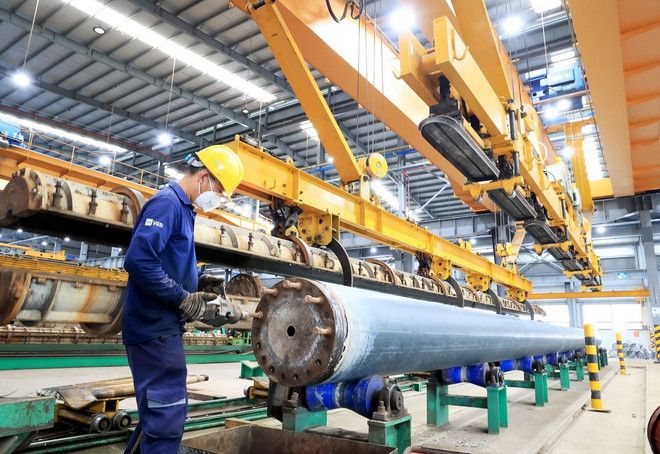
According to the World Bank, over the past 40 years, global integration has been the main driving force behind Vietnam's successful development, creating one of the longest and fastest periods of economic growth in modern history.
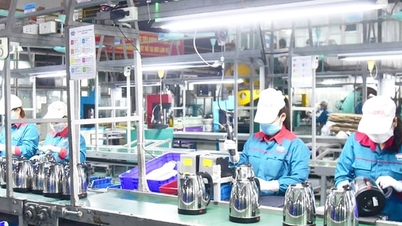
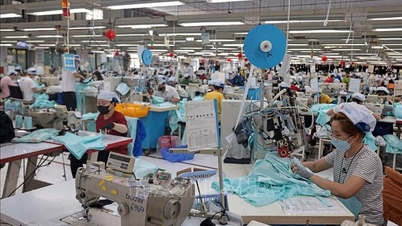
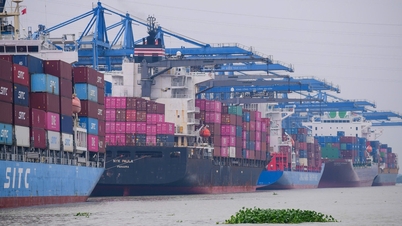
Currently, Vietnam is one of the most open economies, with approximately 50% of its GDP and employment depending directly or indirectly on exports.
Building on its existing successes, Vietnam has set an ambitious goal of becoming a modern, high-income economy by 2045. This requires maintaining an annual GDP per capita growth rate of around 6% over the next two decades.
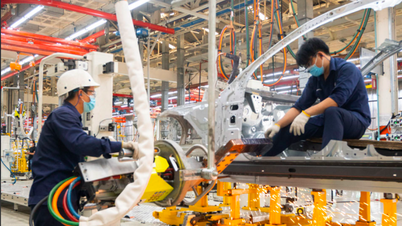
Manuela V. Ferro, Vice President of the World Bank for East Asia and the Pacific, stated: “To sustain rapid growth, Vietnam needs to shift from participating in labor-intensive, low-value-added final assembly to developing higher-value-added manufacturing and services.”
She added that, in the context of changing global trade and increasing uncertainty, diversifying trade and investment partnerships is essential to building resilience and ensuring long-term success.
The World Bank report proposes a comprehensive strategy to boost productivity growth, attract private sector investment, and enhance its position in the global value chain.
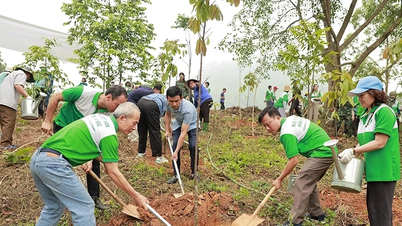
Key policy solutions include: promoting deeper trade integration; strengthening connections between domestic businesses and global value chains; promoting high-tech activities with specialized skills and fostering the high value-added service sector; and transitioning to a low-carbon production model that adapts to climate change.
Despite the positive outlook, Vietnam still faces a number of challenges, including risks from climate change, natural disasters, and slowing growth in its major trading partners.
The World Bank recommends that Vietnam invest heavily in human resources, infrastructure, and structural reforms, while fully utilizing free trade agreements to expand markets and reduce trade barriers.
Similarly, ADB Country Director for Vietnam, Shantanu Chakraborty, also affirmed that public investment will be the "key" to boosting economic growth.
According to him, public investment not only helps boost demand and employment, but also positively impacts other dependent sectors such as construction, logistics, and transportation. This will be a tool to help Vietnam escape its excessive dependence on monetary policy.
The second driving force is reforms aimed at enhancing business convenience and ensuring that Vietnam continues to maintain its competitive advantages as many other countries in the region invest in building world-class infrastructure.
ADB Country Director Shantanu Chakraborty assessed these as the two main drivers for Vietnam to maintain sustainable development momentum towards achieving the growth targets set by the government in the future.
Source: VNA
Source: https://baophutho.vn/kinh-te-viet-nam-qua-goc-nhin-quoc-te-khang-dinh-vi-the-toan-cau-225656.htm


![[Photo] Prime Minister Pham Minh Chinh receives the Chinese Ambassador to Vietnam](https://vphoto.vietnam.vn/thumb/1200x675/vietnam/resource/IMAGE/2026/04/05/1775397481797_ndo_br_dsc-5512-jpg.webp)












































































Comment (0)