

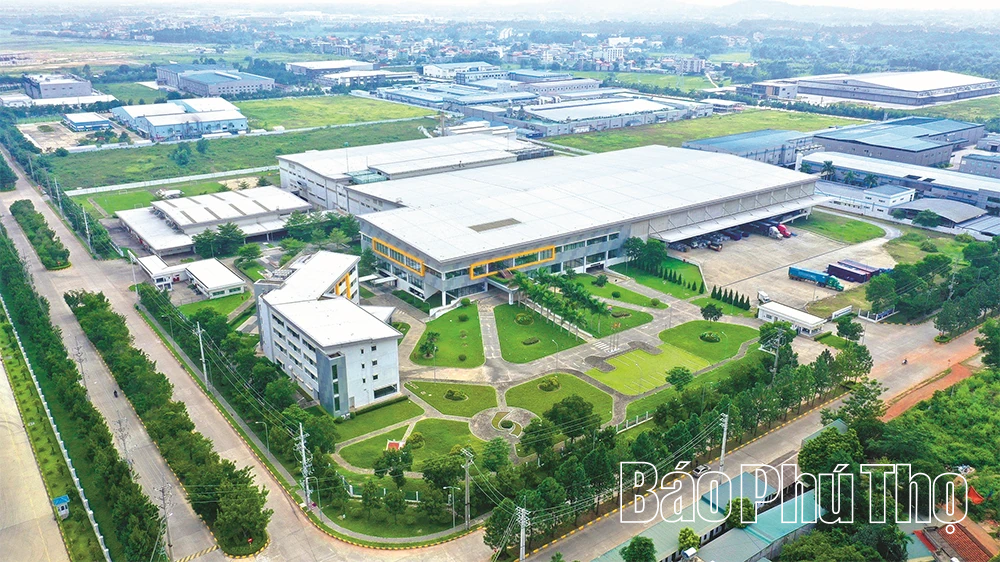
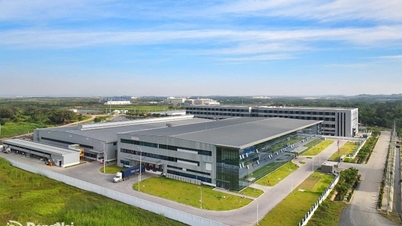
A panoramic view of Ba Thien II Industrial Park - where synchronized infrastructure, green corridors, and water features were planned from the outset, creating a foundation to attract high-tech, low-emission projects in the province's industrial development zone.
Opening up new avenues for development.
Viewed from above, the Viet Tri - Tam Nong - Phu Ninh axis emerges with bright new industrial areas, gradually covering a land once familiar with rice and corn. After the merger, Phu Tho has become one of the localities with the largest network of industrial parks in the Capital region: 28 industrial parks have been established, 17 are operating, and 5 are under construction. Mr. Hoang Long Bien - Director of the Provincial Industrial Parks Management Board, called this an "unprecedented opening in development space." But he emphasized one principle: "Phu Tho will not pursue industry at all costs. The province sets environmental standards as a prerequisite, not an additional condition."
That mindset is evident right from the planning stage. In 2025, a series of 1/2000 scale zoning plans for industrial parks such as Thanh Ba, Yen Lac, Dong Soc, and Lien Hoa - Lien Son will be completed, marking a shift to a new generation of green industrial parks according to new standards: green corridors and water bodies; transportation networks separating residential areas; a closed-loop wastewater collection and treatment system; and 24/7 automated environmental monitoring. What was once a "high standard" has now become a "condition for participation".
Mr. Bien analyzed: "Planning must be green, and Phu Tho has chosen the most difficult approach: tightening standards first, and monitoring first, so that businesses can enter a transparent and sustainable environment."
This mindset led to decisive actions, most notably the relocation of 11 factories from the "inner city" of Viet Tri. These production facilities were forced to move to industrial parks that are completing their infrastructure according to new environmental standards, such as Trung Ha II. Clean space is returned to the city; while the new industrial parks become "destinations" for low-emission, high-tech industries.
As green industrial parks take shape in the province's new development space, it's clear that difficult choices are gradually creating a solid foundation for the future.
In 2025, Phu Tho province aims to attract high-quality FDI, notably from Jahwa (US$100 million), Allied Circuit Meiko (US$77 million), and JH Vina increasing its capital by US$150 million, creating a low-emission electronic component production chain. These projects not only bring economic value but also shape the "green DNA" for the province's next-generation industrial space. |
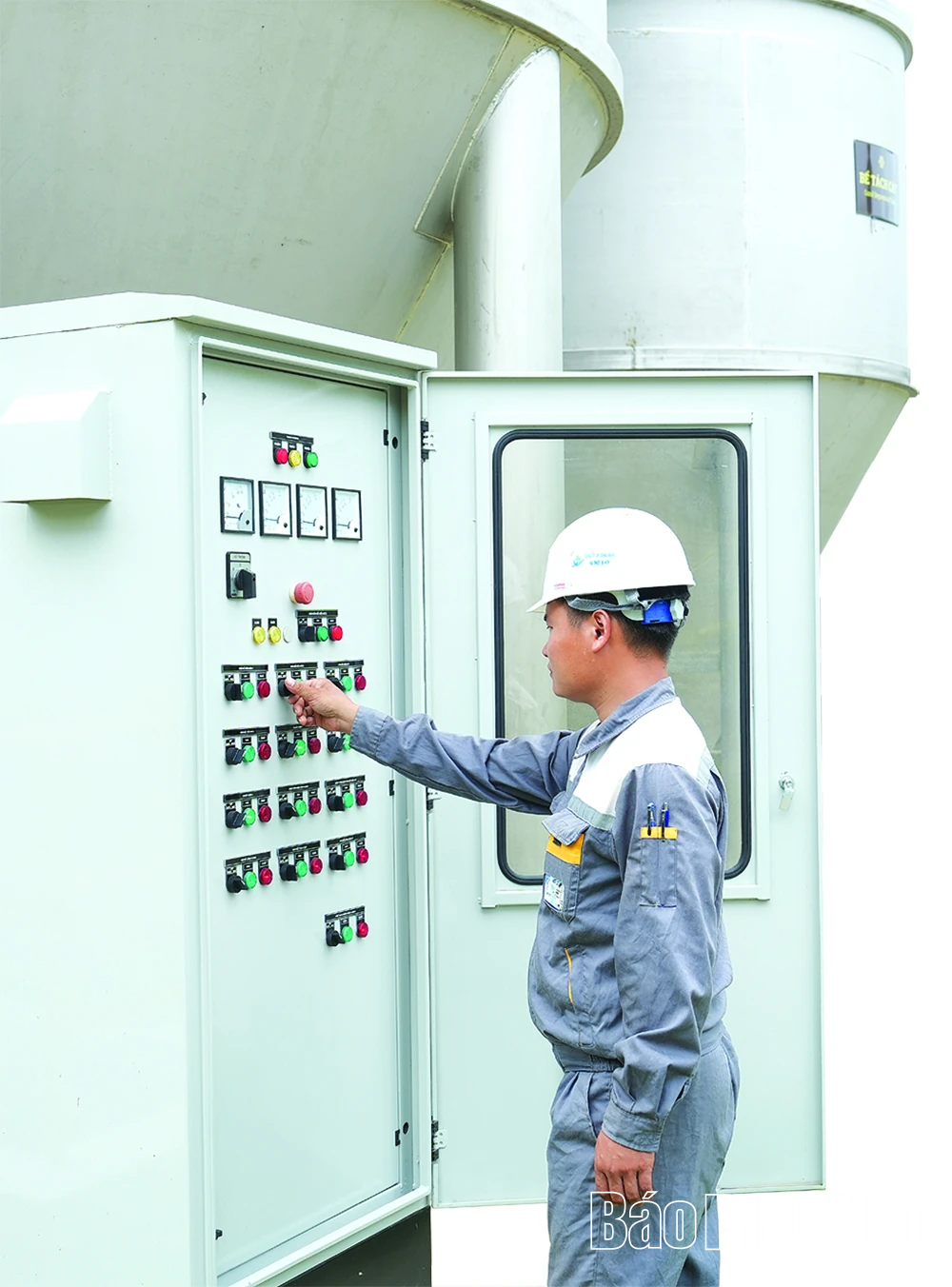
Engineers operate the centralized wastewater monitoring and treatment system at Tien Tien Industrial Park.
"Green vitality" begins
Just before the industrial parks transitioned to a new generation, the Chairman of the Provincial People's Committee, Tran Duy Dong, clearly defined a guiding principle: Vietnam's commitment at COP26 to net-zero emissions by 2050 is not only a national goal but also the responsibility of each locality. Therefore, Phu Tho must choose a path of sustainable development – where the economy, society, and environment are kept in balance.
This mindset forms the foundation for the industrial park system to strongly shift towards a green, ecological, and high-tech model. If planning and infrastructure are the "backbone" of green industry, then businesses are the "heartbeat" that sustains this model. In just 11 months of 2025, the province had 68 projects come into operation, of which 48 FDI projects belonged to the electronics and components group. The shift in capital flow shows a clear trend: Businesses need a clean environment to increase competitiveness; the province needs clean technology for long-term development. Both sides meet at the same standard - the green standard.
Mr. Luu Quoc Khanh, Deputy General Director of Hoa Phu Co., Ltd. - the investor of Phu Son Industrial Park, analyzed: "Industrial economics is only sustainable when it doesn't take more than it creates. Investing in green infrastructure is not an additional expense, but a core part of competitiveness. An industrial park that wants to go the distance must prove that it is clean enough and transparent enough for high-tech projects to entrust their future to it."
Environmental monitoring has also shifted to a completely new model. All industrial parks operate centralized wastewater treatment systems, with monitoring data sent to management agencies in real time. The province not only checks documents but also delves into the production lines and discharge points, requiring businesses to disclose environmental information more transparently. "We are building a monitoring mechanism for the 2026 period, which will increase the rate of businesses reporting automatically and increase on-site inspections," Mr. Bien said.
Green businesses cannot thrive if procedures and institutions remain slow. Therefore, administrative reform is considered the "third pillar" in the green industrial ecosystem. By 2025, the Industrial Park Management Board aims to process 100% of applications correctly and ahead of schedule, reducing processing time by 30% in accordance with Resolution 66/NQ-CP; simultaneously, it will fully digitize information on industrial parks in the area, creating a "digital industrial map" so that investors know the exact land availability, infrastructure, and environment of each park. This not only facilitates businesses but also allows the government to control project quality from the outset – selecting the right projects, screening them effectively, and avoiding projects that consume excessive resources or generate large emissions.
The orientation is concretized in the Resolution of the Provincial Party Congress: By 2030, Phu Tho must become a green, sustainable, and high-tech industrial center of the Capital Region. Environmental indicators are also raised accordingly: 100% of industrial parks meet environmental standards; 100% of hazardous waste is treated; new projects are required to apply modern, low-emission technologies.
Phu Tho's industrial development is shifting direction: from quantitative expansion to qualitative development, from rapid growth to green growth – where each project is selected not only for its capital but also for the future it will bring.
Today's green industrial parks are not only bright spots on the economic map, but also a commitment from the province to a civilized growth path that respects the environment and aims for a sustainable future.
Nguyen Yen
Source: https://baophutho.vn/khat-vong-cong-nghiep-xanh-244986.htm
![[Photo] Prime Minister Pham Minh Chinh receives the Chinese Ambassador to Vietnam](https://vphoto.vietnam.vn/thumb/1200x675/vietnam/resource/IMAGE/2026/04/05/1775397481797_ndo_br_dsc-5512-jpg.webp)





















































Comment (0)