

The First Congress of the Ho Chi Minh City Party Committee, for the 2025-2030 term, taking place from today (October 13th) to October 15th, is a historic political event for Ho Chi Minh City after its merger, setting the direction for comprehensive development in culture, socio-economics, planning, infrastructure, and many other important issues for the new development phase.
In the draft Political Report for the Congress of Ho Chi Minh City, the locality has set ambitious and challenging goals, but ones commensurate with its position as the leading urban center of the country.
With a vision extending beyond a single term, the country's largest metropolis aims to become a civilized, modern city, a dynamic and integrated center of innovation, leading the country's industrialization and modernization, holding a prominent position in Southeast Asia, ranking among the top 100 global cities, being livable and possessing a leading innovation ecosystem, and belonging to the high-income group by 2030.
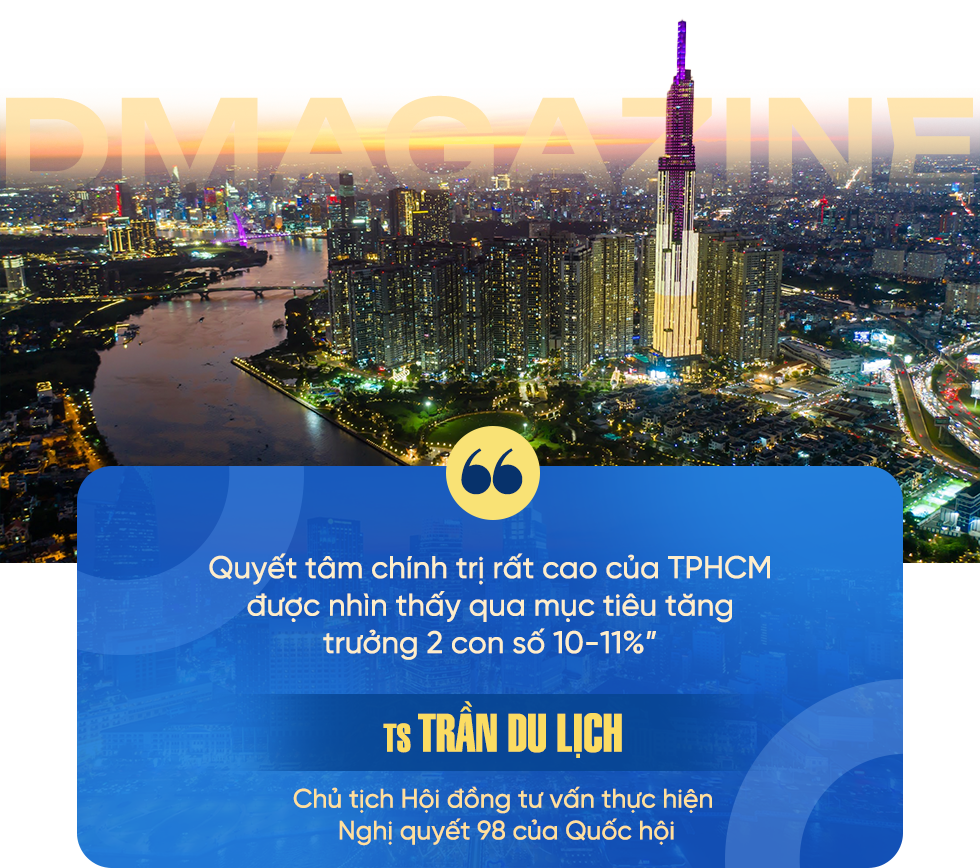
By 2045, the new Ho Chi Minh City will be among the top 100 best cities in the world, befitting its status as an international megacity of Southeast Asia, a center of economy , finance, tourism, services, education, and healthcare in Asia; a globally attractive destination; with distinctive, sustainable economic, cultural, and social development, a high quality of life, and deep international integration.
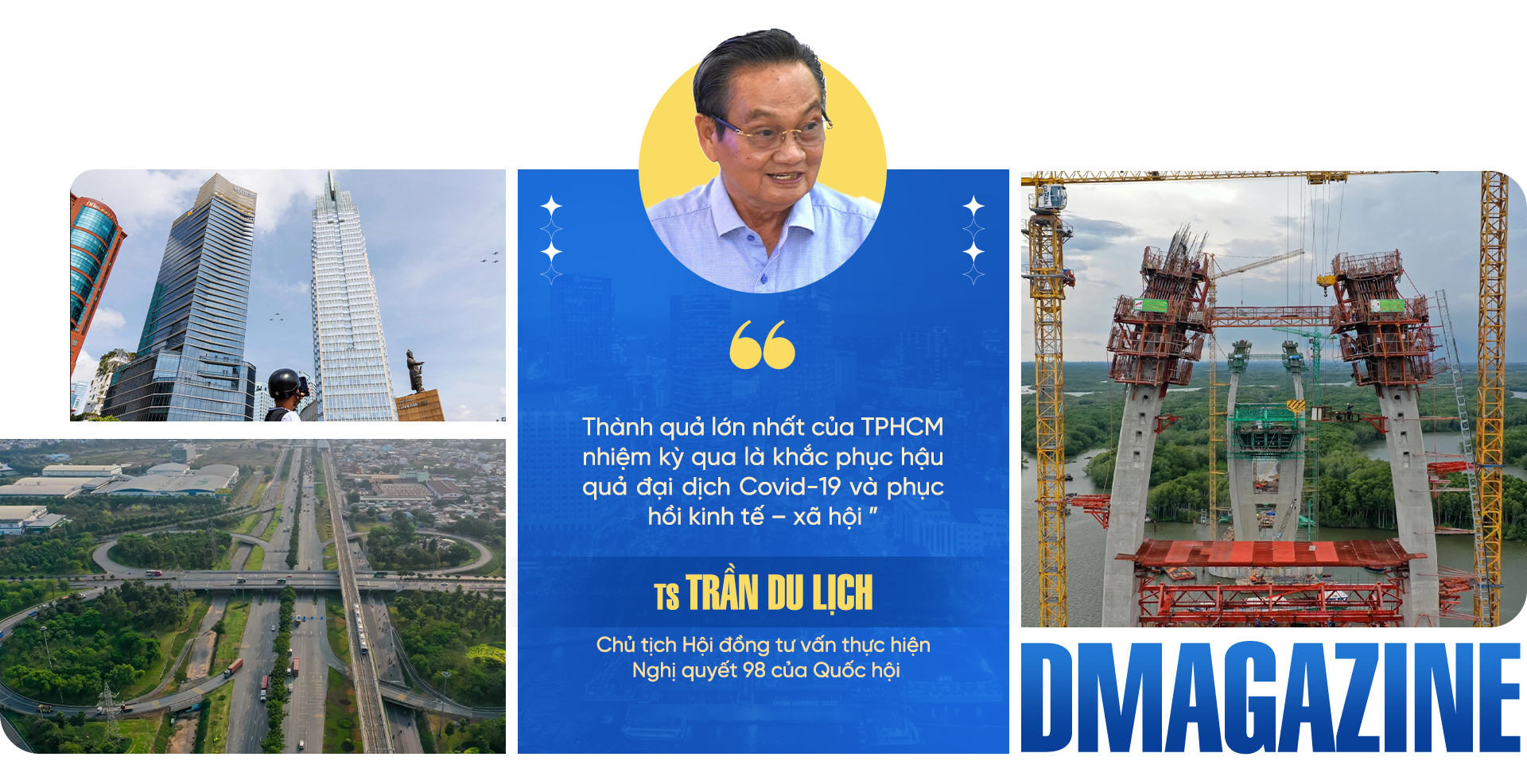
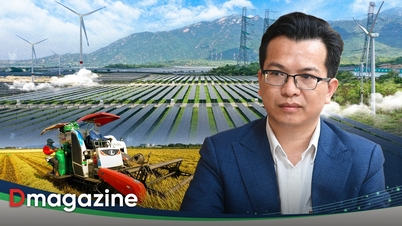
Speaking to Dan Tri newspaper , Dr. Tran Du Lich, Chairman of the Advisory Council for the implementation of Resolution 98 of the National Assembly, assessed that the major goals of Ho Chi Minh City in the new term demonstrate a very high level of political determination. This is especially true in the context of the complex and unpredictable developments in the world and the region, and the country still facing many difficulties and challenges.
“Ho Chi Minh City’s strong political determination is evident in its target of double-digit growth of 10-11%. This goal contributes not only to the development of Ho Chi Minh City but also to the entire country. As the leading city, Ho Chi Minh City needs to seize this opportunity so that by 2045, Vietnam can become a developed country. If we fail to achieve such a growth target, Vietnam may miss the opportunity when it enters a period of an aging population,” Dr. Tran Du Lich observed.

After merging with Binh Duong and Ba Ria - Vung Tau, the new Ho Chi Minh City has a total area of over 6,700 km2 (accounting for more than 2% of the country's total area) and a population of nearly 14 million people (accounting for 13.4% of the country's population). Of this, the employed workforce is approximately 7.3 million people, equivalent to 14% of the total national workforce. This is a large-scale human resource that contributes to promoting the development of industry and services in the Southern key economic region.
Dr. Tran Du Lich believes that Ho Chi Minh City has a superior advantage in terms of scale, resources, and position within the Southern key economic region. On a national level, the expert argues that no other locality possesses the same advantages for breakthroughs in this new phase as Ho Chi Minh City. Therefore, the city must be a pioneer, leading the way in promoting growth and contributing to the country's overall goals.
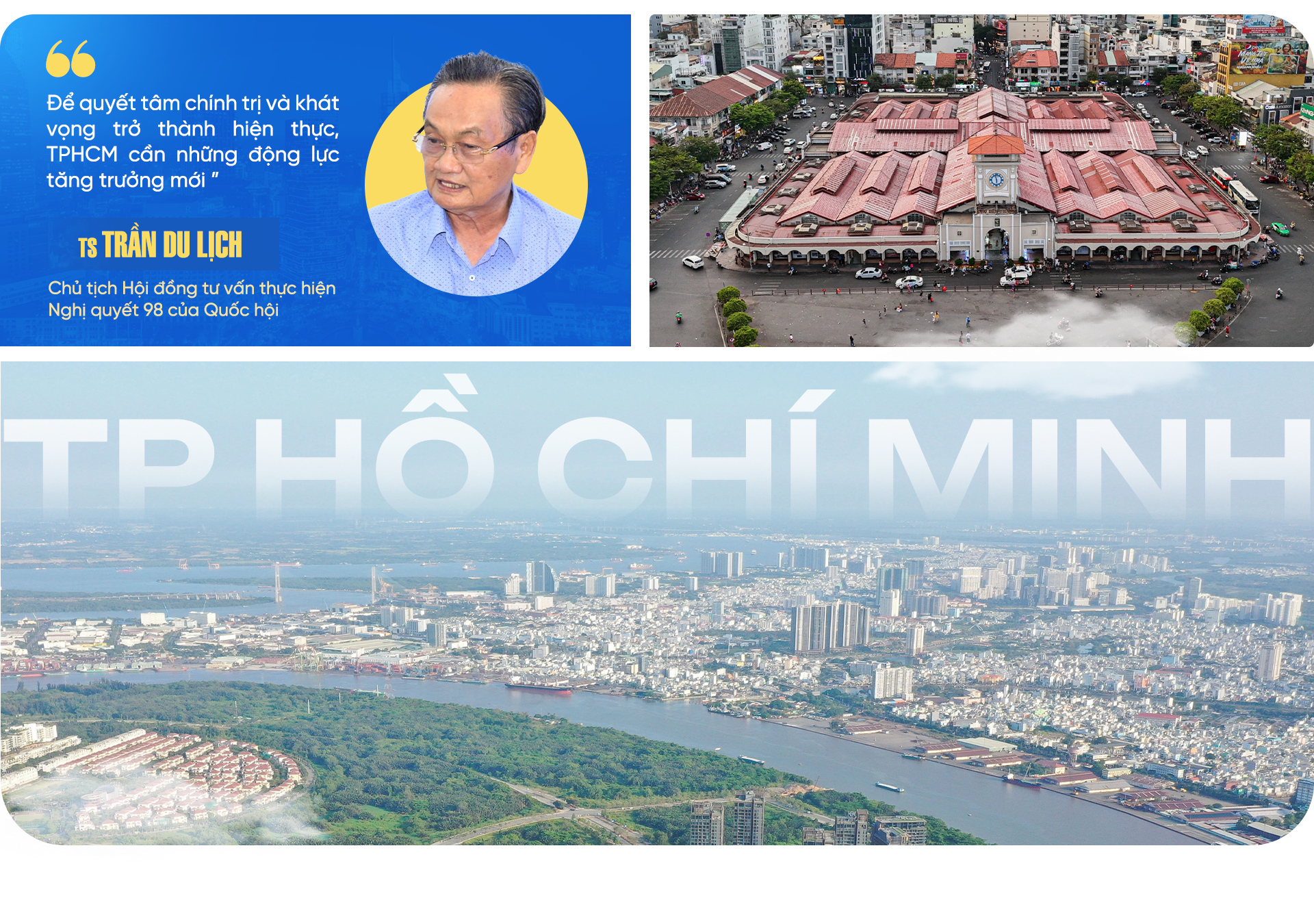
“However, for political determination and aspirations to become a reality, Ho Chi Minh City needs new growth drivers. Especially, breakthrough policy mechanisms. In particular, Ho Chi Minh City needs to continue proposing to the National Assembly to upgrade Resolution 98 on piloting some specific mechanisms and policies, and focus on implementing resolutions including Resolution 222 on the International Financial Center and Resolution 188 on the development of the urban railway system. Ho Chi Minh City must make the most of what has been given to achieve breakthrough development,” emphasized Dr. Tran Du Lich.
For macro-level policies identified as institutional pillars in the new era, Ho Chi Minh City needs to elevate itself to become the most favorable location for implementing Resolution 68 on the development of the private economy and Resolution 198 of the National Assembly on some special mechanisms and policies for the development of the private economy. Through this, Ho Chi Minh City's inherent strengths in the private economy will be further enhanced, making the city the most dynamic hub for startups and entrepreneurship in the country in the near future.
“Ho Chi Minh City also needs to become the place with the best conditions to implement Resolution 57 on breakthroughs in science and technology development, innovation, and national digital transformation. These are new institutional drivers; if Ho Chi Minh City can take advantage of them, it will create a dramatic increase in productivity, quality, and especially high added value in the value chain of goods and products,” said Dr. Tran Du Lich.
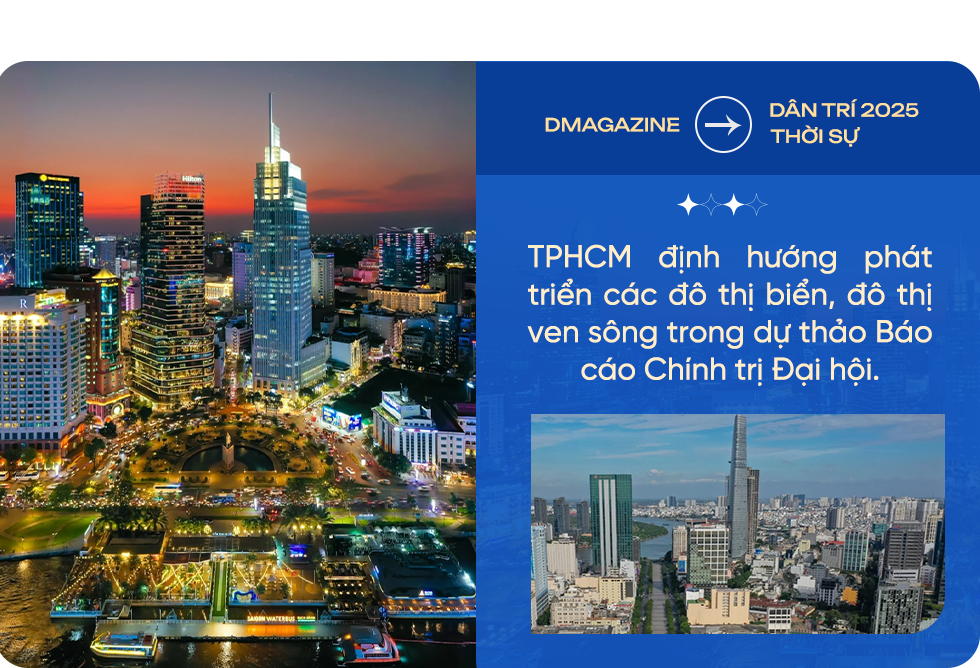
Regarding urban spatial development, he stated that the ideas of coastal and riverside cities in the draft Political Report of the Congress had already been considered by Ho Chi Minh City previously. According to the planning before the merger of provinces and cities, Ho Chi Minh City aimed to form a multi-centered space, and currently, it aims for a multi-city model and a chain of smart cities.
To realize this vision, the city is replanning its entire urban system, integrating it with public transportation, especially urban rail. This is a concrete step in implementing the spirit of Resolution 24 of the Politburo on the development of the Southeast region.
Dr. Tran Du Lich also believes that in the next term, the TOD (Transit-Oriented Development) model will completely transform the urban development landscape of Ho Chi Minh City. A transportation system integrated with residential areas will improve planning efficiency and create modern residential clusters around metro stations and public transport hubs. These are also major directions for the city to gradually complete its post-merger planning, while simultaneously leveraging the specific mechanisms and policies outlined in National Assembly Resolution 188 on the development of the urban railway system.

One of the key issues that Dr. Tran Du Lich is particularly concerned about is the new Ho Chi Minh City government's goal of relocating 20,000 houses located on and along canals and waterways. According to the expert, this is not an easy task, but Ho Chi Minh City must accomplish it by all means to improve the environment, renovate the urban landscape, and address housing needs.
“If this goal is achieved, Ho Chi Minh City will change significantly. Previously, we saw images of dilapidated, unsanitary shacks along canals and waterways in the Nhieu Loc - Thi Nghe area, but now the appearance is completely different. More than 20 years ago, many people raised concerns about the difficulties and the impact on many households, but with political determination to provide better housing for the people and create better living and working conditions, it has been achieved,” Dr. Tran Du Lich stated.

Prior to the Covid-19 pandemic, Ho Chi Minh City achieved a GRDP growth rate of 8.3% in 2019, placing it among the provinces and cities with the highest growth rates nationwide. The impact of the pandemic slowed down the growth momentum that Ho Chi Minh City had built up over many years, with a growth rate of only 1.4% in 2020.
The consequences of the Covid-19 pandemic on the country's economic and social powerhouse were most evident in 2020 when, for the first time since the Doi Moi (Renovation) period, Ho Chi Minh City experienced negative growth of over 6.7%.
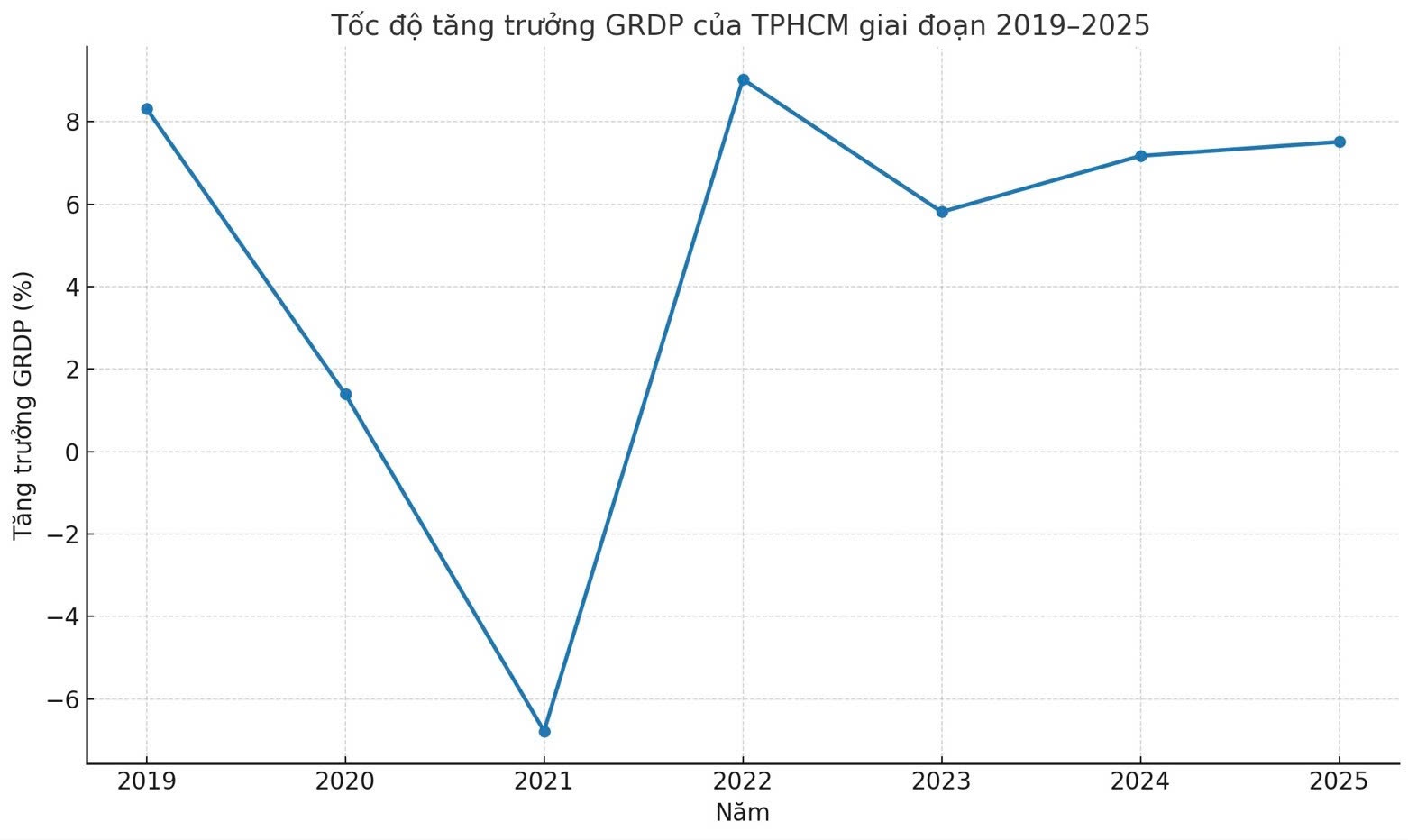
Chart showing the GRDP growth rate of Ho Chi Minh City for the period 2019-2025.
Looking back at the past term, Dr. Tran Du Lich believes that Ho Chi Minh City's greatest achievement was overcoming the consequences of the Covid-19 pandemic and restoring socio-economic activities. All three former localities, including Ho Chi Minh City, Binh Duong, and Ba Ria - Vung Tau, suffered heavy losses due to the pandemic, but quickly stabilized the situation and restored production and livelihoods.
Immediately after implementing numerous strong measures and mobilizing all material and spiritual resources to combat the Covid-19 pandemic, localities focused on restoring production. The economy, which had suffered a severe decline, quickly recovered, regained its growth momentum, and gradually developed stably based on innovation in growth models, structural transformation, application of science and technology, and innovation.
Furthermore, regional linkages and transportation infrastructure connections have undergone significant changes. The three localities, formerly and now as a unified entity, have gradually erased administrative boundaries in their development thinking, working together towards the goal of forming a unified economic space – an international megacity in the Southeast region.
"Previously, the three localities had never coordinated as closely as they do now in implementing ring roads, expressways, and even seaport and logistics systems, which has helped increase the efficiency of goods circulation and attract investment, resolving inherent bottlenecks in regional transportation," commented Dr. Tran Du Lich.
Another significant breakthrough for Ho Chi Minh City in the past term was its institutional reform. The promulgation and implementation of Resolution 98 on special mechanisms for Ho Chi Minh City, along with Resolution 222 on the International Financial Center and Resolution 188 on urban railways, created a favorable legal framework for the city to play its leading role. This was a very successful effort, demonstrating strong support from the central government for Ho Chi Minh City, based on what the city has already achieved and is continuing to achieve.
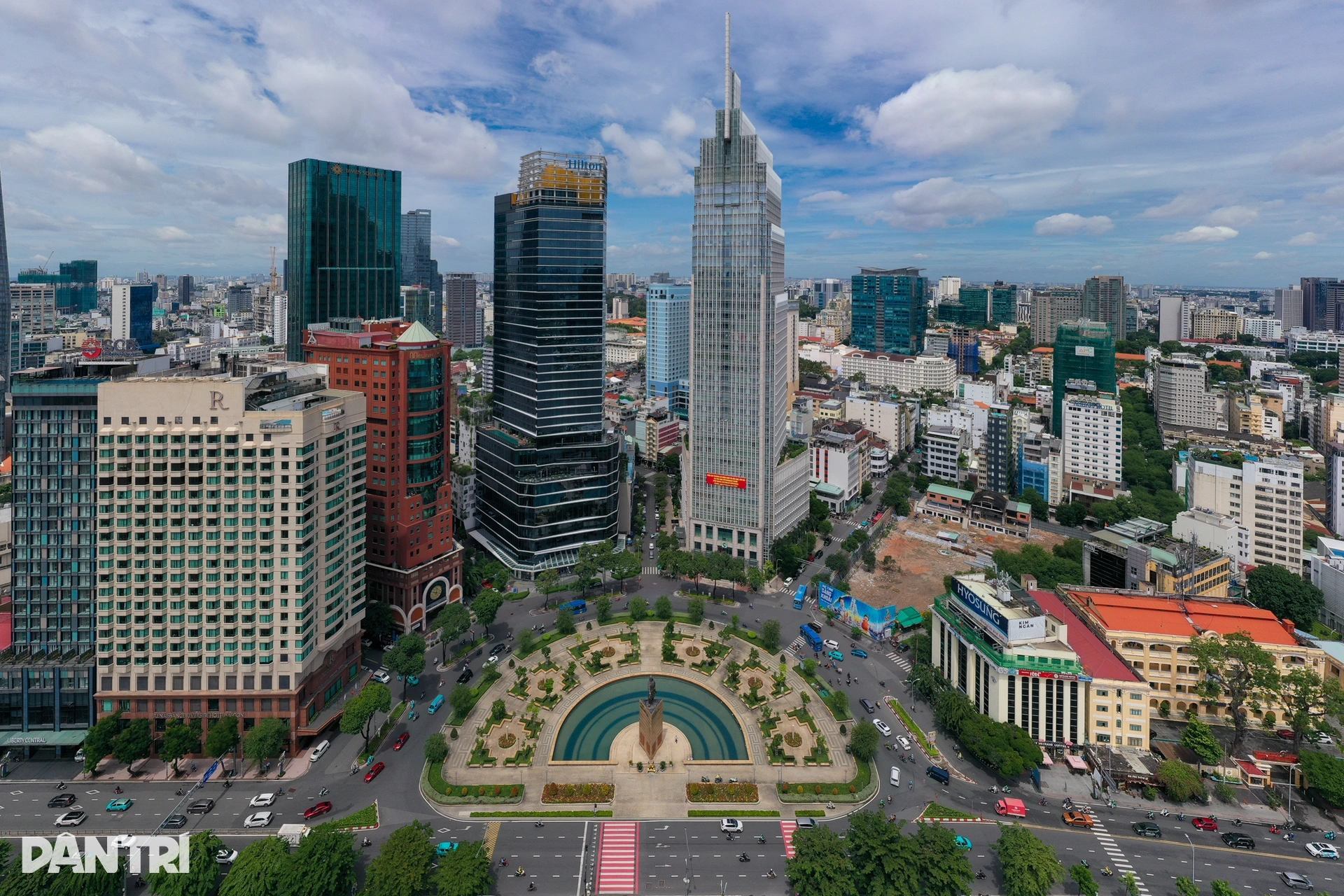
He also pointed out that the biggest challenge facing Ho Chi Minh City in urban development is the ineffective exploitation of underground space. This is an issue the city has been addressing for decades, but has yet to yield tangible results.
“For many years, we have been discussing the construction of underground parking lots, but it has yet to be implemented. Ho Chi Minh City needs to prioritize the development of public spaces, cultural spaces, and the exploitation of underground, elevated, and digital spaces. These will be the pillars of a smart, modern city in the future,” said Dr. Tran Du Lich.
Regarding digital transformation, he stated that Ho Chi Minh City is on the right track across all three pillars: digital government, digital society, and digital economy. The two levels of government are strongly implementing digitalization to improve governance efficiency. Meanwhile, payment activities, trade, services, and social life have rapidly shifted to the digital environment.
"The most noticeable difference compared to the beginning of the term is that now, people in Ho Chi Minh City are familiar with cashless payments and QR code scanning everywhere, from supermarkets to restaurants," Dr. Tran Du Lich cited as an example.

For businesses, digital transformation has become a matter of survival. However, the biggest challenge currently facing Ho Chi Minh City is investing in digital infrastructure and data centers (Big Data). This requires a close connection with investment in clean energy and sustainable digital infrastructure. Ho Chi Minh City is calling for large-scale investment projects in this field, aiming for a "digital transformation - green transformation" model.
"The goal of the digital economy accounting for 30-40% of GRDP is not just an aspiration, but is based on a realistic foundation, on the work being done by businesses, the government, and society," he stated.
According to the Chairman of the Advisory Council for the Implementation of Resolution 98 of the National Assembly, with the objectives outlined in the draft Political Report at the Congress, along with the system of policies and action programs for each task, from 2026 onwards, Ho Chi Minh City will become a major construction site, laying the foundation for new development in infrastructure, transportation, and urban areas. However, the clear outline of a modern Ho Chi Minh City with relatively complete infrastructure, including an urban railway network, international transshipment port, international financial center, and a chain of smart cities, will require at least 10 years to gradually be completed.
“Developing the metro system, free trade zones, and international financial centers are all just in the initial stages. Shaping the entire urban space of the new Ho Chi Minh City will require a long time. I expect to see Ho Chi Minh City grow at least in double digits in the next 10 years. This is also essential if Ho Chi Minh City wants to maintain its leading role and contribute to making Vietnam a developed country by 2045,” shared Dr. Tran Du Lich.
Source: https://dantri.com.vn/thoi-su/khat-vong-cua-tphcm-giai-doan-moi-20251011135704438.htm



![[Image] National Assembly discusses the implementation of the socio-economic development plan.](https://vphoto.vietnam.vn/thumb/1200x675/vietnam/resource/IMAGE/2026/04/20/1776696707422_ndo_br_img-20260420-185419-jpg.webp)
![[Photo] General Secretary and President To Lam meets with National Assembly delegates from ethnic minorities.](https://vphoto.vietnam.vn/thumb/1200x675/vietnam/resource/IMAGE/2026/04/20/1776696701056_a1-bnd-8331-3342-jpg.webp)










![[Infographics] Information on the 34 Chairpersons of Provincial and City People's Councils for the 2026-2031 term](https://vphoto.vietnam.vn/thumb/402x226/vietnam/resource/IMAGE/2026/04/21/1776727949303_package-media-53613504261372558961610-84744387961269657917369.png)
































































Comment (0)