Not only does the performance faithfully recreate the spirit of the original work, but it also bears a strong imprint of Vietnamese art, marking a new step forward for the country's classical arts.
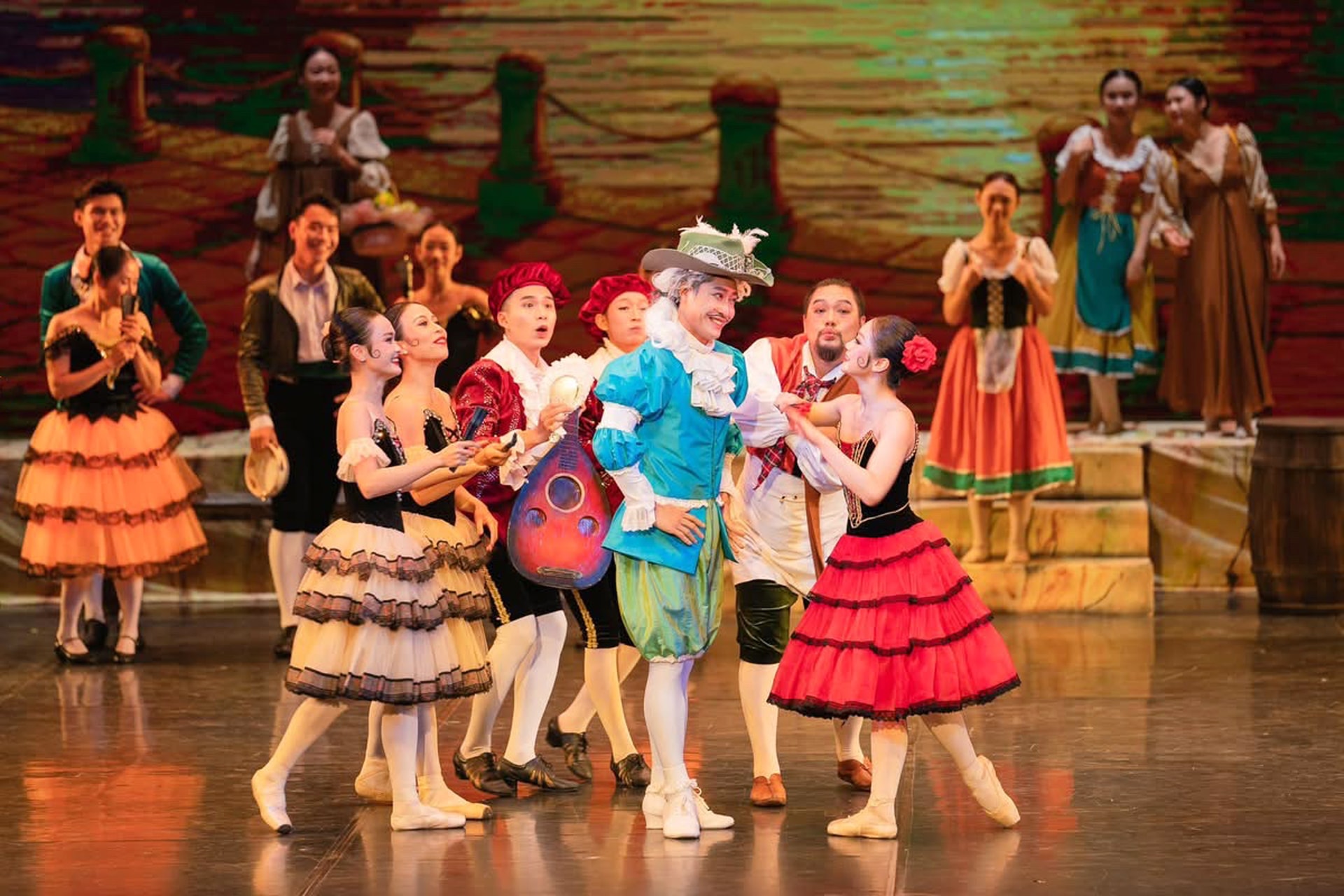
Dreams follow the rhythmic swaying and spinning movements.
First performed in Russia in 1869, the three-act ballet "Don Quixote," based on the immortal novel by writer and playwright Miguel de Cervantes, has become an icon of European classical dance, consistently ranking among the top 10 greatest ballets of all time. With its masterful technique, vibrant Spanish rhythm, and optimistic, poetic spirit, the work is a powerful celebration of love, ideals, and the desire to live life to the fullest.
In Vietnam, although a few excerpts have been presented, a complete, original version has never been performed. Therefore, the successful staging by the Vietnam National Opera and bringing the play to the Ho Guom Theatre ( Hanoi ) at the end of June was considered a bold move.
Meritorious Artist Phan Manh Duc, Director of the Vietnam National Opera and Ballet Theatre, shared that despite overcoming many challenges, especially in terms of human resources, the theatre is determined to bring "Don Quixote" to the Vietnamese stage with the desire to realize the dream of allowing domestic audiences to enjoy world- class artistic works.


The performance, directed by Meritorious Artist Luu Thu Lan and artist Pham Minh - currently the Director of the La Salle Dance School (France) - brings together 150 people, including nearly 60 ballet dancers - the largest number ever for a ballet performance at the theater. Notably, the performance features generations of Vietnamese ballet artists such as Meritorious Artist Cao Chi Thanh, Meritorious Artist Phan Luong, Meritorious Artist Pham Thu Hang, Vu Vu Anh, Bui Tuan Anh, Phung Quang Minh, and Gen Z dancers such as Nguyen Duc Hieu, Vu Khanh Bang, Tran Bao Ngoc...
On the magnificent stage of the Ho Guom Theatre, the familiar Don Quixote of La Mancha, a knight living in a dream world, always fighting for love and ideals, appeared before the audience in a vivid and captivating way through the language of ballet. He himself was the bridge between the two worlds of "reality" and "dream," leading the audience into the passionate and intense love story of Kitri and Basilio throughout the performance. Each skillful fouetté, each powerful grand jeté, and each graceful, sublime sway of the dancers left the audience breathless, their hearts racing, before erupting in applause. It seemed as if the audience was not just watching a ballet performance, but living in a magical classical painting, where light, stage, symphonic music , and the movements of the dancers blended together.
A crystallization of classic techniques and the Vietnamese spirit.
Staging a masterpiece of such scale, cultural depth, and academic technical skill as "Don Quixote" is a challenge for any artistic group. The Vietnam National Opera and Ballet Theatre spent over a year preparing, and the artists poured their sweat and tears into rehearsals for nearly four months.
Meritorious Artist Luu Thu Lan shared, “Don Quixote is a performance with a clear storyline and characters with distinctive personalities. This not only requires dancers with excellent ballet technique but also the ability to act and recreate the dramatic story coherently and emotionally. How to express the vibrant Spanish spirit, the folk humor, and the classical beauty of academic ballet technique while still bringing a familiar Vietnamese touch has always been a concern for the choreographers. While remaining faithful to the original spirit and structure, the choreography team also made subtle adjustments to suit the physical condition, performance psychology, and cultural reception of the Vietnamese audience.”
Returning to the ballet stage as Don Quixote, a character who is both dreamy, daring, and full of experience, Meritorious Artist Cao Chi Thanh expressed that this is a character he has been fascinated with and loved since the novel. The role helps him see the aspirations of youth and a beautiful ideal of life.



Young actress Vu Khanh Bang (playing Kitri) shared: “Kitri is not only charming and mischievous but also has inner depth. I wanted to portray a character full of emotion, with a personal touch, so that the audience would not only see her physical beauty but also feel the spirit of Spain and the vitality of youth.”
The success of the performance also bears the mark of conductor Dong Quang Vinh and the symphony orchestra playing live on stage. “Ballet is the biggest challenge for a conductor. Throughout the performance, the conductor both leads the orchestra and ‘listens with their eyes’ to catch every sway, turn, and breath of the dancers, supporting them in fully expressing their emotions,” conductor Dong Quang Vinh shared.
Following "Swan Lake" and "Giselle," another classic world ballet – "Don Quixote" – has been successfully staged in Vietnam, further affirming the talent and potential of the country's artists. The performance is not only a memorable milestone for classical art but also a testament to the spirit and aspiration of Vietnamese theater to reach global standards.
Source: https://hanoimoi.vn/khat-vong-vuon-tam-cua-ballet-viet-708264.html