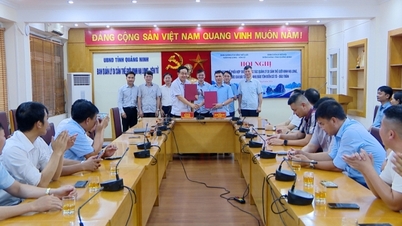
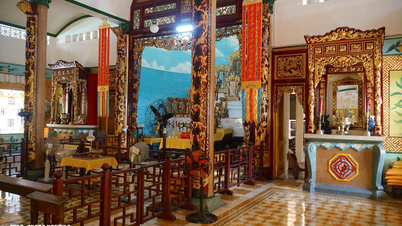
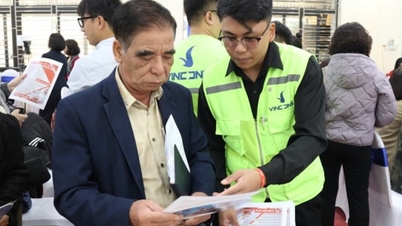
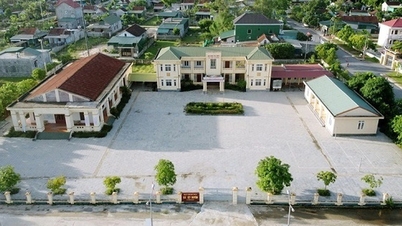
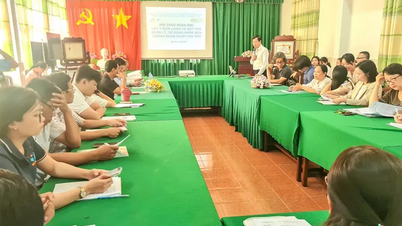
However, the leader also put forward... rather many slogans, requiring officials, civil servants, and employees in the agency to memorize and understand their meaning. Not to mention, slogans related to professional work were even displayed in the communal dining hall and sports field. My friend wondered if that was necessary, since slogans – depending on the message they convey – should be displayed in appropriate spaces. The sports field or the dining hall are places where employees can escape from work, regenerate inspiration and energy after stressful working hours.
In reality, in many localities, agencies, and units, this story is not new – it's even mentioned as a manifestation of formalism and dogmatism. It stems from lengthy slogans, the overuse of verbs and adjectives that are laudatory, or rambling, rambling, and lacking focus, such as "Continue to promote emulation...", "Continuously promote...", "Raise awareness in building..." ... In addition, some agencies and units create too many slogans – or "Slogans" – that even the officials, employees, and workers in the sector can't remember them all...


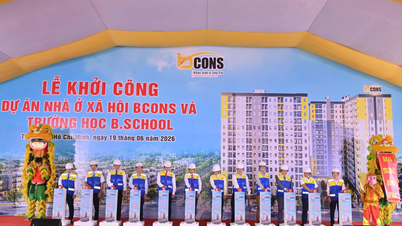
Speaking of this issue, we often encounter banners and slogans that have "completed their mission" after short-term propaganda campaigns during holidays and anniversaries – but some are "forgotten" on streets and walls. This not only detracts from the aesthetics but also limits the effectiveness of communication.
Because propaganda slogans play a crucial role in shaping ideology, boosting morale, and encouraging action, both their content and form must adhere to principles, standards, and practicality.
Nguyen Phong


Source: https://baothanhhoa.vn/khau-hieu-phai-thiet-thuc-291857.htm
![[Photo] Opening Ceremony of the 13th National Congress of the Ho Chi Minh Communist Youth Union](https://vphoto.vietnam.vn/thumb/1200x675/vietnam/resource/IMAGE/2026/06/24/1782286753905_ndo_br_1-8510-jpg.webp)

![[Photo] The 13th National Congress of the Youth Union conducts personnel work.](https://vphoto.vietnam.vn/thumb/1200x675/vietnam/resource/IMAGE/2026/06/24/1782299943080_ndo_br_1-6868-jpg.webp)

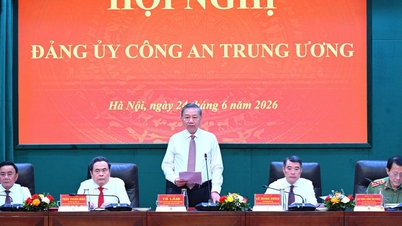
![[Photo] General Secretary and President To Lam attends the Central Public Security Party Committee Conference](https://vphoto.vietnam.vn/thumb/1200x675/vietnam/resource/IMAGE/2026/06/24/1782302063612_a1-bnd-9302-9166-jpg.webp)