

Vietnam's steel production is expected to increase by approximately 10% in 2024 and 8% in 2025 as domestic economic demand for steel recovers.
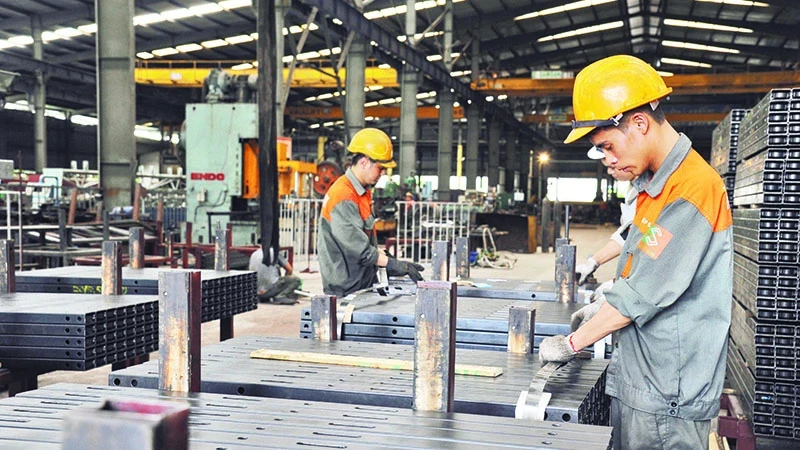
However, the steel industry is unlikely to achieve the high growth rate expected this year due to significant inventory levels and increasing trade protectionism.
Increase pressure
According to the Vietnam Steel Association (VSA), Vietnam currently ranks 12th in the world and first in the ASEAN region in steel production. The VSA forecasts that Vietnam's finished steel production in 2024 could reach 30 million tons, an increase of 7% compared to 2023.
Steel consumption is projected to increase by 6.4% compared to 2023, reaching 21.6 million tons. However, this recovery is uncertain as steel businesses are currently facing difficulties due to the downturn in the real estate market and rising raw material prices. Estimated inventory levels this year are around 8.4 million tons.
Since the first price increase at the beginning of 2024 (an increase of 200-400 thousand VND/ton, reaching 15 million VND/ton) following 21 price reductions in 2023, steel prices have continuously decreased and remained at 13.4-13.6 million VND/ton for CB300 ribbed steel.
This situation is due to a clear downward trend in the global steel market. In addition, domestic steel prices have fallen because steel companies are competing with cheap Chinese steel as China continuously lowers its export prices.
According to the VSA report, in the first seven months of 2024 alone, crude steel production reached over 12.8 million tons, an increase of 21% compared to the same period in 2023; domestic consumption and export of crude steel reached 12.4 million tons, an increase of 17% compared to the same period in 2023; of which exports reached 1.6 million tons, an increase of 45% compared to the same period in 2023.
However, Vietnam also imported approximately 8.2 million tons of finished steel products of all types, worth nearly $6 billion, an increase of 47.88% in volume and 25.15% in value compared to the same period in 2023, mainly imported from China. Currently, China is the world's leading producer and exporter of steel, with about 500 steel mills of various types and a total capacity of about 1.2 billion tons of steel per year.
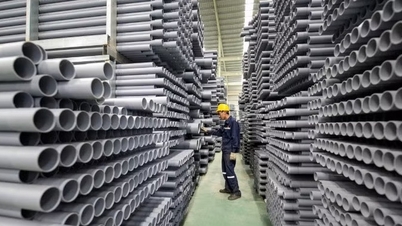
Not only the domestic market, but also Vietnam's steel exports are facing difficulties due to trade defense lawsuits, with technical barriers such as anti-dumping, anti-subsidy, and safeguard measures erected by importing markets. As of the end of May 2024, out of a total of 252 foreign trade defense investigations against Vietnam, approximately 30% involved steel products. The steel products under investigation are quite diverse, including galvanized steel, cold-rolled stainless steel, color-coated steel, steel pipes, steel hangers, steel nails, etc.
Notably, most of these lawsuits occurred in Vietnam's key steel export markets such as the United States, the EU, Australia, and India, with the United States conducting the most investigations against Vietnam. Most recently, India announced it would impose tariffs of 12-30% on certain steel products imported from Vietnam; the EU also initiated an anti-dumping investigation into Vietnamese hot-rolled steel for the period from April 1, 2023 to March 31, 2024,…
Find a solution to resolve the issue.
According to Dr. Nguyen Thi Thu Trang, Director of the WTO and Integration Center (under VCCI), trade defense measures, especially anti-dumping measures, are legitimate tools to protect the legitimate interests of domestic production, directly the steel industry, against unfair competition such as dumping or selling subsidized products from exporting countries to Vietnam.
However, in the long term, the State needs to design a legal framework and organize an enforcement mechanism for trade defense tools in a reasonable, strict, transparent manner, consistent with the World Trade Organization (WTO), so that domestic manufacturing enterprises can use them conveniently and effectively to protect their legitimate rights and interests as prescribed.
According to VSA Chairman Nghiem Xuan Da, the oversupply of many domestic steel products, coupled with the increase in imported steel, is making price competition for domestically produced finished steel products more fierce than ever.
Notably, from January 2026, the European Union (EU) will implement the Carbon Border Adjustment Mechanism (CBAM) to impose carbon taxes on products exported to this market, creating a significant obstacle to the growth of the steel industry.
Therefore, we hope the Government will soon direct relevant agencies to take measures to prevent unfair competition in order to protect the interests of Vietnamese steel businesses in both domestic and international markets. At the same time, we urge the acceleration and synchronization of various channels to stimulate demand for steel products, such as the real estate market, the construction market, the program to build 1 million social housing units, and increased public investment, to help the steel industry recover in the coming period.
Besides current issues, experts also frankly acknowledge that, due to its late entry into the market, Vietnam's steel industry still faces long-term limitations and bottlenecks compared to other countries. These include limited production capacity, high steel imports, and a shortage of high-quality and technical steel products, with crude steel production only meeting basic domestic demand.
Furthermore, outdated technology leads to high fuel consumption and costs, making it difficult for domestic steel products to compete with cheaper imported products. Steel businesses hope that the Government will respond promptly, proactively, and in a way that balances interests to protect the sustainable and healthy development of the steel industry.
Besides government support, domestic steel manufacturers need to quickly improve product quality by optimizing production scale with a closed-loop process, proactively restructuring, and increasing investment in advanced technology to reduce production costs and create the best possible competitiveness against imported steel.
At the same time, it is necessary to proactively secure raw materials, diversify markets and product structures, especially products with good export potential and high profit margins, and quickly transition to green production and consumption in accordance with the Government's commitments at COP26.
Source

![[Photo] Sidewalks in Vung Tau ward are now more spacious.](https://vphoto.vietnam.vn/thumb/1200x675/vietnam/resource/IMAGE/2026/04/06/1775455388046_5-6796-jpg.webp)
![[Photo] Da Nang: A sea of people respectfully paying homage to the Bodhisattva Avalokiteshvara.](https://vphoto.vietnam.vn/thumb/1200x675/vietnam/resource/IMAGE/2026/04/06/1775454198203_ndo_br_lh24-jpg.webp)

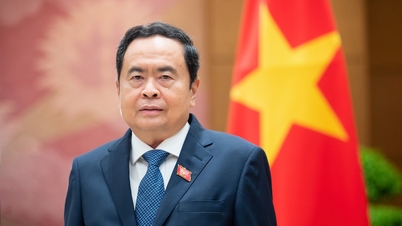
![[Photo] National Assembly Chairman Tran Thanh Man takes the oath of office](https://vphoto.vietnam.vn/thumb/1200x675/vietnam/resource/IMAGE/2026/04/06/1775453300886_ndo_br_1-2229-jpg.webp)
















































































Comment (0)