

Editor's Note: Despite achieving impressive export figures, up to 90% of Vietnam's agricultural products are still exported in raw form, resulting in lower export prices compared to similar products from many other countries.
Eighty percent of exported agricultural products lack established brands, logos, and labels, and have not fully integrated into global value chains. Many products are exported and sold in foreign markets under brands that do not belong to Vietnamese businesses. Therefore, building agricultural brands to boost exports requires a strategic vision and fundamental solutions for the coming period.
Building brands and increasing the value of agricultural products.
The Resolution of the 13th National Congress of the Communist Party of Vietnam and the 10-year Socio-Economic Development Strategy for the period 2021-2030 have emphasized the comprehensive and synchronized improvement of the institutional framework for developing a socialist-oriented market economy, creating a favorable environment for mobilizing, allocating, and effectively utilizing resources, and promoting investment, production, and business. This includes ensuring macroeconomic stability, strongly reforming the growth model, restructuring the economy, and accelerating industrialization and modernization; focusing on infrastructure development and urban development; developing the rural economy in conjunction with building new rural areas; prioritizing resources for infrastructure development in mountainous and ethnic minority areas; promoting national digital transformation and developing the digital economy based on science and technology and innovation; improving productivity, quality, efficiency, and competitiveness of the economy; and harmonizing and effectively integrating domestic and international markets.
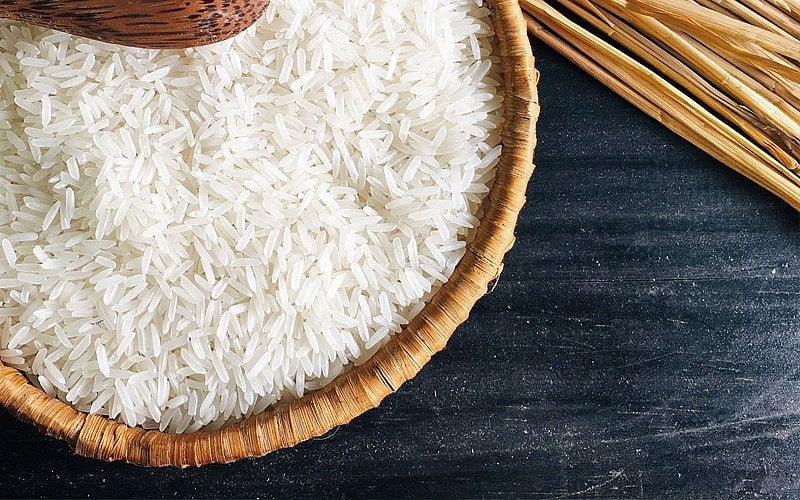 |
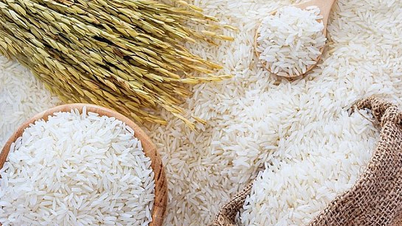
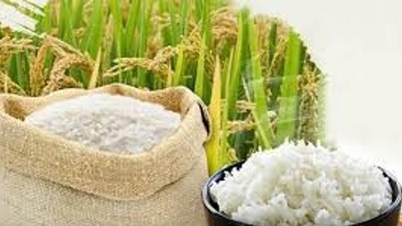
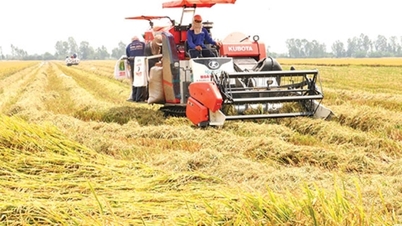
| Rice - one of Vietnam's key agricultural export products. |
Identifying and building brands for agricultural products plays a crucial role in increasing product value and quality, enhancing market competitiveness, preserving and promoting the cultural values of traditional and indigenous products, and contributing to raising the status and value of Vietnamese agricultural products in the global market.
With that policy and orientation, the issue of developing agricultural product brands has also been concretized in a number of government documents such as "focusing on developing industry brands, branded products, and competitiveness to participate in the global value chain" (Resolution No. 40/NQ-CP dated May 10, 2017); "strengthening the building of national brands, export product brands and enterprise brands" (Decision No. 1137/QD-TTg dated August 3, 2017 of the Prime Minister approving the Project to improve the competitiveness of Vietnamese export goods by 2020, with orientation to 2030); “Supporting market access capacity for small businesses, cooperatives and farmers (building geographical indications, establishing planting area codes, packaging facility codes, intellectual property protection, trademark copyright protection, etc.)” (Decision 150/QD-TTg dated January 28, 2022 approving the Strategy for Sustainable Agriculture and Rural Development for the period 2021-2030, with a vision to 2050) and several other major programs.
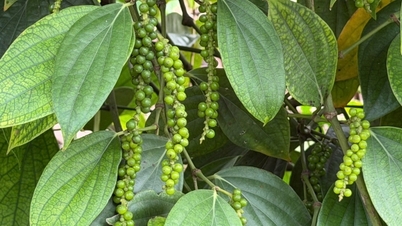
The development of agricultural production and trade has made a positive contribution to the development of Vietnamese agriculture and rural areas in recent years. Accordingly, people's lives have continuously improved, the face of rural areas has constantly transformed, production methods have undergone positive changes, the structure of the agricultural market has been strengthened and is gradually integrating more deeply, and agricultural products have improved in both quantity and quality. Several key agricultural products have affirmed their position and competitiveness in the world market, such as rice, coffee, pepper, and various types of seafood.
A recent report from the Ministry of Agriculture and Rural Development to the National Assembly on the implementation of Resolution No. 44/2017/QH14 of the 14th National Assembly on questioning activities details the story of building brands for Vietnamese agricultural products. Specifically, for rice, the national brand "Vietnam Rice" has been granted a Certificate of Trademark VIETNAM RICE; the national brand logo for "Vietnam Rice" has been announced, and regulations on the use of the national certified trademark "Vietnam Rice" have been issued.
In addition, programs to build brands for high-quality coffee and seafood products (shrimp, catfish) are being implemented vigorously. However, these activities have only been carried out for a few agricultural products and do not yet encompass the strong products of the entire "agriculture" sector. While there is a policy to build brands for key agricultural products, the results have been minimal.
Trademark Where does Vietnamese rice stand on the world map?
Canada is a major importer of rice, serving approximately 7 million people of Asian descent. Vietnam is one of the top 10 rice exporters to Canada, after the United States, Thailand, India, and Pakistan; however, it holds a very small market share (1.6%, before the CPTPP agreement was signed).
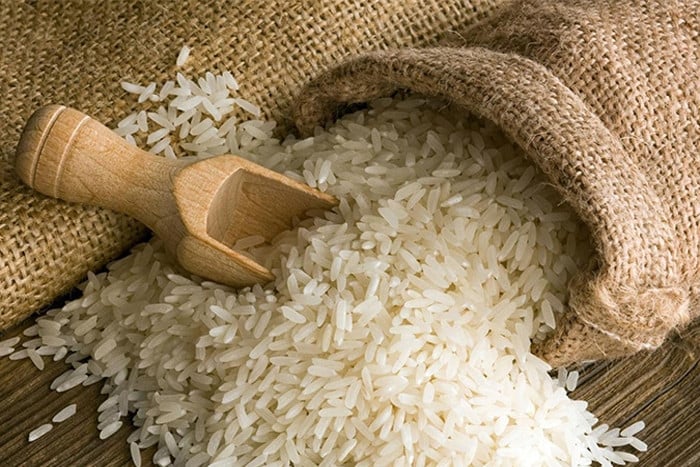 |
| Vietnam's rice market share in Canada increased from 1.6% before the CPTPP agreement was signed to nearly 2.9% in 2023. |
In 2023, Vietnam recorded a growth rate of 56.4% in rice exports to this market, ranking among the top 3 in terms of export value growth, contributing to Vietnam expanding its market share to nearly 2.9%.
Vietnamese rice exported to the Canadian market is mainly milled white rice; the amount of brown rice and broken rice exported is negligible. Recently, Vietnamese rice has been highly appreciated by importers for its quality. Some Canadian import partners are beginning to recognize that the quality of Vietnamese rice is comparable to that of Thai rice. However, some importers are still dissatisfied with the broken rice content (still around 5%), while other countries like Thailand have better milling quality and a broken rice percentage of almost 0%.
Besides long-grain white rice (jasmine), round-grain rice of the Japanese variety grown in Vietnam is currently experiencing a significant increase in imports to Canada, which is one of the reasons driving the growth in rice exports to the market in 2023. However, similar to jasmine white rice, sushi-grade round-grain rice is packaged under the brand names of foreign corporations.
Vietnam's rice export prospects to the market in the coming period remain very positive thanks to its price advantage compared to similar products from competitors. The network of overseas Vietnamese entrepreneurs is actively supporting the increase of Vietnam's rice market share in Canada, especially in introducing high-quality ST25 rice to the market.
However, a significant challenge for Vietnam's rice exports remains the lack of branding, making it difficult for consumers to identify and choose Vietnamese rice. Consumers' purchasing decisions are still primarily based on price rather than brand loyalty.
Not only Canada, but the Philippines is also Vietnam's number one rice import market. Many Vietnamese rice businesses have long-standing business relationships with Philippine rice importers, building trust and credibility in rice exports with their Philippine partners.
Vietnamese rice is of moderate quality, suitable for the tastes and consumption habits of Filipino consumers, meeting the diverse needs of the population, from a large number of middle- and low-income earners to the wealthy, and its affordable price makes it competitive.
Vietnam's rice supply is stable, both in quantity and price, and can meet the Philippines' annual import needs. The geographical distance makes transportation cost-effective and convenient. Vietnam also benefits from the bilateral and multilateral trade agreements that both sides participate in, while non-ASEAN partners like India and Pakistan do not.
The Philippines is Vietnam's largest rice export market. However, a major drawback for Vietnam's rice industry in this market is the lack of Vietnamese rice brands.
According to Mr. Phung Van Thanh, Vietnam's Commercial Counselor in the Philippines, although Vietnam exports a large amount of rice to the Philippines and Filipinos consume a lot of Vietnamese rice, Filipino importers seem to "not trust" it much. Therefore, they never put large labels on Vietnamese rice bags like those of Japan or Thailand.
According to Mr. Phung Van Thanh, previously, Filipino consumers thought of Thai and Japanese rice when they talked about it, and although they consumed Vietnamese rice, they didn't appreciate it highly. This raises the challenge of building a brand so that when Vietnamese rice enters Philippine supermarkets or wholesale and retail rice stores, they can proudly display signs that say "Product of Vietnam" or "Vietnamese Rice." This would be beneficial for Vietnam's rice production and business.
“In 2022, the Vietnam Food Association organized a business delegation to promote trade and conduct surveys at supermarket chains. All Thai and Japanese rice, when packaged, had large, attractive labels like “Thai Rice” and “Japan Rice” on the packaging; however, we couldn't find any indication of Vietnamese origin for Vietnamese rice. After searching extensively, we finally found the words “Product of Vietnam” printed in very small letters at the bottom of the packaging,” Mr. Thanh cited as an example.
Therefore, Mr. Thanh recommended that, in addition to boosting rice production and export value, improving quality, and enhancing the reputation of businesses, businesses and managers should strive to build a brand for Vietnamese rice.
The brand identity of Vietnamese rice in various markets is not yet clearly defined.
The Netherlands serves as a gateway for goods trade into the European market, including rice trade. The Netherlands imports rice from 241 countries and territories worldwide. Rice imports from Vietnam account for 2.6% of the total value of rice imported into this market.
According to the Vietnamese Trade Office in the Netherlands, the Dutch mainly eat potatoes and bread, so rice is not a staple food. Furthermore, Dutch culinary culture is deeply influenced by Indonesia, Suriname, and India, so the rice they use in cooking is Basmati rice, not fragrant sticky rice.
Vietnamese rice is imported and distributed mainly in Asian supermarkets owned by people of Vietnamese origin, with a small amount going to supermarkets in Pakistan, Türkiye, and China, but it has not yet reached large supermarkets in the Netherlands.
Retail prices for Vietnamese rice in Asian supermarkets are higher than those for rice imported from Thailand and Cambodia, ranging from 3.85 to 4 euros/kg, while Thai fragrant rice costs between 3.65 and 3.85 euros/kg; Cambodian rice is cheaper, ranging from 3.5 to 3.65 euros/kg.
"Thai and Indian rice entered the market very early and have proven consistent quality over a long period, thus establishing a fairly strong foothold. Vietnamese rice, however, has been criticized by Vietnamese consumers in the Netherlands for its inconsistent quality and higher price compared to Thai and Cambodian rice. Many, after trying it once or twice, return to Thai rice due to its consistent quality and better price," shared a representative from the Vietnamese Trade Office in the Netherlands.
Vietnam is among the top three rice suppliers to the Indonesian market. However, according to Mr. Pham The Cuong, Vietnam's Commercial Counselor in Indonesia, Vietnamese rice will face significant challenges in this market. One challenge is the lack of strong brand recognition for Vietnamese rice. In many Indonesian supermarkets, Thai rice already has established brands and is easily recognizable to consumers.
| According to the World Intellectual Property Organization (WIPO): “A trademark is a distinctive sign (tangible or intangible) used to identify a product, good, or service produced or provided by an organization or individual.” |
Lesson 2: Brand Building: Where are the obstacles?
Source
![[Photo] Prime Minister Pham Minh Chinh receives the Chinese Ambassador to Vietnam](https://vphoto.vietnam.vn/thumb/1200x675/vietnam/resource/IMAGE/2026/04/05/1775397481797_ndo_br_dsc-5512-jpg.webp)
















































![[INFOGRAPHICS] Exploiting children's personal images for profit can result in fines of up to 50 million VND.](https://vphoto.vietnam.vn/thumb/402x226/vietnam/resource/IMAGE/2026/04/06/1775442200854_1775442148.webp)













Comment (0)