Removing bottlenecks at the grassroots level
On June 8th, Hamlet 4, Bat Xat commune, became the first locality in Lao Cai province to launch the "Digital Hamlet" model. This is not only a new model at the grassroots level but also a concrete step in realizing Resolution 57 through solutions stemming from the needs of the people.
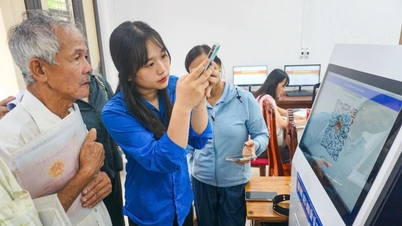
The "Digital Village" model aims to integrate digital technology into daily life, helping people access and effectively utilize digital utilities, while narrowing the digital divide between regions. At the launch event, residents experienced the "Bat Xat Digital Village" application with 16 integrated digital utilities and participated in activities at the digital market.
Lao Cai Provincial Party Committee Standing Deputy Secretary Hoang Giang emphasized that the "Digital Village" model in Village 4 originated from practical experience at the grassroots level, from the very specific needs of the people, and through creative and effective methods. According to Mr. Giang, in the context of building a modern administrative system, the development of a "Digital Village" is not only about applying information technology but also about innovating leadership, management, and service-oriented thinking.
The emergence of this model is linked to efforts to remove digital "bottlenecks" in mountainous areas. As a locality with a vast terrain, many areas still facing difficulties, and over 65% of its population being ethnic minorities, Lao Cai still faces limitations in infrastructure, digital skills, and people's access to technology.



According to Mr. Tran Ngoc Luan, Director of the Department of Science and Technology of Lao Cai province, the locality has determined that digital transformation must originate from practical realities, focusing on the people and addressing practical needs at the grassroots level. Therefore, instead of focusing solely on technology, the province chooses to start by changing perceptions and improving digital skills for the community.
Empowering citizens to become the agents of digital transformation.
If "Digital Indigenous People" and "Digital Villages" are the core elements at the community level, then on a broader scale, the current goal is to build digital communes and wards operating on a data and technology platform.
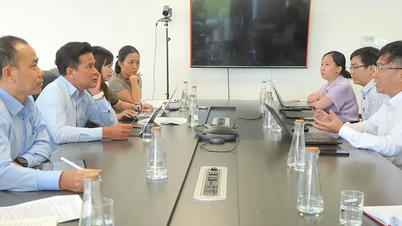
At the recent training workshop on "Implementing the Digital Transformation Model at the Commune/Ward Level," the Ministry of Science and Technology introduced a unified national model for digital transformation at the commune level. According to Associate Professor Dr. Hoang Huu Hanh, Deputy Director of the National Digital Transformation Agency, the model is designed for shared use from the central level to the grassroots. "This means that communes do not build their own systems that already exist at higher levels, but instead utilize shared platforms. The principle is shared use to avoid duplication, waste, and resource dispersion," Dr. Hanh emphasized.
One of the key principles of the model is ensuring digital inclusion, so that vulnerable people are not excluded from digital services. This is also the spirit being demonstrated in the "Digital Indigenous People," "Digital Villages," and the activities of community digital technology groups.
The experience in Yen Binh commune (Lao Cai province) shows that digital transformation is no longer just about infrastructure or software. Currently, over 90% of households with smartphones have installed the "Digital Citizen" application; 100% of villages implement governance and operation on a digital platform; 48% of applications are processed through full-process online public services; and 100% of leaders use digital certificates in handling work.
From Hamlet 4 of Bat Xat commune to the "Digital Villager," "Digital Hamlet," and "Digital Commune" models being implemented in many localities, a clear direction is emerging: bringing technology directly to villages and hamlets, enabling people to participate directly in the digital transformation process. When people know how to use technology to access information, carry out administrative procedures, promote products, or connect to markets, they are no longer just beneficiaries but become active participants in this process.



This is also a way to gradually remove "bottlenecks" in awareness, skills, and digital habits, thereby unlocking the "digital circuit" from the grassroots level and creating a foundation for sustainable socio-economic development in the highlands.
Source: https://daidoanket.vn/khoi-thong-mach-so-tu-thon-ban.html







![[GALLERY] RF Online Next shocks viewers, a 20-year-old legend makes a spectacular comeback.](https://vphoto.vietnam.vn/thumb/402x226/vietnam/resource/IMAGE/2026/06/26/1782480926119_rf-5-png.webp)

![[GALLERY] Phone screen cracked even though it wasn't dropped, shocking and unexpected culprit.](https://vphoto.vietnam.vn/thumb/402x226/vietnam/resource/IMAGE/2026/06/26/1782475538664_nut-4-png.webp)