

"Gratitude is the thread that connects love; we should do good without expecting anything in return," "Enjoy and dream of doing good, because the wind will blow in whichever way the door opens," "I want to 'request' you to do something: whatever profession you pursue later, remember to add the word 'good' after it"... These were some of the words from the first ethics class at an after-school tutoring center taught by Mr. Tran Tuan Anh, a civics teacher at Colette Secondary School (Ho Chi Minh City).
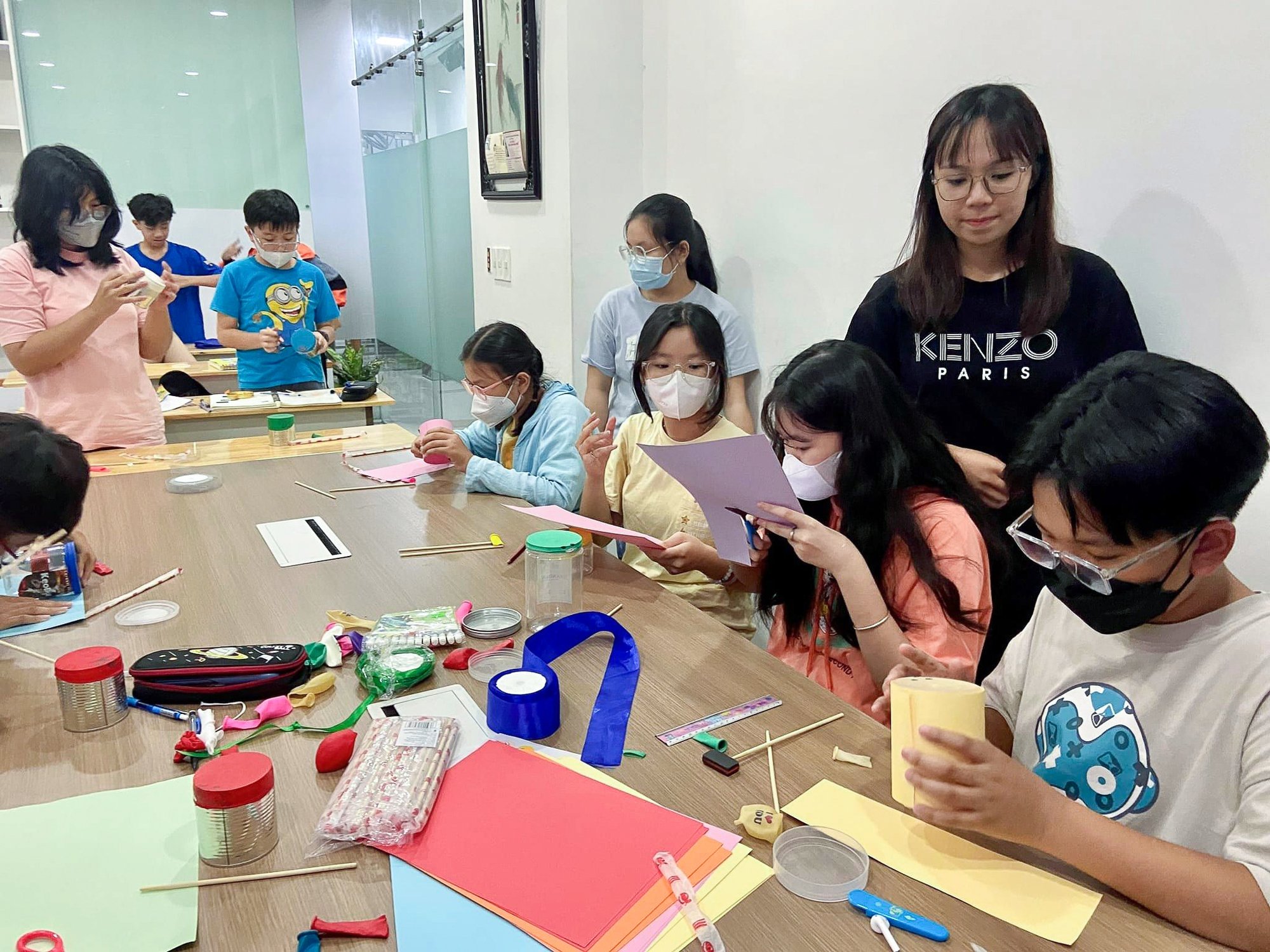
Ms. Le Thanh Ngan (standing, far right) and her students conduct an experiment on sound waves in a natural science lesson during an extra class.
MORAL EDUCATION AND CAREER GUIDANCE
According to the students, Mr. Tuan Anh's lesson left a lasting impression and was deeply moving, because he always illustrated his stories with images and TikTok videos capturing real-life moments. Some students even couldn't hold back their tears after watching a video about the pressures parents have to bear. "After having the students write their end-of-lesson assignments, some pages were smudged with tears," the teacher shared.
Teaching only one session per class at the center, the male teacher said he always chooses "keywords" appropriate for each age group, such as gratitude, "good" professions for high school students, or compassion and kindness in Ho Chi Minh City for middle school students. According to Mr. Tuan Anh, ethics is closely linked to the pulse of life, so teachers can update and select content from social media platforms like TikTok to incorporate into lessons, as long as it fits within the curriculum.
"In many regular classes, teachers are focusing more on teaching academics than on teaching moral values. Therefore, I am very happy to be invited by the center to provide moral education for students," Mr. Tuan Anh confided.
Besides fostering moral values, career guidance for students is also a key focus for these centers. Mr. Ho Van Nhat Truong, a biology teacher at the Practice High School (Ho Chi Minh City University of Education), recounts that during his tutoring sessions, he always incorporates stories about professions related to the lesson's content, for example, explaining which profession the content and activities mentioned in the lesson belong to.
Furthermore, starting from grade 8, students are also guided towards their favorite subjects, allowing them to quickly "finalize" a suitable subject combination by the time they enter grade 10. "Besides fostering scientific abilities, the center also helps students develop their emotions and souls," Mr. Truong added.
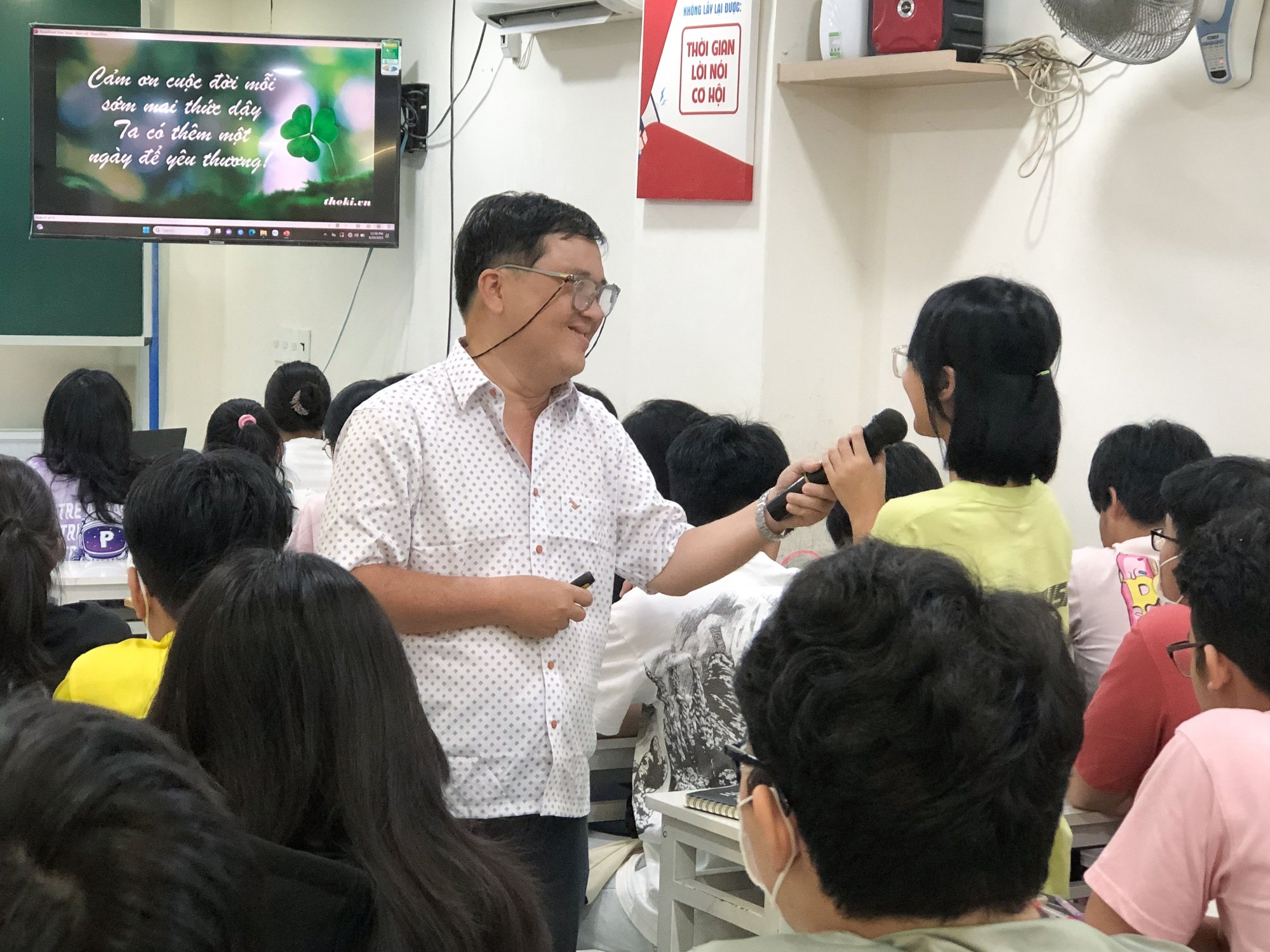
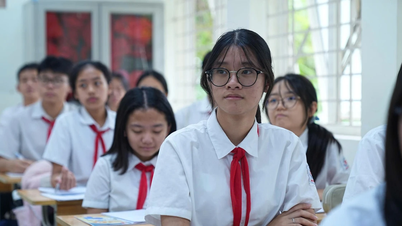
The first ethics lesson of the semester with teacher Tran Tuan Anh at a tutoring center in Ho Chi Minh City.
PRACTICAL EXPERIMENTS, PLAY GAMES TO LEARN
With a diverse range of activities beyond teaching knowledge, it's clear that these centers are gradually undergoing a transformation in their image.
Mr. Le Minh Xuan Nhi, Director of the NP Knowledge Cultural Training Center, said that in recent times, the center has shifted from a "cram school" model to one focused on providing more experiential activities for students.
"We prepare all the necessary equipment and chemicals for experiments in chemistry, for measuring volume and weight in physics, or for making kimchi, yogurt, and planting trees in biology to apply knowledge to real-world situations. Nowadays, extra classes are not just about writing problems on the board and the whole class solving them; they must be engaging and develop skills. We believe that when learning is fun, students will remember the knowledge longer," Mr. Nhi explained.
To illustrate this point, Ms. Le Thanh Ngan, a science teacher currently teaching at the center, said she conducts experiments at the beginning of class to spark curiosity or at the end to reinforce knowledge. "For example, in the lesson on acids, I guide the students in making medicine to treat stomach pain, which neutralizes acid. Learning through experiments like this makes it more enjoyable for the students than just reading from a textbook, and it also helps them develop critical thinking skills," the female teacher explained.
Besides conducting experiments, she also lets students play games or role-play as teachers to teach. "In the future, for biodiversity lessons, I also want to take them to the zoo to see it firsthand instead of just learning the theory," Ms. Ngan shared.
Creating opportunities for hands-on practice alongside theoretical instruction is another method that helps students better understand lectures, as applied by Mr. Dang Duy Hung, Director of Professional Development at Lasan Education. Specifically, the male teacher collaborates with a STEM (science, technology, engineering, and mathematics) specialist to incorporate real-world illustrative models into lessons. In addition, science teachers at the center conduct experiments in class and update the latest real-world examples to share with students.
Ms. Le Ba Anh Thu, founder and director of Viet Anh Thu Academy, frankly admitted that when she first started, she also used the "classic" method of continuously handing out and solving practice questions. However, she gradually realized that this method was only suitable for already gifted students, while for those who didn't like studying, it "only made things worse." "From that, I realized I couldn't continue teaching in the old one-way way where the teacher writes on the board and the students copy," Ms. Thu confided.
According to Ms. Thu, technology has enabled teachers to design interactive, two-way lessons. Therefore, in the last two to three years, she has applied a variety of tools to encourage greater student participation in lessons. "For example, instead of giving students a list of 100 English words and making them memorize them like before, I now use game software like Kahoot, Quizlet, etc., so they can learn while playing. At home, I also give fewer paper assignments and instead assign games for them to complete," Ms. Thu shared.
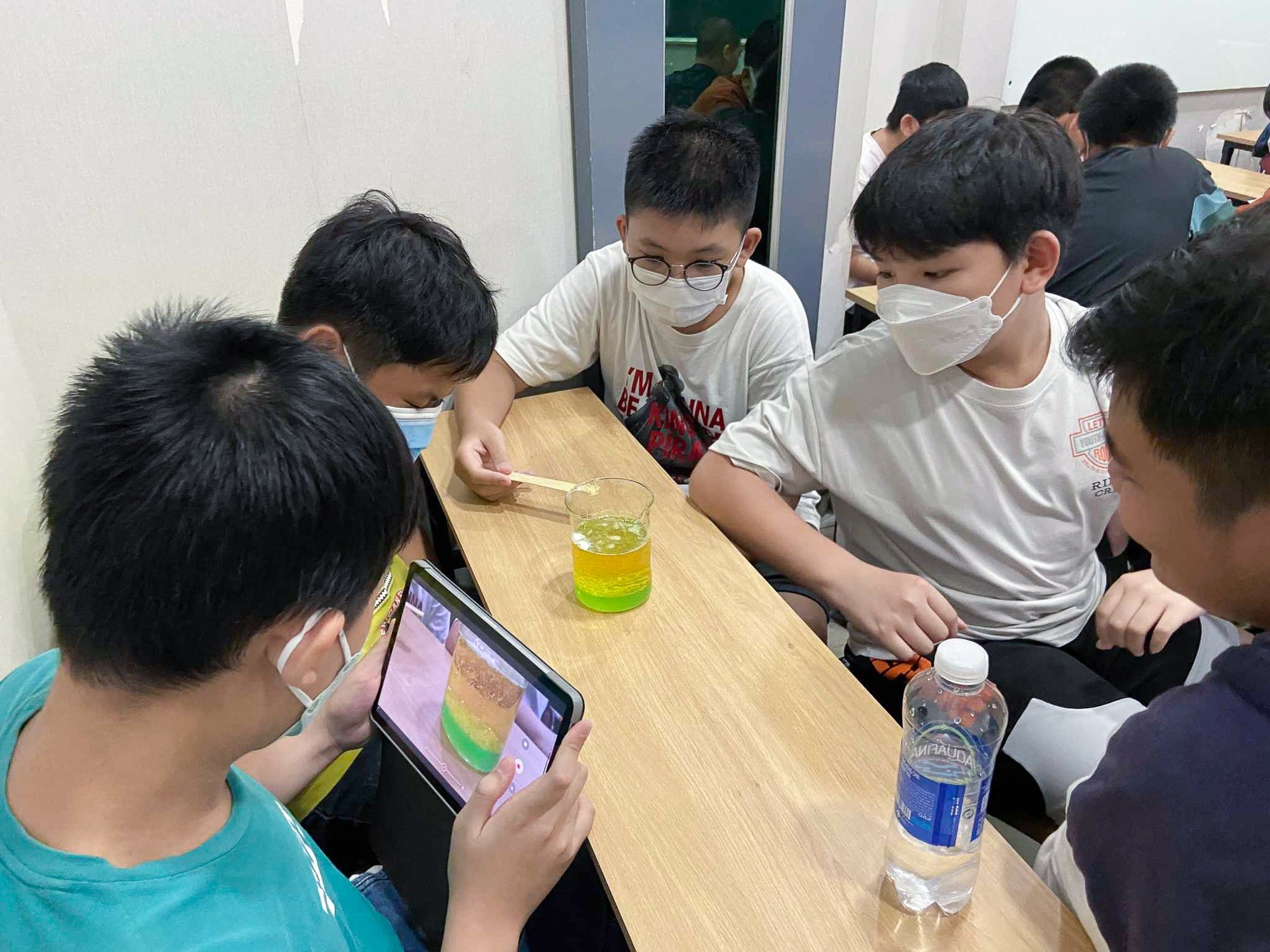
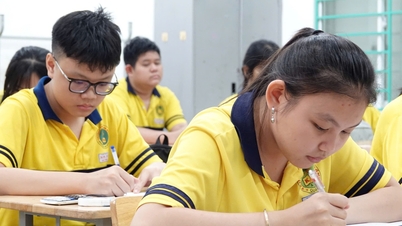
Students are enthusiastic about extra lessons that include hands-on activities and experiments.
ARE THE GOALS FOR EXTRA LEARNING DIFFERENT THAN BEFORE?
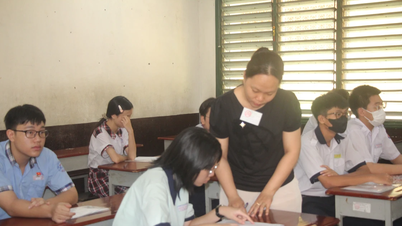
Currently taking extra classes in math and literature, Huynh Pham Nhu Van, a student in class 10A14 at Le Quy Don High School (Ho Chi Minh City), admits that current extra classes are "so different from the past." "The teachers at the centers care not only about our studies but also about our mental health. They also respect students' abilities, guide us in life skills, and regularly check in after class to offer advice and encouragement, instead of just teaching theory and assigning homework like before," the female student explained.
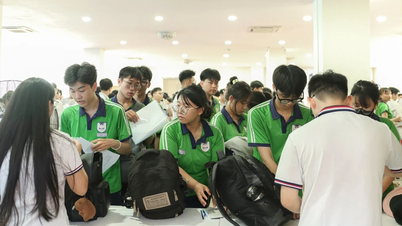
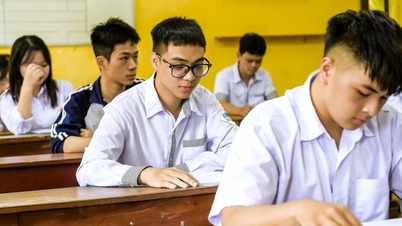
The number of high school students attending extra classes has decreased.
According to teacher Dang Duy Hung, the demand for extra tutoring remains high, but it is concentrated in centers that keep up with the latest exam trends, most notably in junior high school with natural science and mathematics, which incorporate many practical application exercises. "As for high school, because the new curriculum defines subject combinations from the outset, the demand for extra tutoring in non-compulsory subjects has been fragmented, leading to a decrease in the number of students," Mr. Hung observed.
Similarly, teacher Le Minh Xuan Nhi also assessed that the total number of high school students needing extra tutoring in physics, chemistry, and biology has decreased significantly, mainly concentrated in the group with average academic ability.
According to Van, the main reason she chose to attend extra classes in recent years has been to understand the lessons in advance and improve her grades in high school. However, the ability to learn more through diverse exercises, study guides, and opportunities to interact with high-achieving students from other schools to further develop herself are also goals she aims for when choosing extra classes in the new program.
Thus, although the goal of the new program is to help students develop comprehensively, especially their personal abilities, grades and entrance exams remain the top concerns of students and parents. This reality stems from the fact that students do not have enough time to do homework in regular classes due to the increased workload, and schools have not yet standardized teaching and testing methods, according to Mr. Dang Duy Hung.
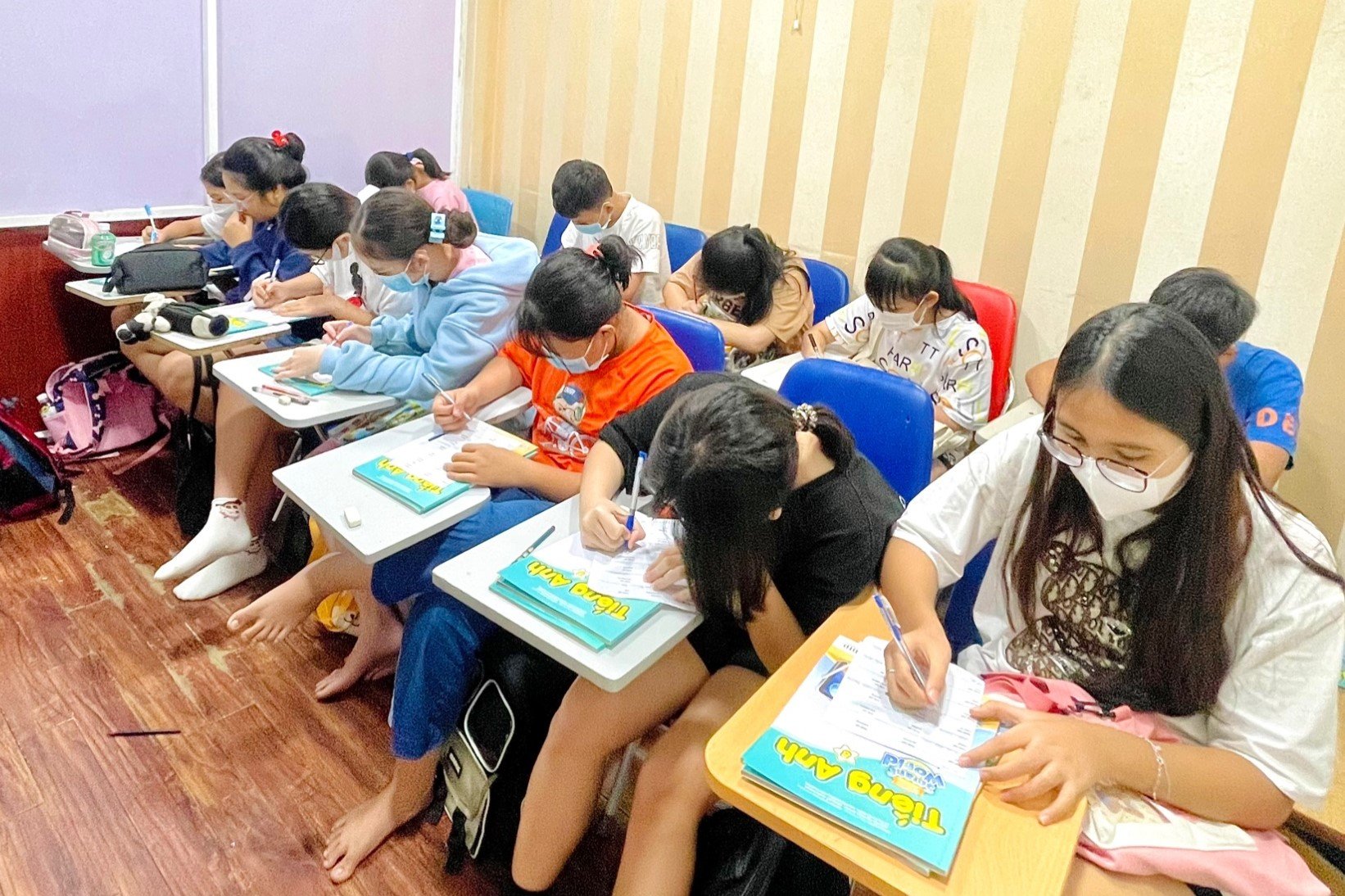
An English tutoring class in District 7, Ho Chi Minh City.
"The way students' abilities are assessed in Vietnam is still largely based on a grading scale. Therefore, it's understandable that students take extra classes to improve their scores, thereby increasing their chances of getting into university based on their academic records and exam scores," Mr. Hung commented.
However, unlike high school students, these centers have been changing their goals, no longer focusing solely on exam preparation as before. "Our perspective is to teach students how to think critically and solve problems, that is, to apply existing data to find the most effective 'path' to success. Ultimately, the purpose of learning isn't just to solve a problem, but to equip them with the skills to overcome difficulties when they grow up," affirmed Ms. Le Ba Anh Thu.
Source link

![[Photo] General Secretary and President To Lam presides over a meeting on assessing national development resources.](https://vphoto.vietnam.vn/thumb/1200x675/vietnam/resource/IMAGE/2026/05/20/1779253785852_a1-bnd-2943-8519-jpg.webp)


![[Photo] National Assembly Chairman Tran Thanh Man working with the Standing Committee of the Economic and Financial Committee](https://vphoto.vietnam.vn/thumb/1200x675/vietnam/resource/IMAGE/2026/05/20/1779249584387_ndo_br_1-jpg.webp)




















































Comment (0)