Create a certain level of interest
During the summer months, welcoming her grandchildren from Hanoi is a great joy for Mrs. Nguyen Thi Tinh in Dang Hai Street (Hai An Ward). Whenever she has free time, she teaches them to play traditional games like O An Quan, Chuyen, and "Planting Buds and Flowers"—games that have been a part of many generations' childhoods.
With just a few pebbles, some bamboo sticks, or a small yard, children can have fun together. These games not only bring laughter but also help children learn how to communicate, cooperate, and follow the rules. However, Ms. Tinh noticed that the children were usually only enthusiastic when an adult guided them or when many friends joined in.
Nguyen Hoang Anh, a student at To Hieu Secondary School (Le Chan Ward), said she had participated in many traditional games during school activities and found them quite enjoyable. However, in her free time, she and many of her friends still often choose to read books, watch videos , or use their phones and computers for entertainment.
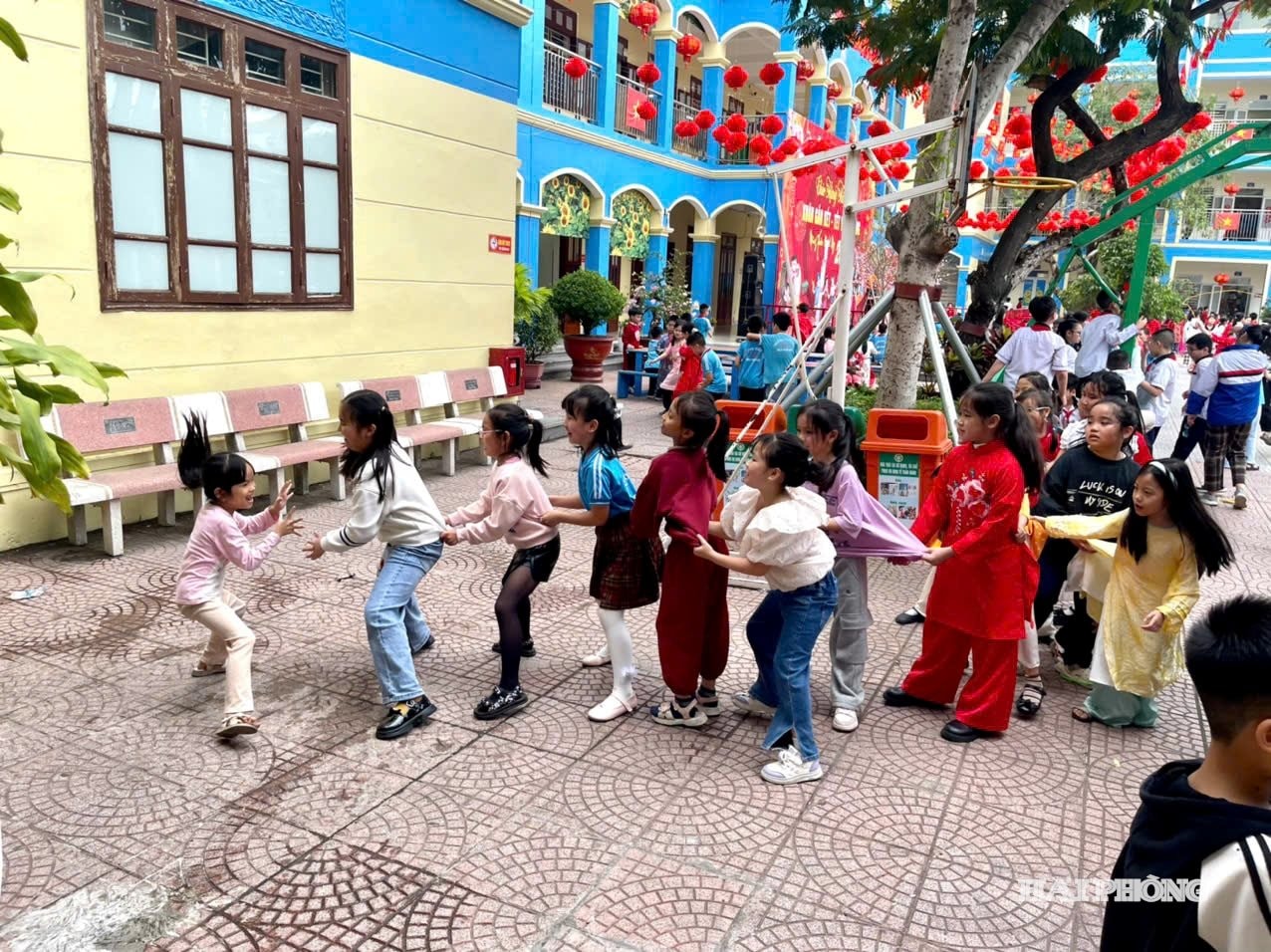
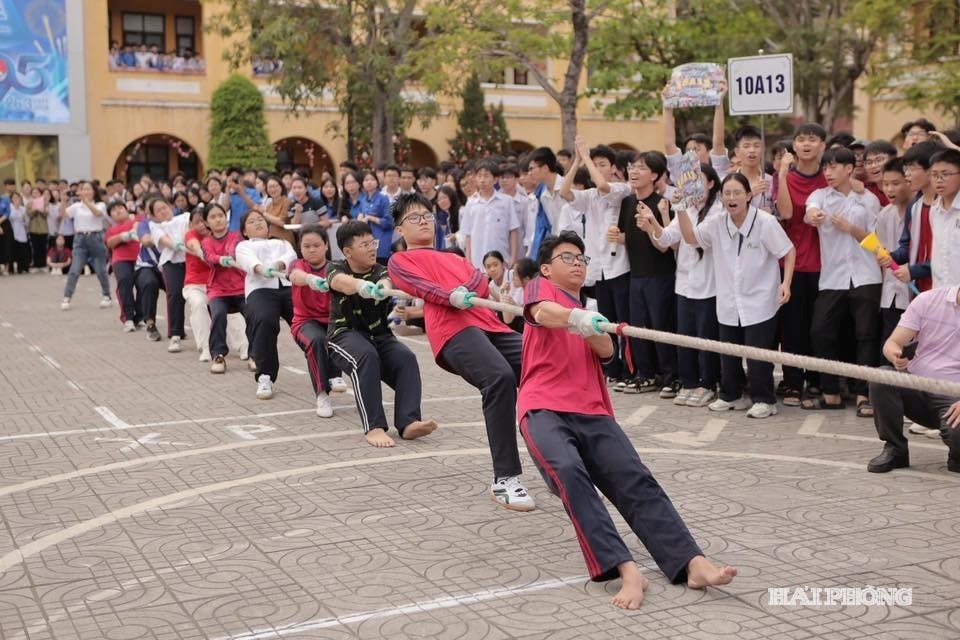
In order to preserve traditional cultural values, many schools incorporate folk games into extracurricular activities, cultural festivals, or experiential programs. Games like tug-of-war, sack racing, and blindfolded tag often attract a large number of students.
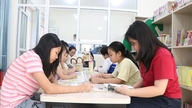

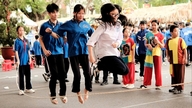
At Thai Phien High School, the "No Phones During Recess" model is implemented along with many traditional games such as tug-of-war, sack racing, and capture the flag... The school's Youth Union Secretary, Nguyen Xuan Tien, said that students respond quite positively whenever the school organizes these activities, especially team-based games.
Not only in schools, but some cafes also set up tables for traditional Vietnamese games like "O An Quan" or "Co Ca Ngua" to offer customers more choices. However, most young people still prefer chatting or using their phones. This shows that traditional games still create a certain level of interest, but they haven't become a popular choice in modern entertainment.
We need more community playgrounds.
The development of the internet, social media, and digital entertainment platforms has significantly changed children's play habits. According to a survey by UNICEF, over 80% of children aged 12 to 15 in Vietnam use the internet daily, with many spending 8-9 hours online, many times more than recommended. Numerous surveys also show that children spend a considerable amount of time online outside of school. Furthermore, shrinking community spaces mean children have fewer opportunities to gather and participate in group games as they did before.
According to Mr. Nguyen Dinh Chinh, Chairman of the Hai Phong Folk Arts Association, folk games originated from the working and daily lives of the people, associated with nursery rhymes passed down through many generations. Through play, children develop physical abilities, language skills, communication skills, cooperation, and creative thinking. Mr. Chinh believes that the greatest value of folk games lies in their ability to connect people. Children who want to participate must interact directly with each other, cooperate, and solve situations during play. These are experiences that are difficult to obtain when only interacting with electronic devices.

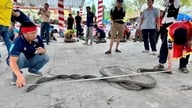

Looking at the current situation, reviving folk games not only aims to preserve the beauty of traditional culture but also contributes to creating more playgrounds for children. Summer is also a time when many children have free time but lack suitable places to play, while the risks of drowning, traffic accidents, and domestic accidents are always present.
With the advantages of being easy to organize and inexpensive, folk games can be a suitable option at cultural centers, residential areas, or schoolyards. However, for these activities to be sustained instead of only appearing during festivals or extracurricular events, more cooperation from local authorities, organizations, and the community is needed to create conditions for children to participate more regularly.
HA LINHSource: https://baohaiphong.vn/khong-de-mai-mot-tro-choi-dan-gian-545090.html

![[Photo] General Secretary and President To Lam attends the Central Public Security Party Committee Conference](https://vphoto.vietnam.vn/thumb/1200x675/vietnam/resource/IMAGE/2026/06/24/1782302063612_a1-bnd-9302-9166-jpg.webp)
![[Photo] The 13th National Congress of the Youth Union conducts personnel work.](https://vphoto.vietnam.vn/thumb/1200x675/vietnam/resource/IMAGE/2026/06/24/1782299943080_ndo_br_1-6868-jpg.webp)

![[Photo] Opening Ceremony of the 13th National Congress of the Ho Chi Minh Communist Youth Union](https://vphoto.vietnam.vn/thumb/1200x675/vietnam/resource/IMAGE/2026/06/24/1782286753905_ndo_br_1-8510-jpg.webp)