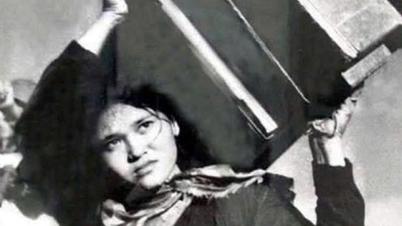
In that context, the poem "Mother! I've Come Home" by Minh Cuong emerged as a poignant tribute to those who sacrificed and dedicated themselves to the national revolutionary cause.
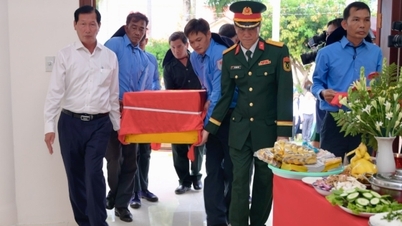
Today's peace was bought with the blood and tears of countless generations before us. Stemming from the traditional moral principles of "Remembering the source when drinking water" and "Showing gratitude," and in accordance with the wishes of the families and relatives of fallen soldiers, in 2026, the National Steering Committee launched the "500-Day Campaign to Intensify the Search, Collection, and Identification of the Remains of Fallen Soldiers."
Moved by the remaining stories of war and the efforts of today's generation, the poem "Mother, I've Come Home!" by author Minh Cuong was born. The author continues the story of peace with a touching perspective: He personifies the reunion in the afterlife between an elderly mother with gray hair and her son who bravely sacrificed his life, creating an epic ballad in peacetime...
The poem opens with a poignant paradox, a choked plea from a soldier upon his return: "Today I return / Mother doesn't wait for me / Fifty-five years in the mountains / My comrades searched endlessly but couldn't find me / On the day I return, Mother doesn't wait for me."
"Fifty-five years," a long, drawn-out period, like a lifetime, during which the child's remains were left "deep in the mountains and forests," hidden beneath bombs and bullets. And then, on the day "the child returned," the mother was no longer alive to hold her child in her arms, even if it was just a handful of bones...
Through the soldier's account, the heroic yet brutal memories of "that battle" emerge vividly. Amidst the battlefield where "the enemy relentlessly unleashed a barrage of bombs and bullets," the soldiers had only "man and stone," to the point that "the stone couldn't even provide shelter, Mother!" The heartfelt cry of "Mother!" marked the end of their youth on the fierce battlefield.
The soldier also spoke of the camaraderie, the fellowship, and the love between people when they sacrificed themselves. "Lying there to shield each other from bullets , " hoping to sacrifice their lives for one another so that "one day they could return to their Mother." But that aspiration never came true.
Reading the poem, one cannot help but feel a pang of sadness as they recall the immortal words of Heroic Vietnamese Mother Ngo Thi Lang (from Hoi An , Quang Nam): "Letting my son go means losing him, but keeping him means losing the country. Let him go…". These words are the clearest evidence of the greatness mixed with the profound pain of the heroic Vietnamese mothers. It is the pain of war, so that today, in the story of peace, there are always moments of gratitude for the countless generations of fathers and brothers who have fallen.
Mothers send their sons off to fight for their country, only to receive in return "sleepless nights of anxious waiting," and "weariness and exhaustion" that wears them down over the years. The author uses incredibly familiar words that powerfully touch the emotions and hearts of each reader: anxiety, weariness, missed opportunities...
Transcending the personal suffering of an individual, the poem elevates the image of the soldier into a symbol of an entire generation defending the country: "Our country has endured many hardships/Many young people have sacrificed to protect it/Every inch of land left by our ancestors/Forever twenty years old, immortal."

"The country's past hardships" were marked by the youthful years of young men "forever immortal at 20." They dedicated their entire youth to their homeland, so that today, the country enters a new era, an era of peace, independence, and development. Their sacrifice is a solid foundation connecting the glorious past and the bright future of the nation. A nation with a tradition of patriotism, a tradition of remembering one's roots and repaying kindness, this bond has remained strong and enduring through generations.
Perhaps the poem's conclusion is the climax of emotion, describing the return to reality and the encounter in the mind: "Now my comrades have welcomed me home / A piece of bone on the border outpost / I return amidst so much anticipation / I'm home, but where is Mother?"
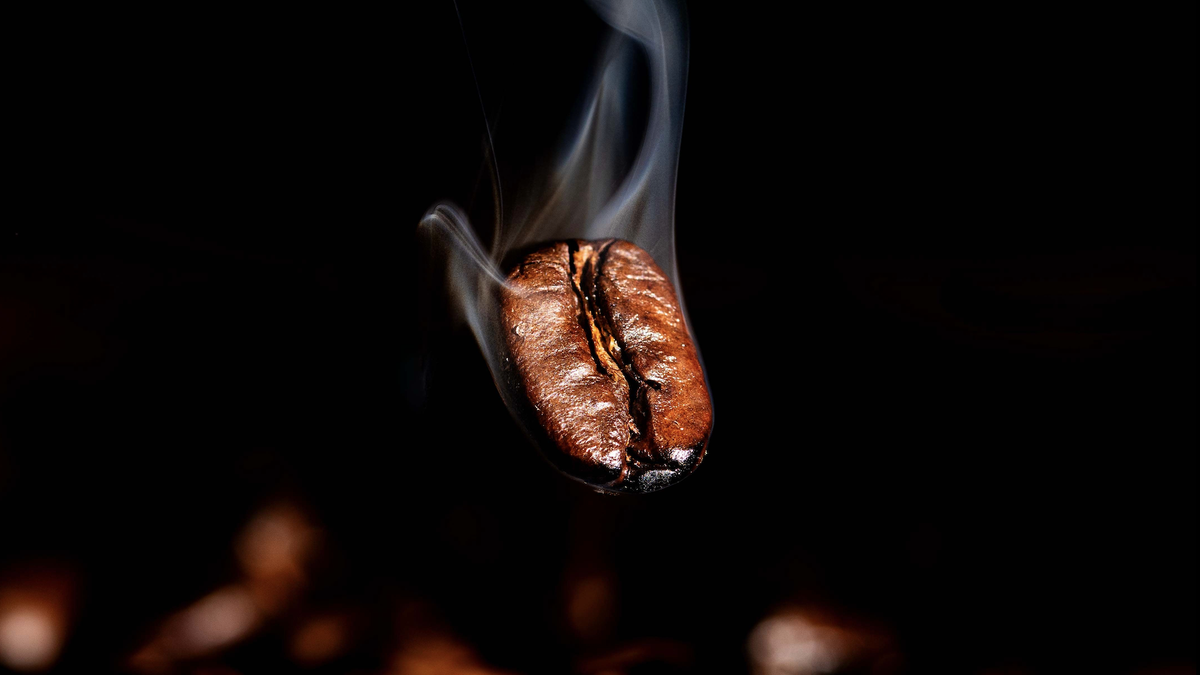
Upon his return, all that remained of him was "a pile of bones on the border outpost." His mother, after years of "weary waiting," "Longing" for their child, only in their dying moments do they have hope of seeing their child again. The scene concludes with the "fragrance of incense wafting in the wind," the billowing smoke like an invisible thread connecting the two worlds of the living and the dead.
That dutiful son, now a spirit, still bows his head. "Mother, please forgive me a thousand times," "I apologize a thousand times" for leaving you to spend your life silently and anxiously waiting. This meeting in that "heavenly realm" was both heartbreaking and the only solace for the two souls.
"Mom, I'm home!" It is not just a poem, but a heartfelt tribute, a moving poetic story about maternal love and sacred patriotism. Using familiar, simple language and compassion, the author successfully portrays a heroic yet tragic chapter in the nation's history.
The poem also serves as a silent tribute from present and future generations to the heroic martyrs, the heroic Vietnamese Mothers, and those who have become an integral part of the nation's identity, contributing to the peaceful beauty we enjoy today.

We are pleased to introduce to our readers the poem "Mother, I'm Home!" by author Minh Cuong:
MOM, I'M HOME!
Now that I'm home, Mother isn't waiting for me.
Fifty-five years in the mountains and forests
His teammates searched and searched but couldn't find him.
When I came home, Mother wasn't waiting for me.
I wasn't the only one in that battle.

Many of my comrades sacrificed their lives, Mom.
Only two of us were left in the entire company.
But they all bear lifelong injuries.
When we scored the winning goal
The enemy unleashed a frenzied barrage of bombs and bullets.
We only have people and rocks.
The rocks can't protect us, Mother!
We lay there shielding each other from bullets.
Hopefully, at least one person will survive.
So that someday I can go home and see my mother again.
Tell Mom about the battle from years ago.
Our country has gone through many hardships.
Generations of young people sacrificed themselves to preserve it.
Every inch of land left behind by our ancestors.
Forever twenty years old, immortal
I know you've been waiting patiently, Mom.
It's just that I missed the date to come home.
The wind kept blowing, and Mother is no longer here.
Many sleepless nights, Mother waited anxiously.
Now the teammate has brought the child home.
A piece of bone on a border outpost.
My child has returned amidst much anticipation.

I'm home, but where are you, Mother?
I think that place is like paradise.
I will see Mom, won't I?
War lingers deep in our hearts.
It belongs to me, to my mother, and to so many others.
Mother, please forgive me a thousand times.
A mother spends her whole life silently waiting for her child.
The fragrance of incense wafts gently on the breeze.
I apologize a thousand times, Mother!
Author Quan Minh Cuong wrote this in Quang Ninh on June 29, 2026, in the context of the whole country carrying out the 500-day campaign to search for the remains of martyrs, leading up to the 80th anniversary of the Day of War Invalids and Martyrs (July 27, 2027).
Source: https://baotintuc.vn/sang-tac/khuc-trang-ca-giua-thoi-binh-20260706101345383.htm
![[Photo] General Secretary and President To Lam working with the Technical and Professional Center, Ministry of Public Security](https://vphoto.vietnam.vn/thumb/1200x675/vietnam/resource/IMAGE/2026/07/06/1783318005842_a1-bnd-1129-2263-jpg.webp)