

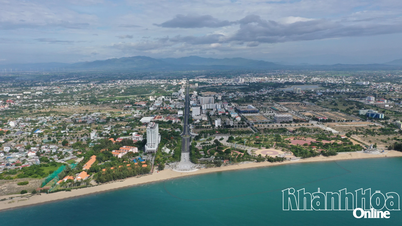
Thus, from its strategic orientation towards the sea with the former Can Gio area, Ho Chi Minh City, after its merger and connection with Ba Ria - Vung Tau (along with the Con Dao special economic zone), has become the locality with the most advantages in the country for developing the marine economy , including oil and gas - energy exploitation, tourism, and deep-water ports.
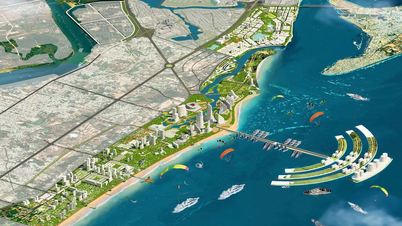
The inclusion of the entire Gành Rái bay area in the southeastern part of Cần Giờ, creating a continuous space from the Saigon River port to Cát Lái on the Soài Rạp River and the Cần Giờ international transshipment port, has formed a "vision" for the marine economic ecosystem, encompassing energy, maritime transport, logistics, industry, fisheries, tourism , trade, and services.
Maximizing the use of coastal space to activate the interconnectedness of mountains, forests, plains, and islands in Ho Chi Minh City can be understood as creating a continuous network for an international gateway to a megacity, the economic center of the Asian region. There, the maritime economy, viewed from the Can Gio - Ba Ria - Vung Tau - Con Dao strip, is not only a goal of economic "privileges" and integration, but also a "front line" for protecting national sovereignty over the sea, islands, and continental shelf.
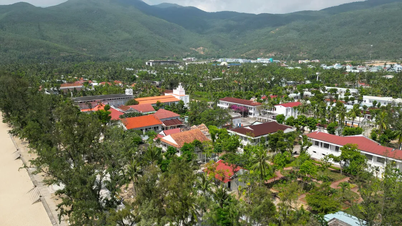
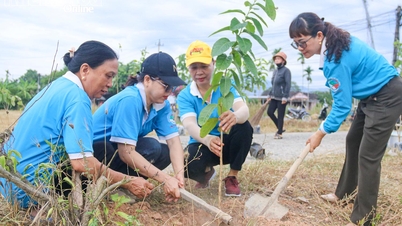
An interesting parallel: If Can Gio is a shining example of a model for preserving natural values, demonstrating how indigenous people have "coexisted" with protective forests and protected them for many years (for example, the Ho Chi Minh City budget allocated 1,156,000 VND/ha/year for the development of the Can Gio protective forest, much higher than the government's allocated support of 400,000 VND/ha/year), then Con Dao is a "laboratory" for infrastructure, transportation, economic development, and heritage preservation.
The most recent initiatives, guided by the Secretary of the Ho Chi Minh City Party Committee Tran Luu Quang and the Chairman of the Ho Chi Minh City People's Committee Nguyen Van Duoc, regarding the Con Dao special economic zone, have also placed it within the vision of "maritime space and interconnected activation," linking the sea with the mainland, natural resources with cultural heritage, development and conservation... In particular, the issue of conflict between development and conservation interests, the preservation of the Can Gio mangrove forest, the Con Dao marine ecological reserve, and the Vung Tau coastline alongside exploitation, services, trade, and tourism activities, and ensuring "green and clean" operations, have been raised along with specific, harmonious solutions linked to individual responsibility.
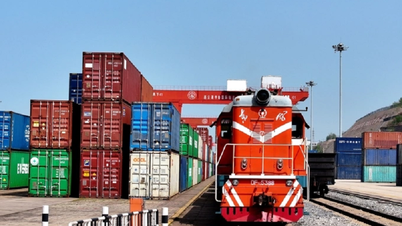
Overlapping planning and management policies, a lack of synchronization in transportation infrastructure development, failure to create momentum for marine economic development, and logistics not meeting the needs of export businesses are issues that must be fundamentally and effectively addressed soon. Simultaneously, the draft document for the First Congress of the Ho Chi Minh City Party Committee, term 2025-2030, which includes updated socio-economic master plans for the city after the merger, as well as additions and adjustments to Resolution No. 98/2023/QH15 of the National Assembly on piloting some specific mechanisms and policies for the development of Ho Chi Minh City, will be submitted to the National Assembly at the end of this year's session.
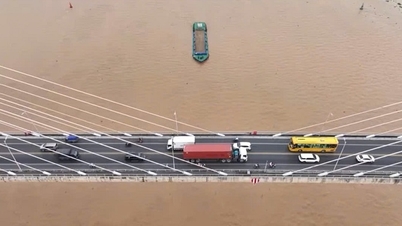
Looking at the broader picture, Ho Chi Minh City's maritime space has been and is being activated with synchronized connections from Con Dao Airport, the railway connecting Can Gio, the sea and coastal routes from Can Gio to Ba Ria - Vung Tau, the Cai Mep Ha free trade zone, etc., contributing to the stronger development of Ho Chi Minh City in the new phase.
Source: https://www.sggp.org.vn/kich-hoat-khong-gian-bien-tphcm-post813325.html














































































Comment (0)