

From a city bearing the scars of war, with a fledgling economy after the Liberation Day of the Capital (October 10, 1954), with the spirit of "healing wounds while building a new life," the capital's economy has clearly flourished.
In particular, since the Doi Moi (Renovation) period and the historic milestone of expanding its administrative boundaries, Hanoi has made breakthroughs, not only in scale, but also in improving the quality and depth of its development...
Revival and laying the foundation for development
Immediately after taking over the capital, the Hanoi Party Committee and government led the people in quickly stabilizing the situation, restoring production, and reforming and developing the economy.
Seventy-one years ago, Hanoi had only 1,522 industrial and handicraft production facilities, while agricultural production was fragmented and disorganized. The transportation and commercial infrastructure was severely lacking and small-scale. With the three-year plan to restore the economy and heal the wounds of war from 1955-1957, Hanoi's economy showed significant improvement. This marked the beginning of building a new life.
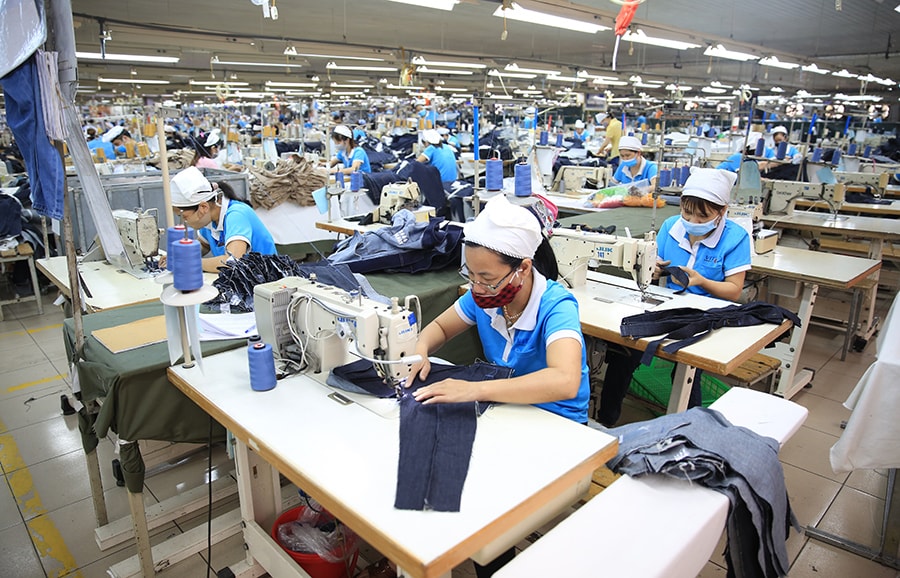
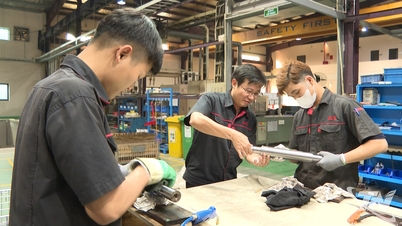
In the following years, the capital's economy was marked by the emergence of numerous new production facilities and factories – becoming the driving force and source of vitality for self-reliant production, alongside support from international partners. These included textile and garment factories, mechanical workshops, automobile repair shops, engine manufacturers, and consumer goods factories, all closely linked to the lives of the people throughout the subsidy period.
That period could not be called fully developed, but the capital's economy met social needs quite well. Hanoi's position was increasingly consolidated and clearly affirmed during the period 1961-1975. By 1975, the total social product in the area had increased 2.1 times compared to 1960; the value of total industrial output had increased 3.5 times…
In the next phase, particularly during the years 1981-1985, Hanoi gradually reformed its management mechanism through the implementation of product quotas in agriculture and emphasized the role of the private economy, maintaining industrial production. As a result, the total social product in 1985 increased by 47.6% compared to 1980, with an average annual increase of 8.1% over the five years from 1981 to 1985. The total industrial output value in 1985 increased by 62.6% compared to 1981, with an average annual increase of 12.9%...
Since the start of the Doi Moi (Renovation) process in 1986, Hanoi has spent nearly 40 years focusing on development both in breadth and depth, with increasingly impressive scale and impact. A significant milestone was the adjustment of administrative boundaries according to Resolution No. 15/2008/NQ-QH12 dated May 29, 2008, of the National Assembly, opening up vast space and conditions for mobilizing resources for the development of the capital city. After the expansion, Hanoi's area increased from 920.97 km2 to 3,348.5 km2, and its population exceeded 8 million people, creating a foundation for a new phase of development.
Leading position and the aspiration for breakthrough.
Overall, in the last 10 years, Hanoi has consistently had a higher economic growth rate than the national Gross Domestic Product (GDP). The economic model has undergone positive changes, with trade, services, and tourism becoming key sectors. Simultaneously, the city is gradually adopting modern global economic models.
Currently, the trade and service sector accounts for nearly two-thirds of Hanoi's Gross Regional Product (GRDP). Several high-tech industrial sectors have emerged and made significant progress, such as digital control, automation, robotics, nanotechnology, plasma, laser, and biotechnology, contributing to shaping the new economic landscape of the capital city.
During the period 2021-2025, Hanoi's GRDP is projected to grow at an average rate of 6.57%, 1.1 times higher than the national average. The size of the economy is estimated at approximately US$63 billion, 1.42 times larger than in 2020, accounting for 41.54% of the Red River Delta region and 12.6% of the whole country. GRDP per capita is estimated at US$7,200 per year. The economic structure is shifting positively towards modernization.
Economist Le Quoc Phuong, former Deputy Director of the Center for Industrial and Trade Information (Ministry of Industry and Trade), assessed that Hanoi has taken the right direction in economic development by making trade, services, and tourism its spearhead. The city's trade sector has become a major economic sector, not only serving the lives of the people but also ensuring the supply of goods and services for production and business, contributing to the economic growth of the capital.
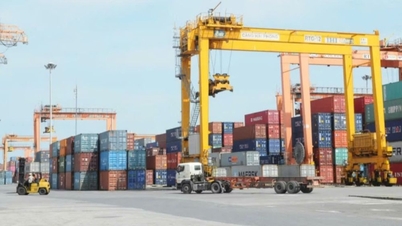
Domestic commercial infrastructure such as logistics centers, inland ports, shopping malls, supermarkets, and markets are being prioritized for development. Hanoi currently has a modern commercial system with approximately 30 shopping malls, 150 supermarkets, and over 400 markets.
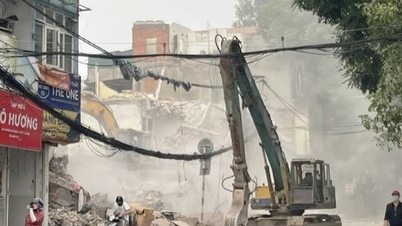
In recent years, Hanoi has basically completed key transportation projects in the inner city area, while accelerating the construction of ring roads, interchanges, and national highways such as: Ring Road 4 - Hanoi Capital Region, the connecting road between Phap Van - Cau Gie and Ring Road 3…, along with major bridges across the Red River such as Tu Lien, Tran Hung Dao, and Ngoc Hoi.
These results have confirmed that Hanoi is truly the economic locomotive and the driving force for development of the region and the entire country.
In the coming period, the city has identified a new growth model that will shift towards being based on science and technology, innovation, and deep international integration...
In the draft Political Report of the Executive Committee of the Hanoi City Party Committee, 17th term, presented to the 18th Congress of the Hanoi City Party Committee, one of the key tasks identified is to promote rapid and sustainable growth; determined to implement solutions to accelerate and break through, striving for a GRDP growth rate of 11% or higher in the 2026-2030 period, with the proportion of added value of the digital economy in GRDP reaching 40%...
To achieve the above goals, a crucial solution is to accelerate industrialization and modernization, and vigorously develop the private economy. Hanoi will create breakthroughs in economic structure and a modern urban growth model, building a foundation for a knowledge-based, creative, and high-value-added economy. Simultaneously, it will promote the development of the digital economy, green economy, circular economy, and sharing economy; proactively research and experiment with new development models; and develop the urban economy in conjunction with the effective organization and exploitation of cultural and creative spaces, public spaces, underground spaces, digital spaces, and elevated spaces.
Hanoi will also make breakthroughs in developing high-tech industries that are competitive and effectively participate in global value chains and distribution networks. The industrial structure will continue to shift towards focusing on high-tech, green, circular, and low-carbon emission industries, playing a leading role in development linkages along intra-regional and inter-regional industrial corridors.
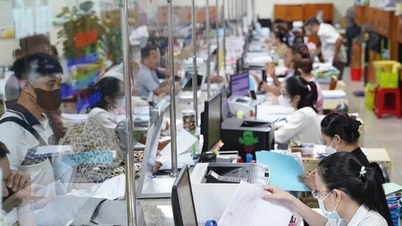
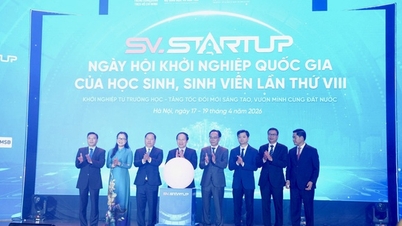
Simultaneously, the city is promoting the development of commerce in a civilized, modern direction with high added value; developing high-tech agriculture and urban-ecological agriculture. In particular, the city is creating an innovative startup ecosystem, removing barriers, minimizing administrative procedures, time, and compliance costs for citizens and businesses, and creating all favorable conditions for private enterprises to access resources such as land, capital, technology, and high-quality human resources.
With a spirit of unity, creativity, and aspiration for progress, Hanoi is continuing to write brilliant new chapters, befitting its status as the thousand-year-old capital of culture and the economic engine of the country.
Source: https://hanoimoi.vn/kien-tao-kinh-te-tri-thuc-phat-trien-but-pha-719067.html































































Comment (0)