

The Japanese have shaped the tea ceremony into a national philosophy, an art of living conveyed through the enjoyment of a cup of tea. Meanwhile, Vietnam – a leading coffee powerhouse in the world , possessing some of the world's finest Robusta coffee beans, and boasting a centuries-old history of coffee appreciation – still sees Vietnamese coffee valued in the lower segment, primarily exported in raw form, and failing to establish its rightful place within the industry and the nation.
With the desire to elevate the Vietnamese coffee industry to a new level, enhancing the value of coffee not just as an ordinary beverage but also as a cultural, artistic, spiritual... and even philosophical coffee, worthy of its position as a world coffee powerhouse - Trung Nguyen Legend Group has dedicated time and effort over many years to researching the history, culture, art... of coffee in all aspects of human life to transform coffee into "Philosophical Coffee".
Throughout Trung Nguyên Legend's journey of creation and development, the spirit of commitment to serving the community has always been the core principle, demonstrated through numerous action programs aimed at building great aspirations and ambitions; and establishing a new position for the Vietnamese coffee industry on the world coffee map.
The Japanese did it!
Vietnamese people can do it too, and do it even better!
History: Understanding the past and shaping the future of humanity.
History has been known as a field of study since ancient times, existing in the form of oral tradition or written records on stone, papyrus, etc., to preserve memories, replacing myths and legends, and providing moral and political lessons for leaders. Before the 17th century, history was intertwined with literature, myths, and subjective research methods, emphasizing storytelling rather than analysis.
During the Enlightenment, when humanity focused on using reason, science , and the pursuit of happiness to improve society and individuals, the field of history underwent a dramatic transformation. The development of rationalism, the printing revolution, and growing concern for the place of humankind in society fueled the need to explain the past, particularly the origins and dynamics of human society, using scientific methods rather than supernatural elements. The deepening social contradictions also led intellectuals to seek the historical causes of current problems, thus forming analytical and critical thinking in historiography.

In this process, history is no longer merely a record of the past but becomes a crucial factor in shaping the future of human civilization. The German historian Leopold von Ranke (1795-1886) laid the foundation for modern historiography with his approach of research based on accurate archival documents, ensuring absolute objectivity in order to recreate the past "as it was." In particular, his introduction of the historical seminar model and the method of critical analysis of historical sources into universities marked a turning point in history, officially separating it from literature and philosophy and becoming an independent science from the 19th century onwards.
With the development of science, economics, society, and academic systems in the 19th and 20th centuries, people approached the past in diverse ways. Historiography gradually expanded its scope and research methods, from political events to social, economic, and cultural life, and the everyday experiences of people. Many schools of historiography emerged, such as positivism, the Annalesian school, and Marxist historiography, making it an interdisciplinary science that explains the past at both macro and micro levels. The world, therefore, was viewed through economic structures, trade exchanges, and networks between communities and nations. The expansion of transcontinental trade routes, the movement of people, goods, knowledge, and technology also shaped a global history.
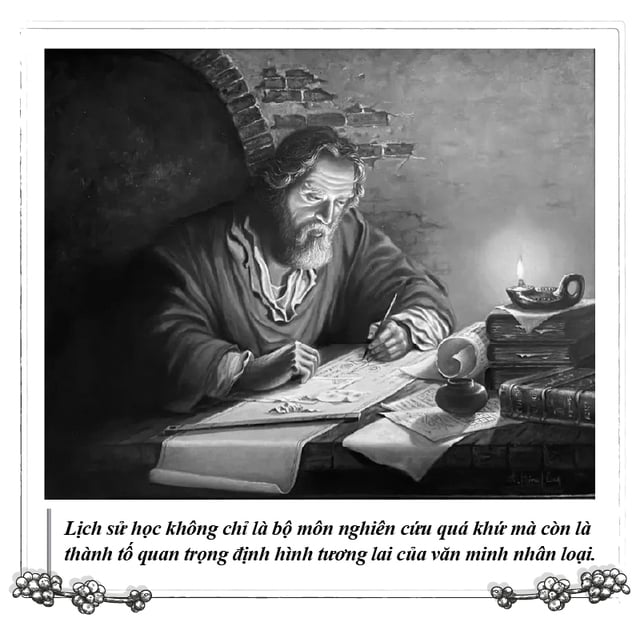
From recording and recounting events, history has become a science that helps reconstruct and explain the past of humankind, enabling people to gain a deeper understanding of the intertwining of civilizations and the significance of the past for humanity's shared future. Through this, people better understand the laws governing social development, past achievements and mistakes, and learn from them, ultimately striving to build a prosperous and happy life.
The imprint of coffee in the history of human civilization.
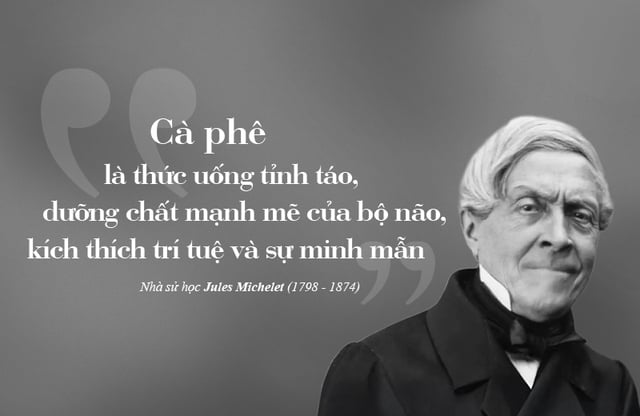
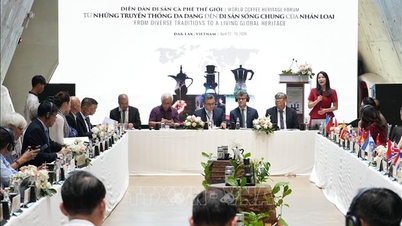
Introduced to Europe in the 17th century, coffee quickly became a source of energy that awakened the mind, guiding people towards the clarity of reason and ushering in the Enlightenment. Accordingly, coffee houses became symbolic spaces for scientific and critical thinking, truly centers of culture and forums for academic dialogue among European intellectuals.
Serving as a center of information and communication, where newspapers, economic news, maritime affairs, politics, and more were constantly updated, coffee houses attracted many philosophers and historians who came to observe social life, take notes, analyze, and freely engage in dialogue and theorizing. In this open environment, historical knowledge was produced, with many schools of thought and theories of history being formed, reflecting the rhythm of a changing world. Historiography thus entered a process of scientification with a rational, systematic approach, based on social observation, debate, and critical thinking.
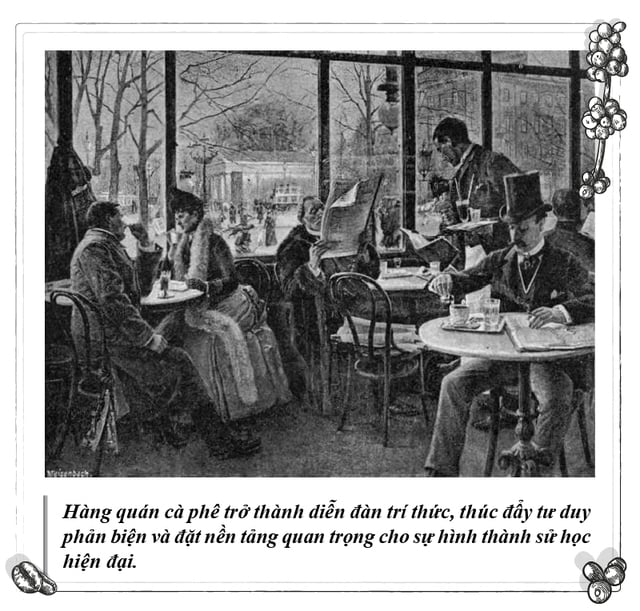
Among them, Café Procope in Paris stands out, a gathering place for philosophers like Voltaire and Diderot, where they debated and shaped important principles of modern historiography such as evidence-based methodology, comparative thinking, and scientific skepticism. Karl Marx also frequently visited cafés in Berlin and Paris to exchange ideas with progressive thinkers, thereby developing his historical materialism, which profoundly influenced 20th-century historiography.
In particular, coffee is not only a favorite beverage of historians and philosophers, but also a crucial subject in global historical research. Studies of its origins, consumption culture, power shifts, and trade reveal its powerful impact on economic and social changes worldwide over the centuries. The history of coffee is not just a story about a beverage, but also a reflection of the economic and social evolution of many communities, international trade, and modern economics.
From a seed discovered in Ethiopia in the 9th century that helped people stay alert, coffee has become a global commodity, profoundly impacting life and paving the way for trade and sustainable development. In this process, coffee has been intertwined with shifts in human consciousness, power dynamics, globalization, and the formation of international trade relationships.
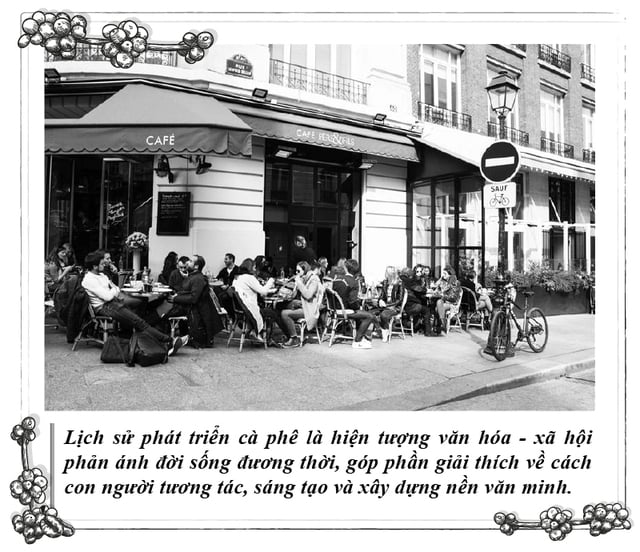
Cafés, from important social spaces in the Ottoman Empire to social networking centers and intellectual hubs for European scholars, became ideal environments for the formation and development of movements and ideas, driving societal progress. Taking cafés as his subject of study, historian Fernand Braudel (1902-1985), of the Annalesian school, viewed them as symbols of urban life and the rhythm of economic and social life. Braudel was particularly interested in how cafés reflected material life and social structure, allowing for a deeper understanding of economic and cultural movements in a globalized world. They were a component of civilization, simultaneously impacting many aspects of human life and contributing to the creation of humanity's cultural heritage.
In today's knowledge-based economy, the creative and invigorating value of coffee continues to be strongly promoted, contributing to shaping how people think and act to build a sustainable future.
https://www.youtube.com/watch?v=3Len2ZfAKDM
We invite you to watch the series of videos on Coffee Philosophy, which have been uploaded to the channel https://bit.ly/caphetrietdao

Read the next installment: Coffee in the history of globalization.
Source: https://thanhnien.vn/ky-116-dau-an-ca-phe-trong-lich-su-hoc-185251201142327625.htm


![[Photo] General Secretary and President To Lam meets with National Assembly delegates from ethnic minorities.](https://vphoto.vietnam.vn/thumb/1200x675/vietnam/resource/IMAGE/2026/04/20/1776696701056_a1-bnd-8331-3342-jpg.webp)


![[Image] National Assembly discusses the implementation of the socio-economic development plan.](https://vphoto.vietnam.vn/thumb/1200x675/vietnam/resource/IMAGE/2026/04/20/1776696707422_ndo_br_img-20260420-185419-jpg.webp)




















































































Comment (0)