

Striving to build a strong and prosperous homeland, ensuring the people's well-being and happiness, is fulfilling President Ho Chi Minh's aspirations during his lifetime.
National independence is linked with socialism.
Throughout his life, President Ho Chi Minh fought for national independence and the freedom and happiness of the people. He emphasized: "An independent country is meaningless if its people do not enjoy happiness and freedom." He found the value of independence, freedom, and happiness in the goals and ideals of scientific socialism. Therefore, national independence and socialism were great ideas and the goals he pursued throughout his journey of seeking a path to national salvation and leading the Vietnamese revolution.
It is important to emphasize that, in Ho Chi Minh Thought, socialism is not a rigid dogma, alien to the material and spiritual interests of humanity; on the contrary, it is extremely concrete and practical. He said: "Socialism aims first and foremost to liberate the working people from poverty, to ensure everyone has a job, is well-fed, and lives a happy life." In short, concisely, and easily understood, it is socialism that leads to a "rich people and a strong nation"—a concept of socialism that aligns with the traditional Vietnamese concept and the trends of the present era. This concept and goal were established in the very first documents of our Party and have been affirmed as the correct choice throughout history, as it has met the practical requirements of national development.
In the struggle for national independence, under the light of Marxism-Leninism and Ho Chi Minh Thought, the Party formulated the correct guidelines, especially the art of seizing opportunities to abolish the colonial-feudal regime, leading to the August Revolution of 1945, ushering the country into an era of independence, freedom, and socialism. Throughout the resistance wars against French colonialism and American imperialism, our Party, led by President Ho Chi Minh, led the people to rise up in unison, fight tenaciously, defeat all forms of aggression, protect the achievements of the revolution, liberate the South, and unify the country. From there, the country entered an era of unification, renewal, and development. When the socialist system in the Soviet Union and Eastern Europe collapsed, Vietnam faced countless difficulties. However, it continued to steadfastly adhere to Marxism-Leninism and Ho Chi Minh Thought; steadfastly pursuing the goal of national independence linked with socialism; Maintaining unwavering faith in the path chosen by our beloved leader for the nation, our country has persevered and resolutely embarked on the "long march of reform." As a result, after nearly 40 years of implementing reforms under the Party's leadership, "our country has never before possessed the potential, position, and international prestige it enjoys today."
During his lifetime, President Ho Chi Minh once said: "I have only one desire, an ultimate desire, which is to see our country completely independent, our people completely free, and all our compatriots having enough food and clothing, and access to education." Fulfilling his wish, the achievements of nearly 80 years since the founding of the nation and 40 years of reform have brought a prosperous and comfortable life to all strata of the people. In particular, to make Vietnam a strong and wealthy nation, "on par with the great powers of the world," the entire political system has been striving to achieve breakthrough socio-economic development goals set at the 13th National Congress of the Party, and the target of 8% or more growth by 2025, with continuous double-digit growth from 2026 to 2030...
The world is undergoing many epoch-making changes. Hostile and reactionary forces have never abandoned their plots to overthrow the leadership of the Communist Party and the socialist regime in Vietnam. Non-traditional security challenges are causing many negative impacts... However, for Vietnam, this is a time when the Party's will blends with the people's aspirations to build a prosperous and happy country, and to successfully build socialism. In other words, this is the moment when all advantages and strengths converge to lead the country into a new era - an era of national progress.
Culture and ethics are at the core.
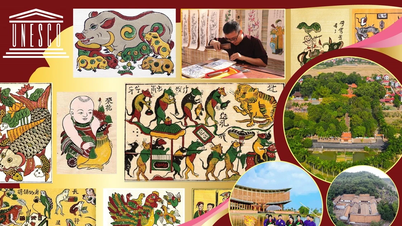
Some argue that when discussing the future, culture is not the only factor, but it is the most important, because ultimately, "the flourishing of culture is the highest peak of development." President Ho Chi Minh was honored by UNESCO as a national liberation hero and a world cultural figure precisely because he is a symbol of "the culture of the future."
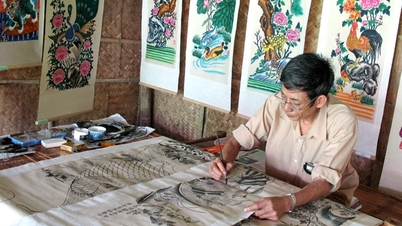
Clearly defining the importance of culture, he stated, "Culture illuminates the path for the nation to follow." The more developed the economy, the more culture must be valued, even being recognized as the spiritual foundation of society, the intrinsic strength, the driving force for national development and defense. Building and cherishing cultural values must go hand in hand with eliminating anti-cultural ideas and behaviors from life. Considering this meaning, and considering the meaning of a true cultural figure, "Ho Chi Minh's revolution was not only to liberate people from oppression and exploitation, but the noblest goal was to liberate people from a culture of enslavement and build a national culture."
The core of culture is morality; therefore, President Ho Chi Minh always considered morality to be the foundation of a revolutionary. He not only left behind a new system of moral views but also served as an exemplary model of revolutionary morality. A Mexican philosopher, political scientist, and sociologist remarked: “Today, the struggle between two philosophies of life is clearer than ever. One philosophy views the world as something immutable, in which all change is merely an illusion; and the other views the world as a process in which change is the source of wealth, progress, and the pursuit of humane aspirations in the realm of morality. Therefore, people like Ho Chi Minh become increasingly great because they are the people who have given us a reason to live and the ability to realize our dreams.” Ho Chi Minh embodies the highest values of Vietnamese culture and morality. It is the crystallization and radiance of a new humanism, with the great thoughts, feelings, and dreams of humanity. Therefore, his cultural ideas have reached nations as a natural course of action and profoundly inspired every individual and every nation.
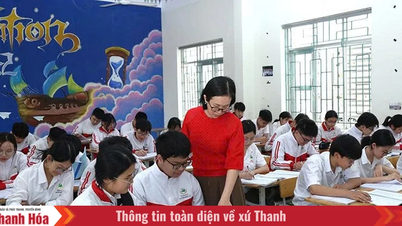
To build a cultured society with morality as its core, each individual must understand their rights and civic duties. President Ho Chi Minh clearly stated: "To maintain independence, to make the people prosperous and the country strong, every Vietnamese person must understand their rights and responsibilities, and must have new knowledge to participate in building the nation." Especially with the concept that "An ignorant nation is a weak nation," he always considered ignorance to be an enemy. He advocated for the successful development of education in building socialism and catching up with the general development of humanity. Clearly defining learning as for work, for becoming a good person, and for serving the Fatherland and the people, he consistently emphasized the task of educating ideals and morals: "diligence, thrift, integrity, righteousness, impartiality, and selflessness." He affirmed: "A nation that knows diligence, thrift, and integrity is a nation rich in material wealth, strong in spirit, a civilized and progressive nation."
President Ho Chi Minh was the founder and mentor of the Communist Party of Vietnam, tasked with leading the revolutionary cause of the working class, the laboring people, and the entire Vietnamese nation. Therefore, more than anyone else, he was deeply concerned about the building and challenges facing the ruling party; about the relationship between the ruling party and the people; and about enhancing the party's character and intellect so that it truly embodies morality and civilization. He clearly stated: "Our Party is a ruling party. Every party member and cadre must truly internalize revolutionary morality, truly practice thrift, integrity, honesty, and selflessness. We must keep our Party truly clean and worthy of being a leader and a truly loyal servant of the people."
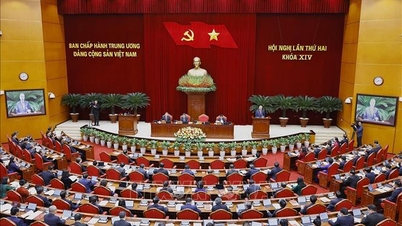
Following the guidance of President Ho Chi Minh, throughout its 95-year history, the Party has always prioritized Party building. Simultaneously, it has strictly implemented the Party's leadership and governance methods, absolutely preventing any instances of excuses, substitutions, or laxity in the Party's leadership. The Party's leadership aims to ensure that power truly belongs to the people, and that the State is truly of the people, by the people, and for the people. In particular, the Party is focusing on streamlining the political system's apparatus to enhance the role and responsibility of Party organs, truly making them the "intellectual core," the "general staff," and the vanguard leading State agencies. This major and challenging revolution is receiving the support and approval of the people, with the expectation that it will create new momentum for the country's strong development.
...
Ho Chi Minh has become a name in history – not only for the Vietnamese people, but for all progressive humanity. “His life and his work, his flesh and soul, have been intertwined with the rivers and mountains of Vietnamese culture and morality, from the time of King Hung to the era of Ho Chi Minh. This has been acknowledged by Marxists-Leninists, Catholics, and all people of all ideologies and religions who desire a better world. UNESCO has declared him a World Cultural Figure. Ho Chi Minh was a world statesman!” (Professor Mauro García Triana, former first Ambassador of Cuba to Vietnam).
Text and photos: Le Dung
Source: https://baothanhhoa.vn/ky-nguyen-rang-ro-viet-nam-249145.htm







































Comment (0)