

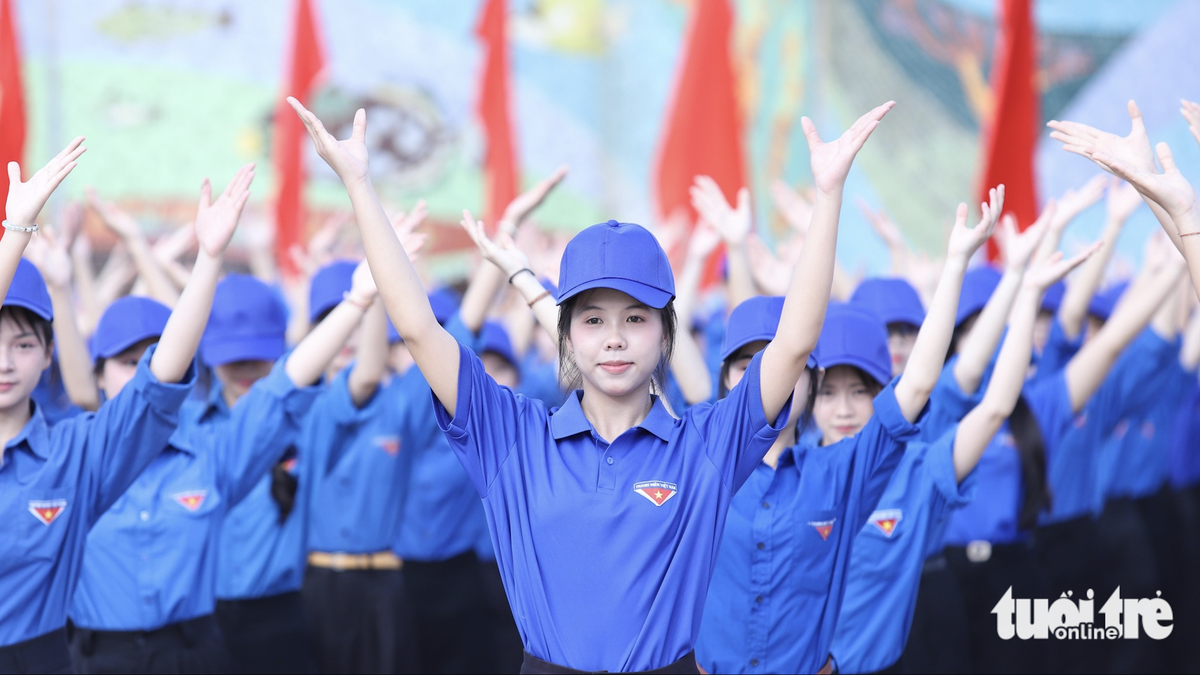
This is a meaningful activity to commemorate the 95th anniversary of the founding of the Ho Chi Minh Communist Youth Union (March 26, 1931 – March 26, 2026), in response to Youth Month 2026.
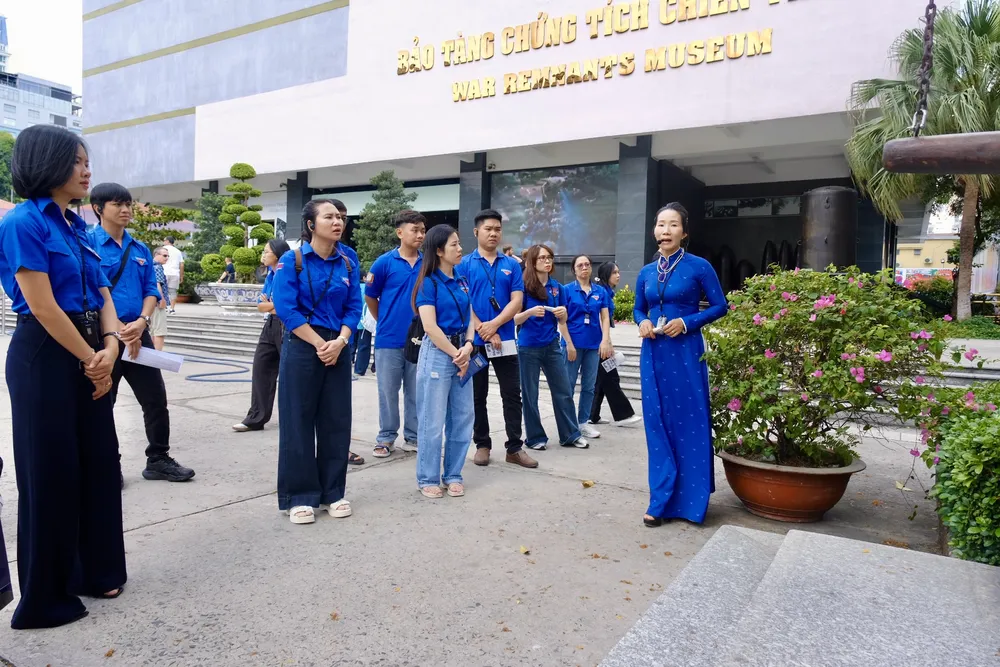
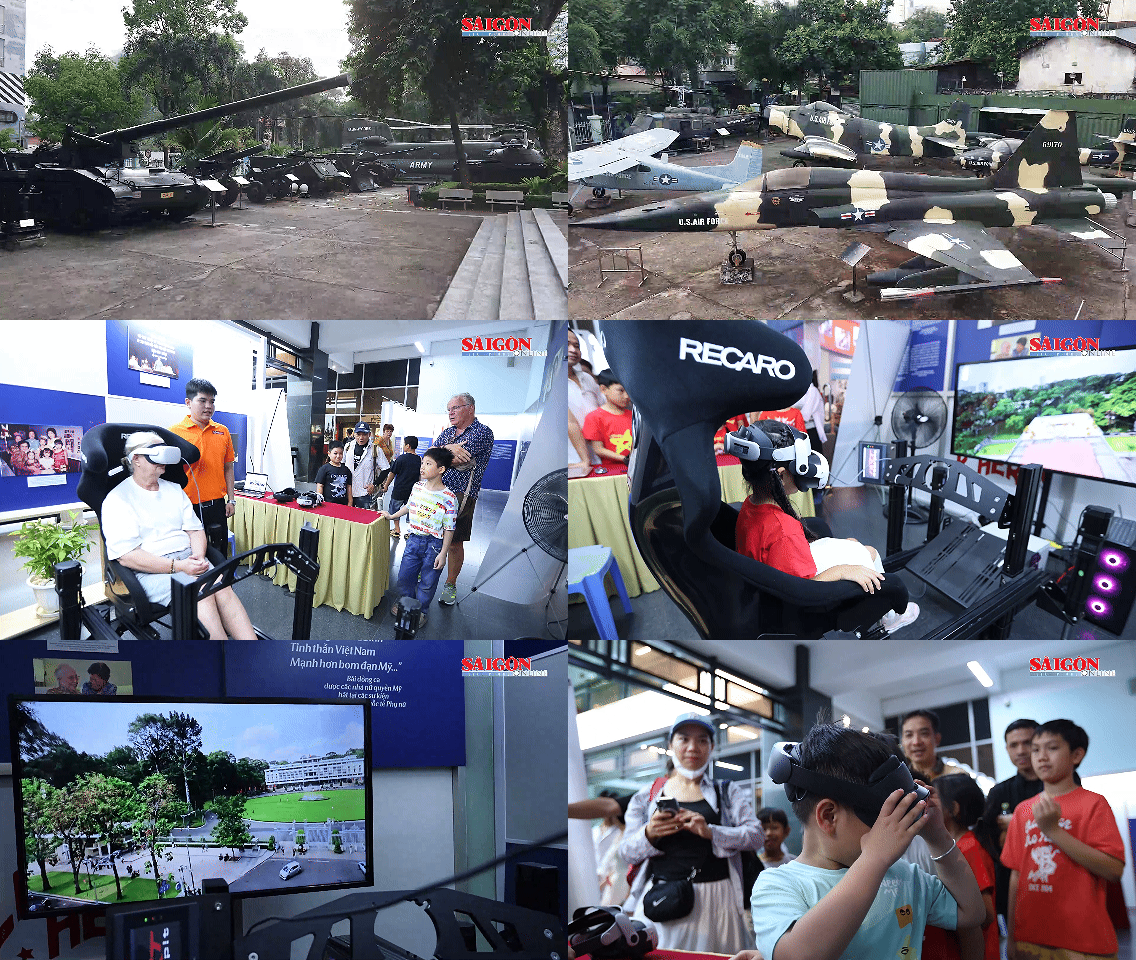
Arriving at the museum early, the young people took turns visiting the exhibits on the resistance wars. Each photograph and artifact before their eyes truthfully reflected the brutality of the war.
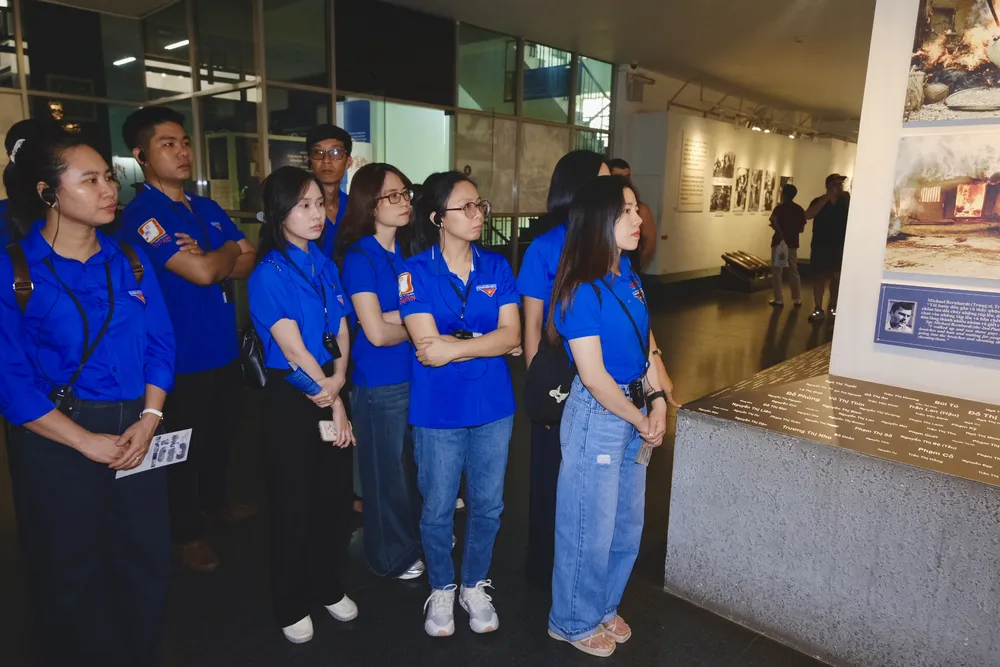
The trip became even more moving when the young people learned about the lives of former political prisoners at the exhibition area about prisons housed in shipping containers, covering an area of about 70 square meters . This area displayed images and artifacts about major prisons in the South at that time, such as Chi Hoa, Con Dao, Phu Loi, and Phu Quoc…
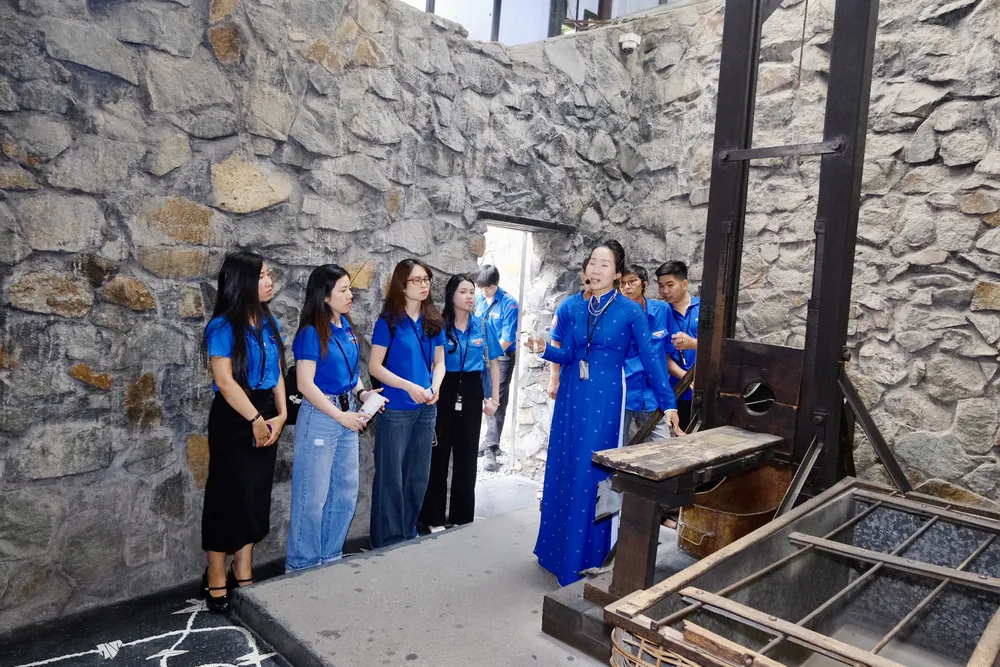
The exhibition area dedicated to "The Prison Regime" recreates a part of Con Dao Prison - once considered a hell on earth. The tiger cage is surrounded by a nearly 4-meter-high stone wall with barbed wire fences and a watchtower on top.
The more they listen and watch, the more deeply young people feel the pain that their compatriots endured during the years of bombing and shelling, and the more they understand the sacrifices of the heroic martyrs and previous generations. Each person becomes grateful and proud of the indomitable fighting tradition of the nation.
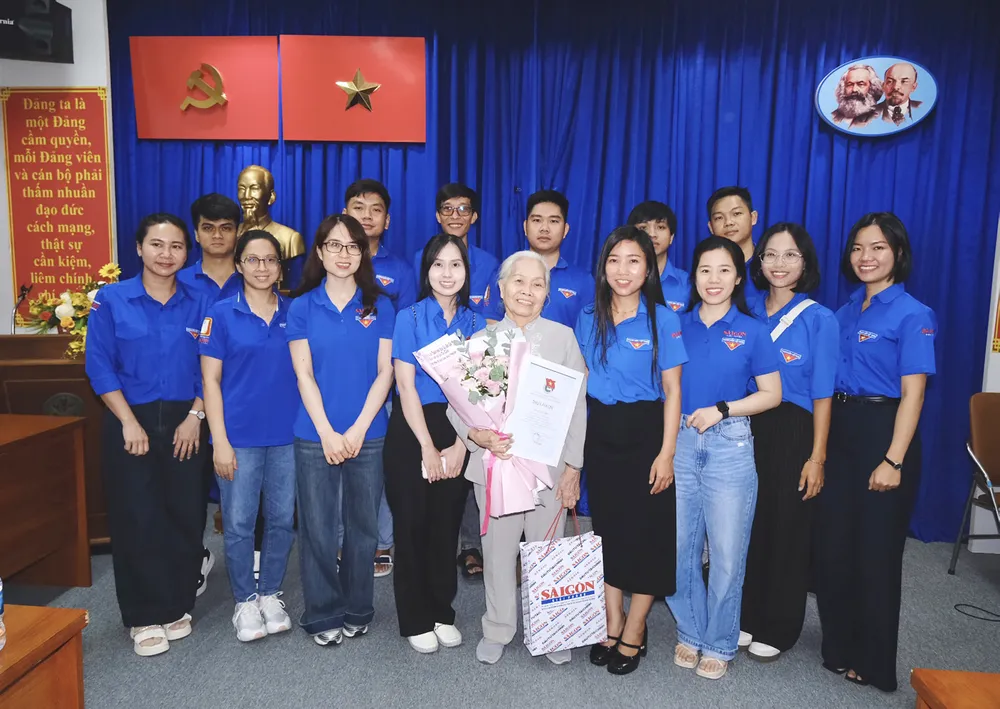
During the program, the youth union members had a meaningful conversation with former female political prisoner Le Tu Cam. When life in prison was recounted through the words of a historical witness, the strength of spirit and patriotic will was more evident than ever.
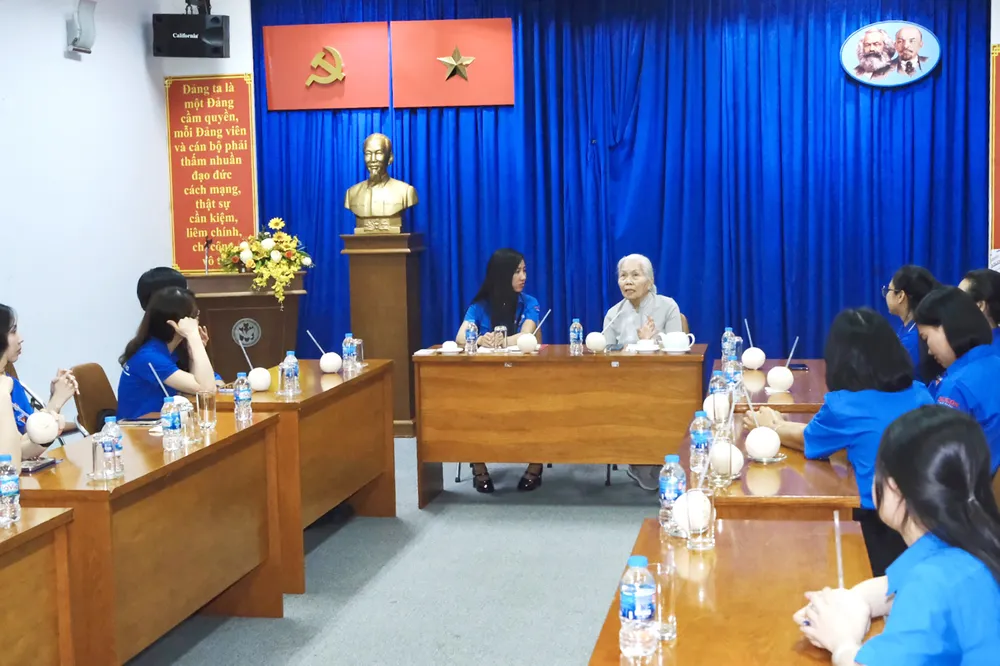
Recalling those difficult years, the first thing that comes to mind for Ms. Tu Cam is not the beatings, but the times she and her comrades studied together. She recounted: “When I entered prison, I was only 19 years old, a young person. There was an older group, called the aunts and sisters, who had gone through many years of fighting and taught us about politics. Next came learning to read and write. In prison back then, there were intellectuals, doctors, directors, teachers, artists, students... and also many farmers, some of whom were illiterate. That's how it went, those who knew more taught those who knew less.”
Ms. Tu Cam added that in prison at that time, they also learned singing, dancing, songwriting, and many other things related to culture and art. She believes these were effective spiritual weapons for fighting. Temporarily setting aside physical pain and the marks of beatings, political prisoners at that time always sought ways to learn more, understand more, and love their country more. Despite the harsh conditions, every letter was written on a makeshift blackboard made of cardboard, cloth, and soap, even salvaged from broken tiles and compressed pills... but everyone remained resilient and united in overcoming the challenges.
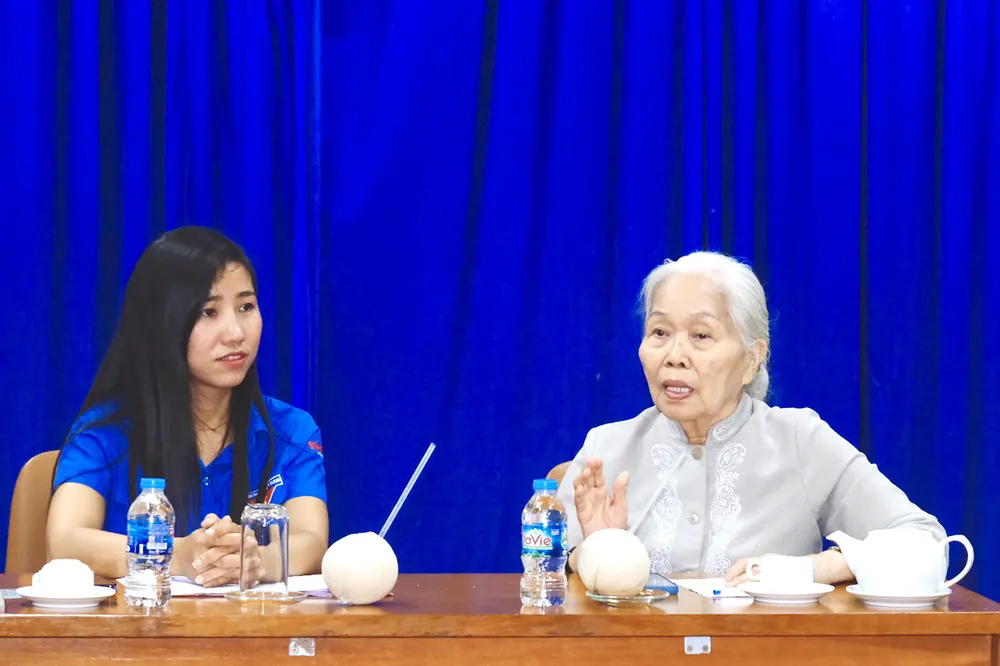
Throughout the conversation, Ms. Tu Cam repeatedly emphasized the importance of mental strength. It was this mental strength, willpower, and integrity of the revolutionary soldiers that enabled them to uphold their ideals and live lives worthy of themselves, their comrades, and their country.
She specifically addressed the youth union members of the Saigon Giai Phong Newspaper in particular, and young people in general, about the responsibilities of the younger generation in the new era. “That is the spirit of striving to contribute even more to the renewal of the city and the country. Each young person needs to define their values and ideals for society, understand what they are doing, and know how to develop themselves,” she emphasized.
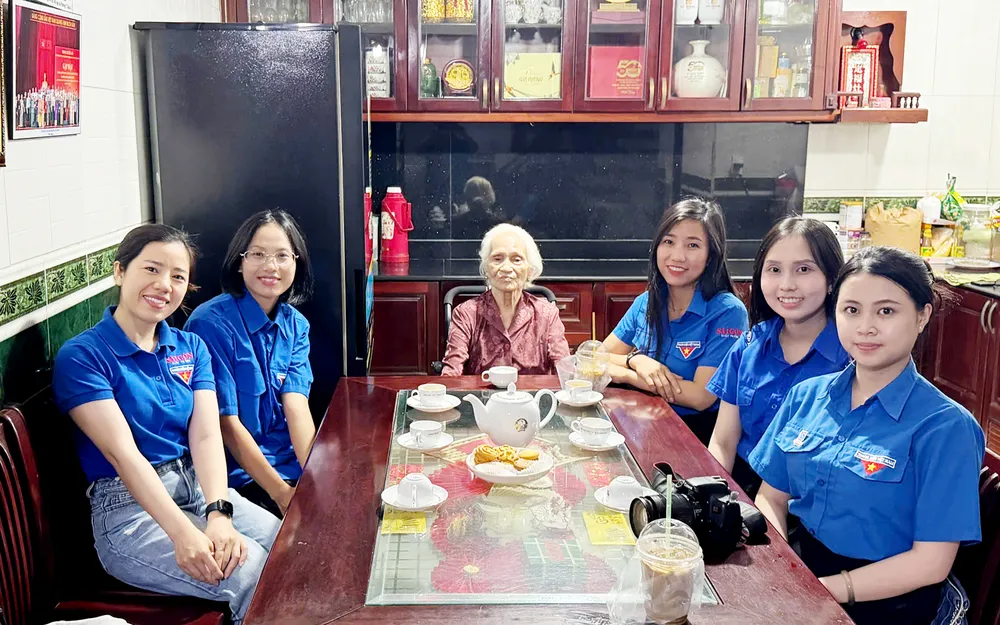
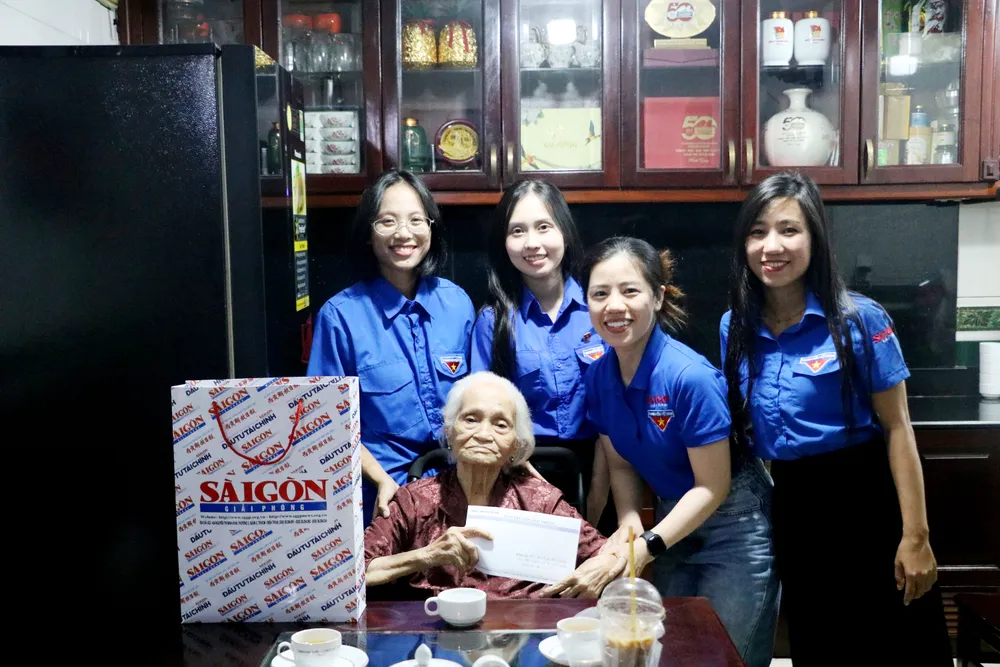
On the same day, the Saigon Liberation Newspaper delegation visited and presented gifts to Heroic Vietnamese Mother Vo Thi Tuoi (currently living in An Dong ward, Ho Chi Minh City). Mother Tuoi is 90 years old this year, and her husband and sons bravely sacrificed their lives in the resistance war to protect the Fatherland.
Source: https://www.sggp.org.vn/tri-an-va-tu-hao-post845027.html






















![[Workers' Month 2026] Spreading love on the Vinh - Dong Hoi frontline: Nearly 1 billion VND spent on caring for the lives of workers.](https://vphoto.vietnam.vn/thumb/402x226/vietnam/resource/IMAGE/2026/05/20/1779237885217_img_8650.jpeg)























Comment (0)