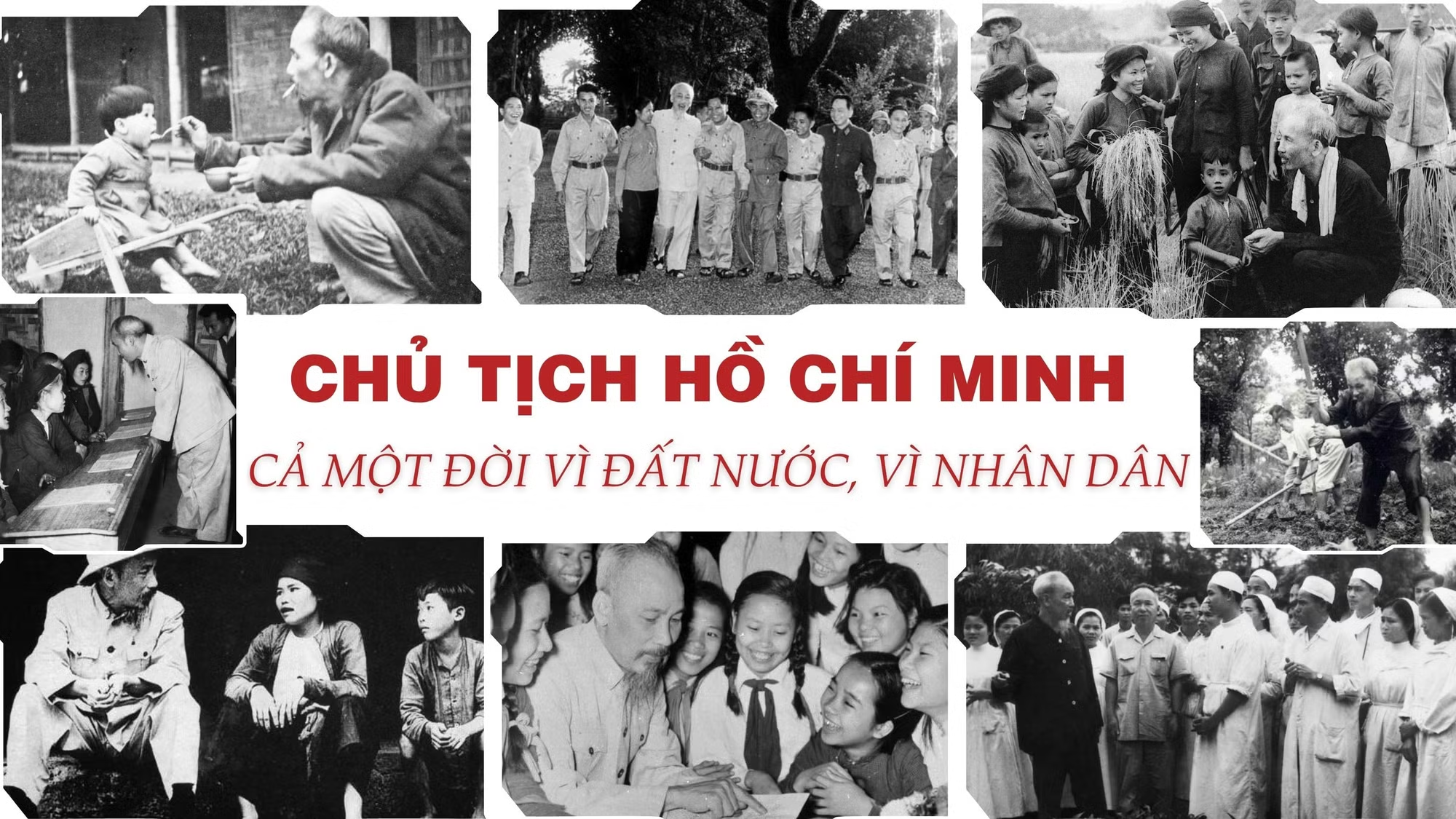
Not only was President Ho Chi Minh a brilliant leader and a national liberation hero, but he was also a sublime symbol of compassion, self-sacrifice, and boundless love for humanity.
Among President Ho Chi Minh's noble qualities, his love for humanity held a particularly important place. It was both the driving force behind his tireless work for the nation and its people, and the foundation for uniting all strata of society in the struggle for national liberation and nation-building.
That love became the red thread running through his thoughts, morals, and lifestyle; it was the source of strength that motivated him to dedicate his entire life to national independence, freedom, and the happiness of the people.
In the context of national renewal and deep international integration, studying and following Ho Chi Minh's ideology, ethics, and style, especially learning from his example of loving-kindness, is even more profound and urgent for every cadre, Party member, and the entire society.
Love for humanity - a noble quality of President Ho Chi Minh
Among President Ho Chi Minh's noble qualities, his love for humanity held a particularly important place. It was both the driving force behind his tireless work for the nation and its people, and the foundation for uniting all strata of society in the struggle for national liberation and nation-building.
According to President Ho Chi Minh, loving humanity means first and foremost loving our compatriots, the working people, the poor, the oppressed, and the exploited. Therefore, he dedicated his entire life to fighting for national independence, bringing freedom, food, and clothing to the people. His greatest aspiration is expressed in his immortal words: "I have only one desire, an ultimate desire, which is to see our country completely independent, our people completely free, and all our compatriots having enough food and clothing, and access to education."
That was the message President Ho Chi Minh sent to the people, becoming the banner of struggle and the goal of his lifelong sacrifice and dedication.
With that boundless love, throughout his life, he dedicated himself to the revolutionary cause of the nation and the happiness of the people. He affirmed: "If the country is independent but the people are not free, then independence is meaningless"; "If we gain freedom and independence but the people are still starving and freezing, then freedom and independence are useless. The people only truly understand the value of freedom and independence when they are well-fed and well-clothed."
Spread love through concrete actions.
Uncle Ho's love for humanity was very concrete and clear, from major to minor matters, such as: striving to liberate people from oppression and exploitation, granting them freedom and happiness; helping people gradually escape from lives of hunger, poverty, deprivation, and hardship, even down to their meals, clothing, shelter, and employment…
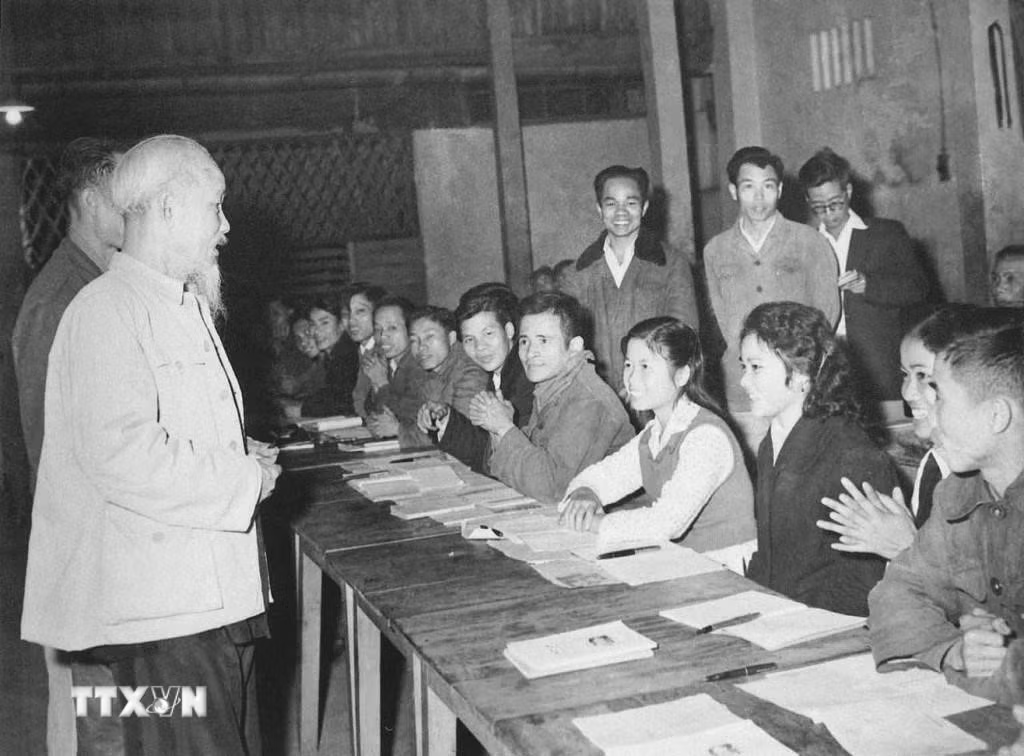
Uncle Ho highly valued the role of the people, respecting everyone from scientists and talented individuals to sanitation workers. According to him, from the President to the ordinary worker, if they perform their duties well, they are all equally respected and honored.
President Ho Chi Minh's love for humanity was simple yet noble. That love wasn't expressed through lofty words or empty slogans, but through concrete actions, words, and deeds.
Immediately after the success of the August Revolution, the fledgling revolutionary government had to cope with countless difficulties and challenges, facing a precarious situation. Along with droughts, natural disasters, and floods, our people were starving everywhere.
"I have only one desire, an overwhelming desire, to see our country completely independent, our people completely free, and all our compatriots having enough food and clothing, and access to education."
President Ho Chi Minh
In the first session of the Government Council on September 3, 1945, President Ho Chi Minh called on the entire nation to compete in "eradicating hunger, illiteracy, and foreign invaders." He believed in the strength of the people, in the spirit and enthusiasm of the entire nation – the greatest internal strength that could enable the nation to overcome all difficulties and dangers in the struggle against all enemies to protect and build the country.
Therefore, to overcome the famine, he proposed that the Government Council launch a campaign to increase production and open a fundraising campaign to alleviate hunger. On December 7, 1945, in a letter to Vietnamese farmers, he urgently appealed: “Increase production! Increase production immediately! Increase production even more! That is the practical way for us to maintain our freedom and independence.”
Responding to his call, the whole country competed to implement the principle of "every inch of land is worth its weight in gold," and "not a single inch of land left fallow." He, along with ministers and government officials, participated in production after work hours, genuinely increasing agricultural output, not just formally. While waiting for the harvest of corn, potatoes, cassava, etc.

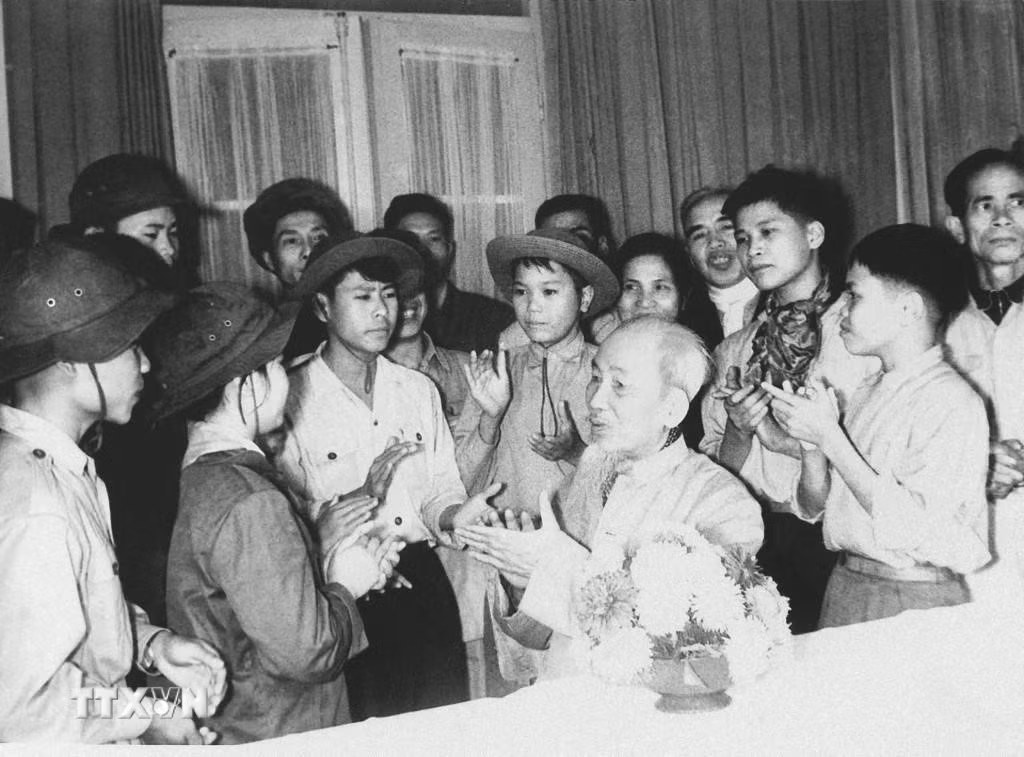
Uncle Ho with young heroes from the South visiting the North (February 13, 1969). (Photo: VNA archives)
The initiator of the "rice jar for famine relief" fundraising movement, who urged people to skip one meal every 10 days to save rice for the poor, set an example by doing so himself. At the opening ceremony of the fundraising campaign held at the Hanoi Opera House, he was the first to donate the rice he had saved from his own fasting.
Uncle Ho's exemplary actions inspired the entire nation to follow suit. With heartfelt and moving words, he wrote a letter encouraging the people to uphold the spirit of "sharing food and clothing" to save the poor: "When we lift our bowls of rice to eat, thinking of those who are hungry and suffering, we cannot help but be moved. Therefore, I propose to the people of the whole country, and I will practice it first: Every 10 days, skip one meal, three meals a month. Use that rice to save the poor." Thanks to this initiative, every week the people of the whole country donated tens of thousands of tons of rice to alleviate famine, helping many poor people overcome the terrible famine of 1945.
During the years he lived and worked at the Presidential Palace (1954-1969), his boundless compassion was deeply reflected in his concern and sharing with each individual: first and foremost, with those in the most arduous fighting positions; sharing the sorrow and empathizing with those who suffered losses and sacrifices; being tolerant and forgiving of those who made mistakes and shortcomings but now sincerely repented; persuading those who hesitated and were uncertain; cherishing young children; respecting the elderly; living harmoniously and closely with those who served around him… President Ho Chi Minh's love for humanity was not pity, nor was it mere compassion, but a profound empathy for those in similar circumstances, understanding the suffering and sacrifices of his compatriots.
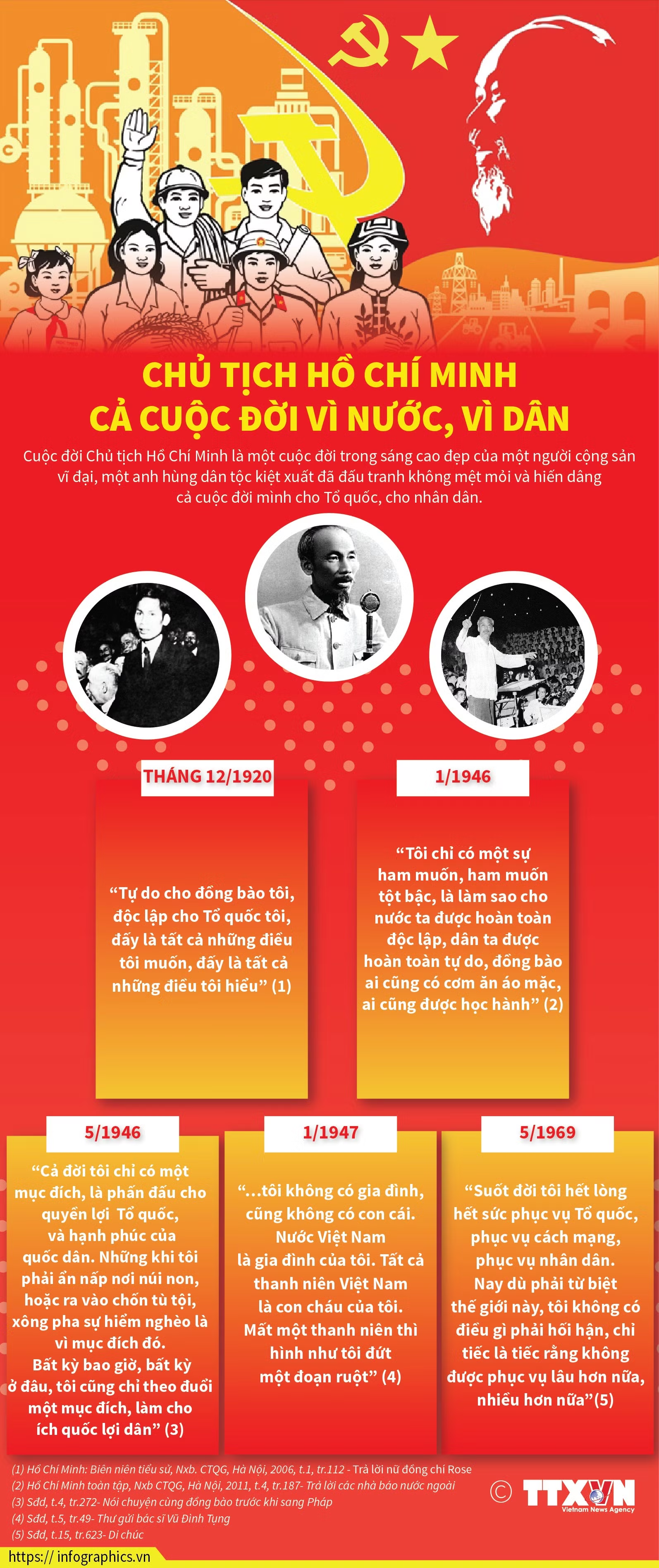
The period when President Ho Chi Minh lived and worked at the Presidential Palace coincided with the years when the country was divided into two regions, North and South. The people of the South suffered many losses and sacrifices due to the brutal massacres perpetrated by the invading American imperialists. President Ho Chi Minh always showed deep affection for the people and soldiers of the South: “As long as the South remains unliberated, I cannot eat or sleep peacefully”; “In the South, each person, each family has their own suffering, and when you combine all the individual sufferings of each person and each family, it becomes my suffering.”
President Ho Chi Minh's love for humanity was also demonstrated in his care and concern for his compatriots, comrades, elderly people, young people, children, and soldiers on the front lines.
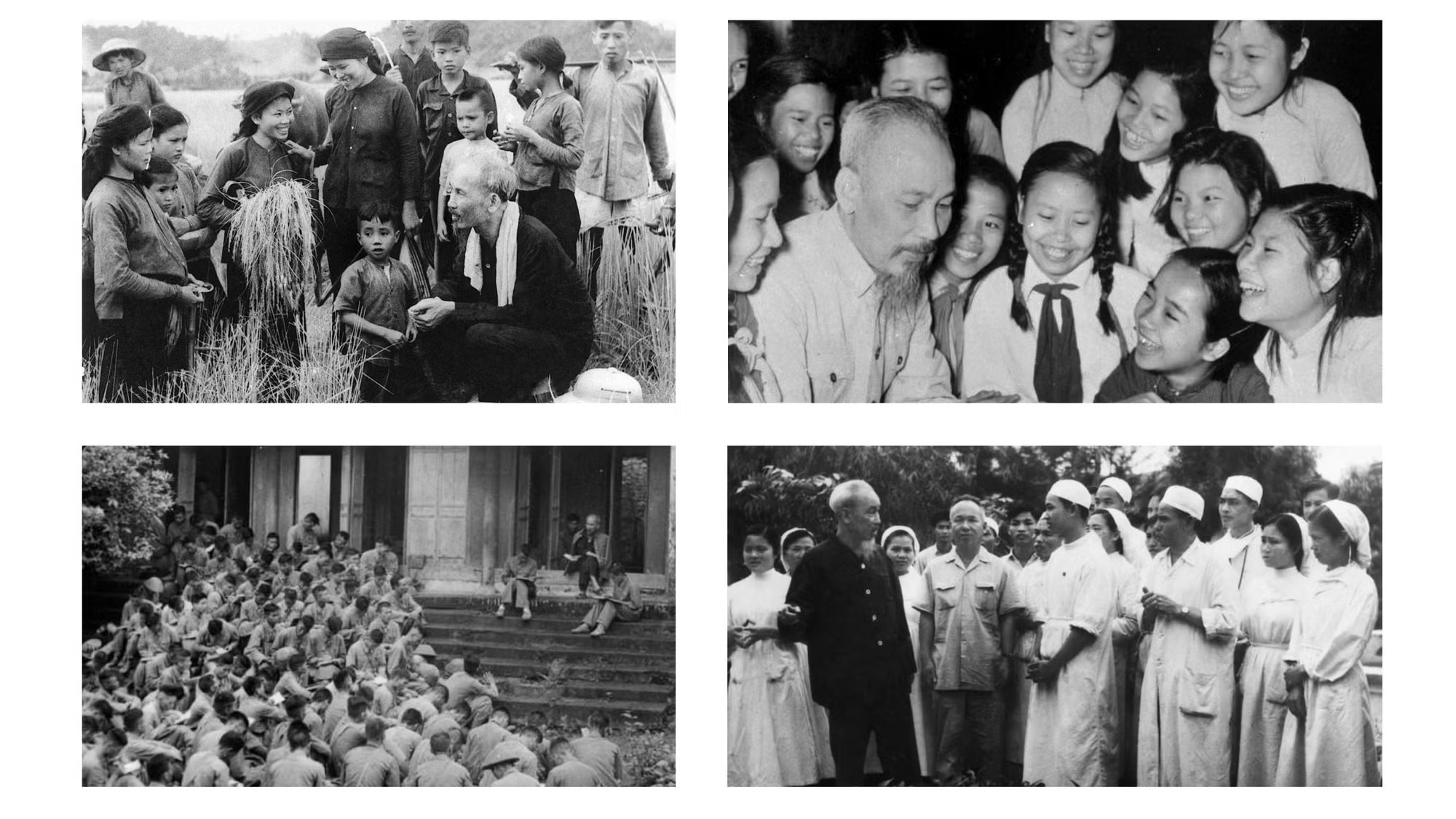
He believed that whatever benefited the people and the nation was the truth, and he considered serving the people as serving the truth, and being a servant of the people as a noble deed. Therefore, his revolutionary life is a model of closeness to the people, respect, and service to the people.
Compassion, tolerance, and love for humanity were the red thread running through the thoughts and feelings of President Ho Chi Minh. Until his passing, in his will, Ho Chi Minh instructed: "Throughout my life, I have wholeheartedly and devotedly served the Fatherland, the revolution, and the people. Now, even though I must leave this world, I have nothing to regret, only that I could not serve longer and more. Finally, I leave behind my boundless love for the entire people, the entire Party, the entire army, and the young people and children. I also send my warmest greetings to my comrades, friends, and the young people and children of the international community."
The light of Ho Chi Minh guides the way.
The life and character of President Ho Chi Minh will forever be a shining symbol of Vietnamese humanism. His love for humanity will continue to illuminate the souls of generations today and tomorrow, like fertile soil nourishing the Vietnamese nation for its enduring existence and development.
Learning from President Ho Chi Minh is not only about learning great things, but also about learning how to live with compassion, sharing, caring for others, and being responsible to the community and the country. This is also the foundation for building a civilized, compassionate, and sustainably developing society.
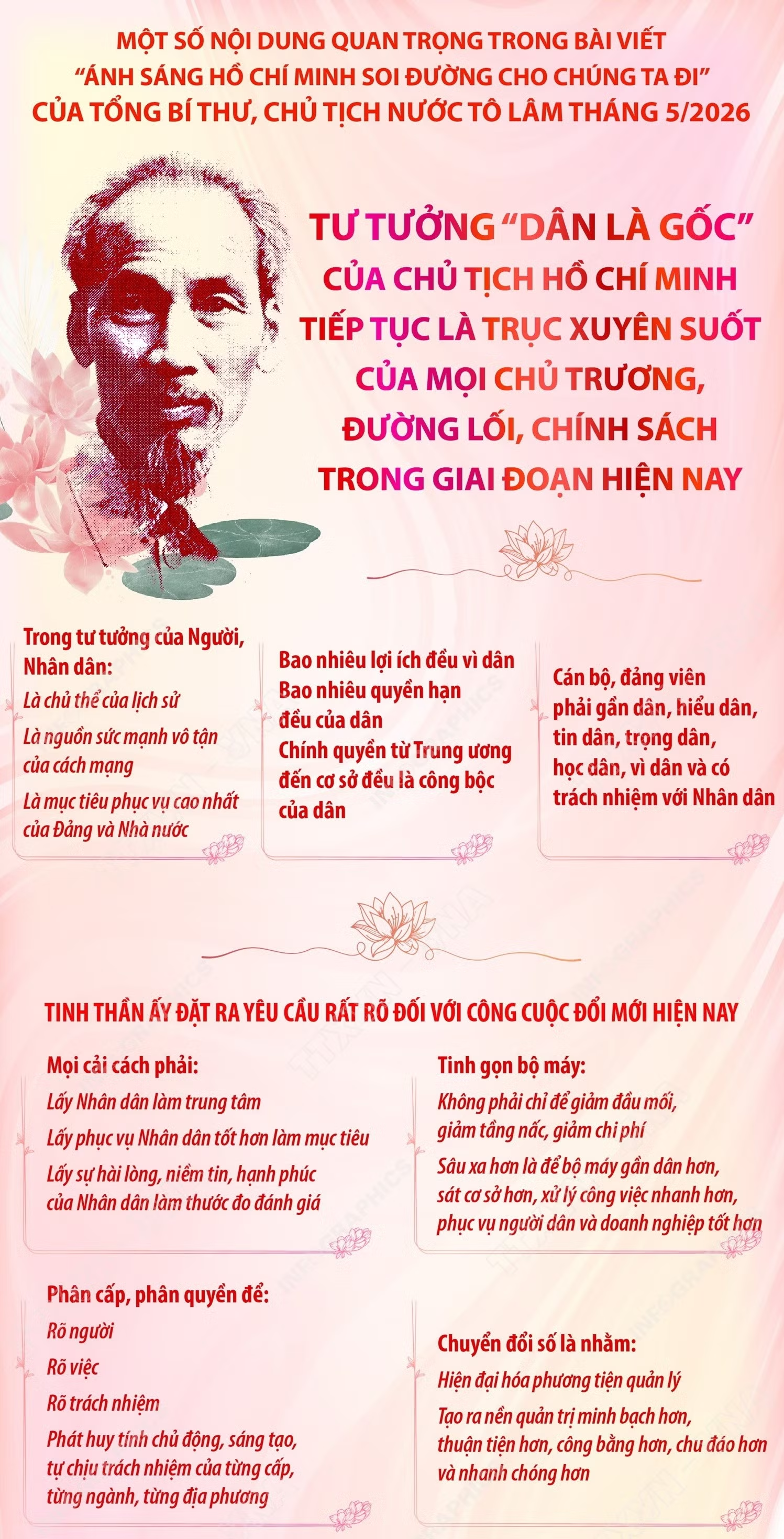
President Ho Chi Minh's ideology of "the people are the foundation" sets very clear requirements for the current reform process: all reforms must be centered on the people, aimed at better serving the people, and judged by the people's satisfaction, trust, and happiness.
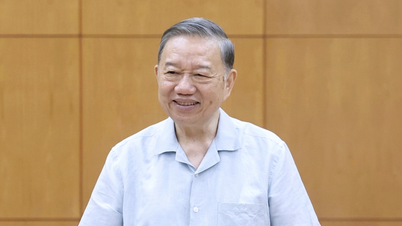
General Secretary and President To Lam
In an article titled "The Light of Ho Chi Minh Guides Our Way" commemorating the 136th anniversary of President Ho Chi Minh's birth, General Secretary and President To Lam clearly stated: President Ho Chi Minh's ideology of "the people are the foundation" continues to be the guiding principle of all policies and strategies in the current period.
In his thought, the people are the subject of history, the inexhaustible source of strength for the revolution, and the highest goal of service for the Party and the State. All benefits are for the people. All powers belong to the people. The government, from the central to the local level, is the servant of the people. Cadres and Party members must be close to the people, understand the people, trust the people, respect the people, learn from the people, work for the people, and be responsible to the people.
That spirit places very clear demands on the current reform process: all reforms must be people-centered, aimed at better serving the people, and judged by the satisfaction, trust, and happiness of the people.
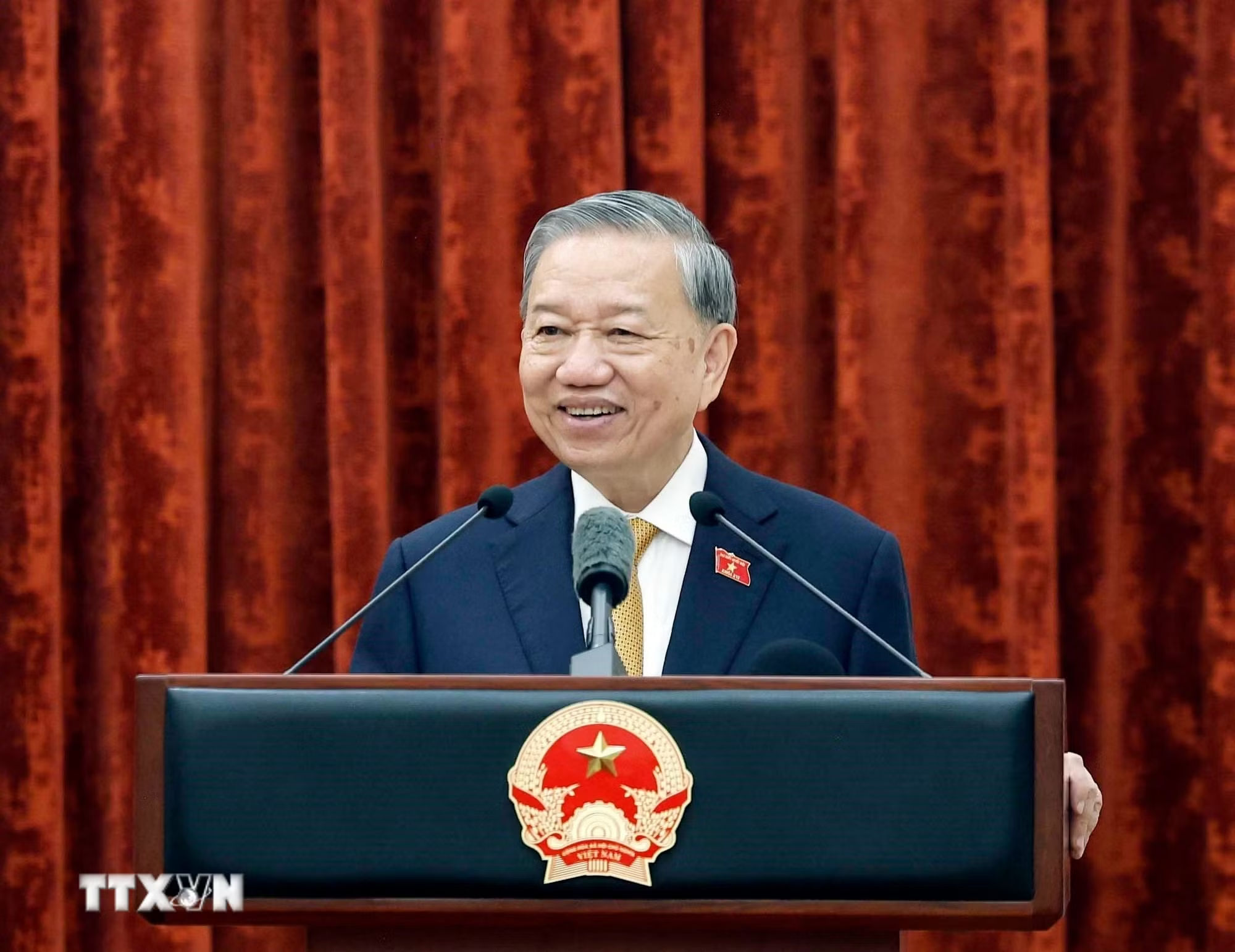
General Secretary and President To Lam. (Photo: Thong Nhat/VNA)
Streamlining the administrative apparatus is not just about reducing bureaucracy, hierarchical levels, and costs, but more fundamentally, it's about making the system closer to the people, more connected to the grassroots, handling tasks faster, and serving citizens and businesses better. Decentralization and delegation of authority ensure clarity of roles, tasks, and responsibilities, fostering initiative, creativity, and accountability at each level, sector, and locality. Digital transformation aims to modernize management tools, creating a more transparent, convenient, fair, thoughtful, and faster governance system.
According to General Secretary and President To Lam, if the Party's 14th Congress documents define a new development path for the country, then Ho Chi Minh Thought is the guiding light that will lead us on that path with unwavering resolve, correct goals, scientific methods, and profound faith in the people.
President Ho Chi Minh was not only the one who found the path to national salvation and liberation, but also the one who laid the ideological foundation for the building, protection, and development of Vietnam in the new era. For him, national independence was inextricably linked to the freedom and happiness of the people, and to socialism. National liberation was the starting point of a great journey: building a peaceful, unified, and independent Vietnam where the people are masters of their own destiny, live in prosperity, freedom, and happiness, receive education, achieve comprehensive development, and enjoy the fruits of the revolution.
Commemorating the 136th anniversary of President Ho Chi Minh's birth in the current context is not only an occasion to remember and express gratitude for his immense contributions. It is also an opportunity for the entire Party, the entire people, and the entire army to reflect on themselves in light of his thoughts, ethics, and style; to strengthen faith in the chosen path; to enhance responsibility to the Fatherland and the People; and to transform Ho Chi Minh's thought into concrete revolutionary actions in every agency, every locality, every cadre, Party member, and every citizen.
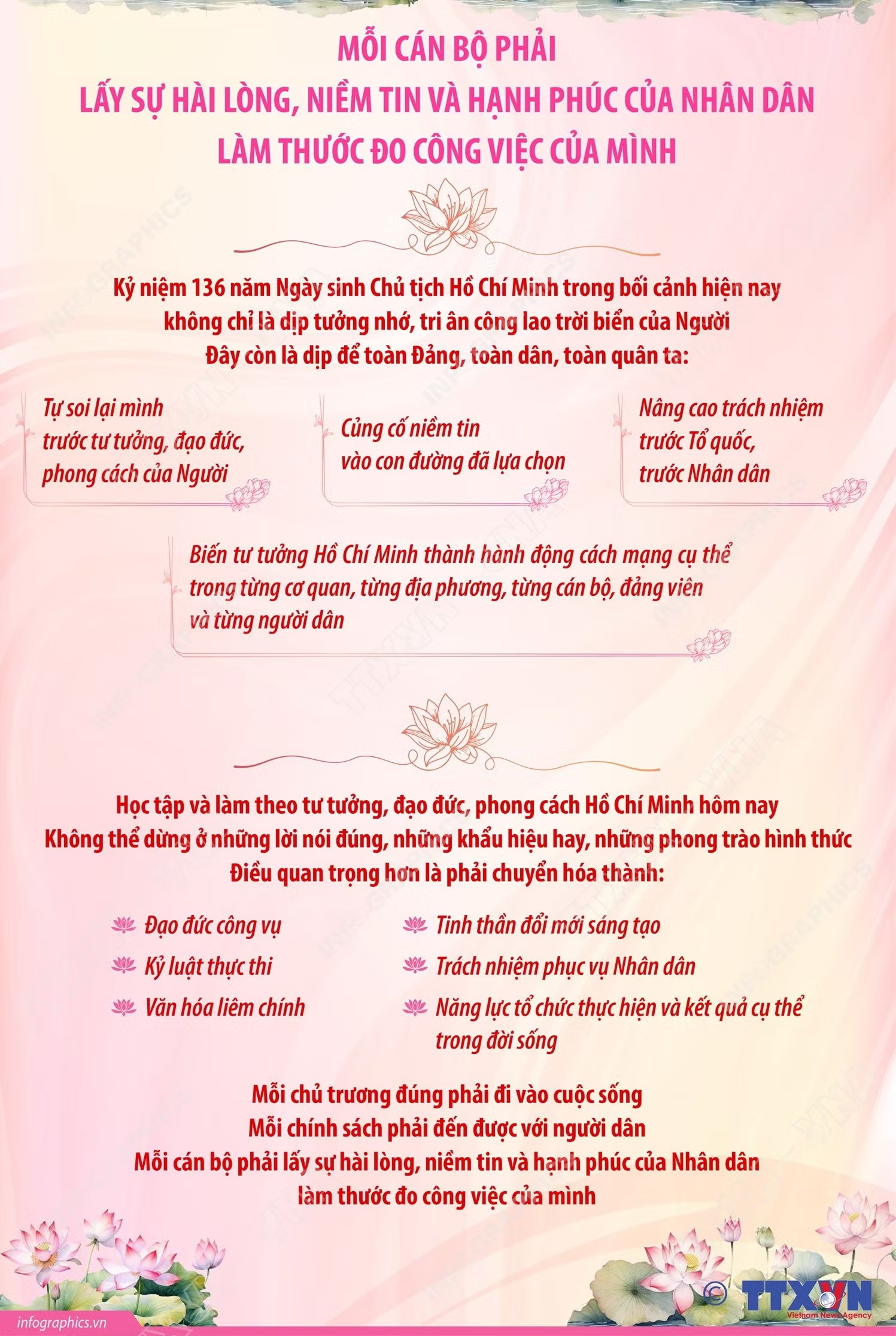
Studying and following Ho Chi Minh's ideology, ethics, and style today cannot stop at mere words, catchy slogans, or superficial movements. More importantly, it must transform into public service ethics, disciplined implementation, a culture of integrity, a spirit of innovation and creativity, responsibility to serve the people, organizational capacity, and concrete results in daily life. Every correct policy must be put into practice. Every policy must reach the people. Every official must use the satisfaction, trust, and happiness of the people as the measure of their work.
General Secretary and President To Lam affirmed that the era of national progress places very high demands on the entire political system. We must be steadfast but not conservative; innovative but not deviating from the path; develop rapidly but sustainably; integrate deeply but maintain independence and self-reliance; build a streamlined apparatus but ensure better service to the people; develop a strong economy but ensure social progress, equity, and the happiness of the people. This is also the spirit of Ho Chi Minh in the new conditions: steadfast in goals, creative in methods, practical in action, humane in purpose, putting the people first, and placing national interests above all else.
Under the guidance of Ho Chi Minh, with the courage, wisdom, will, and aspirations of Vietnam, the entire Party, people, and army will certainly successfully implement the Resolution of the 14th National Congress of the Party, achieve the two strategic goals of the 100-year period, and realize the aspiration for a strong and prosperous nation, standing shoulder to shoulder with the great powers of the world, as our beloved President Ho Chi Minh always wished.
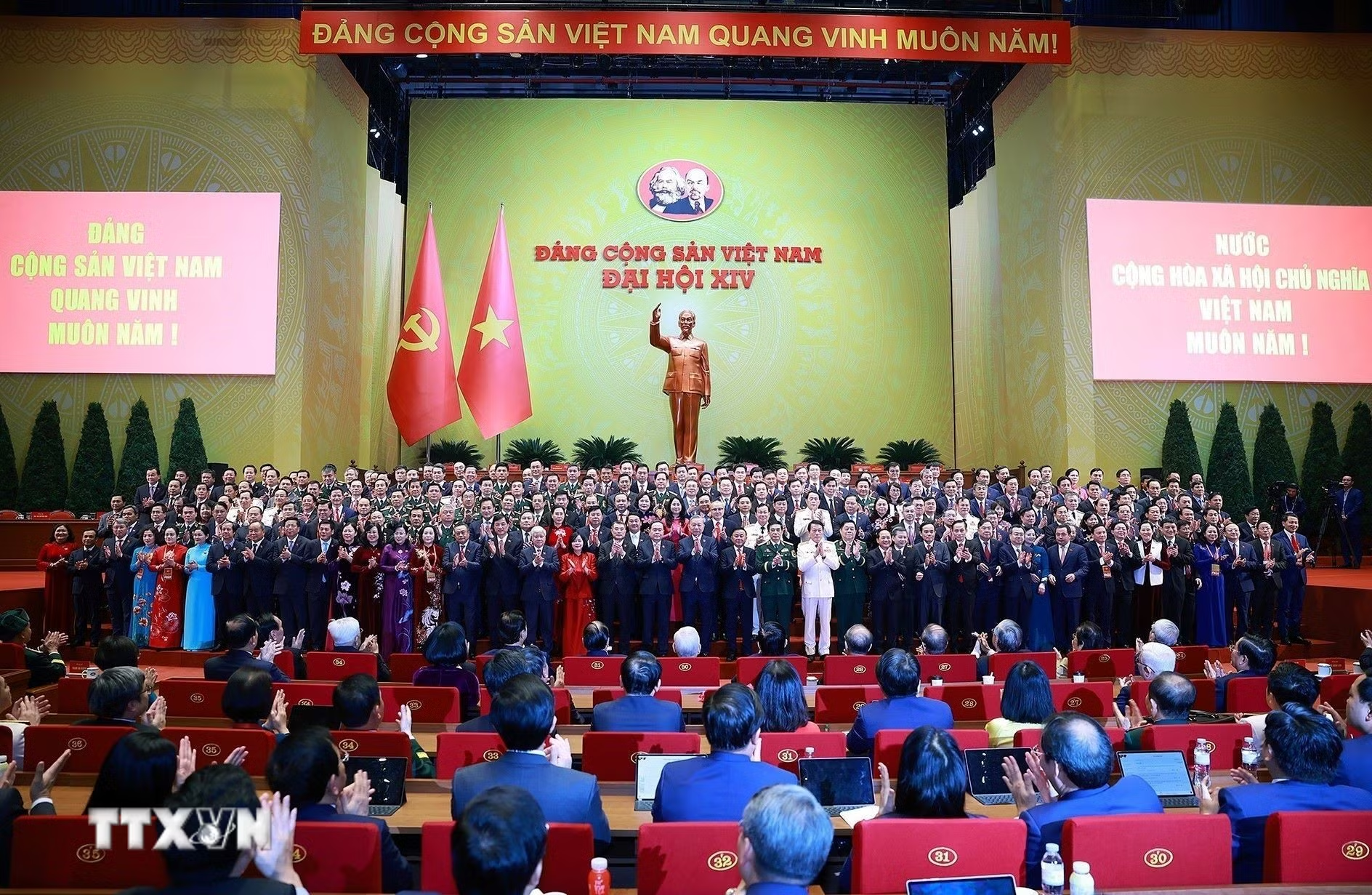
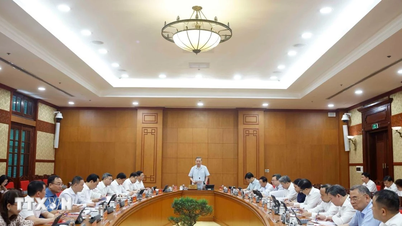
The 14th Central Committee of the Communist Party of Vietnam is introduced at the Congress. (Photo: VNA)
(Vietnam+)
Source: https://www.vietnamplus.vn/chu-tich-ho-chi-minh-ca-mot-doi-vi-dat-nuoc-vi-nhan-dan-post1111107.vnp


![[Image] Hanoi's urban life under the challenge of a "scorching hot" environment](https://vphoto.vietnam.vn/thumb/1200x675/vietnam/resource/IMAGE/2026/05/25/1779706979265_nang-nong-t5-2026-minh-duy-7-4636-jpg.webp)

![[Image] Close-up view of the interchange connecting the two expressways and Long Thanh Airport.](https://vphoto.vietnam.vn/thumb/1200x675/vietnam/resource/IMAGE/2026/05/25/1779703378210_ndo_br_z7863716673926-224453a31600126cce10622af6290afd-4549-jpg.webp)
































































Comment (0)