A DIFFICULT JOURNEY TO NURTURE DREAMS
Buon Don, a land steeped in legends of elephant hunting and taming, has long been etched in the minds of visitors with its distinctive Central Highlands culture . The longhouses stretching as far as the eye can see, the resonant sounds of gongs echoing through the mountains, and the slow pace of life of the ethnic minority communities create an atmosphere that is both wild and captivating.
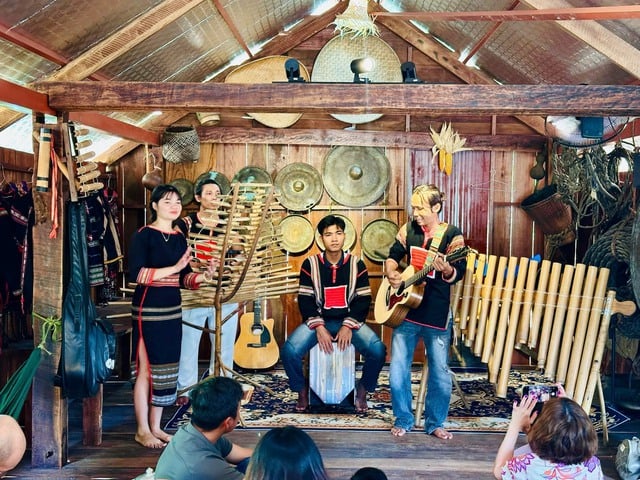
Buon Don is developing a community-based tourism model.
PHOTO: Huu Tu
However, over time, the hustle and bustle gradually faded. Visitors came and went, few lingering long enough to fully appreciate the soul of the land. It was in this quiet period that Y Kham Bun Hua Hwing (31 years old, from Tri village, Buon Don commune), a young man of Vietnamese-Lao descent, nurtured a dream of encouraging tourists to stay, live with the villagers, and understand the warmth of the local people.
Born and raised amidst the sounds of gongs and drums in the mountains, Bun Hua couldn't bear to see his village deserted. "Before, the longhouses were almost empty; visitors would just stop by and leave. I've always wondered how to get them to stay, to understand the meaning and the affection of the people here," he shared.
In early 2024, that dream began to take shape, but it was also when he faced his first challenges. Lacking substantial resources, Bun Hua decided to borrow 100 million VND from the bank, adding it to his savings from years of freelance photography and performing arts, to embark on building a community tourism model.
Instead of hiring professional builders, he and his fellow villagers constructed each part of the house themselves. Bamboo was cut from the forest, the iron frames were welded using learned techniques, and the roof was constructed by the villagers' own hands. Each pillar erected was not just a material but also represented the sweat and collective effort of the entire community.
Advertisements
X
What's remarkable is that the locals help him not for money. They reciprocate with shared meals and lively conversations around the fireplace. This sense of community, seemingly simple, is actually the most solid foundation for the tourism model that Bun Hua is building.
LISTEN TO IMPROVE STEP BY STEP
As the facilities gradually improved, a new challenge arose: How to attract customers? Without a large advertising budget, Bun Hua and a group of young people from the village leveraged social media. Images of their longhouses, traditional meals, and campfire nights were regularly posted. Initially, there were only a few individual visitors, but each person who came left valuable feedback.
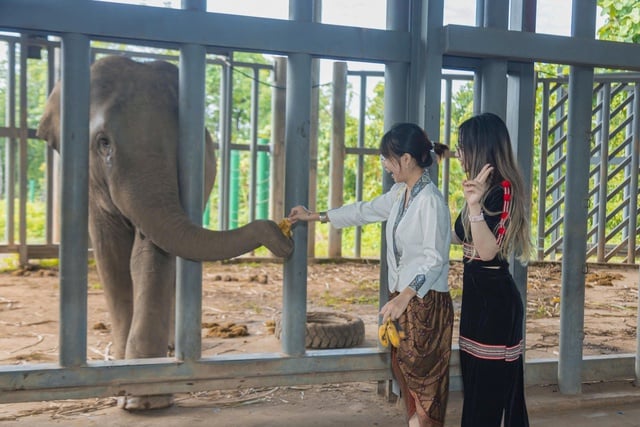
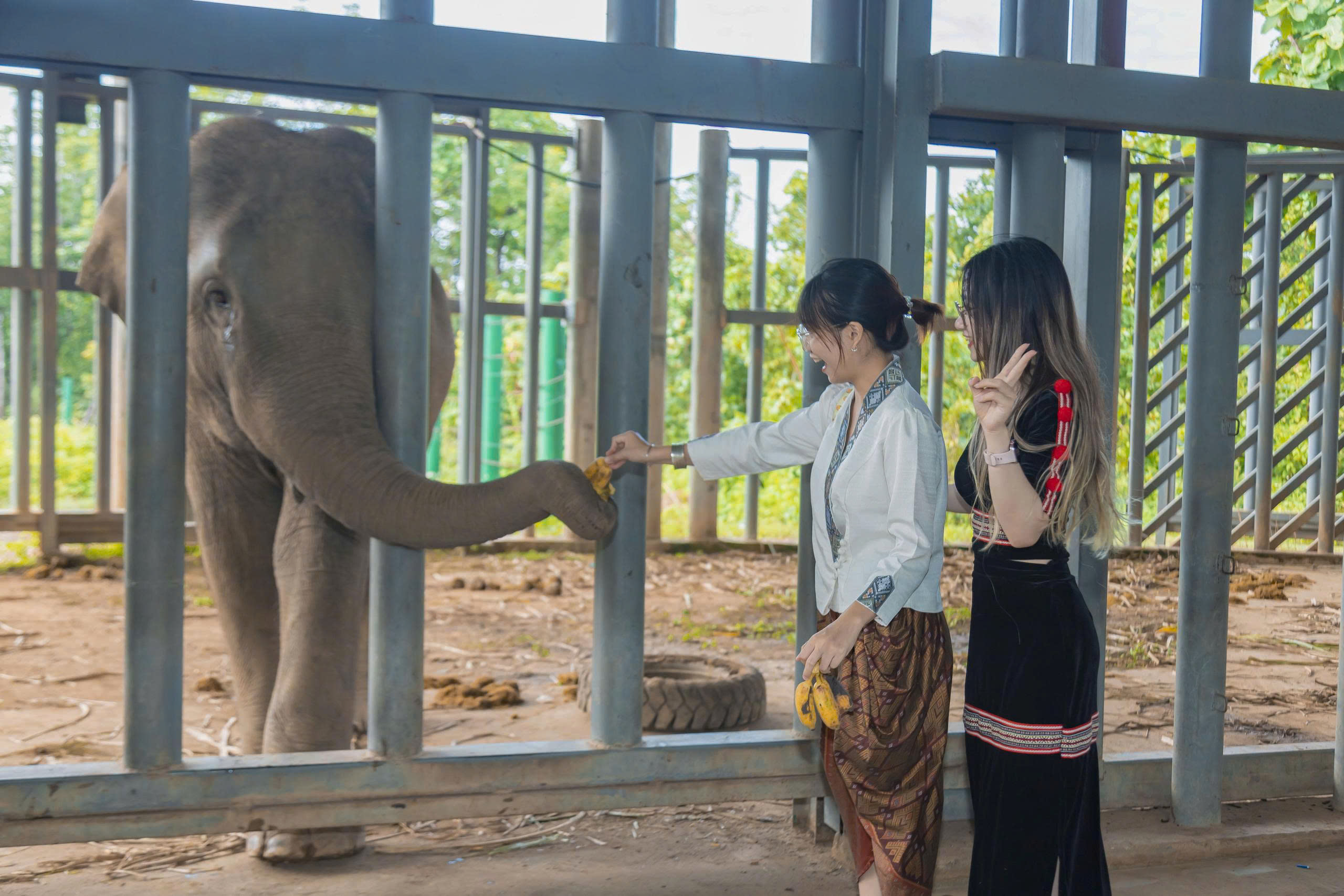
Tourists experience feeding elephants in Buon Don.
PHOTO: Huu Tu
"Each customer is an opportunity for us to learn more. They offer suggestions on everything from how to welcome and serve customers to preserving our cultural identity. Thanks to that, the model is gradually becoming more refined," Bun Hua said.
Although it hasn't been officially operating for long, Bun Hua in Buon Don has already begun to gain recognition from many tourists and travel agencies. The number of foreign tour groups visiting the village is increasing. There are memories that Bun Hua will never forget, such as evenings spent gathering around the campfire, singing and playing music with the family until late at night before leaving.
On one occasion, a foreign female tourist, after experiencing the service, frankly commented that the stilt house was a bit hot due to the dry season in the Central Highlands. But instead of complaining, she sent additional money to help Bun Hua upgrade its services.
"It was the customers' feelings that motivated us. They gave us suggestions on how to promote our products and services more professionally, while still maintaining our unique character, our individuality, and our national cultural identity," Bun Hua recalled.
Language barriers are also a significant obstacle. Every time Bun Hua welcomes international guests, he has to hire an interpreter from the city, costing up to a million dong per day. He and the young people in the village are quietly learning English on their own. According to him, language is not only a tool for communication, but also a key to telling the story of their ancestors and to spreading their local culture more fully.
DOING TOURISM WITH THE HEART OF THE VILLAGE
What is particularly significant about Bun Hua's tour model is its community-oriented approach, developing tourism alongside the local people in the village. In his thinking, tourism should be an ecosystem where all residents benefit.
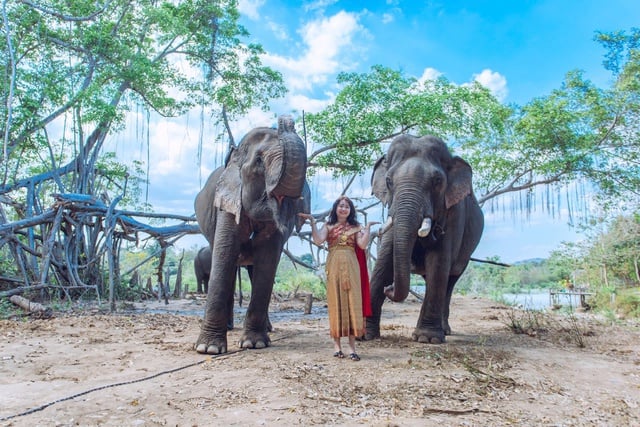
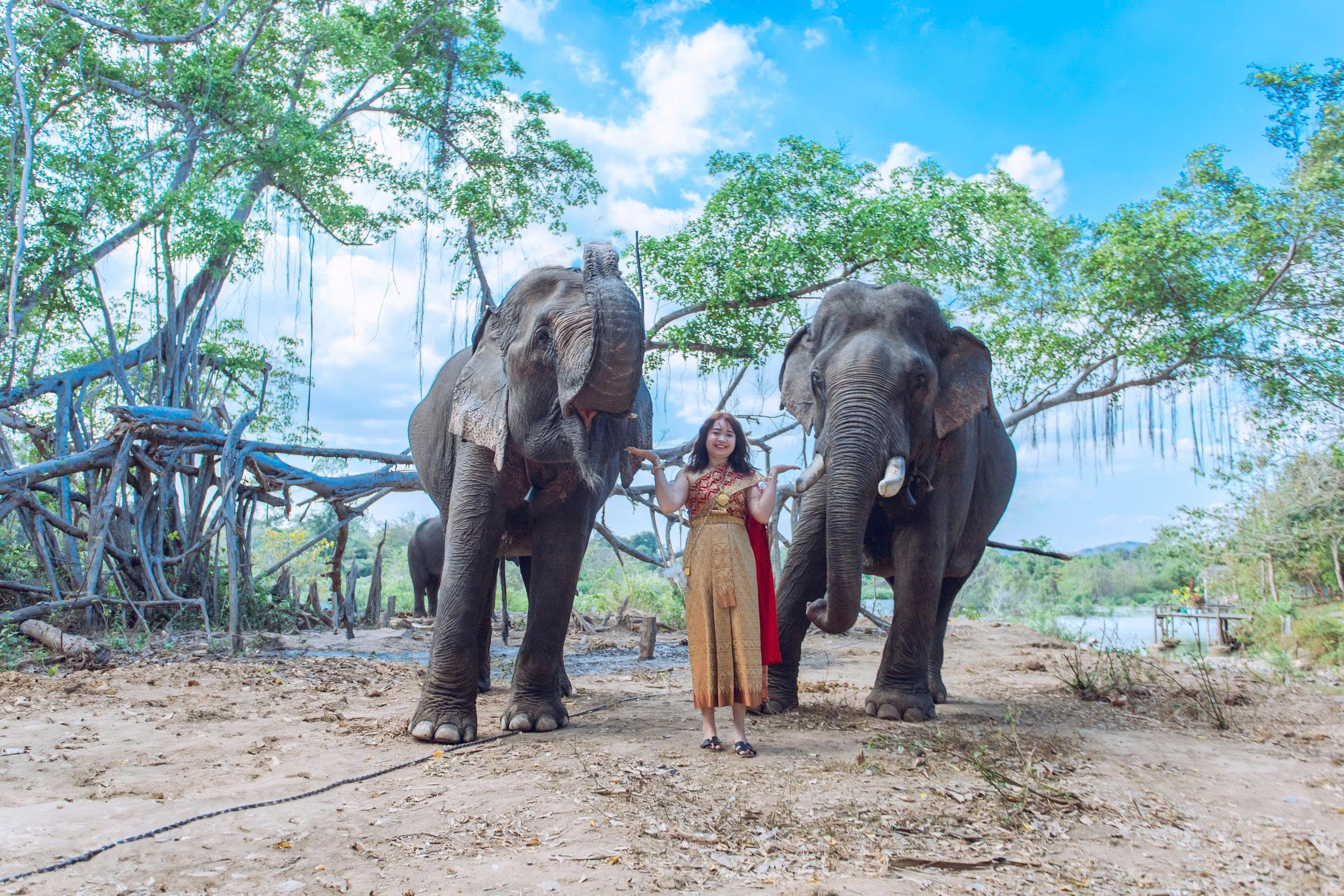
Y Kham Bun Hua Hwing's tourism model is popular with many tourists because of its close interaction with domesticated elephants and the traditional clothing of the Lao and Ede people.
PHOTO: Huu Tu
"We always tell ourselves that we should never benefit alone. Community tourism loses its meaning if only one person gets rich. When we have tourists booking tours, instead of going to the market to buy food, we prioritize buying chicken, bamboo shoots, and fish from the households in our village. If the tour group needs help, we invite the elderly and women in the village to assist with a fair wage," Bun Hua explained.
Currently, his experiential tourism model has created jobs for about 30-40 people in the village, from the gong and drum team and dance group to those providing logistical support.
"I hope that in the future, Tri village will become a destination where each house offers a unique experience. One house will sell traditional baskets, another will introduce epics, and yet another will welcome guests to stay overnight... The road into the village will be more beautiful, and the lives of the villagers will be more prosperous thanks to the cultural values that blend the M'nong, Lao, Ede, and other ethnic minority groups," Bun Hua shared.
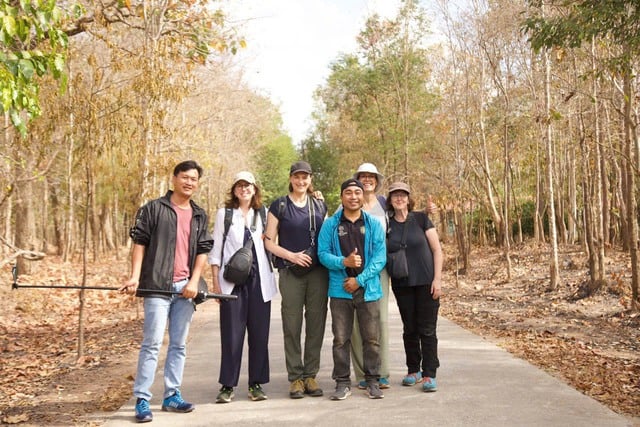
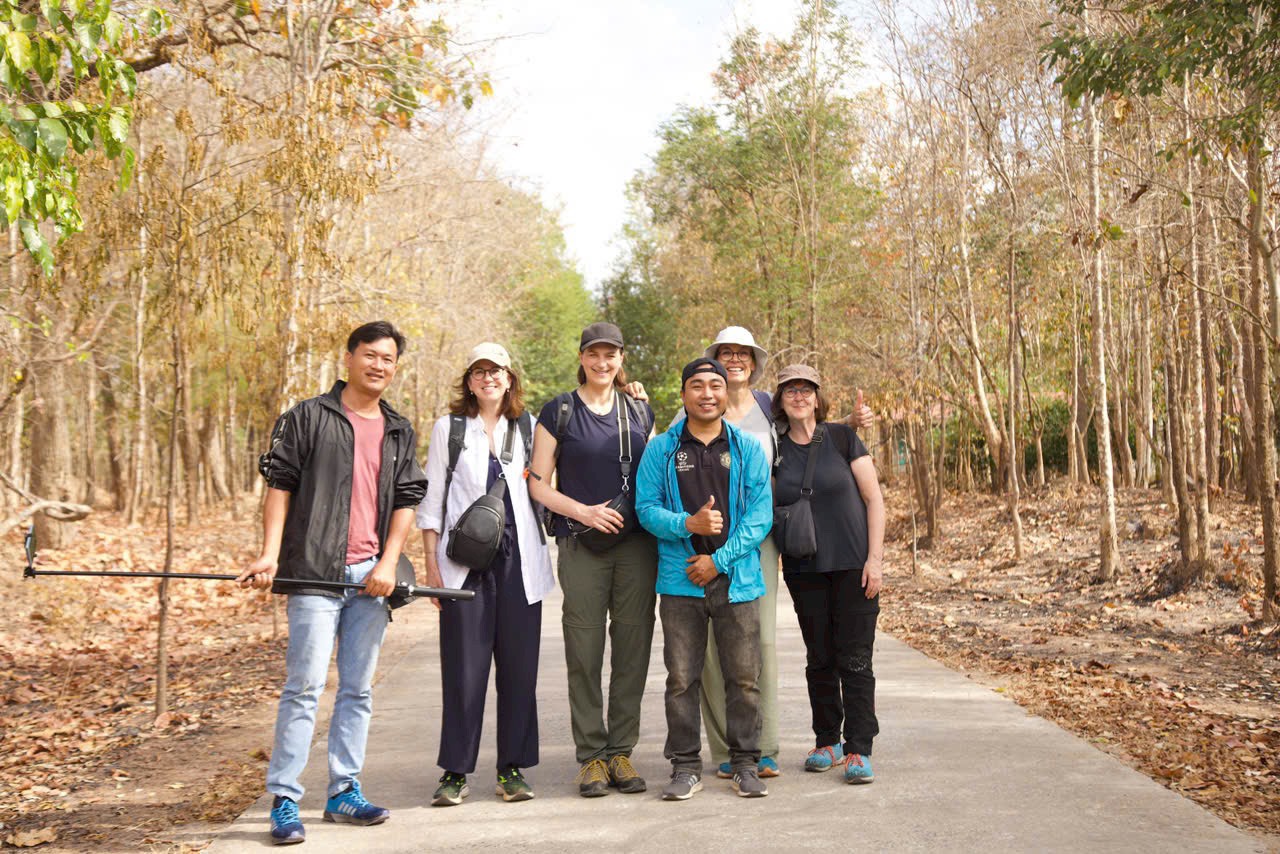
Y Kham Bun Hua Hwing (third from the right) welcomes a group of foreign visitors to Buon Don.
PHOTO: Huu Tu
That dream is not unrealistic. Behind Bun Hua is not just individual willpower, but also support from the local government. Mr. Le Phuc Long, Deputy Director of the Department of Culture, Sports and Tourism of Dak Lak province, said that the province has selected 5 out of 17 villages to prioritize community tourism development, including Tri village. Infrastructure projects have been invested in, and the people have received training and learned from successful models in northern provinces.
According to Mr. Long, the model of the Y Kham Bun Hua Hwing family has initially proven effective. Tourists not only visit but also directly participate in cultural activities such as making bracelets and enjoying traditional cuisine , creating a deep interaction. "This is a direction that helps preserve culture, create sustainable livelihoods, and diversify the province's tourism products," he emphasized.
Bun Hua said the road ahead is still full of challenges, from upgrading infrastructure to improving services and expanding the market. However, he believes that community tourism can develop from its own local values, from the flickering firelight of gong nights and the harmonious laughter of tourists and locals. It is this simple story that creates lasting appeal, touching emotions with the genuine warmth of the mountains.
Source: https://thanhnien.vn/chang-trai-viet-lao-thap-lua-du-lich-buon-don-185260427232534613.htmnha





































































Comment (0)