A masterpiece of nature
Having just passed the winding mountain pass, looking down into the lush green valley, you can see the H'Mun hydroelectric power plant situated beside the Ayun River, which meanders around the towering mountain ranges.
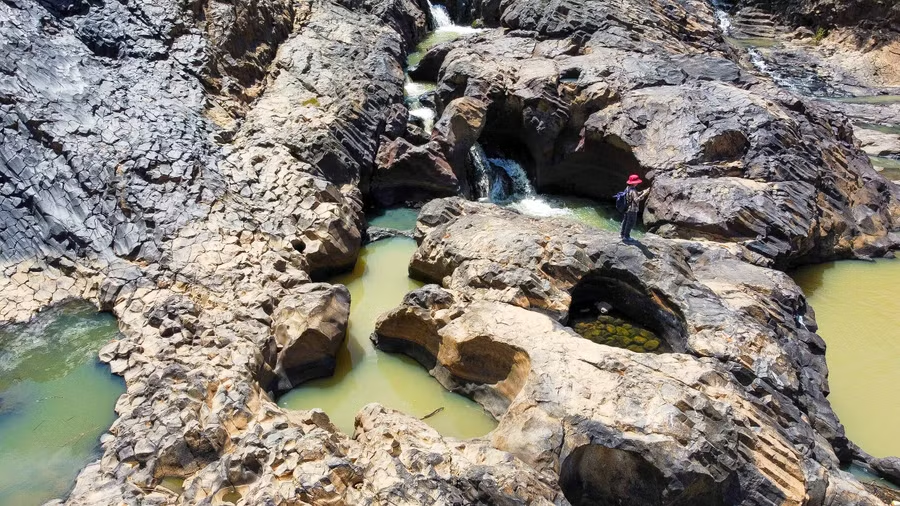
From here, heading up towards the H'Chan hydroelectric dam, the entire 4-kilometer stretch is bordered by forest on one side and the Ayun River on the other, with cylindrical rock formations rising from the green riverbed. But the feeling of awe truly begins when you set foot on the vast ancient rock formation at the foot of the H'Chan hydroelectric dam.
Thousands of rock pillars, sculpted by nature with similar dimensions, are stacked upon each other in a unique order. Besides the vertical rock formations in the middle of the river, there are also interconnected horizontal pillars, resembling a giant beehive when viewed from an angle, partly anchored in the mountains and forests, and partly extending into the riverbed.
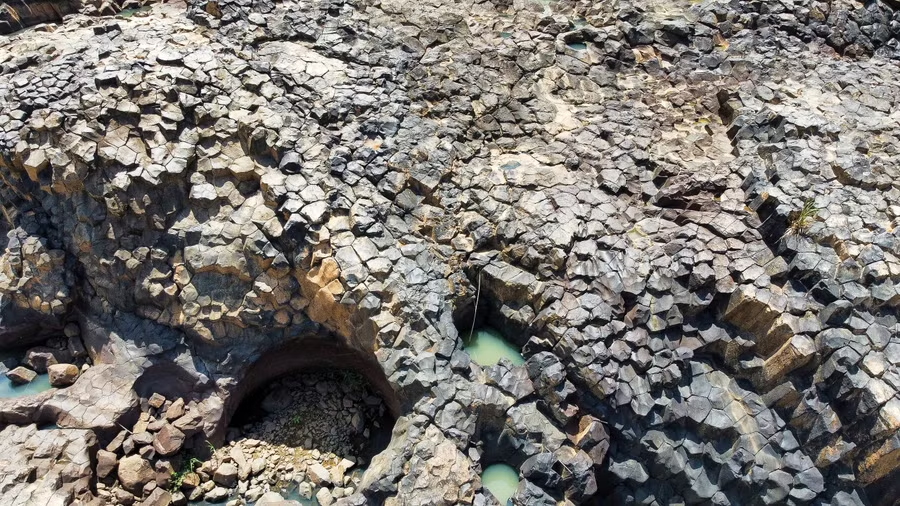
The seemingly immovable basalt formations, weathered by flowing water for millions of years, have been eroded, creating scattered, emerald-green water-filled cavities across the ancient rock formations. During the dry season, many of these cavities transform into "miniature bathing pools" amidst pristine nature.
Not far from the rocky beach is a waterfall with a similar geological structure, although it is quite isolated. Surrounding the base of the waterfall and inside the cave arch are hundreds of basalt columns stacked on top of each other. The white water cascading down between the dark rocks makes the scene even more mysterious.
The Ayun River originates from the peak of Kon Ka Kinh and joins the Ba River in the Ayun Ha area. Currently, there are five hydroelectric power plants on this river: Ayun Ha, Ayun Trung, H'Mun, H'Chan, and Plei Keo.
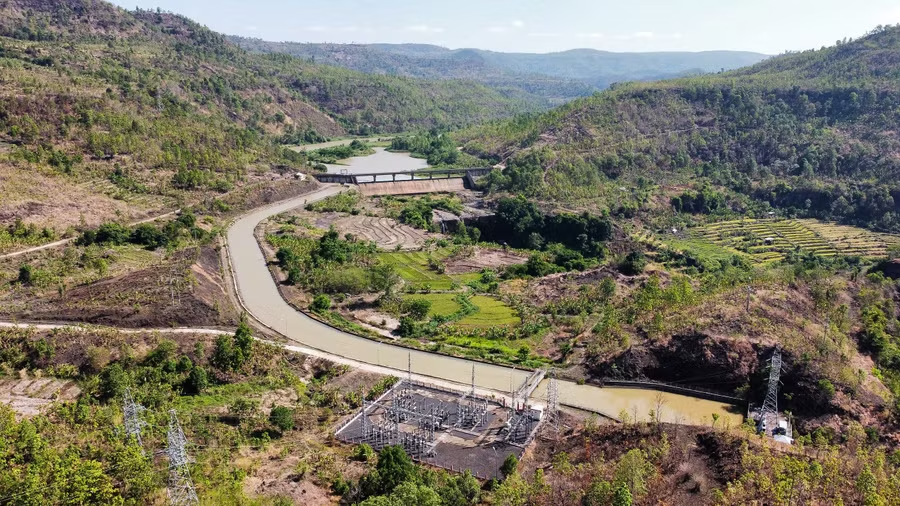
The two sites, H'Mun and H'Chan, are located about 4 km apart and are named after the two waterfalls that cascade down from the topographical variations of the Ayun River as it passes through Lo Pang commune – where the ancient rock formations are most densely distributed.

Mr. Nguyen Duy Hoan, the station manager of the H'Chan Hydropower Plant, recounted: Locals call H'Mun the "father waterfall" and H'Chan the "mother waterfall." These waterfalls have been intertwined with the lives of the local people for generations.
Scenic spots waiting to be awakened.
The H'Chan ancient rock site is many times larger than the ancient rock stream in Van village (Ia Ly commune). To date, these are the two sites where million-year-old ancient rocks have been discovered in the western part of the province.
According to archaeologist Phan Thanh Toan (Dong Thap province), these two ancient rock streams and rock formations in Gia Lai and Ganh Da Dia (Tuy An Dong commune (formerly Phu Yen province), Dak Lak province) share many similarities in geological structure and are almost entirely situated on a Northwest-Southeast axis.
Of these, the H'Chan ancient rock formation is located approximately midway, about 60 km northwest of the ancient rock stream in Van village and about 130 km as the crow flies from Ganh Da Dia.
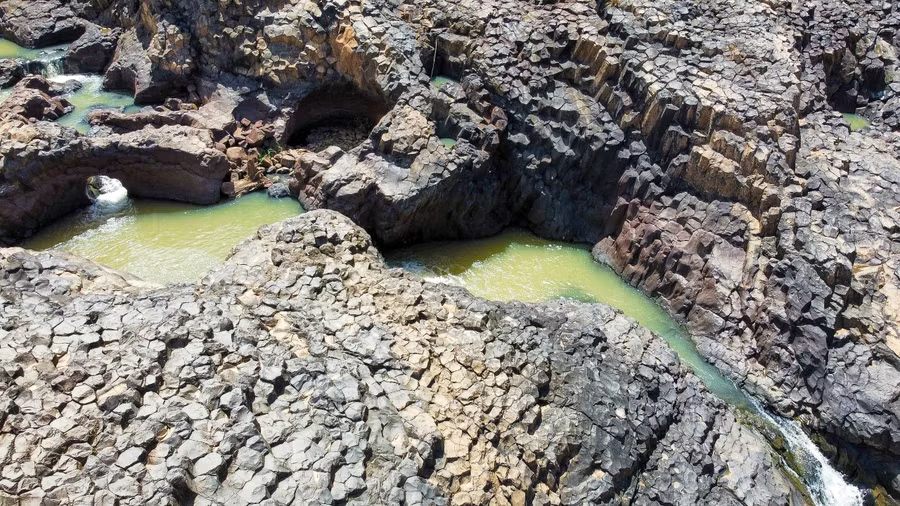
These basalt rock formations are all associated with large-scale volcanic eruptions from millions of years ago, and therefore share many similar geological characteristics. "These are all natural heritage sites that need to be protected and their value promoted," commented archaeologist Phan Thanh Toan.
While Ganh Da Dia, stretching along the Tuy An Dong coastline, is a famous scenic spot recognized as a special national monument, the ancient rock formations of H'Chan in the Gia Lai mountains remain almost "unknown" on the tourism map.
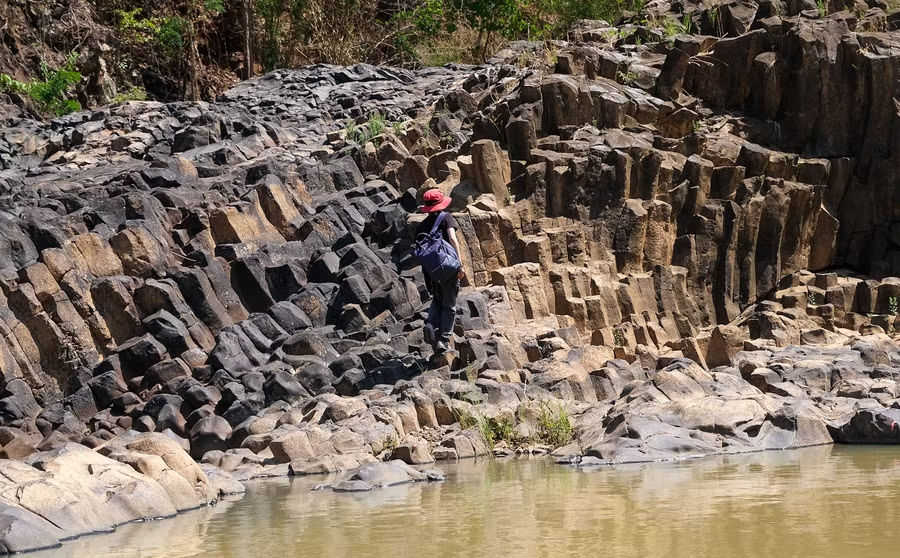
“Previously, the leaders of the former Mang Yang district, along with the culture and tourism sector, surveyed the development of ecotourism in this area. However, due to the rugged terrain and lack of safety for tourists, currently only a few adventurous people come here to take photos and check in,” said Mr. Nguyen Duy Hoan.
That is also why this ancient rock formation has not yet received the attention it deserves. Mr. Nguyen Tan Hy - Head of the Culture and Social Affairs Department of Lo Pang commune - also informed: In the 2026 tourism resource survey, the locality has not yet included the H'Chan ancient rock site in the list of tourism exploitation sites and has not yet developed a specific plan for this scenic spot.



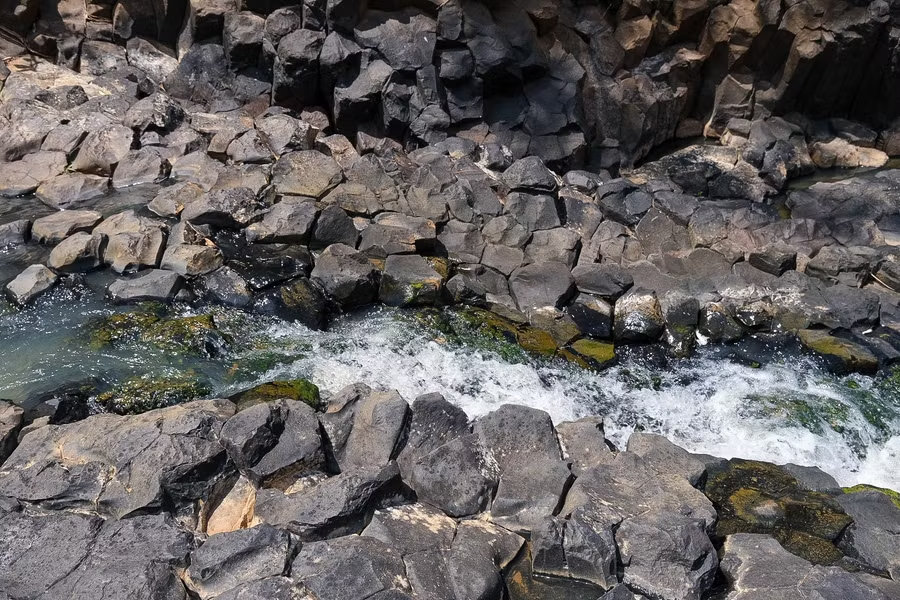
A "column of rocks" on the plateau silently exists amidst the sound of water and the endless green of the mountains and forests, possessing the wondrous beauty of nature. Meanwhile, according to the experience of archaeologist Phan Thanh Toan, such ancient rock formations along rivers are often associated with traces of ancient inhabitants.
“These rocky areas, stretching for kilometers, are very convenient for residents living on both banks to fetch water for daily use. Therefore, the ancient H’Chan rocky area is not only a geological heritage but also potentially linked to the history of settlement and cultural life of ancient inhabitants,” Mr. Toan said.
"If properly studied and researched, the H'Chan ancient stone site could absolutely be considered for provincial-level recognition as a historical site, and eventually for national-level recognition," according to archaeologist Phan Thanh Toàn.
Source: https://dulichpleiku.gialai.gov.vn/Lehoi-sukien/Tin-tuc/Ky-quan-da-co-tren-dong-Ayun


![[Photo] Strengthening character and expertise: Intense training for artillery soldiers.](https://vphoto.vietnam.vn/thumb/1200x675/vietnam/resource/IMAGE/2026/06/30/1782815602541_lu-368-1875-4571-jpg.webp)