


An important prerequisite for entering a new phase of development.
Nguyen Thi Ha, the youngest National Assembly delegate from Bac Ninh province in the 15th term and a teacher at Luong Tai High School, affirmed: "The goal of building a modern national education system, on par with the region and the world, can be achieved if we make decisive changes."
As a classroom teacher, Ms. Nguyen Thi Ha is particularly interested in and has high expectations for the country's education development strategy in the new phase – a pivotal phase in realizing the aspiration to make Vietnam a developed, high-income country by 2045.
First, Delegate Nguyen Thi Ha affirmed that Vietnam's education system has important prerequisites for entering a new stage of development. The legal and policy system is increasingly being perfected, especially the Education Law, the strategies for developing education and training, the new general education curriculum, along with major policies on digital transformation, innovation, and building a learning society.
"This is a crucial institutional foundation, reflecting a long-term development mindset that places people at the center and education as a key driver for sustainable development," Representative Nguyen Thi Ha emphasized.
In this context, Delegate Nguyen Thi Ha particularly hopes for a "breakthrough in digital transformation in education." Digital transformation should not only be limited to the application of technology or the digitization of lectures, but should be viewed as a fundamental innovation in teaching, learning, management, and assessment methods. When implemented comprehensively, digital transformation will contribute to narrowing the regional gap, expanding opportunities to access knowledge, and forming a lifelong learning ecosystem – where every citizen can learn flexibly, continuously, and creatively throughout their lives.
High-quality human resources are the foundation for development.
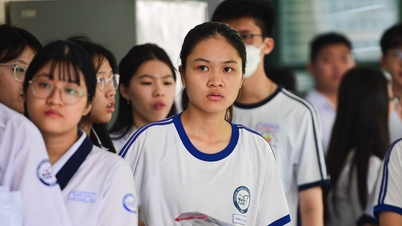
Regarding the goals of educating Vietnamese people in the new era, the female teacher hopes that education will continue to aim for comprehensive development in terms of knowledge, skills, physical health, personality, and civic character.
"Students should not only be knowledgeable but also possess independent thinking, innovative abilities, the capacity for international integration, a sense of social responsibility, and national pride. These are the foundations for forming a high-quality workforce – a decisive factor in national competitiveness in the knowledge-based economy era," Ms. Ha analyzed.

Ms. Nguyen Thi Ha, Member of the 15th National Assembly Delegation of Bac Ninh Province.
According to Ms. Nguyen Thi Ha, building and developing a team of teachers plays a crucial role in realizing the above strategic goals .
"I expect teachers to continue to receive attention in terms of policies, working conditions, and career development opportunities; to receive regular training to adapt to new curricula, new technologies, and integration requirements. When teachers are given more confidence, motivation, and a creative environment, education will truly be reformed from its roots," the female delegate remarked.
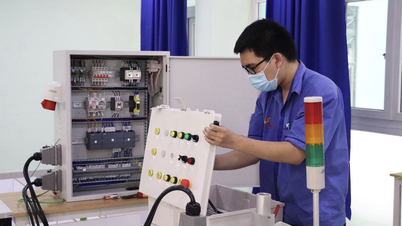
National Assembly representative Nguyen Thi Ha expressed her hope that in the coming period, focus should be placed on training high-quality human resources according to international standards, meeting the requirements for the development of strategic industries and technologies.
In addition, special mechanisms and policies are needed to identify, attract, train, nurture, and utilize talent; focusing on inviting excellent scientists and leading experts from both within and outside the country, especially in basic sciences and particularly important fields.
At the same time, Delegate Nguyen Thi Ha affirmed: "With the major orientations established at the 14th National Congress of the Party, Vietnamese education is facing a strong opportunity for transformation, contributing to training generations of citizens who are both intellectually capable, morally upright, and aspire to contribute, while also possessing the capacity to lead the country steadily on the path of development until 2045."
Delegates also emphasized the need to promote the development of a lifelong learning society, diversifying learning models, methods, and movements suitable for each target group and locality. According to teacher Nguyen Thi Ha, it is necessary to promote the role and responsibility of the entire political system in developing a learning society, while simultaneously raising the awareness of self-learning, self-improvement, and self-cultivation of knowledge among every citizen, of all ages.
In addition, Delegate Nguyen Thi Ha suggested that it is necessary to continue innovating and improving the effectiveness of grassroots educational institutions; paying attention to supporting community learning centers, especially in border areas, islands, remote areas, ethnic minority areas, and mountainous regions; strengthening distance learning, creating conditions for disadvantaged groups to have lifelong learning opportunities. At the same time, she encouraged the Vietnamese community abroad to participate in activities promoting learning and talent development, contributing to building a sustainable learning society.
Source: https://phunuvietnam.vn/ky-vong-dot-pha-tu-chuyen-doi-so-giao-duc-238260119094602131.htm













































































Comment (0)