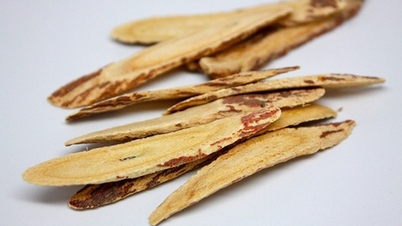
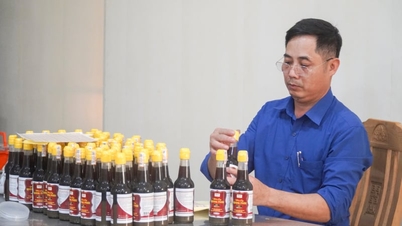
In the treasury of Asian folk medicine, Terminalia catappa leaves appear as a familiar ingredient in many localities, especially in traditional remedies. People often use Terminalia catappa leaves to make bathwater, decoctions for drinking, or combine them with other medicinal herbs to alleviate symptoms such as mild diarrhea, itchy skin, or bloating.
- 1. Terminalia catappa leaves in folk medicine
- 2. Active ingredients of Terminalia catappa leaves
- 3. Some folk remedies using Terminalia catappa leaves (for reference only)
- 3.1. Supports treatment of mild diarrhea and digestive disorders.
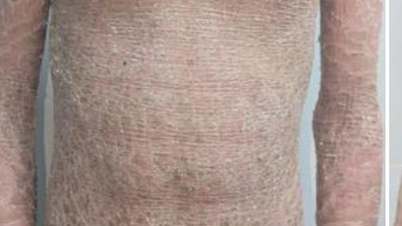
- 3.2. Supports treatment of mild dermatitis, rashes, and skin itching.
- 3.3. Supporting the healing of superficial wounds
- 3.4. Relieves mild bloating and indigestion.
- 3.5. Supports blood sugar control
- 3.6 Treating osteoarthritis of the knee that causes clicking or popping sounds when walking.
1. Terminalia catappa leaves in folk medicine
In folk practices in Vietnam and some Southeast Asian countries, Terminalia catappa leaves are commonly used in the following ways:
- Prepare bathwater for children with rashes and itchy skin.
- This decoction is for drinking in cases of mild diarrhea.
- For external use only to soothe mild inflammation.
- It is used in combination with other herbs in traditional folk remedies.
Some traditional remedies suggest that Terminalia catappa leaves have "astringent" properties, helping to constrict mucous membranes and reduce secretions.
2. Active ingredients of Terminalia catappa leaves
Phytochemical studies show that Terminalia catappa leaves contain many groups of bioactive compounds: flavonoids, tannins, polyphenols, saponins, alkaloids, etc.
Recent review studies published in international medical journals have linked these substances to: antioxidant capacity, laboratory-level antibacterial effects, mild anti-inflammatory activity in cell models… however, there is not yet strong enough clinical evidence in humans to recommend their use as therapeutic drugs.
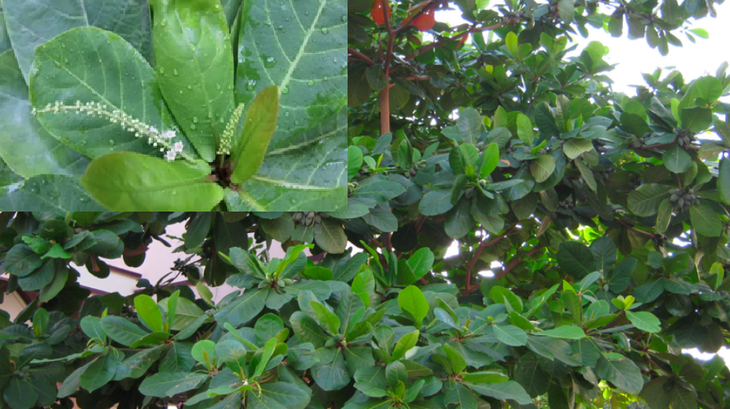
Some traditional remedies suggest that Terminalia catappa leaves have "astringent" properties, helping to constrict mucous membranes and reduce secretions.
3. Some folk remedies using Terminalia catappa leaves (for reference only)
3.1. Supports treatment of mild diarrhea and digestive disorders.
Recipe: 10–15g young Terminalia catappa leaves, 10g guava leaves, 3–5 slices of fresh ginger.
Instructions: Boil with 500–700 ml of water until reduced to 200–300 ml, divide into two doses and drink daily.
According to folk remedies, Terminalia catappa leaves and guava leaves are rich in tannins which help to "tighten" the intestinal lining, while ginger helps reduce gastrointestinal spasms.
Note: Suitable only for mild diarrhea without dehydration. Do not use if severe or prolonged bacterial infection (>48 hours) is suspected.
3.2. Supports treatment of mild dermatitis, rashes, and skin itching.


Remedy: A handful of fresh Terminalia catappa leaves, 5–7 betel leaves.
Instructions: Boil with water, then use to bathe or wash the itchy skin area.
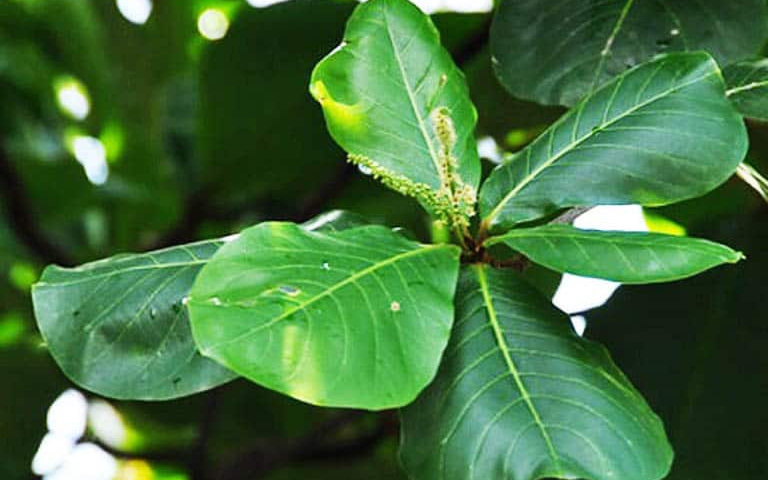
Effects: Betel leaves contain essential oils with antibacterial properties, while Terminalia catappa leaves have mild antioxidant activity.
Note, For external use only. Do not apply to deep wounds or infections.
3.3. Supporting the healing of superficial wounds
Remedy: A few young Terminalia catappa leaves, 1 small fresh turmeric root.
Instructions: Wash and crush both ingredients, apply externally to the skin for 10-15 minutes, then rinse off.
Effects: Turmeric contains curcumin, which has anti-inflammatory properties, while Terminalia catappa leaves have antibacterial activity.
Note: Do not use on wounds with pus or severe infection; this is not a substitute for medical antiseptics.
3.4. Relieves mild bloating and indigestion.
The remedy: 10g of Terminalia catappa leaves, 5g of mint, 5–7g of dried tangerine peel (Chen Pi).
Instructions: Brew the herbs in water and drink after meals.
Effects: Peppermint helps reduce spasms, tangerine peel aids digestion, and Terminalia catappa leaves help soothe mild intestinal irritation.
3.5. Supports blood sugar control
Recipe: 10g of Terminalia catappa leaves, 10g of pandan leaves, 5g of neem leaves.



Instructions : Brew a diluted decoction and drink throughout the day.
Some preclinical studies suggest that compounds in Terminalia catappa and neem leaves may affect glucose metabolism, but There have been no clinical trials on humans, therefore it is not a substitute for diabetes medication and may cause hypoglycemia if taken with other medications.
3.6 Treating osteoarthritis of the knee that causes clicking or popping sounds when walking.
Dried herbs, roasted and buried in the ground: 10g of Terminalia catappa leaves + 20g of Piper betle leaves + 3 slices of fresh ginger, combined into one decoction. Add 600ml of water and simmer until only 200ml remains. Divide into two doses and drink daily. The treatment course lasts 3 weeks, then rests for 1 week, and then resumes for another 3 weeks.
Terminalia catappa leaves are a natural ingredient with a long history of folk use, often combined with other herbs such as ginger, guava, betel leaves, or turmeric to alleviate mild symptoms like digestive disorders, dermatitis, or intestinal discomfort. However, from a modern medical perspective, scientific evidence remains largely preclinical, there are no official treatment recommendations, and it should not be used as a substitute for prescribed medication.
Readers are invited to read more:
Source: https://suckhoedoisong.vn/la-bang-chua-benh-gi-169260627095622693.htm

![[Image] Overview of the construction site for the underground station of metro line 5 at the Hanoi Ring Road 1 intersection.](https://vphoto.vietnam.vn/thumb/1200x675/vietnam/resource/IMAGE/2026/07/03/1783065595682_ndo_br_z7974930852369-100ca093c306e72675f1d3700966a86b-jpg.webp)