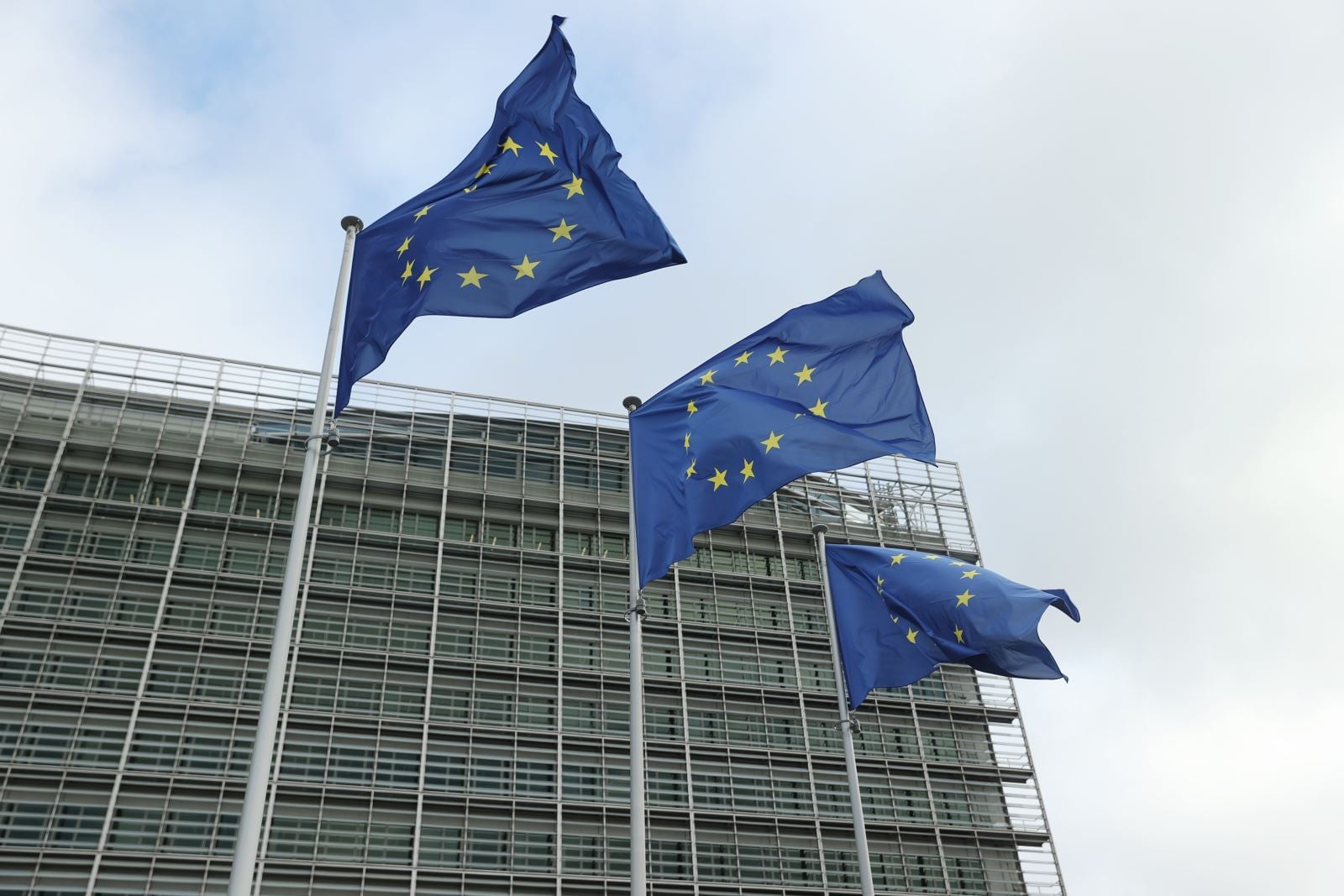
The headquarters of the European Commission (EC) in Brussels, Belgium. Photo: THX/VNA
In the context of a volatile global geopolitical landscape, the European Union (EU) is facing a life-or-death challenge to its credibility and autonomy. According to Politico.eu, in the face of mounting pressure and shocking statements from the administration of US President Donald Trump, Brussels is no longer in a passive position. Instead, the bloc is ready to activate a special tool: the Anti-Coercive Instrument (ACI) – a "weapon" designed to maintain the continent's standing and prestige.
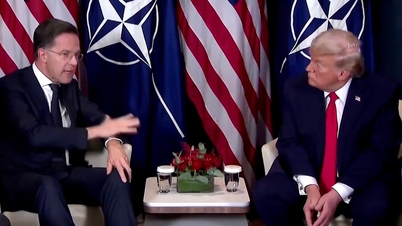
In a short period of time, the world has witnessed strong pressure tactics from Washington targeting traditional allies. According to experts Mario Monti (former Prime Minister of Italy) and Sylvie Goulard (Vice President of the European Policy Planning Institute at Bocconi University), President Donald Trump has repeatedly issued tough messages: reiterating his determination to control Greenland, declaring a 10% tariff on non-compliant NATO allies, and even threatening a 200% tariff on French wine.
These actions, under the EU legal framework, met the criteria to be classified as acts of economic coercion. However, unlike previous occasions, the EU now possesses a policy "bazooka" to defend itself.
ACI: The Power of Foresight and Unity
The Anti-Coercive Instrument (ACI) was introduced in 2023 with the consensus of all 27 member states. It is not simply a punitive measure, but a strategic negotiating framework. The ACI allows the EU to deter and respond to third countries seeking to pressure the bloc's policy choices through measures affecting trade or investment.
The biggest difference between ACI and impulsive decisions is its strict adherence to international law. Before acting, the EU conducts transparent consultations with the country exerting pressure. Potential countermeasures include: imposing tariffs or restricting trade in services, suspending the ratification of key trade agreements, restricting foreign direct investment (FDI) and participation in public procurement, and regulating certain aspects of intellectual property rights.
The trap of "voluntary submission"
These experts point out a worrying reality in Europe: some countries are showing a tendency towards "voluntary submission" to pressure from the US. Some cite political realism, fearing that resistance will lead to the loss of security protection from Washington, especially in the context of the Russia-Ukraine conflict.
However, this stance is being challenged. With Trump consistently expressing skepticism towards NATO and even showing signs of leaning toward Russia, the question arises: Will such security protection truly exist if the EU relinquishes its sovereignty? Avoiding the use of the ACI and yielding to unreasonable demands will only allow the opponent to gain more leverage, while simultaneously eroding the credibility of European institutions in the eyes of their own people.
The EU's firm stance on using the ACI is not only to protect its economic interests, but also a strong signal to the US – who still believe in the rule of law and multilateral order. Eighty years of peace since World War II have proven that prosperity is built on cooperation, not on force or coercion.
After World War II, the United States helped rebuild the economy and shape democratic institutions in Europe. Now, perhaps it is time for Europe to reciprocate by defending those very values. Abandoning the ACI at this point would be irresponsible. Conversely, the appropriate and resolute use of trade as a weapon is the way for the EU to assert its independence and resilience against any pressure, even from the world's most powerful nation.
Source: https://baotintuc.vn/the-gioi/la-chan-kinh-te-moi-cua-eu-20260126153724549.htm




















































































Comment (0)