The subversive plot of hostile forces
One early summer evening, village elder Ho Phuc Yen, a respected figure in Prin Thanh hamlet, A Doi commune, used his smartphone to research policies for the development of ethnic minority areas, then slowly said: "In the past, bad elements came to the villages to spread propaganda and slander the Party, but now they've appeared on this phone." This simple statement quite accurately reflects the reality unfolding in many border villages in Quang Tri province today.
 |
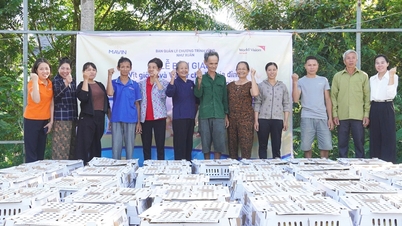
| Krong Aho production group in Huong Lap commune - Photo: A.D |
Following the administrative reorganization in 2025, the communes of Ba Tang, Xy, and A Doi merged to form the new A Doi commune with over 11,000 inhabitants, mainly Pa Ko and Bru-Van Kieu ethnic minorities. Internet and smartphones have reached many remote villages, opening up opportunities for access to knowledge, economic development, and the promotion of ethnic culture.
However, this also provides an environment for hostile forces to intensify their subversive activities. While previously they used direct propaganda or leaflet distribution, they have now shifted their focus to cyberspace. Through fake accounts on Facebook, YouTube, and TikTok, they manipulate and distort the truth, spreading false information about ethnic and religious policies, land issues, and life in mountainous regions. More dangerously, these arguments are often disguised under the guise of "demanding rights for our people" or "protecting the vulnerable," aiming to sow doubt, erode trust, and divide the relationship between the people and the Party and government.
Lieutenant Colonel Ngo Quang Thuyen, Political Officer of Huong Phung Border Guard Station, stated: “Hostile forces are exploiting cyberspace, even using AI technology, to spread false information, distorting the Party's guidelines and policies, and the State's laws, causing doubt and eroding the people's trust. In border areas, although people have faster access to information thanks to telecommunications infrastructure and social media, a segment of the population still has limitations in verifying information, making them easily influenced by fake news and unverified information. If not promptly detected, combated, and refuted, these malicious elements will exploit the situation to spread propaganda and incite unrest, affecting local security and order.”
The ultimate goal of hostile forces is not merely to distort the truth, but to erode the people's trust in the Party. Therefore, the struggle to protect the Party's ideological foundation in the Mekong Delta region is essentially a struggle to maintain the people's support and strengthen their trust in the Party.
To gain people's trust, you must first show them.
The reality in western Quang Tri shows that wherever the people trust the Party and its officials, distorted narratives have little chance of infiltrating. This trust doesn't come naturally, but is nurtured by concrete changes in the lives of the people.
During the 2021-2025 period, Quang Tri province was allocated over 3,500 billion VND to implement three national target programs, with over 1,200 billion VND dedicated to the Sustainable Poverty Reduction Program. From this resource, numerous infrastructure projects, including transportation, schools, health stations, electricity, clean water, and livelihood models, have been invested in, gradually transforming the appearance of the highland communes. This reality demonstrates that there is no more convincing argument than the tangible achievements of development in people's lives.


Visiting Lia commune today, you'll find concrete roads extending to the villages, the national power grid reaching every home, and children studying in more spacious schools. These are not just public works projects, but also "milestones of people's hearts" in this border region. Standing amidst the lush green rubber plantations at the foot of the Truong Son mountain range, Mr. Ho Van Chun, a Bru-Van Kieu ethnic minority member from Lia commune, emotionally shared: "Life has changed today; we have food to eat and clothes to wear, and we no longer eat cassava like our parents did. Thank you so much to the Party and the State."
 |
| "Extracurricular lesson in the border region" organized by La Lay Border Guard Station - Photo: A.D |
The story of Mr. Ho Van Chun is not an isolated case but a testament to the changes taking place in many highland villages in Quang Tri province. As people's lives improve, and as officials become closer to and more connected with the people, the people's trust in the Party continues to be strengthened. This reality shows that there is no more sustainable way to protect the Party's ideological foundation than caring for the people's lives and building a solid "people's support" base from the grassroots.
Lieutenant Colonel Dinh Quang Duyen, Political Officer of Ba Tang Border Guard Station, said: “To effectively combat harmful and toxic information, we must proactively guide public opinion from the grassroots level; effectively utilize the public address system, village Zalo groups, and local social media; and at the same time help people develop the economy, improve their living standards, and continue to implement the motto 'eat together, live together, work together, and speak the ethnic language together'."
Building a "digital shield" starting from each village.
In the digital age, protecting the Party's ideological foundation cannot simply stop at "combating" it; more importantly, it requires proactive "building." This means building immunity against harmful and toxic information, developing digital skills, and strengthening the political resolve of the people.
In many mountainous communes of Quang Tri province, community-based digital technology teams have been established to guide people in accessing technology, identifying fake news, and being vigilant against distorted content on social media.
Ms. Ho Thi Trang, Deputy Secretary of the Youth Union of Huong Phung commune, said: “The Youth Union identifies cyberspace as a very important channel for propaganda. The Union regularly guides its members and young people to use social media responsibly, not to share unverified information, and to promptly report any content that shows signs of distortion or incitement.”
In addition to refuting harmful and toxic information, many young people in mountainous areas are also proactively spreading positive values on the internet.
Visiting western Quang Tri today, it's easy to find inspiring stories spreading online. These include videos showcasing the Pa Ko and Bru-Van Kieu cultures by Ho Tong Pu Ngoi in A Mor village, Lia commune; and the journey of developing community tourism and planting FSC-certified timber forests by Ho Van Gioi in Huong Lap commune. These films about ethnic cultural identity, effective economic models, and inspiring examples of overcoming hardship not only promote the image of western Quang Tri but also vividly and effectively reflect the Party's guidelines and policies, and the State's laws and regulations concerning ethnic minority areas. Each thriving village, each household escaping poverty, each successful model serves as authentic evidence, helping to refute misinformation and distorted narratives about the highlands.

Experience shows that protecting the Party's ideological foundation must begin with maintaining the people's trust. In the digital age, building a "people's support base" is not only important in individual villages but also in the digital environment. And the most convincing way to refute false information is not just through words, but through the achievements that people directly enjoy every day.
Elder Ho Phuc Yen in Prin Thanh village, A Doi commune, often reminds the villagers: "Telephones help us learn many things, but we must know how to distinguish right from wrong. Don't listen to bad people who try to sow discord between the villagers and the Party"...
Amidst the vast Trường Sơn mountain range, the "people's support" is being built up day by day, becoming a solid bulwark protecting the Party's ideological foundation from the grassroots, from each village, each family, and each citizen in the border regions of the Fatherland.
Pham Thi Anh Dao
Source: https://baoquangtri.vn/chinh-polit/202606/la-chan-long-dannoi-vung-cao-quang-tri-d415989/