

The city is spread across 14 islands, connected by more than 50 bridges, forming a network of both land and water, leading to the vast Stockholm archipelago offshore.
Thanks to its unique location, water seeps right into the heart of the city, making Stockholm resemble a map where rivers, the sea, and streets intertwine. Walking a few streets, crossing a bridge, the scenery changes – and sometimes I realize I've gotten lost.
The beauty of tranquility
Winter in Stockholm is typically quite long, but depending on the method of calculation, it can be understood in two different ways. According to climatology, winter lasts from December to February of the following year, with average temperatures ranging from -3°C to 1°C. However, in reality, the "winter atmosphere" often arrives earlier, from the end of October or the beginning of November, and can last until March, or even the beginning of April of the following year. Therefore, many travel guides suggest that winter in Stockholm lasts approximately 5-6 months.
I was fortunate enough to arrive in Stockholm in winter to experience the early closing afternoons and the luxury of sunlight. And I allowed myself to get lost there. Not to get lost in a panic, but to allow myself to deviate from my initial preconceived notions, letting things unfold in their own way.
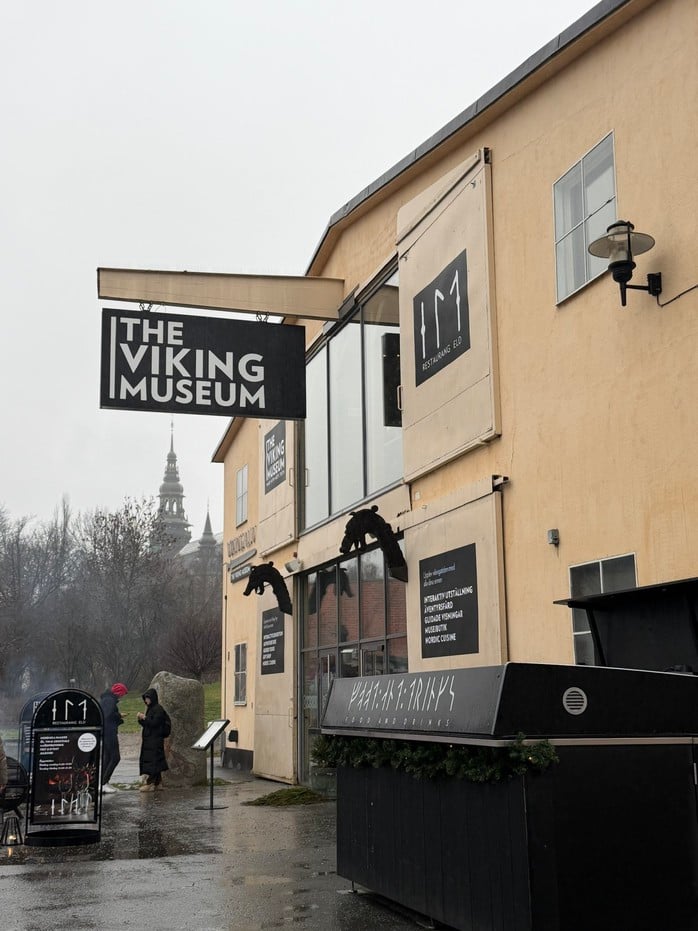
At the Viking museum, stories unfold not just through artifacts, but through the sense of movement, through the concept of journey.
Stockholm feels both familiar and strange. Familiar, because the name has appeared somewhere before: in geography books, in stories about Northern Europe, in vague images of a cold but civilized land. Strange, because you don't really know what's there, or what you'll encounter first. It's like recognizing a melody you've heard before but can't remember the lyrics, only knowing it will lead you there. Winter blankets Stockholm in a grayish-blue hue, seemingly gloomy but actually possessing a tranquil beauty. The weather is cold but not harsh, although winds still sweep through the streets. The owner of a pho restaurant in a Vietnamese eatery on the street confided in me that in recent years there has been less snow, not as thick as when he first arrived.
That evening, we wandered onto an unplanned road, the yellow streetlights casting soft, ethereal reflections. People walked quickly but calmly, carrying paper bags and wearing thick woolen scarves. I didn't fully understand the language spoken in this cold Scandinavian region. But I sensed the gentleness and serenity of the people here.
If there's a place where getting lost becomes a joy, it's the Stockholm metro. The subway stations are decorated like underground art galleries. Each station has its own style, story, and color palette. I deliberately got off at the wrong station, just to see what awaited me. Some stations were vibrantly colorful (Stadion), others were decorated in a whimsical pixel art style (Thorildsplan)... In the middle of winter, the metro became a warm space where art and life intersected. I realized that sometimes cities intentionally create beautiful labyrinths, so that we learn to appreciate that sometimes there isn't just one straight path to our destination.
Following in the footsteps of the Vikings
One colder-than-usual morning, I entered the Nobel Prize Museum—a place where human history and intellect unfold through surprisingly ordinary stories. I walked slowly, reading each explanatory note, as if afraid of missing a detail that could change the way I see the world .
The museum isn't large, but it's enough to make you realize that great inventions that have shaken the ages all began with very small questions. Here, getting lost isn't just about taking the wrong path, but about delving into the crossroads of knowledge. This isn't just an ordinary museum; it's a place that celebrates the world's greatest minds – from scientists and writers to peace activists, all those who have won the prestigious Nobel Prize since 1901.
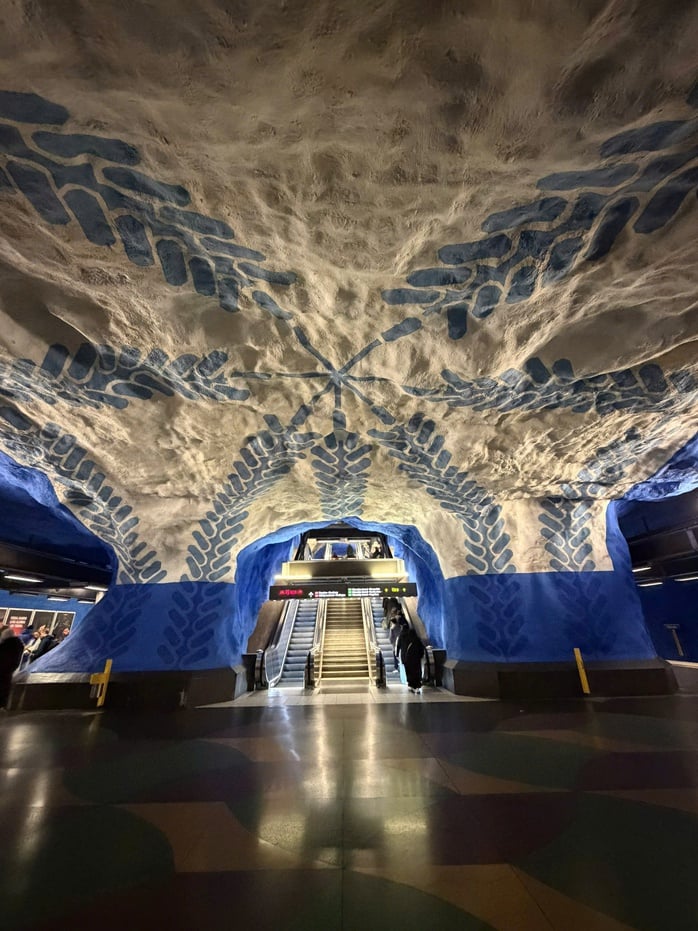
The T-Central station is designed like a unique and eye-catching cave.
Albert Einstein, Marie Curie, Alexander Fleming, Ernest Hemingway, Martin Luther King… how many more could I possibly name to express my admiration for their contributions to humanity?
Leaving the Nobel Prize Museum, the atmosphere changes almost instantly. The old town of Gamla Stan opens up to a bustling weekend market, where the aroma of freshly baked pastries, wine, and delicious candies fills the air. After the museum's tranquility, the crowds bring the city to life.
From the Nobel Prize Museum, I continued my journey to The Viking Museum. This space transported me to a bygone era, when the sea was the route and the ship the home. Vikings were Norse people from Norway, Denmark, and Sweden, prominent during the 8th-11th centuries. They were not only warriors but also explorers, merchants, and settlers. Thanks to their superior shipbuilding techniques, the Vikings spread throughout Europe, reaching England, France, Russia, Iceland, Greenland, and even North America hundreds of years before Christopher Columbus. They valued strength and courage. They had their own beliefs, culture, and writing system. Amidst a modern, orderly, and peaceful Stockholm, there is still a place for the memory of those who once wandered the seas, adventured, and were even reckless, yet were not without heroism.
Both familiar and strange.
Stockholm is a city of water and small islands. The trains aren't just for transportation; they're for seeing the city from a different perspective. Standing on the deck, I saw the small islands drift by like fleeting thoughts. The city was no longer a map, but a series of moments: a red house on the shore, a silent bridge, Ferris wheels in the distant amusement park. The train glided smoothly, and I let myself drift along, without needing to know the exact destination. All the trains, buses, and metro allowed me to wander around Stockholm for 24 hours with a ticket costing only 180 SEK (approximately 430,000 VND).
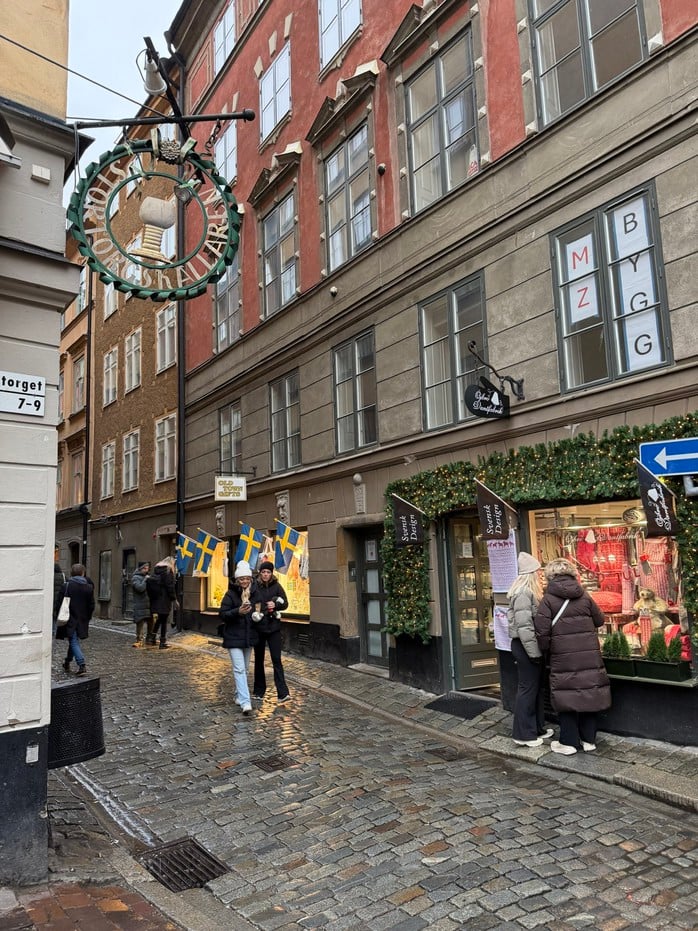
Visiting Gamla Stan in the old town reveals that Stockholm today is not just a grand concept and history, but a very close, warm, and vibrant present, full of everyday life.
My days in Stockholm were filled with wanderings, getting lost, unplanned steps, and streets I remembered only by feeling, not by name. I learned that this city doesn't demand complete understanding immediately. It allows you to feel both familiar and unfamiliar, both outside and inside. A window, a train station, a museum, or a boat trip on a winter afternoon—all were enough to illuminate a stretch of road and fill my soul with happiness.
I left Stockholm with my travel plans almost meaningless, but with a renewed sense of hope. I promised myself I would return to Stockholm someday, still with my habit of getting lost. Stockholm remains in my heart like a quiet promise, not rushed, not noisy, but a promise I will definitely return to.
Currently, there are no direct flights from Ho Chi Minh City to Stockholm, so most passengers have to make at least one stopover. I chose to fly with Qatar Airways, transiting in Doha before continuing my journey to Stockholm. The total travel time was approximately 18 hours, including waiting time at the airport. Besides Qatar Airways, you can also choose airlines such as Turkish Airlines (transiting in Istanbul), Emirates (transiting in Dubai), Thai Airways (transiting in Bangkok), or Vietnam Airlines (flying directly from Ho Chi Minh City to Copenhagen (Denmark) and then connecting to Stockholm).
I chose to stay at the Generator Stockholm hotel, right in the city center. It's only a 10-minute walk to Stockholm Central Station and a 5-minute walk to the nearest bus stop, making it very convenient for getting to attractions or using the subway. The hotel impressed me with its modern design, featuring a distinctive Scandinavian style. The interior is quite youthful, with a spacious lounge area, a bar, and several common areas where guests can chat, relax, or work. The rooms, while not overly large, are clean, tidy, and equipped with basic amenities, including a kitchenette at the back of the hotel for convenient hot meals on chilly days. Alternatively, you can store your luggage in the lockers for 30-40 SEK (85,000-115,000 VND) for 4 hours.
Source: https://nld.com.vn/lac-loi-giua-stockholm-196260404204708158.htm


![[Photo] Prime Minister Pham Minh Chinh receives the Chinese Ambassador to Vietnam](https://vphoto.vietnam.vn/thumb/1200x675/vietnam/resource/IMAGE/2026/04/05/1775397481797_ndo_br_dsc-5512-jpg.webp)

















































































Comment (0)