

Hanoi Port is in ruins.
Nearly eight years after its equitization, Hanoi Port, formerly part of the Vietnam Water Transport Corporation (VIVASO), is largely abandoned, overgrown with trees, and many buildings are dilapidated or have been "carved up" for rent.
We were at Hanoi port in mid-November, and in stark contrast to the bustling scene of trucks and cargo vehicles entering and leaving the rented warehouses, we saw rusty docks exposed to the elements. Mr. T., a security guard there, said that only a few ships arrive each day to load cargo. At the time of our visit, only two ships were waiting to unload their goods, mainly cement.
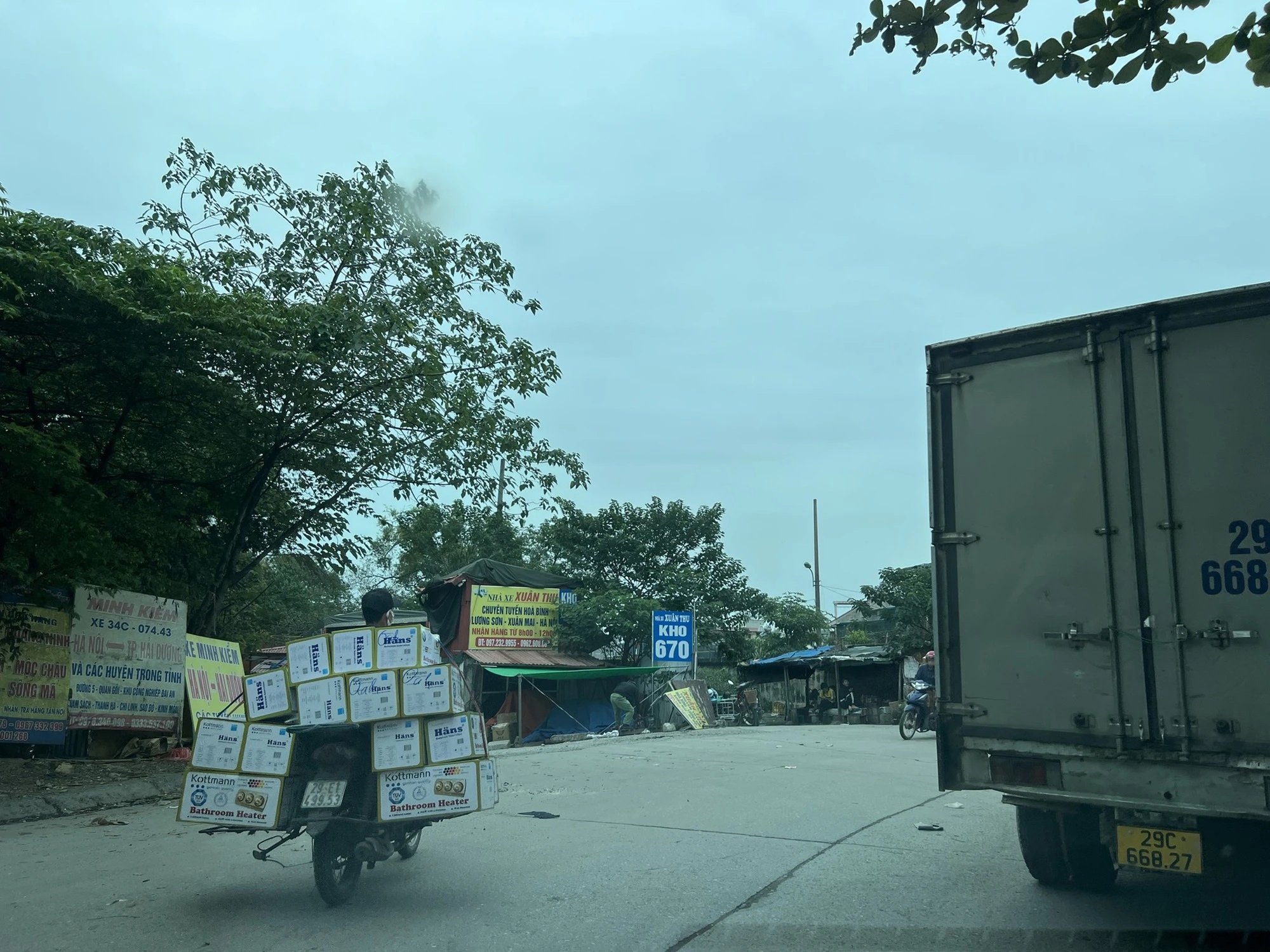
The interior of Hanoi port has been transformed into a warehouse and cargo storage area for trucking companies.
Finding the way down to the port is very difficult; the entrance is narrow, squeezed between rented warehouses that surround the road along the Red River. Some piers don't even have cranes for loading and unloading goods, lying rusty and covered in trash. Meanwhile, along the more than 1 km stretch from the entrance to Hanoi port on Bach Dang Street, there are hundreds of large and small warehouses belonging to trucking companies operating routes from Cao Bang and Bac Kan to Nghe An and Thanh Hoa. Small and large trucks, and motorbikes carrying goods, constantly come and go. Some warehouses, only a few hundred square meters, serve as receiving points for dozens of trucking companies on various routes.
The rusted sign that reads "Hanoi Port - Production Area - No unauthorized persons or vehicles allowed to enter or leave the port" sits in a corner, unnoticed. Inside the area where the sign is posted, which was once the port's main operating area, only the units renting warehouse space are currently active.
At the time VIVASO was equitized, the company's value of goods was estimated at approximately 327 billion VND. This price was once considered "equivalent to just one house in the old quarter," but it encompassed the entire asset system of one of the leading enterprises in waterway transportation. This included numerous newly constructed ports and piers of significant value, as well as many historically significant piers dating back to the French colonial era.
According to the approved equitization plan, in January 2014, the parent company - VIVASO - issued 32.7 million shares, with the state holding 49% of the charter capital. After two subsequent divestments, from April 2016, VIVASO no longer had state capital. The new "owner" of VIVASO is Van Cuong Construction Joint Venture Company, owned by Mr. Nguyen Thuy Nguyen. This is also the owner that acquired the Vietnam Feature Film Studio (VIVASO held 65% of the shares), which has been involved in many controversies and lawsuits.
The scenario for Van Cuong's acquisition of VIVASO is similar to the acquisition of the Vietnam Film Studio. In March 2014, VIVASO held its initial public offering (IPO), offering 15 million shares, but only managed to sell over 550,000. Van Cuong then submitted a request to buy back the remaining 14 million unsold shares, which was approved by the Ministry of Transport , allowing Van Cuong to negotiate and finalize the purchase agreement with VIVASO.
The "bargain" deals
In 2022, the Vietnam Automobile Industry Corporation (Vinamotor) set a plan to produce and assemble 800 cars of all types, but the actual number produced was only 13 vehicles, reaching only 2%. Sales of all types of cars were also targeted at 806 vehicles, but actual sales were only 106 vehicles. Revenue from core business activities reached only over 59 billion VND (compared to the planned 342 billion VND), achieving only 17%; and labor export reached only 7 people (target 220 people - corresponding to only 3% of the plan).
These figures clearly show the decline and backwardness in the production, assembly, and sales of automobiles by a company that once held a leading position in the industry before privatization, compared to its competitors, which are now formidable private car manufacturers. In 2013, before privatization, Vinamotor achieved revenue of 5,606 billion VND; produced and assembled 4,105 vehicles of all types; and exported 3,980 workers…
At the time of the Vinamotor equitization in 2015, although many major players in the automotive industry at the time wanted to own shares of this car company, such as TMT Automobile Company, Sacom Investment and Development Company, etc., none of them met the rather strict regulations set by the Ministry of Transport (the bidding entity had to have a minimum equity capital of 926 billion VND, no accumulated losses, and a commitment not to transfer shares for 5 years).
At a price of 1.25 trillion VND, acquiring Vinamotor was considered a lucrative deal, not only because of Vinamotor's position in the truck manufacturing and assembly industry, but more importantly, because of the large land holdings the company owns. In early 2016, the winning investor, Motor NA Vietnam Co., Ltd. (Vinamco) - a company related to the BRG Group - acquired the entire 97.7% stake and became Vinamotor's strategic investor. Ms. Tran Thi Tuyet Nhung, who previously held the position of Director of Business Development (BRG Group Joint Stock Company) and then Vice President of Motor NA Vietnam Co., Ltd., assumed the position of Chairwoman of the Board of Directors of Vinamotor.
Privatization or acquisition of prime land?
Not only Vinamotor, but in 2018 Vinamco also acquired all 65% of the shares of Hanoi Trade Corporation (Hapro) to become a strategic shareholder. Although unable to compete in the retail sector and performing poorly before privatization, Hapro possesses a desirable land bank.
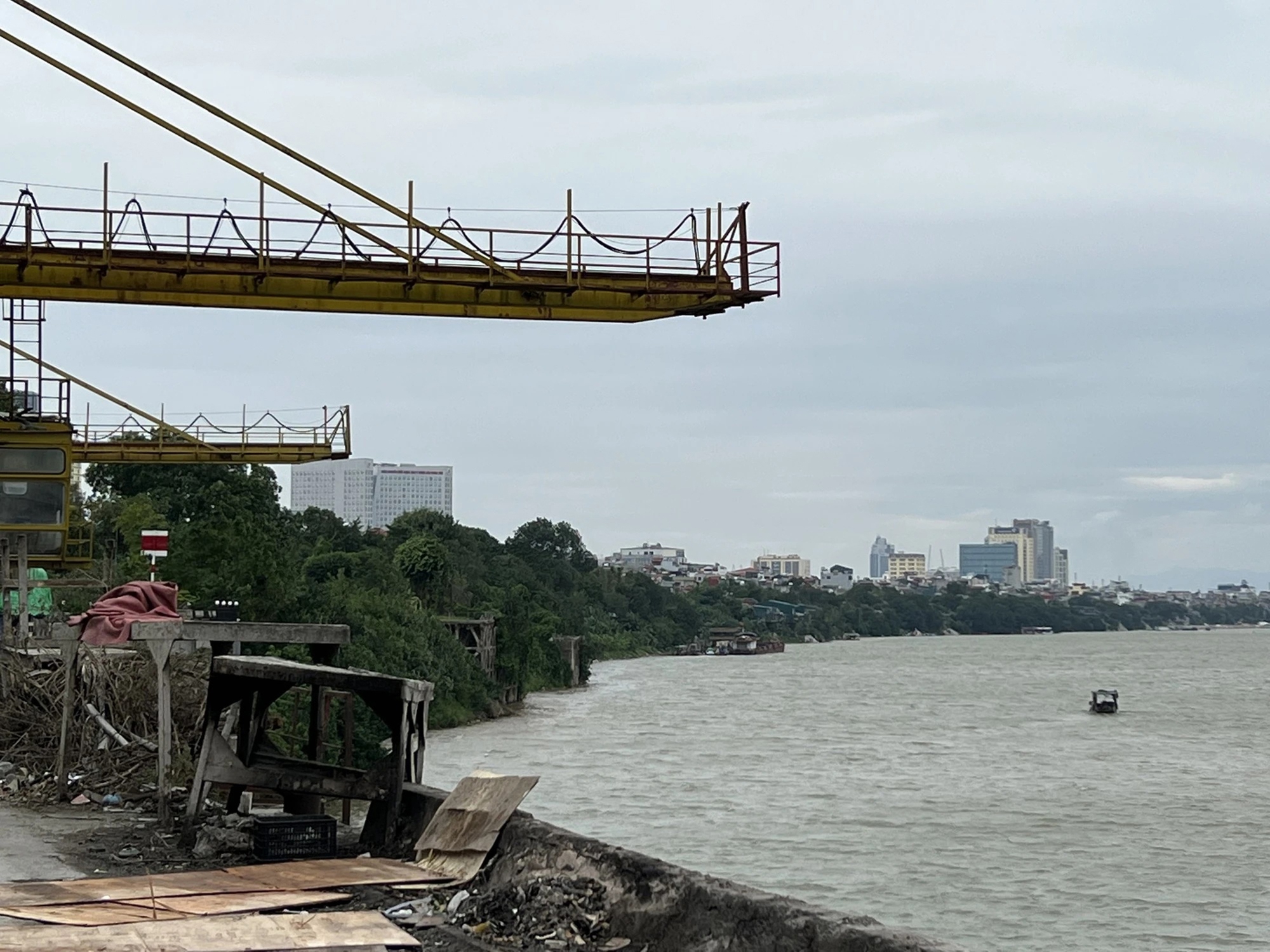
Rusting piers, mixed with trash, at Hanoi port.
According to Hapro's information disclosure, prior to equitization, the Corporation managed and utilized 183 properties. After equitization, Hapro continues to manage and utilize 114 locations, including 96 properties in Hanoi. Hapro Holdings, a subsidiary of Hapro established in 2007, specializes in investing in commercial spaces and real estate projects in Hanoi and other provinces and cities.
VIVASO was once known as a strong brand in the field of water and land transport and cargo handling. In particular, it possessed a port system with numerous land plots, factories, and warehouses at important transportation hubs… However, VIVASO's advantage also lay in its prime real estate in the North, including the largest river ports in the region such as Hanoi Port, Viet Tri Port, Ninh Phuc Port, Hoa Binh Port, and Ha Bac Port… In addition, VIVASO's headquarters at 158 Nguyen Van Cu (Long Bien District, Hanoi) is also considered prime real estate with an area of nearly 800 m² . Since its equitization, VIVASO has not registered for trading or listed its shares on the stock exchange.
The Government Inspectorate has pointed out a series of violations related to the equitization process of VIVASO. These include an inaccurate equitization plan, and the fact that the Viet Tri and Ninh Phuc ports, completed in 2015, have not yet been handed over for operation and use as per regulations, posing a risk of wasting approximately 135 billion VND in investment capital…
Specifically, the Government Inspectorate recommended transferring the VIVASO equitization case file to the Ministry of Public Security and the Supreme People's Procuratorate for clarification regarding the equitization of assets formed from the use of WB6 funds (Viet Tri Port, Ninh Phuc Port - total investment value of 135 billion VND) and the incorrect determination of enterprise value for equitization and divestment, resulting in the loss of state capital at Hanoi Port amounting to 16.3 billion VND, for investigation and handling according to the law.
Regarding the Hanoi People's Committee, the Government Inspectorate also recommended considering and handling the responsibility of individuals and organizations involved who were slow to provide feedback on the plan for handling the three land plots during the equitization of VIVASO. They also recommended failing to inspect and address the situation of illegal and unauthorized construction on the land at Hanoi Port. Furthermore, according to the Government Inspectorate's conclusions on the equitization and divestment of VIVASO, the Hanoi People's Court issued an appellate judgment on a business cooperation contract dispute between VIVASO and Sao Nam Song Hong Co., Ltd. Accordingly, Sao Nam Song Hong Co., Ltd. constructed nine unauthorized structures in the Hanoi Port area between 2007 and before 2015.
Regarding the handling of the inspection findings, Deputy Minister of Transport Nguyen Xuan Sang stated in a document that the Ministry of Transport is coordinating with the Ministry of Finance to prepare a report and propose a plan to recover the 50.3 billion VND. However, the handling process is considered quite complex, as it involves the valuation by the appraisal consultant at that time. The Ministry of Transport has sent a document to VIVASO and will hold a meeting with relevant units to find a solution.
Source link


![[Photo] Standing Committee member of the Party Central Committee Tran Cam Tu presents the Decision appointing the Secretary of the Party Committee of the Ho Chi Minh National Academy of Politics.](/_next/image?url=https%3A%2F%2Fvphoto.vietnam.vn%2Fthumb%2F1200x675%2Fvietnam%2Fresource%2FIMAGE%2F2026%2F02%2F02%2F1770039902160_le-cong-bo-bt-hvctqg-11-7880-jpg.webp&w=3840&q=75)


![OCOP during Tet season: [Part 3] Ultra-thin rice paper takes off.](/_next/image?url=https%3A%2F%2Fvphoto.vietnam.vn%2Fthumb%2F402x226%2Fvietnam%2Fresource%2FIMAGE%2F2026%2F01%2F28%2F1769562783429_004-194121_651-081010.jpeg&w=3840&q=75)


Comment (0)