Peace talks between the two sides continue, but the political situation and atmosphere are no longer the same. The upcoming round of negotiations in Qatar is seen as the last chance for both sides to salvage the entire peace process, which is set within the 60-day timeframe agreed upon by US President Donald Trump and Iranian President Masoud Pezeshkian when they signed the Memorandum of Understanding on ending the war between the two sides.
The conflict began when the US and Oman attempted to guide oil and gas tankers and commercial vessels through Omani waters in the Strait of Hormuz to bypass Iranian waters in the same strait. Iran responded by attacking these ships. The US retaliated with new airstrikes against Iran. Iran then retaliated by attacking US military bases in Bahrain and Kuwait. Both sides accused each other of violating the ceasefire agreement.
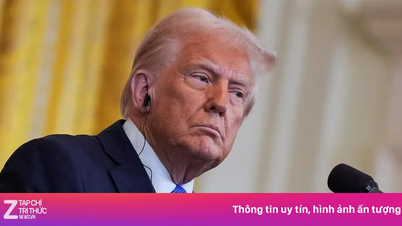
In essence, the past two days of fighting between the US and Iran have determined who has the right and ability to control the Strait of Hormuz. For President Donald Trump, reopening the strait to free navigation is proof of US victory over Iran. For Iran, control of the strait is a strategic trump card in both war and peace talks with the US. Therefore, the upcoming round of negotiations in Qatar between the US and Iran will focus first and foremost on the Strait of Hormuz issue. Resolving this issue has become the most urgent priority if both sides want to avoid the collapse of the temporary peace agreement they have reached.
After the US Senate passed a resolution demanding that the US President end the war with Iran, Donald Trump realized that a peace agreement with Iran needed to be reached even more quickly. President Trump deliberately pursued this urgent goal by simultaneously pursuing peace talks with Iran while increasing maximum pressure, threatening a devastating war against Iran, and seeking to neutralize Iran's strategic trump card in the Strait of Hormuz by allying with Oman. Resuming the war and allying with Oman over the Strait of Hormuz would help the US maintain its position in peace talks with Iran.



Maintaining a strong position in peace talks with the US is also a goal of Iran's recent military actions. Iran is pursuing four objectives. First, to test how far it can go in confrontation with the US before reaching a compromise.
Secondly, Iran is taking advantage of Donald Trump's legal dilemma and weak position in the US after the US Senate passed the aforementioned resolution. It seems that Iran believes both the US and Iran need a peace agreement, but for now, in the initial stages of the peace talks, Iran is not in as much of a hurry as the US.
Thirdly, it involves establishing de facto control over the Strait of Hormuz and thwarting the US's intention to collaborate with Oman in creating an alternative shipping route to avoid Iranian territorial waters in the Strait of Hormuz, which also means preserving this strategic trump card.
Fourth, it sends a strong message warning and deterring Arab nations in the Gulf that harbor US military bases from supporting the US, and reaffirms the demand for the US to withdraw its troops from the Gulf during peace negotiations with the US.



Since both sides need a peace treaty, they will likely reach some kind of compromise regarding the Strait of Hormuz in Qatar to prevent the peace talks from collapsing. However, whether this compromise will be sustainable is another matter.
Source: https://hanoimoi.vn/lai-chien-de-giu-the-1209821.html





![[Photo] Strengthening character and expertise: Intense training for artillery soldiers.](https://vphoto.vietnam.vn/thumb/1200x675/vietnam/resource/IMAGE/2026/06/30/1782815602541_lu-368-1875-4571-jpg.webp)