A test for traditional theater
For many years, bringing traditional art forms closer to audiences, especially young people, has been a challenging task. The value of Tuong, Cheo, and Cai Luong lies in their aesthetic depth, performance techniques, and cultural memories built up over generations. However, for these values to continue to be recognized, the way these works are presented and how they connect with viewers also needs appropriate changes.
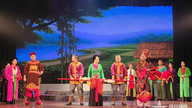
Based on that requirement, the Ha Hoi Show - Secrets of the Magical Dynasty can be considered a noteworthy experiment by placing Tuong, Cheo, and Cai Luong on the same stage. The program is a collaboration between the Vietnam National Traditional Theatre and the Ha Hoi project, featuring professional artists and a group of young creatives interested in traditional arts. This model suggests a broader direction: expanding audience engagement while maintaining the professional principles that define each art form.
The team did not blend Tuong, Cheo, and Cai Luong into a new performance form, but rather placed excerpts within a common narrative to allow viewers to experience various artistic nuances in the same space. Tuong impresses with its conventionality, epic spirit, and richly symbolic movements. Cheo brings a humorous, approachable, and flexible folk spirit to the performance style. Cai Luong, on the other hand, leans towards psychological depth, lyricism, and the ability to guide emotions through lyrics and singing. When placed side-by-side, the three forms do not lose their distinct boundaries; on the contrary, they help viewers better appreciate the richness of national theater.
The selected excerpts all have the potential to evoke the characteristics of each art form. In Cheo (Vietnamese traditional opera), "The Sorcerer Afraid of Ghosts" creates a lively atmosphere with folk humor and deliberately exaggerated acting. The image of the sorcerer emerges through the postures, gestures, dialogue, and the flexible improvisation of the actors. Behind that laughter lies Cheo's familiar critical spirit against superstition, gullibility, and the exploitation of spiritual beliefs for personal gain.

In the excerpt from the Cai Luong play "Daji's Ambition," the emphasis lies in the character's inner life. Daji is portrayed as alluring and proud, yet full of contradictions between love, ambition, and the desire for power. The emotionally rich melodies, combined with psychological acting, prevent the character from remaining merely a familiar theatrical figure, instead prompting reflection on fame, choices, and the price paid when people are consumed by ambition.
In Tuong opera, the scene of On Dinh beheading Ta clearly demonstrates the weight of traditional performance techniques. Against the backdrop of the pounding war drums, every physical movement, footwork, gaze, and whip stroke is organized according to a tightly structured system of conventions. The appeal of the performance lies not in modern effects, but in the professional skill of the artists, from the precision of their movements to their ability to portray the loyal and indomitable spirit of the characters.
Besides the excerpts, the program also features the instrumental piece "Chieu Ban Tau Ma" composed by Meritorious Artist Le Tran Vinh and performed by the live orchestra of the Vietnam National Traditional Theatre. The work utilizes traditional musical elements, combining the lively rhythms of traditional pieces to evoke a sense of urgency and heroism. The live orchestra also helps the audience better appreciate the role of music in folk performing arts, where drums, stringed instruments, and rhythmic clappers directly contribute to creating atmosphere and guiding emotions.
Do not blur the artistic boundaries.
When Tuong, Cheo, and Cai Luong are presented together in a single program, concerns arise about whether the boundaries between these art forms will be blurred, especially for audiences who have not had many opportunities to experience traditional art. In a shared performance space, without restraint and professional understanding, introducing multiple art forms simultaneously can easily become disjointed, leaving viewers only with a general atmosphere without recognizing the unique characteristics of each art form.
However, the organization of the Ha Hoi Show - Secrets of the Magical Dynasty does not follow a hybrid approach. The excerpts retain their distinctive structure, stage language, music, and performance techniques. The program creates a common space for the various art forms to coexist, but each work still operates within its own aesthetic frame of reference. As a result, viewers can recognize the differences between the conventional, formulaic nature of Tuong (classical Vietnamese opera), the humorous, folk-like style of Cheo (traditional Vietnamese folk opera), and the lyrical, psychological depth of Cai Luong (modern Vietnamese opera). Placing the excerpts side-by-side does not blur the artistic boundaries; on the contrary, it creates a contrasting effect in style, storytelling, music, and acting.
According to People's Artist Le Tuan Cuong, Director of the Vietnam National Traditional Theatre and Artistic Director of the program, bringing Tuong, Cheo, and Cai Luong together on one stage is not intended to erase the boundaries between the art forms, but rather to give viewers more opportunities to recognize the unique value of each type. Each art form has its own aesthetic system, from character development, body language, music to storytelling methods. Therefore, selecting representative excerpts is important, helping the program create a unified viewing experience while preserving the artistic essence of each work.
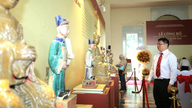
People's Artist Lê Tuấn Cường believes that traditional Vietnamese art forms have undergone a long development journey, closely linked to the spiritual life of many generations and becoming an important part of national culture. The vitality of Tuồng, Chèo, and Cải Lương lies not only in their historical value, but also in their ability to evoke emotions, convey moral lessons, reflect the human condition, and create performance models that have stood the test of time. In the context of an increasingly diverse entertainment industry, the challenge is not to innovate at all costs, but to find ways to bring these values to today's audience in a more appropriate manner.
From that perspective, models like the Ha Hoi Show demonstrate a noteworthy experimental approach in expanding accessibility for traditional art. Instead of maintaining familiar presentation methods, the program opts for a more flexible format, creating a more intimate narrative rhythm, while still respecting the professional principles of each art form. Innovation here doesn't mean altering the core elements, but rather finding new avenues for these traditional values to be seen, heard, and embraced in contemporary life.
Source: https://baovanhoa.vn/nghe-thuat/lam-moi-nhung-khong-hoa-tan-239670.html

![[Photo] Opening Ceremony of the 13th National Congress of the Ho Chi Minh Communist Youth Union](https://vphoto.vietnam.vn/thumb/1200x675/vietnam/resource/IMAGE/2026/06/24/1782286753905_ndo_br_1-8510-jpg.webp)
![[Photo] The 13th National Congress of the Youth Union conducts personnel work.](https://vphoto.vietnam.vn/thumb/1200x675/vietnam/resource/IMAGE/2026/06/24/1782299943080_ndo_br_1-6868-jpg.webp)

![[Photo] General Secretary and President To Lam attends the Central Public Security Party Committee Conference](https://vphoto.vietnam.vn/thumb/1200x675/vietnam/resource/IMAGE/2026/06/24/1782302063612_a1-bnd-9302-9166-jpg.webp)


![[Video] Weather forecast for tonight and tomorrow, June 25, 2026: Hot and intensely hot weather will continue throughout the country.](https://vphoto.vietnam.vn/thumb/402x226/vietnam/resource/IMAGE/2026/06/24/1782306248499_dem-24-png.webp)