

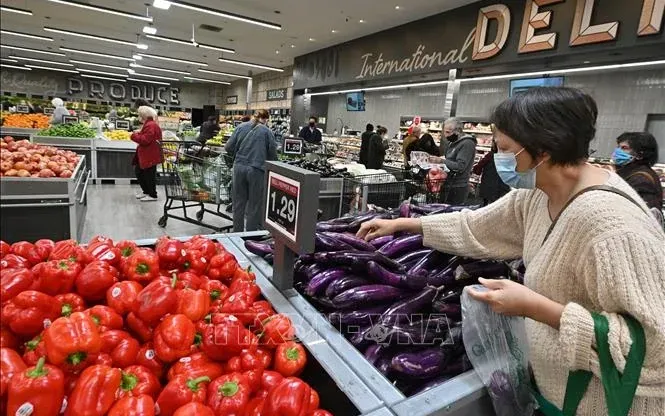
US inflation remained stable in February.
Newly released data shows that the US consumer price index (CPI) rose in February as market forecasts predicted, reflecting stable price pressures in the world's largest economy .
The US consumer price index rose 0.3% month-on-month and 2.4% year-on-year, in line with economists' forecasts. This development indicates that inflation remains above the Federal Reserve's 2% target, but shows no signs of accelerating again. This data is considered a key factor for the Fed in its future interest rate trajectory. However, this report does not yet reflect the impact of the recent surge in oil prices, as conflicts in the Middle East have raised concerns about a new energy shock.
On March 6, Austan Goolsbee, president of the Chicago branch of the Fed, told The Wall Street Journal that current conditions create “exactly the most uncomfortable kind of stagflationary inflation environment a central bank can face.”
However, not everyone believes the current situation is as bad as the media portrays. Peter Andersen, who manages $500 million as the director of Andersen Capital Management, said: “I think it’s an exaggerated fear and I don’t see it happening. I think the bigger risk right now is what I call a prolonged period of slow economic growth.”
In an interview with USA TODAY, Andersen explained that slow growth coupled with high prices for essential goods is a worrying issue. He said, "For most families, that can feel like stagflation, even if that's not the official explanation."
Andersen advised ignoring a single economic indicator and instead considering long-term trends. For example, the February jobs report was concerning but not enough to warrant the "overreaction and sharp reversal" that occurred in the market.
However, the underlying hiring trend is currently quite weak. The Department of Labor reported on March 6th that employers will only create 181,000 jobs in 2025, or about 15,000 jobs per month. According to Mr. Andersen, in such a slow-growing economy, and with upcoming advances in artificial intelligence (AI) technology, it is likely that lower-level workers will be the most affected group. The economy may look strong from the top, but it feels much more unstable on the ground.
Source: https://vtv.vn/lam-phat-my-on-dinh-trong-thang-2-10026031200262542.htm








































































































Comment (0)