Markets surge after US-Iran agreement.
On Monday, the preliminary truce between the US and Iran delivered one of the most positive trading sessions for global markets since the conflict erupted in late February. Oil prices plummeted, stocks surged, and many investors believe that the biggest energy shock of the year may be coming to an end.
After more than three months of conflict that paralyzed one of the world's most important energy shipping lanes, the United States and Iran have reached a framework agreement to end hostilities and reopen the Strait of Hormuz. This waterway previously handled about 20% of global oil and liquefied natural gas (LNG) traffic before being disrupted by the conflict. On the social media platform Truth Social, US President Donald Trump announced that oil tankers have begun moving again through the Strait of Hormuz.
Ships have begun moving again, with many oil tankers leaving the Strait of Hormuz. They are traveling through the Southern Channel, which is now completely safe and open. Other shipping routes are also in operation.
This news immediately fueled optimism in the market. Brent crude oil prices fell by about 5%, to their lowest level in nearly three months.
European stocks hit new all-time highs. For investors, this is more than just a signal of peace. More importantly, it signals the prospect of a possible restoration of global energy supplies after months of disruption. In fact, as early as April, when oil prices began to surge, many investment funds had bet that the parties would eventually have to find a diplomatic solution. And now, for the first time, they see a relatively clear path forward.
Jochen Stanzl, a market analyst at Consorsbank, said: "For the first time after weeks of negotiations, we have a concrete and credible plan to reopen the Strait of Hormuz. This is good news for those concerned about inflation as well as those worried that central banks will have to continue maintaining tight monetary policies."
However, fully restoring shipping through Hormuz, getting hundreds of stranded ships back to normal operation, stabilizing maritime insurance premiums, and re-establishing energy supply chains will still take time. Many major shipping companies remain cautious and are not in a hurry to fully resume operations through the area.

Oil prices have fallen sharply and stocks have surged following the US-Iran agreement, but consumers and central banks can't breathe a sigh of relief yet.
Inflation continues to plague American households.
The preliminary US-Iran agreement triggered an almost immediate reaction in financial markets: oil prices fell, stocks rose, and expectations of a prolonged energy crisis were temporarily eased.
However, the real economy operates much more slowly than the financial markets. Oil prices may fall in a single day, but it takes weeks, even months, for fuel prices, transportation costs, food, and ultimately inflation to cool down. The crucial question ultimately isn't just "whether oil will fall," but "how long will it take for the drop in oil prices to actually affect consumers' pockets."
In Mississippi, where fuel prices remain around $4 per gallon, many residents say the cost of living is becoming an increasing burden.
"Gasoline prices have dropped below $4 a gallon in some places, but are still at $4 in others. And diesel is just too expensive," said American consumer David Johnson.
Rising fuel prices not only affect travel costs, but also spill over into many other essential goods in the economy.


American consumer David Johnson said: "I think the rise in diesel prices is one of the reasons why food is more expensive. Higher transportation costs ultimately fall on consumers."
That's what economists call the spillover effect of energy prices. When fuel gets more expensive, transportation, logistics, and distribution costs rise across the board. From agricultural products and food to clothing and consumer goods, almost every item is affected. For many American households, the pressure is palpable in their daily lives.
Matt Goar, an American consumer, said: "When we first got married, my wife and I could go to the supermarket and fill a shopping cart with about $200. Now, $200 can't even buy half a cart. Money is much harder to manage than it used to be."
"I feel it most acutely when I go to the supermarket. The other day I bought a bottle of orange juice for $6.99. Just two weeks later, when I went back, the price had gone up to $7.99. What I hear from supermarket employees is that prices continue to rise, but wages don't," shared Max Rodriguez, a resident of Miami.

Rising fuel prices not only affect travel costs, but also spill over into many other essential goods in the economy.
From gas stations to supermarkets, the story of American consumers illustrates a familiar reality of modern economies: oil prices are often one of the first indicators of change when new market expectations emerge. But for those changes to truly be reflected in the prices of goods and the cost of living, it often takes months. And that's why the fight against inflation is far from over after just one truce.
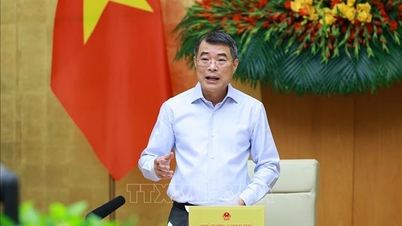
With inflation still looming, the Federal Reserve is holding its first policy meeting this week under the chairmanship of its new Fed Chairman, Kevin Warsh. While most experts and markets currently predict the Fed will keep interest rates unchanged in the 3.5%-3.75% range, the focus is not on the interest rate decision itself, but on the accompanying message.
With US inflation having just risen to 4.2%, the highest in three years, and energy prices still being affected by recent geopolitical shifts, investors are awaiting signals on whether the Fed will continue to maintain a cautious stance or begin preparing for the possibility of a more hawkish monetary policy in the near future.
Central banks prevent inflation risks.
Not only in the US, but many central banks globally are facing a difficult dilemma: Should they act early to prevent risk or wait?
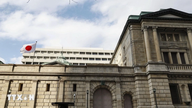
In Europe, the ECB raised interest rates in early June after adjusting its inflation forecast for this year to 3%, citing the Middle East conflict as adding further price pressure under various scenarios.
In South Korea, the Bank of Korea (BOK) kept interest rates unchanged at 2.5%, but signaled a more cautious stance amid rising exchange rate and inflation risks.
In the Philippines, although inflation cooled slightly in May, the 6.8% rate remained above the central bank's target for the third consecutive month, prompting the central bank to affirm that it would take necessary actions to bring inflation back to the target range.
In Sri Lanka, the country has no significant commercial crude oil production and is almost entirely dependent on imported oil to meet domestic demand. This dependence has made Sri Lanka particularly vulnerable to rising global fuel prices due to conflict. The Sri Lankan central bank's response has therefore been more aggressive than expected.
In late May, the Central Bank of Sri Lanka chose a drastic measure: raising interest rates by 100 basis points, the largest increase in three years. This move surprised many investors. Previously, most experts surveyed by Reuters had only predicted an increase of around 25 basis points. However, the rupee – the country's currency – has lost nearly 9% of its value since the beginning of March, while inflationary pressures and credit demand continue to mount.



Mr. Nandalal Weerasinghe, Governor of the Central Bank of Sri Lanka, stated: "This policy measure will help the economy adjust to maintain stability in the coming period. This is an important tool for us to continue protecting the stability that Sri Lanka has strived to build over the past years."
For central banks, the biggest risk isn't always current inflation, but rather expectations of future inflation. When people and businesses begin to believe prices will continue to rise, they tend to accelerate spending, borrowing, or demanding wage increases, creating a vicious cycle that makes inflation even harder to control. That's why many policymakers choose to act early, even if it might slow economic growth in the short term.
Sri Lanka's Central Bank Governor Nandalal Weerasinghe stated: "The goal of this decision is to curb excessive demand, prevent the economy from overheating, and balance growth and inflation. This is why we are using interest rates."
According to economists, Sri Lanka's decision reflects a growing reality in many emerging economies: limited resilience to external shocks. As energy prices rise, domestic currencies weaken, and capital flows become more volatile, central banks often need to react more quickly than in developed economies.
Murtaza Jafferjee, President of the Advocata Institute, commented: "This is the right decision in the current context. The market did not expect such a large interest rate increase, but the rapid credit growth and volatility in the foreign exchange market forced the central bank to act to curb demand."
For Sri Lanka, the concern isn't just fuel prices. The country relies heavily on trade, tourism, remittances, and shipping routes through the Middle East. This means any fluctuations in the region quickly spill over into the domestic economy.
The fight against inflation therefore often begins long before prices actually skyrocket. In today's geopolitically uncertain world, many central banks are choosing to act early, sacrificing some growth today to avoid greater shocks in the future.
Source: https://vtv.vn/lam-phat-phu-bong-kinh-te-toan-cau-100260617102743728.htm

![[Photo] "Hanoi Lotus Festival" honors the lotus flower that has been associated with Vietnam for thousands of years.](https://vphoto.vietnam.vn/thumb/1200x675/vietnam/resource/IMAGE/2026/06/27/1782516943048_sen-ha-noi-2026-minh-duy-1-jpg.webp)

































































![[Infographic] 16 fireworks display locations to celebrate the 50th anniversary of Ho Chi Minh City being honored with the name of President Ho Chi Minh](https://vphoto.vietnam.vn/thumb/402x226/vietnam/resource/IMAGE/2026/06/27/1782539591308_man-ban-phao-hoa-ruc-ro-dem-khai-mac-638jpg-17242995540161175940469.jpeg)