The Hanoi poisoning incident shocked the colonial government.

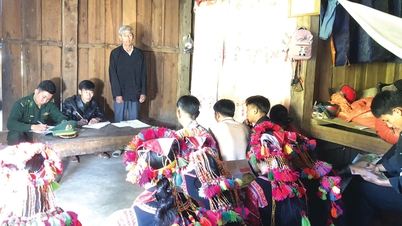
On June 27, 1908, the "Hanoi Poisoning" incident occurred in Hanoi when a group of Vietnamese soldiers and cooks in the French army organized the poisoning of French soldiers stationed in Hanoi in coordination with the resistance forces outside the city.
The plan to use jimsonweed to weaken the French army was quickly discovered before the attack could be launched. The colonial authorities then cracked down, arresting many involved and holding major trials to prosecute them.
Despite failing in its military objectives, the event demonstrated the spirit of anti-colonial struggle within the colonial military apparatus.
Establishment of the Vietnam National Tourism Administration
On June 27, 1978, the Standing Committee of the National Assembly issued Resolution No. 262 establishing the Vietnam National Administration of Tourism, marking an important step in the state management of tourism.
Through various stages of organizational restructuring, Vietnam's tourism industry has gradually expanded in scale, evolving from a service catering to sightseeing and cultural exchange needs into a vital economic sector.
In the process of development, tourism is increasingly linked to heritage preservation, promoting the image of the country, building cultural and ecological products, and enhancing Vietnam's position on the international tourism map.
Since 2023, the Vietnam National Administration of Tourism has been reorganized into the Vietnam National Tourism Administration.
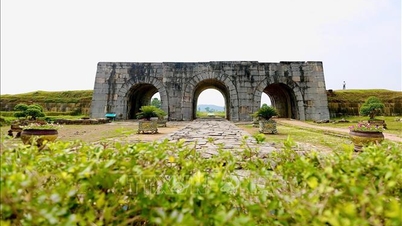
Ho Dynasty Citadel has been recognized by UNESCO as a World Cultural Heritage site.

On June 27, 2011, at the 35th session of the UNESCO World Heritage Committee in Paris (France), the Ho Dynasty Citadel (Thanh Hoa) was officially inscribed as a World Cultural Heritage site.
Built in 1397 during the Ho Dynasty, Ho Citadel is a unique stone military architectural structure, notable for its technique of precisely joining large stone blocks. After more than 600 years of existence, many parts of the citadel are still preserved in a relatively intact landscape.
This heritage site reflects a crucial period of Vietnamese history in the late 14th century, associated with the reforms of the Ho Dynasty and the process of national consolidation.
The Phu Dien Cham Tower holds Vietnamese and world records.
On June 27, 2022, Phu Dien Tower (Hue City) was announced as setting a Vietnamese and world record for being the first ancient Cham tower buried deep beneath coastal sand dunes to be excavated and preserved.
Discovered in 2001, the structure dates back to approximately the 8th century and belongs to the group of early Cham architecture remaining in Central Vietnam. The excavation under special conditions has provided researchers with additional information about the construction techniques and cultural life of the ancient Champa people.
The event contributed to affirming the value of Champa heritage and promoting the conservation of coastal archaeological sites.



Cave C6-1 has been recognized as a National Monument.
On June 27, 2023, Cave C6-1, located within the UNESCO Dak Nong Global Geopark (now Lam Dong), was awarded the National Monument ranking certificate.
Cave C6-1 stands out for its combined geological and archaeological value. Through excavations, scientists have discovered many traces of prehistoric habitation, including stone tools, pottery, animal bones, mollusk shells, hearths, and burial sites.
Studies show that this area was inhabited by humans approximately 6,000-7,000 years ago, providing further data on the history of ancient settlements in the Central Highlands.
The classification of these sites contributes to protecting a unique value of Vietnam's volcanic cave systems.
Nam O fish sauce has been granted geographical indication protection.
On June 27, 2024, the Intellectual Property Office granted a geographical indication certificate for "Nam O" traditional fish sauce from Da Nang.
With a history spanning over 400 years, Nam O fish sauce making is renowned for its traditional handcrafted methods, creating a distinctive flavor through its traditional fermentation process. Prior to this, Nam O fish sauce making was recognized as a National Intangible Cultural Heritage in 2019.
Geographical indication protection enhances brand value, safeguards products from extinction, and opens up opportunities for connecting with craft village tourism and promoting local culinary culture.
Birthday of painter Le Ba Dang
On June 27, 1921, artist Le Ba Dang – a prominent figure in modern Vietnamese art – was born in Quang Tri.
He moved to France to pursue his artistic career and made his mark with a style that combined the spirit of Western painting with inspiration from Eastern culture.
Over more than 70 years of artistic creation, Le Ba Dang left behind numerous paintings, sculptures, and graphic works that have been showcased in many countries. His works often express love for his homeland, a yearning for peace, and reflections on humanity.
Artist Lê Bá Đảng passed away on March 7, 2015, in France, leaving a profound mark on modern Vietnamese art. His name became a bridge bringing Vietnamese art closer to the international public.
The writer Thạch Lam has passed away.
On June 27, 1942, writer Thạch Lam passed away, leaving a profound mark on Vietnamese literature during the 1930-1945 period.
His real name was Nguyen Tuong Lan, born on July 7, 1910 in Hanoi. He was famous for his gentle and subtle writing style, focusing on exploring ordinary life scenes and the compassionate beauty in people.
Unlike many contemporary works that focused on conflict, Thạch Lam's short stories evoke emotion through feelings, atmosphere, and everyday details.
Works such as "The First Cold Wind of the Season," "Under the Shadow of the Magnolia Tree," "Two Children," and "Hanoi's 36 Streets"... contribute to affirming his position in modern Vietnamese literature.
The world's first nuclear power plant goes into operation.



On June 27, 1954, the Obninsk nuclear power plant in the Soviet Union officially began operation, becoming the world's first nuclear power plant to produce electricity.
With a capacity of approximately 5 MW, Obninsk is considered a symbol of the application of atomic energy for peaceful purposes. The project is the result of many years of research in the fields of nuclear physics and energy engineering.
After nearly half a century of operation, the plant ceased operations in 2002 and was transformed into a space for preserving documents about the history of nuclear industry development.
This event marked a new phase in humanity's exploration of atomic energy.
Countries are pushing for a ban on landmines.
On June 27, 1997, 95 countries agreed to sign a declaration in Brussels, Belgium, concerning the promotion of a ban on the use of landmines.
This was a step in the process of forming the Ottawa Convention on the Prohibition of the Use, Stockpiling, Production and Transfer of Personal Anti-Personnel Mines, which was formally signed at the end of 1997.
International efforts to limit this type of weapon stem from its long-lasting consequences for civilians, as landmines can persist for years after a war, causing casualties and hindering the recovery of many communities.
Source: https://baovanhoa.vn/van-hoa/thanh-nha-ho-duoc-unesco-ghi-danh-240643.html