Accurately assessing abilities will help change the way we teach .
Many believe that with the high school graduation exam plan starting in 2025, reforming teaching in non-compulsory subjects becomes even more crucial. The goal is to make students enjoy learning and see the subjects as essential to their lives, opening up more career opportunities for them in the future, rather than just studying to get high scores on the exam. Schools need to be serious about teaching, testing, and evaluating students in all subjects, not just focusing on the exam subjects.
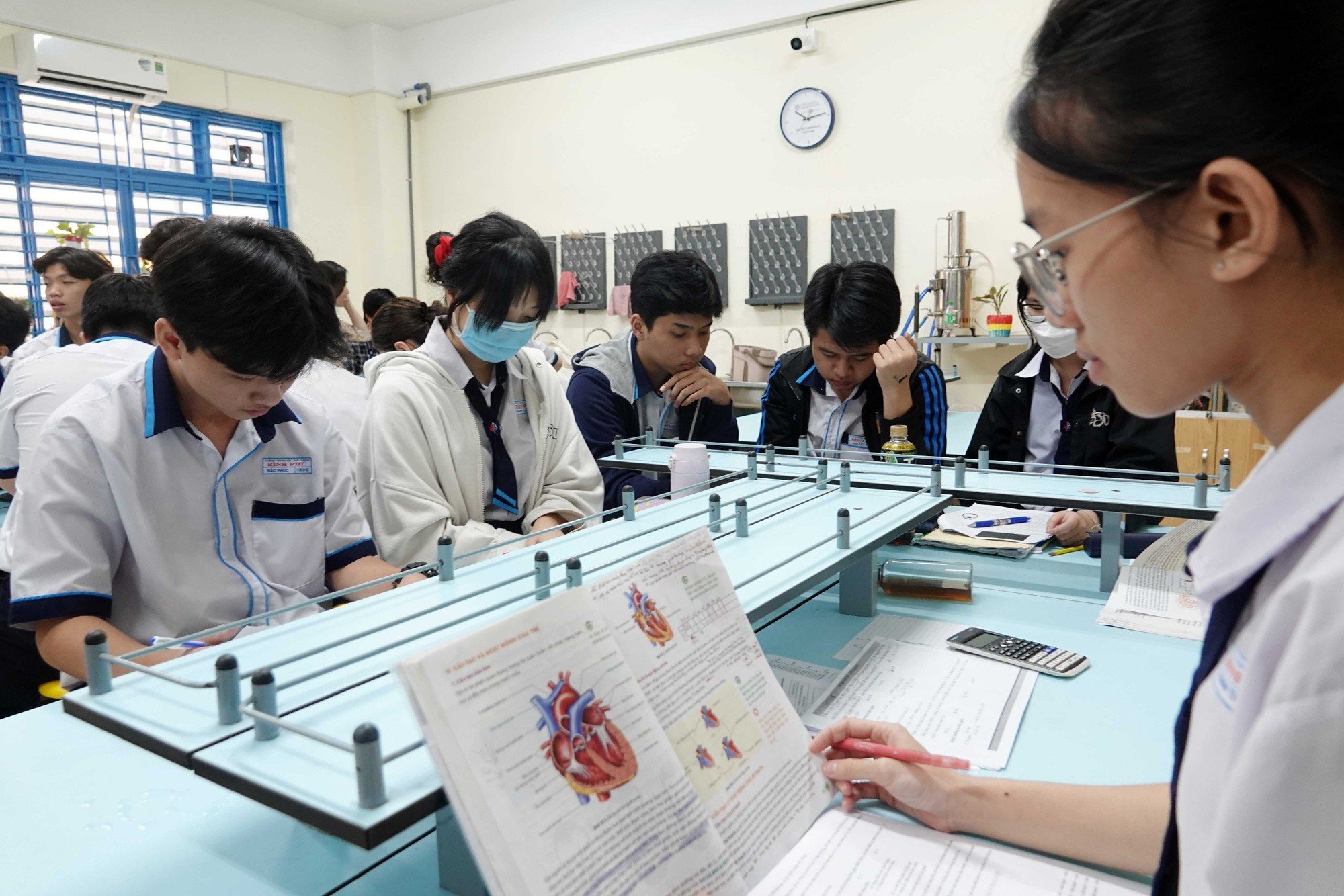
With the high school graduation exam plan starting in 2025, reforming teaching and learning, especially for subjects not included in the exam, is crucial.
Ms. Nguyen Boi Quynh, Principal of Viet Duc High School (Hanoi), believes that the key to a new exam format that aligns with the curriculum is to focus on reforming the way exam questions are designed. With the exam format used in previous years, the pressure on students to study only to pass the exams will persist. Therefore, schools are eagerly awaiting the Ministry of Education and Training's announcement of an illustration of the new exam format to provide clear guidance for reforming teaching, learning, and assessment in schools.
Mr. Dam Tien Nam, Principal of Nguyen Binh Khiem Secondary and High School ( Hanoi ), stated his view: the number of compulsory and elective subjects in the exam does not significantly affect teaching and learning, but how the exam is conducted to accurately assess students' abilities will have a crucial impact on learning. Taking history as an example, Mr. Nam suggested: "Whether or not there is a high school graduation exam, the way questions are formulated and assessments are conducted for this subject must change."
Ms. Nguyen Phuong Lan, Principal of Luc Nam High School (Bac Giang), also believes that there is no need to worry too much about the number of subjects in the exam affecting holistic education because students are now more interested in university admissions. The trend of universities organizing their own entrance exams using aptitude and critical thinking tests is increasing, so students who want more opportunities for admission must have comprehensive knowledge and skills, paying equal attention to all subjects, thus avoiding the problem of students focusing on only certain subjects.
Mr. Nguyen Van Minh, Principal of Muong Chieng High School (Hoa Binh province), also stated that the fewer subjects tested, the more rigorously the school must control regular and periodic assessments to maintain the quality of teaching and learning. Teachers are required to focus more on process-based assessment to record students' progress. Periodic tests are conducted school-wide. Subjects must submit their test matrix to the subject committee one week in advance. After approval, teachers create the test questions and conduct cross-grading between classes to ensure fairness. After each periodic test, the school will directly discuss with teachers to adjust teaching accordingly.
WE CANNOT ALLOW THE SITUATION OF 'STUDYING WHAT YOU'RE ON THE EXAM' TO HAPPEN.
Speaking to Thanh Nien newspaper, Professor Do Duc Thai from Hanoi Pedagogical University stated that educational assessment, including the methods of examination and recognition of high school graduation, is the final stage in the entire process of implementing the general education program. It is responsible for achieving the goals of general education and fulfilling the required standards of students' qualities and competencies.



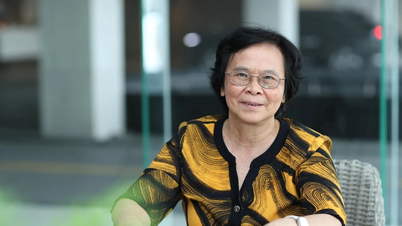
Mr. TRAN MANH TUNG, Director of a cultural training center in Hanoi
This means that educational assessment must adhere to the principle of "what is taught is what is tested." It is unacceptable for educational assessment to regulate or control educational goals; that is, it is unacceptable for students to simply study what is tested. For each subject in the 2018 General Education Program, it is necessary to build trust among students and parents regarding the value that the knowledge gained from that subject will bring to the students' lives later on; thereby motivating and engaging students in the subject. To achieve this, the content and teaching methods of each subject must be reformed; administrative measures such as mandating exams in certain subjects to force students to study them cannot be used.
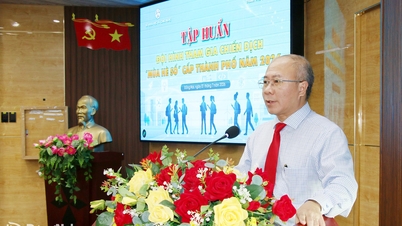
Mr. Tran Manh Tung, Director of a cultural training center in Hanoi, also believes that an important issue to consider today is changing the concept of learning and testing. "For a long time, we have mainly focused on 'learning to pass exams,' and 'learning only what will be tested.' To gradually change this 'learning only what will be tested' mindset, we first need to gradually change the assessment methods in schools, build a question bank so that students don't need to cram or prepare for exams; this will change the way we teach and learn," Mr. Tung suggested.
Next, we need to change the perception of learners and society regarding the purpose of learning: learning to understand, learning to be able to do, to be able to apply, and learning for oneself. This is a positive concept; learning is for progress, not just to pass an exam and then forget everything. If we can achieve this, all subjects will be important, and learning will not be dependent on whether or not a subject is tested.
Mr. Thai Van Thanh, Director of the Nghe An Department of Education and Training, hopes that in the future, the Ministry of Education and Training will establish centers for assessing student abilities in localities, allowing candidates to take exams at different times of the year, and even choose to take the exam multiple times. In this way, students' abilities in all subjects will be assessed.

When applying for graduation, students must have their academic results for all subjects.
UNIVERSITIES SHOULD HAVE COMPLETE AUTONOMY IN ADMISSIONS.
After the Ministry of Education and Training finalized the 4-subject exam for the high school graduation exam starting in 2025 and affirmed that students wanting to take more than that number are not allowed under the regulations, some opinions suggested that this would reduce students' opportunities for university admissions with various subject combinations. However, many experts supported the decision, arguing that since it is only the high school graduation exam, any regulations should only aim for that goal.
Teacher Nguyen Xuan Khang, Chairman of the Board of Directors of Marie Curie High School (Hanoi), stated his opinion: it is unnecessary to add the purpose of "university admission" to the high school graduation exam. The pressure of the high school graduation exam would be greatly reduced if it only had the main purpose of the exam, without any additional objectives. Secondly, according to Mr. Khang, universities already have the right to autonomous admissions, and there are many admission methods suitable for each school and each major.



Sharing the same view, Mr. Tran Manh Tung believes that it is necessary to separate the high school graduation exam and the university/college entrance exam as soon as possible. From 2025, the high school graduation exam should fulfill its proper role, which is to determine graduation eligibility.
Professor Do Duc Thai also argued that the high school graduation exam (if any) should only serve to provide data for vocational and higher education admissions, not directly for university and college admissions. The Ministry of Education and Training should encourage universities and colleges to be completely autonomous in their admissions processes, using different methods suitable for each institution... Thus, the method of examination and recognition of high school graduation must directly contribute to the successful implementation of Resolution 29's directives on career orientation for high school students, "aiming to best develop the potential of each student."
Graduation eligibility requires the academic results of all subjects.
Although the high school graduation exam consists of four subjects, educational institutions must fully implement the learning workload of each subject as stipulated in Circular 32/2018-TT-BGD-ĐT, amended by Circular 13/2022-TT-BGD-ĐT. Furthermore, graduation eligibility requires the academic results of all subjects through continuous assessment.
Mr. Huynh Van Chuong , Director of the Quality Management Department, Ministry of Education and Training
Source link



![[Image] National conference summarizing one year of operation of the overall organizational model of the political system, the three-tiered government model.](https://vphoto.vietnam.vn/thumb/1200x675/vietnam/resource/IMAGE/2026/07/01/1782882811691_ndo_br_1-jpg.webp)




















![[Video] Weather forecast for tonight and tomorrow, July 2nd, 2026: Tropical depression likely to strengthen into a storm; many areas will continue to experience thunderstorms.](https://vphoto.vietnam.vn/thumb/402x226/vietnam/resource/IMAGE/2026/07/01/1782911026600_thumb-dem-png.webp)