

For generations, black glutinous rice from Dakrong district and leaf-based yeast from Lia region, Huong Hoa district, have been considered flagship products of the western mountains and forests of Quang Tri province . These products are the culmination of the soil, climate, water sources from streams, and the labor and creativity of the local people. Now, black glutinous rice and leaf-based yeast have become commodities, consumed not only within the villages but also spreading the essence of the forest to distant regions throughout the country...
Preserving the "black gem" of the mountains and forests.
Black glutinous rice has long been considered the "black pearls" of the Dakrong mountainous region because this variety must be grown on high hills and mountain slopes, enduring the harsh conditions of dry, freezing, and frosty weather. Perhaps due to its adaptation to grow and develop in such harsh soil and weather conditions, black glutinous rice has "honed" itself to have a beautiful color, a fragrant stickiness, and rich nutrients unmatched by any other glutinous rice variety.
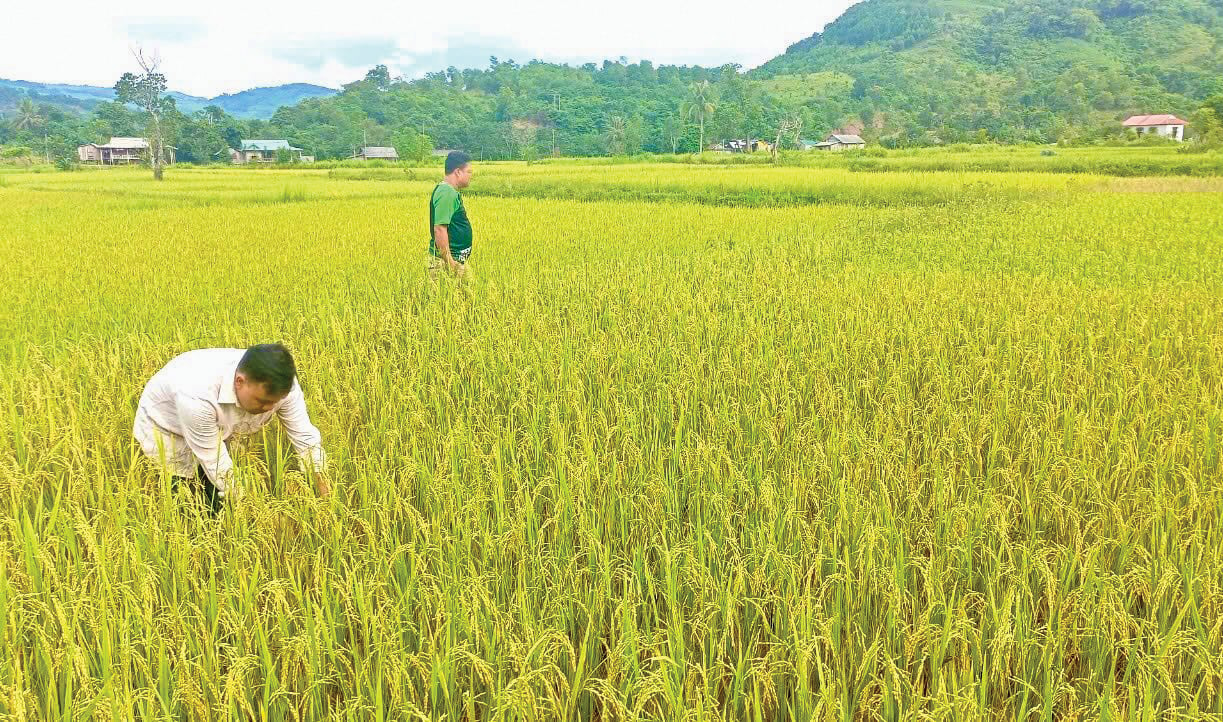
Black glutinous rice plants are laden with grain in the water-scarce fields of A Ngo commune, Dakrong district - Photo: TIEN SY
According to the elders of the ethnic minority communities in many villages and hamlets in Dakrong district, they have known about this black glutinous rice variety since they were young. Perhaps since the early days of the villages, this black glutinous rice variety has accompanied the pioneers who settled here.
In those days, to cultivate black glutinous rice, people in the area had to clear the high hills and mountains of trees and weeds between January and March each year, creating relatively flat fields. Then, in April, they would begin sowing the seeds. The black glutinous rice would grow naturally and be harvested from the end of October to the beginning of November.
After the harvest, the ethnic minority people here select the best quality rice grains to save as seeds for the next season. Due to the characteristics of the black glutinous rice variety and the belief that production depends heavily on nature and does not require fertilizer, the yield is low, so fewer and fewer people are planting it. Most people in the communes of the mountainous Dakrong district only grow it on a small scale to meet family needs and for festivals.
Faced with the reality that the black glutinous rice variety is at risk of degeneration and gradual extinction, Dakrong district has recently focused on implementing solutions to preserve and develop this economically valuable glutinous rice variety. This contributes to preserving valuable genetic resources and developing black glutinous rice into a distinctive OCOP (One Commune One Product) product.
From 2019 to the present, Dakrong district has implemented many support programs and pilot models for growing black glutinous rice in water-scarce paddy fields near irrigation works, yielding high efficiency. A typical example is the model of growing black glutinous rice in the frequently water-scarce paddy fields of Ta Long commune, which has achieved a yield of 38-39 quintals/hectare.
Since then, about 20 households in villages throughout Ta Long commune have boldly expanded their cultivation area of black glutinous rice. In A Ngo commune, after several successful seasons of growing black glutinous rice, the authorities have encouraged people to expand their production area from 7-10 hectares and are expected to reach about 20-30 hectares.
Not only Ta Long and A Ngo communes, but many communes in Dakrong district have boldly expanded the area and planted black glutinous rice varieties seasonally, just like other common rice varieties, in paddy fields. In addition, the local authorities and specialized departments of Dakrong district regularly support and guide people in cultivating organically to create clean, high-quality products. They also promote the brand and establish outlets for black glutinous rice products to increase production value and contribute to the local economic development.
Leaf yeast, a distinctive flavor of the Lìa region.
The Lìa region comprises the communes of Thanh, Thuận, Hướng Lộc, Lìa, Xy, A Dơi, and Ba Tầng in Hướng Hóa district. For decades, the local people in this area have preserved the traditional secret of making herbal yeast for brewing rượu (rice wine), gradually developing it into a distinctive product of the district. Herbal yeast is a traditional yeast used in rượu brewing, made from a combination of various leaves, roots, and precious medicinal plants.
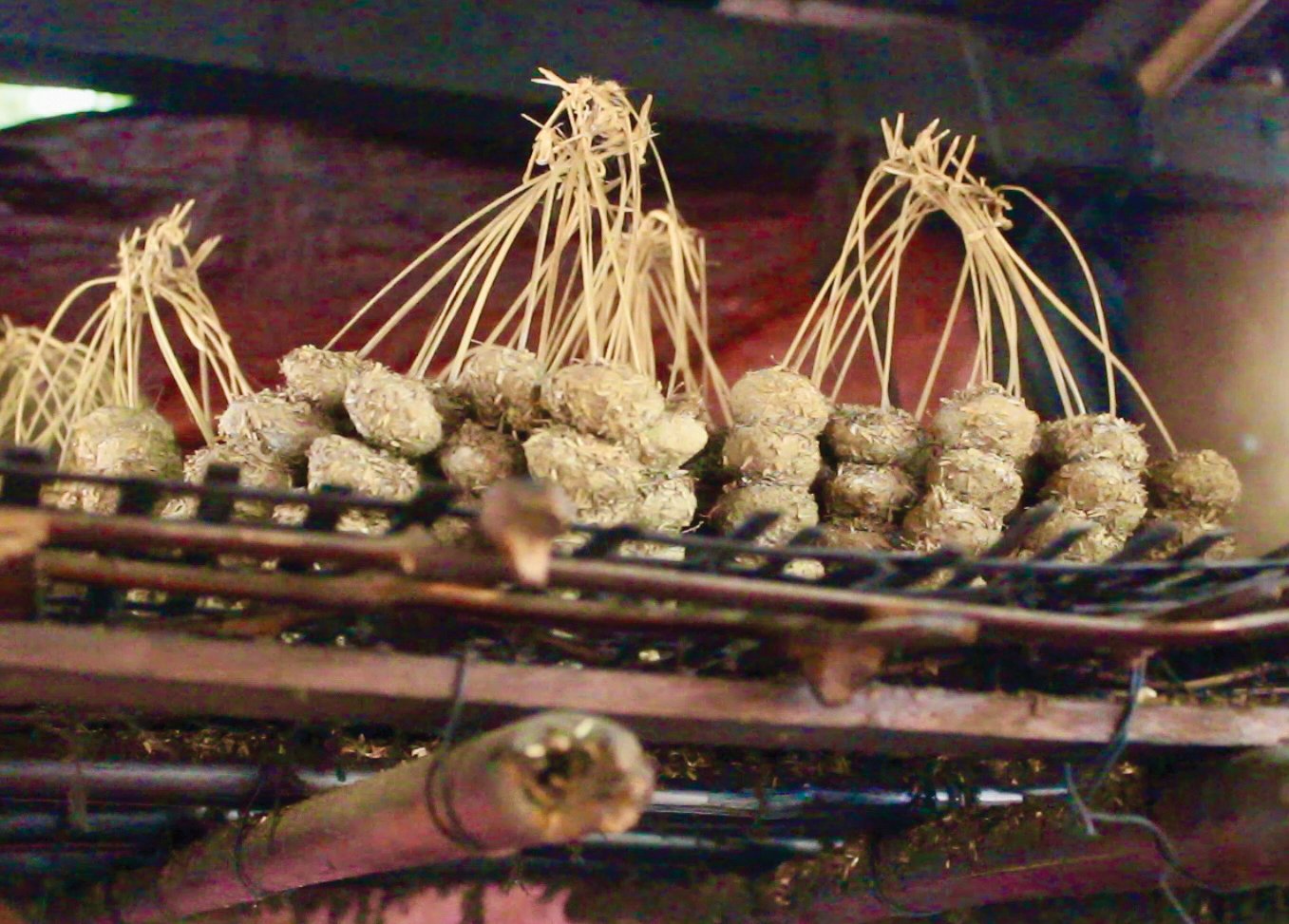
The yeast sheets are then air-dried on a kitchen rack for about 8-10 days to ensure they are completely dry and can be used for a longer period - Photo: NB
To make traditional leaf yeast, the ethnic minority people in the villages of Lìa region spend many days venturing into the deep forests to find leaves, roots, tree bark, etc., until they have all the necessary ingredients to make this distinctive type of yeast.
According to the elders, making herbal yeast requires at least 12 types of leaves, roots, bark, and stems of medicinal plants such as: kurung (ginger), tan-tieu, kurai, rangil (forest cycad), la baq (betel leaf), pliêm părdang, pepper (chili), ka tao (sugarcane), bak noi (hairy sương sâm plant), a-pin (núc nắc plant), si râm (white hà thủ ô)...
Once they have gathered all the ingredients, the locals carefully select each type, wash them thoroughly, chop them into small pieces, mix them together, and dry them in the sun. Some even put the washed ingredients together in a mortar and pestle and lightly pound them before drying them.
Once the ingredients are dry, to continue making the finished yeast, glutinous rice is soaked in clean water for about half a day, then drained and pounded into a fine powder in a wooden mortar. The dried leaves, roots, and stems are divided into two parts; one part is mixed thoroughly with the glutinous rice powder and yeast starter (retained from previous batches), then pounded into a fine powder.
The remaining leaves, roots, and stems are soaked in water for about 4-5 hours to extract the liquid for making the leaf yeast. The next step is to knead the crushed mixture with the previously soaked yeast liquid until it reaches the desired consistency. Then, spread clean rice husks on a flat tray, plate, or wooden board to a thickness of about 2-3 cm to retain moisture and allow the yeast to dry. Next, the yeast maker will use their hands to roll and shape the mixture of leaves, stems, roots, and glutinous rice flour into small yeast balls with a diameter of 3-4 cm, or even larger, and gently place them on the tray, plate, or board lined with rice husks.
The next step is to ferment the yeast under a thin layer of straw, then cover it with a tarp to keep it warm for two days. When the yeast pellets begin to swell and have a white, porous surface, remove the husks underneath, then string them together into small bundles and dry them in the sun for about 8 hours. After drying, the yeast is hung in the kitchen attic for about 8-10 days to further air dry before use.
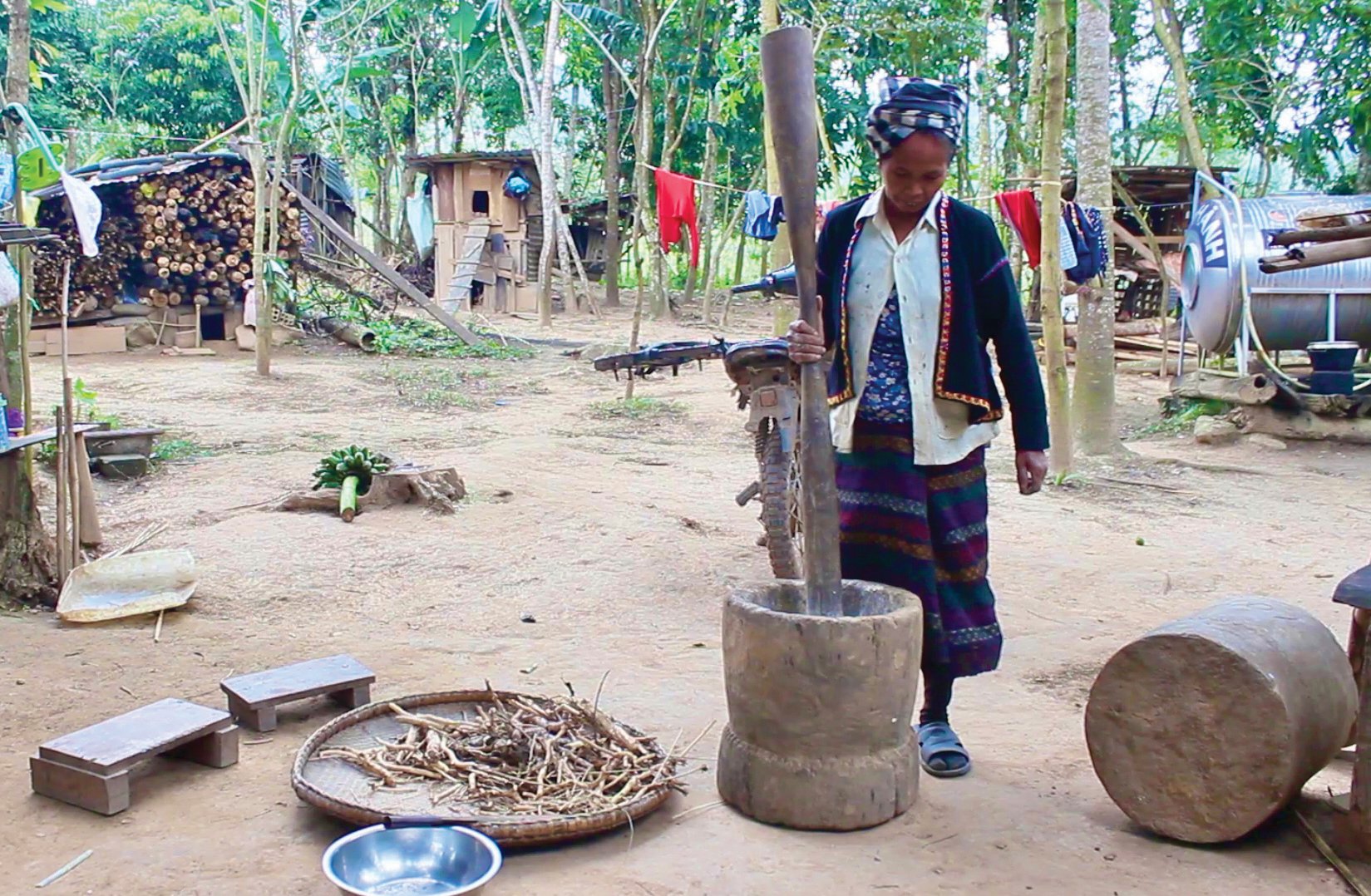
After washing, chopping, and drying the leaves, stems, bark, and roots of medicinal plants, they are mixed with glutinous rice flour and then pounded in a mortar to make traditional leaf yeast - Photo: NB
Chairman of Thuan Ho Commune People's Committee, A Dung, said: "Thuan commune, Huong Hoa district, is a locality in the Lia region with a long-standing tradition of making leaf glaze. Currently, many households in the commune preserve and promote the traditional leaf glaze making craft, including families that operate on a fairly large scale, supplying products to the market, such as the households of Ho A Khiem, Ho Van Lin, Pi Ta Lu..."
Over the years, Huong Hoa district has consistently paid attention to and supported the development of the traditional leaf glaze making craft in many localities in the Lia region, including Thuan commune. In the coming time, the locality will make even greater efforts in preserving and promoting the traditional leaf glaze making craft, while continuing to promote and connect product outlets to encourage people to produce and develop the economy."
It can now be affirmed that food made from black glutinous rice from the mountainous region of Dakrong and rice wine made from leaf yeast in the Lia region of Huong Hoa district have found their own place, captivating and enchanting those who taste them. Black glutinous rice and leaf yeast are no longer just characteristic products of the mountainous region of Quang Tri, but have also spread their flavors from the mountains to the lowlands, carrying the sentiments of the highlanders to distant places both domestically and internationally.
Nhon Bon
Source: https://baoquangtri.vn/lan-toa-tinh-hoa-cua-nui-rung-190273.htm


![[Image] National Assembly discusses the implementation of the socio-economic development plan.](https://vphoto.vietnam.vn/thumb/1200x675/vietnam/resource/IMAGE/2026/04/20/1776696707422_ndo_br_img-20260420-185419-jpg.webp)


![[Photo] General Secretary and President To Lam meets with National Assembly delegates from ethnic minorities.](https://vphoto.vietnam.vn/thumb/1200x675/vietnam/resource/IMAGE/2026/04/20/1776696701056_a1-bnd-8331-3342-jpg.webp)










































































Comment (0)