

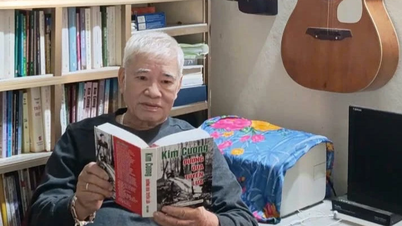
1. Every time I visit Ly Hoa, I always seek out Mr. Nguyen Sy Hung, a retired propaganda official and a native of the village. He has dedicated his life to researching his homeland, so the way he recounts the names of places and villages is imbued with profound love and deep knowledge.
He said that nearly 400 years ago, fishermen from the Cuong Gian area ( Ha Tinh province) left their village, bringing with them their seafaring experience and the way of life of a community accustomed to facing the waves and storms. The first inhabitants crossed the Hoanh Son mountain range, followed the coastal strip, and settled in an area "with mountains, rivers, and the sea." Here, there is white sand, blue sea, mountain ranges like a windbreak, and a river mouth opening to the sea. A landscape that the ancients called "mountains above, water below"—sufficient for survival, sufficient for development, but also sufficient for challenges to temper people.
 |
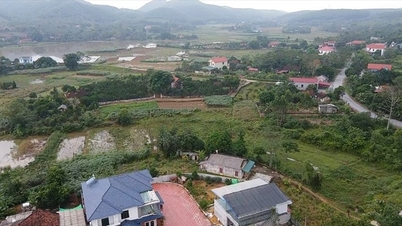
| Ly Hoa village is well-maintained, resembling a small riverside town - Photo: Tran Thuan |
Mr. Hung said that initially, they lived south of the Thuan Co River, then gradually moved north, where the land was flatter and more suitable for a permanent settlement. The first houses were built from sand. The first boats were launched from aspiration. And from there, a fishing village was formed. I stood at the mouth of the sea for quite a while. Looking out at the wide open water, listening to Mr. Hung and the elders of Ly Hoa village share their stories, I suddenly understood why the ancients not only stopped here to live, but also chose this place to begin their journeys.
From very early times, Ly Hoa was both a fishing village and a bustling trading port in the ancient Quang Binh region. Mr. Nguyen Duy Hung, former Secretary of the Party Committee of Hai Trach commune (formerly), recounts that when he was a child, he witnessed the Ly Hoa estuary bustling with boats. The docks and the river were as vibrant as a trading port. Boats came and went, and goods spread everywhere. For the people of Ly Hoa, the sea was both a space for earning a living and a path to vast horizons. It is no coincidence that from a very early age, the people of Ly Hoa were accustomed to building large ships, trading, and sailing far out to sea, even to the South to make a living. In Le Quy Don's "Phu Bien Tap Luc," it is written that as early as the 18th century, the people of Ly Hoa "had the custom of trading; in peacetime, they went to Gia Dinh to build hundreds of large bamboo boats, each worth more than a thousand quan, to resell."
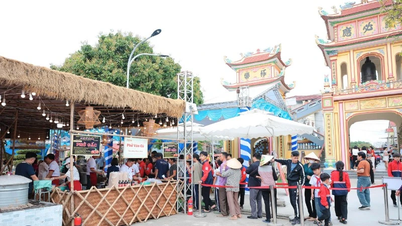
2. Due to its unique location and rich history, the land "surrounded by mountains on one side and the sea on three sides" gives Ly Hoa unique cultural values rarely found in other villages. Structures bearing the marks of time, such as the Ly Hoa village communal house, the Nguyen Duy family church, and the Ho family church, have all been recognized as provincial and national historical relics.
From the 12 clans that founded the village, Ly Hoa has grown to 28 clans over time. Each clan is a link in the village's memory, a part of its history, cherished and preserved within each family. Some clans are large, like the Nguyen Duy clan, with many generations serving as officials, leaving behind the legacy of a village that not only relied on the sea for its livelihood but also valued scholarship and learning. Many clans still preserve imperial decrees from feudal dynasties, as a recognition of their ancestors' contributions, such as the Pham and Ho clans. These "golden days" are cherished and preserved by descendants through generations, serving as reminders and sources of pride.
 |
| Ly Hoa village communal house, a national historical monument - Photo: DH |
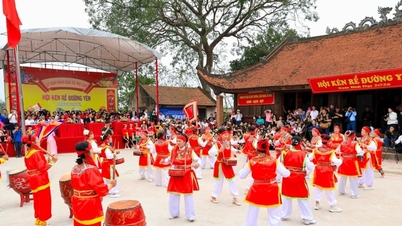
Inside Ly Hoa communal house, an ancient structure built in the 18th century, the villagers worship their founding ancestors who pioneered the land. Traditional rituals are still maintained there. History and ancient cultural values live on fully through the rhythm of the community's life.
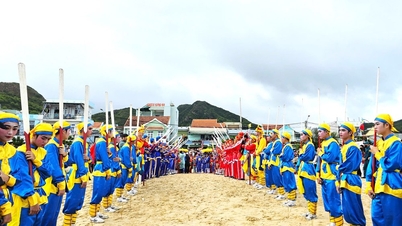
In Ly Hoa, culture is inseparable from life. It is present in every festival, in every fishing trip, and even in seemingly small things. There are the boat races at the beginning of the year, expressing hopes for a year of favorable weather, calm seas, and abundant catches of shrimp and fish. There is the belief in worshipping the Whale God, the sea god. There are the folk songs, the traditional tales, and the seafaring experiences passed down through generations. These values have become deeply ingrained in the mindset of every villager.
And perhaps most valuable of all, this knowledge isn't found in books, but in life itself, from how to judge fish schools by looking at the water's color, to how to listen to the wind to know the weather, to how to read the waves to choose the right time to go out to sea…
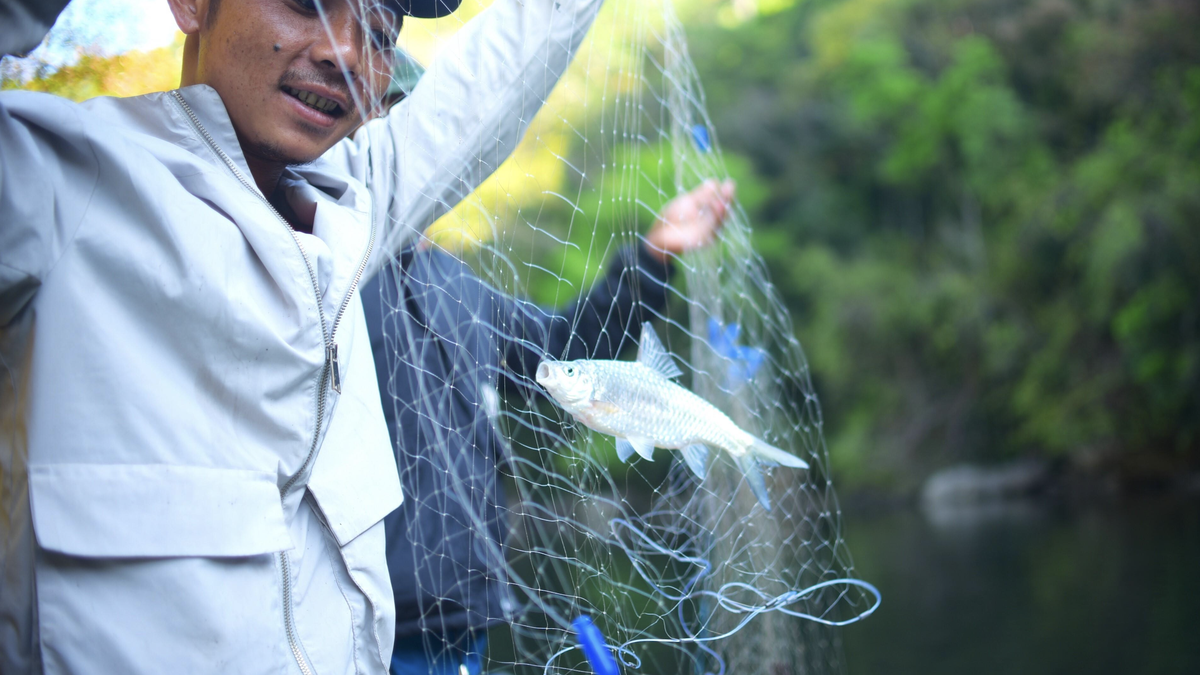
3. I went out to sea and met a family preparing to set sail. The husband was tying the anchor rope, and the wife was loading the boat with various items. Everything was happening as if it were a routine repeated over many years. I asked if they ever wanted to do something else. The wife smiled gently: "The sea has sustained us for generations; how could we give it up?" As she said, in Ly Hoa, many families still maintain the traditional fishing profession. The husbands sail on offshore or inshore fishing boats, while the wives stay at home selling goods. After many changes, the original Ly Hoa village has now split into 7 hamlets, 6 of which still cling to the fishing profession. The entire village has more than 170 fishing boats of all kinds, going out to sea and returning to inshore day after day. The river mouth is bustling with activity with each ebb and flow of the tide.
In stories filled with pride, I often hear about Mr. Phan Hai, a son born in the village and deeply devoted to it. Villagers recount that when the village needed a new school, he contributed to its construction. When the village needed a small park for children to play in, he stepped in to help. Then, roads, constructions, and seemingly small projects were gradually built and nurtured by him over the years. The amount of money he has contributed to his homeland has reached tens of billions of dong.
Like him, the people of Ly Hoa are proud that wherever they are, their hearts are always drawn to this narrow strip of land anchored at the mouth of the river. Some have gone south, some north, and many abroad. Each has their own path. But everyone is conscious of their roots and wants to contribute to their homeland. So it's no surprise that a village that has been a fishing village for generations is now vibrant and modern, like a miniature city by the river, with plenty of impressive and grand cultural buildings and institutions.
I left Ly Hoa as dusk was falling. The boats were once again heading out to sea. By now, the village was lit up, shimmering like a small, vibrant town on the azure coast. A village by the waves. A town by the river. And between these two realms, the people of Ly Hoa still retain their maritime character: simple, generous, and kind-hearted.
Dieu Huong
Source: https://baoquangtri.vn/van-hoa/202603/lang-ben-song-pho-ben-song-cb06a1c/





























































Comment (0)