

Chau Van singing (also known as Van singing or Bong singing) is a form of ritual music associated with the spirit medium ritual in the Vietnamese practice of Mother Goddess worship. It is also one of the important elements that create the unique appeal and contribute to the recognition of Vietnamese Mother Goddess worship as a representative intangible cultural heritage of humanity.
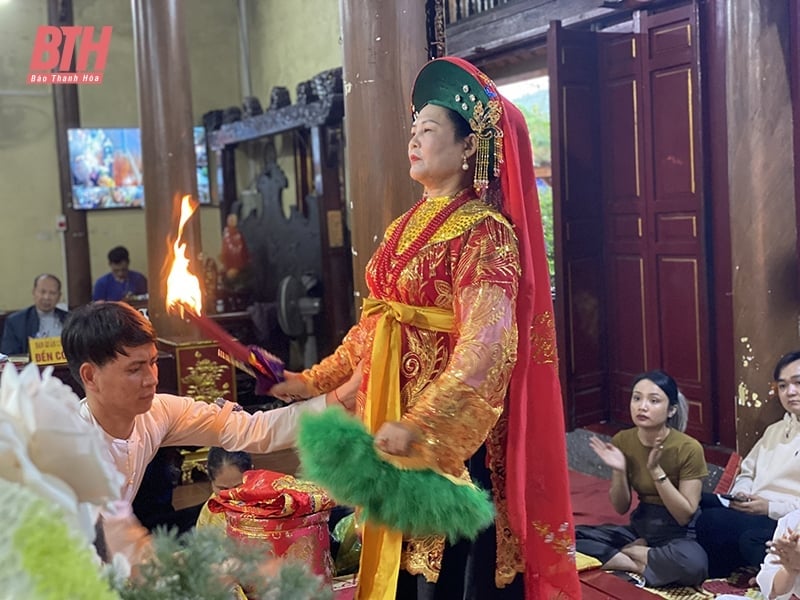
The late Professor Ngo Duc Thinh – who dedicated much effort to reviving the essence of the Mother Goddess religion and authored numerous works and books on the religion – once stated: “The ceremonial songs are composed and recorded in Nom script, Han script, or the Quốc ngữ script. Essentially, these are sacred songs, sung by ceremonial singers during spirit possession rituals dedicated to the Mother Goddesses. Along with music , dance, and other rituals, they create a sacred atmosphere and a harmonious connection between humans and the divine world. Beyond their ritual function, these ceremonial songs themselves express certain artistic values.” Therefore, “to understand the Mother Goddess religion, as well as the origins and characteristics of each deity, these ceremonial songs are an invaluable source of information. Furthermore, through these songs, we can also discern the aspirations, thoughts, and feelings of the people, and the artistic paths and methods of folk art, both past and present.”
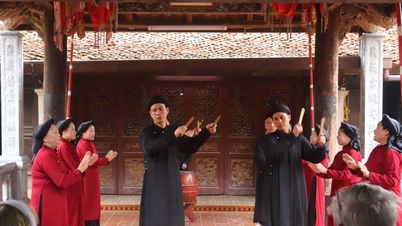
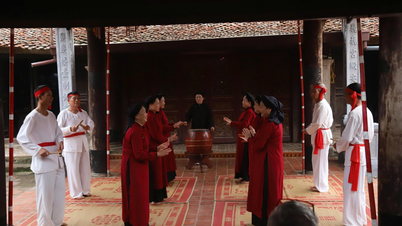
In the practice of spirit mediumship (Hầu Đồng), there are a total of 36 different spirit possession rituals. The main medium (Thanh Đồng) is the presiding spirit, directly performing the rituals and ceremonies to recreate the image, personality, and life of the deity being worshipped. A spirit mediumship ritual is never complete without a musician (Cung Văn). This musician sings the traditional folk songs (Hát Văn) accompanying the spirit mediumship performance. Hát Chầu Văn has many forms of performance, such as singing in a literary style (Hát Thi), singing in a devotional style (Hát Thờ), and singing in a spirit mediumship style (Hát Lên Đồng).
As spring arrives, countless tourists travel down the Ba Bong River to Co Bo Temple (Ha Son commune, Ha Trung district) to offer incense and prayers, expressing their reverence and hoping for health, peace, happiness, and good fortune. Amidst the vast river landscape, the lingering scent of incense smoke, and the melodies of traditional folk songs—sometimes gentle and leisurely, sometimes resonant and profound—the beauty and sacred atmosphere of this place are further enhanced.
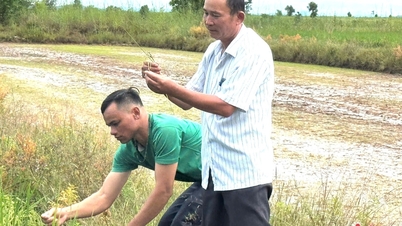
Meritorious Artist Nguyen Van Chung (commonly known as "Uncle Chung"), the caretaker of Co Bo Temple (Ha Son commune, Ha Trung district), is a renowned folk singer both within and outside Thanh Hoa province. His house is located right next to Co Bo Temple, a vibrant center for the worship of the Mother Goddess. From a young age, Uncle Chung developed a passion and love for folk singing, a unique form of traditional Vietnamese singing.
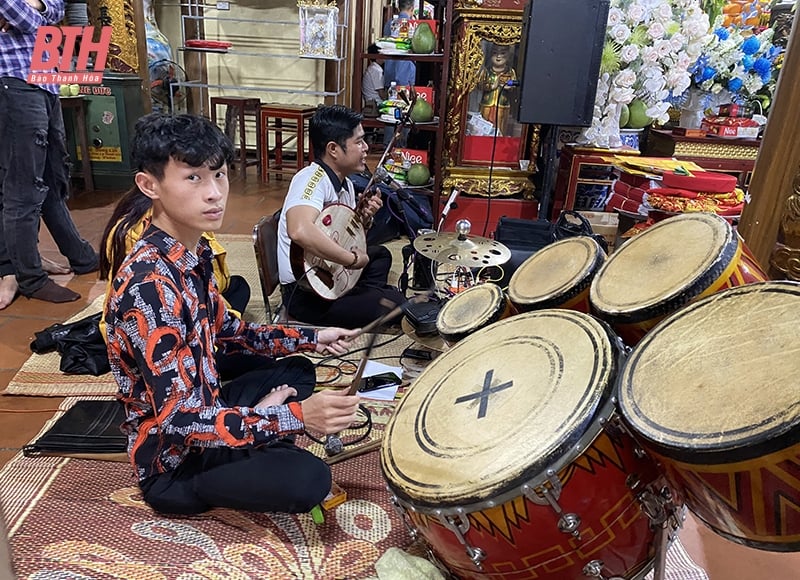
Entering the profession with countless difficulties, Meritorious Artist Nguyen Van Chung has continuously strived, "seeking guidance from masters," honing his knowledge, and perfecting his skills. Mr. Chung said: "Van singing is very diverse in genre, lyrics, and melodies, and is deeply rooted in local culture. There are about 15 or 16 main melodies in van singing, each branching out. These include the Bi, Mieu, Thong, Phu Binh, Phu Chenh, Phu Noi, Phu Corn, Dieu Corn, Dieu Doc, Tien Corn Hau Luyen, Luyen Tam Tang, Dieu Xa... The Dieu Corn is further divided into Southern Corn and Northern Corn; the Dieu Doc has Northern and Southern Doc; the Dieu Xa has Northern Xa, Upper Xa, and Xa Day Lech..."
Each deity worshipped has its own unique folk song melody; each melody has a distinctive and appropriate singing style in different contexts, linked to the life, career, and personality of each deity being worshipped. Therefore, a folk singer must not only have a beautiful voice, good health, and knowledge of folk song melodies and techniques, but also be knowledgeable about the sacred texts and remember the lives, careers, and personalities of the deities and saints in the Mother Goddess religion.
Chung explained enthusiastically: “When singing ritual songs for high-ranking officials, one must use rhyming or stylized melodies to express solemnity, majesty, and bravery, leaning towards a scholarly court style. But when singing ritual songs for the Four Palaces Holy Maidens, one needs to use smooth, delicate melodies. Depending on the region, ritual songs performed in mountain retreats or highlands should have a rough, uneven, and free-flowing melody; conversely, ritual songs performed in the vast landscape of rivers and lakes should have a vast and profound quality.” After finishing, Chung recited a passage from a ritual song depicting the beauty of Lady Bơ Bông: “Her silky hair sways like willow branches / Her straight parting reflects the earth / Her willow-like curves lie horizontally / Her reflection shimmers in the water's surface / Her delicate beauty is like snow / Her rosy cheeks are like the moon's rosy cheeks / Her youth is like the full moon…”
Besides the Co Bo Temple, Thanh Hoa is one of the largest centers of Mother Goddess worship in the country. It boasts the "most sacred Song Temple in Thanh Hoa" (Bac Son ward, Bim Son town), Pho Cat Temple (Van Du town, Thach Thanh district), Na Palace (Xuan Du commune, Nhu Thanh district), Cua Dat Temple (Thuong Xuan district)... attracting numerous tourists for sightseeing and worship. Therefore, the art of folk singing has spread and resonated from the highlands to the coastal areas, midlands, and plains, deeply ingrained in the spiritual and cultural life, providing fertile ground for the cultural flow of Thanh Hoa in particular, and Vietnamese culture in general.
Over the years, Thanh Hoa province has undertaken meaningful and practical actions to preserve and promote the value of folk singing associated with the practice of Mother Goddess worship; a prime example being the establishment and vibrant, effective operation of the Thanh Hoa Provincial Folk Singing and Chanting Club.
Established in 2020, the Club is a professional social organization operating in the field of Vietnamese folk singing, including the practice of Mother Goddess worship. The Club's purpose is to unite its members, protect their legal rights and interests, support each other's activities, and actively preserve and promote the traditional cultural values of the homeland. Since its establishment, the Club has organized several forums to promote the beauty and value of Mother Goddess worship; successfully collaborated with other organizations to hold the Thanh Hoa Provincial Folk Singing and Chau Van Singing Festival; and organized activities, professional training, and exchanges of experience in organizing related events in the field of folk singing and Chau Van singing. These activities contribute to honoring, promoting, and developing the value of Mother Goddess worship to a wider audience. Meritorious Artist Tran Van Thuan, head priest of the Tong Duy Tan temple (Thanh Hoa City), and Chairman of the Thanh Hoa Province Traditional Singing and Chanting Club, said: "The most important thing we aim for is that the club's activities will contribute to bringing the practice of Mother Goddess worship back to its true identity."
Traditional folk songs and chants have been and continue to beautify the radiant days of spring...
Text and photos: Nguyen Linh
Source: https://baothanhhoa.vn/lang-long-nghe-hat-chau-van-239773.htm

![[Photo] National Assembly Chairman Tran Thanh Man working with the Standing Committee of the Economic and Financial Committee](https://vphoto.vietnam.vn/thumb/1200x675/vietnam/resource/IMAGE/2026/05/20/1779249584387_ndo_br_1-jpg.webp)
![[Photo] General Secretary and President To Lam presides over a meeting on assessing national development resources.](https://vphoto.vietnam.vn/thumb/1200x675/vietnam/resource/IMAGE/2026/05/20/1779253785852_a1-bnd-2943-8519-jpg.webp)





















































Comment (0)