Through the mountains
News of the landslide came thick and fast, as even the Hung Son Commune Police Station was tilting, cracking, and sinking due to the mountain slide. The Ga Ri Border Guard Post, located a few hundred meters from the scene, had its soldiers on standby, ready to evacuate. A Lang Lo, a local resident, said over the phone: “They say people are ready to move, but where can we go? This place is situated halfway up the mountain, with a ravine hundreds of meters below.”
To go or not to go? Is it possible or impossible? How dangerous is it? These questions flooded my mind. And at 4:30 a.m. on November 20th, I set off from Da Nang city by motorbike upon hearing that the road had just been reopened (but cars still couldn't get through). The day before, the Border Guard's search dog team had managed to get into the scene.
Rattling…rattling, the motorbike jolted repeatedly. Since I had never ridden a motorbike from Da Nang to the areas along the Eastern Truong Son route before, having only traveled by bus on the Tay Giang and Nam Giang routes, I secretly hoped that the 170-kilometer stretch of road winding through the mountains wouldn't be congested again.
“Why did the landslide happen on a day when the weather was clear and sunny?” This question was published in several newspapers. It was truly frightening. At that time, the communes of La Êê and La Dê were also under a red alert for several days. The Da Nang City People's Committee issued Decision No. 776/QD-UBND declaring a state of emergency regarding natural disasters to respond to and mitigate damage to the transportation infrastructure on the DH4.NG route.
Haunting: "Mountain Prisoner"
The previous afternoon, when I mentioned "going to Ga Ri tomorrow morning," Mr. Pham Tho, a resident of Da Nang who had traveled this route before, looked at me in surprise. His face tensed, and he could only utter one sentence: "It's very dangerous... why would we travel by car? Even passenger buses wouldn't dare go that way!"
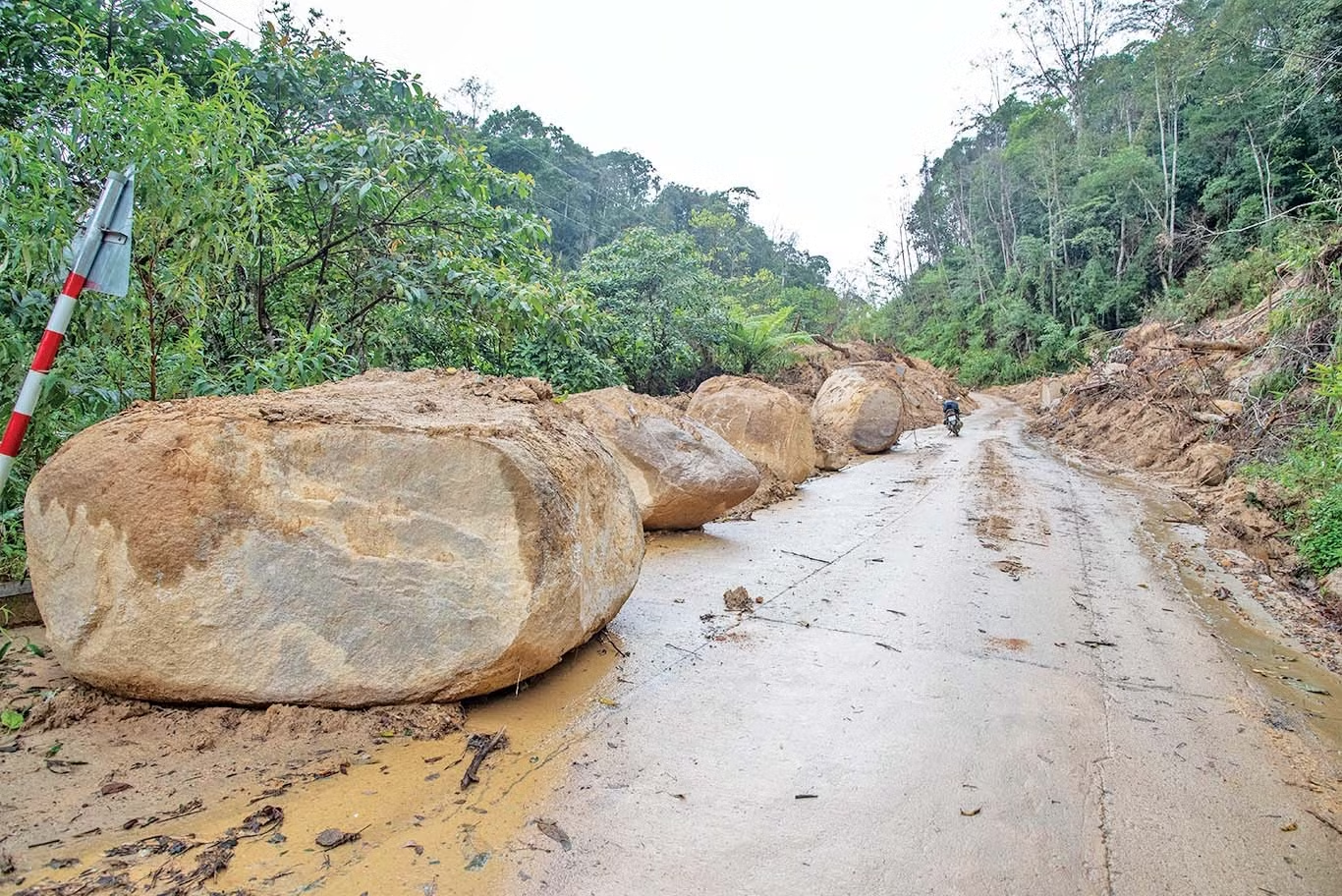
But I couldn't refuse. It's my job. Journalism always involves adventurous trips. In 2024, I was assigned to report from Lang Nu village, Phuc Khanh commune, Bao Yen district, Lao Cai province. I waded through mud and rain for 10 days to cover a landslide. I'll never forget it!



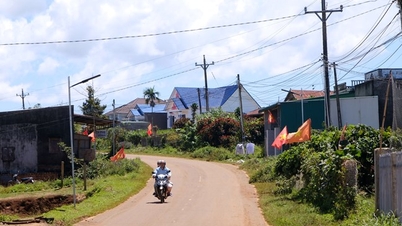
The motorbike kept going…and going until I saw a sign for Prao town (now Dong Giang commune) ahead. It was already 8:30 a.m. I stopped for a 15-minute rest. At first, I congratulated myself on reaching A Tieng commune (now Tay Giang commune). But upon closer inspection, I realized I had only reached the old Prao town. The residents and the pace of life in this area were still half-asleep. The nearby market was deserted, shops were closed because the road was blocked and people from the communes further north couldn't get down.
The car stopped, but the sound of raincoats still echoed in my ears. I remembered the days when I was 20, hunched over, cycling through the coastal villages of Quang Ngai . At that time, I was a talented scout at Border Guard Post 288, Quang Ngai Provincial Border Guard. Even during the rainy season, I had to cycle to my assigned area. The road was pitch black. I walked, I pushed my bike, I fell. My whole body was covered in mud.
Returning to the story of going to a remote village in the Truong Son mountain range for work, the Vinmart store employee in Prao town warned, "The next section is very dangerous. Remember to look carefully at the mountains before you go through. I'm from the local community and I haven't dared to go home for 10 days."
The journey from Prao to A Tieng took 90 minutes, but we encountered five terrifying landslide sections. In some places, the muddy mountain slopes collapsed onto the road. In other places, trees were precariously perched right above our heads. At times, we had just crossed a landslide only to find another massive pile of red earth and mud right in front of us.
At that moment, I considered turning the car around and going back. I got goosebumps. Suddenly, an image flashed through my mind: a large chunk of earth rumbling behind me, then more earth collapsing right in front of me. At that point, I would become a "prisoner of the mountain."
The motorbike rolled through a muddy puddle like a buffalo, mud splashing all over my raincoat, my boots bought in Prao were soaked twice, red soil clung to my toes, and I felt sticky all over. I told myself that I had struggled with bicycles in my youth, and that's why I dared to venture onto this incredibly difficult road now.
The scene was a dead end.
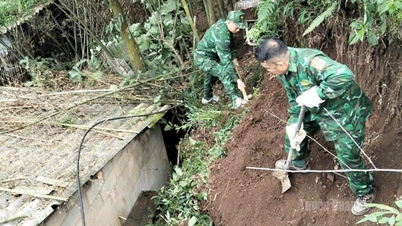
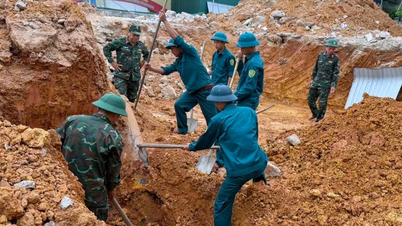
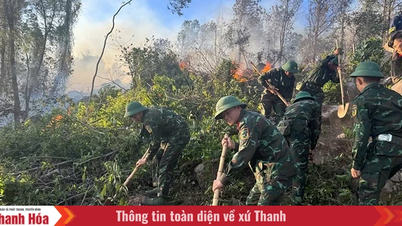
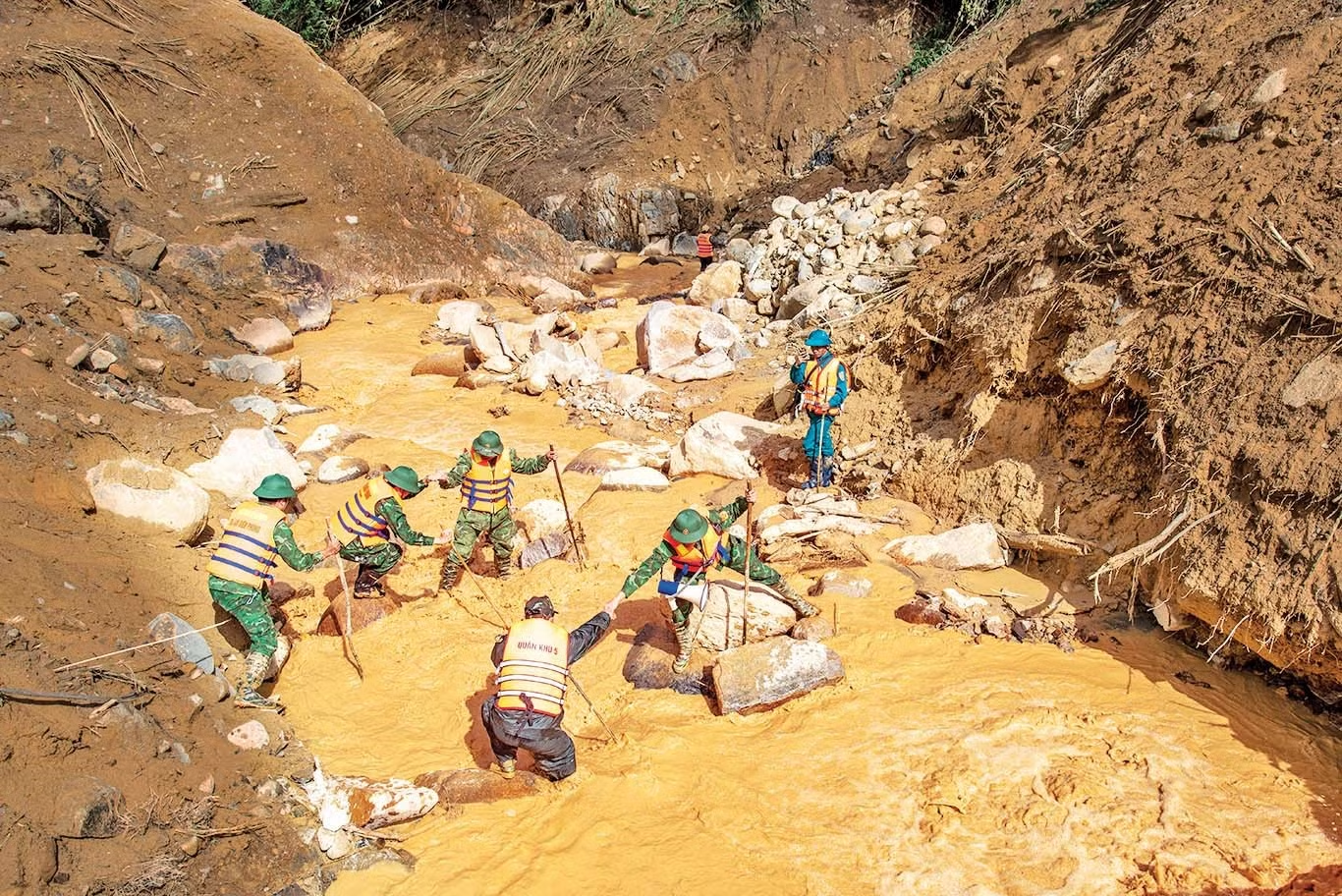
Every day, around 150 militiamen and soldiers search along the A Zắt stream for the three missing people. The A Zắt stream resembles a miniature version of the Nho Quế River, with two massive mountain ranges and a stream bed running through it. People wade through the shallow stream daily to search. Those following must place their feet precisely in the tracks left by those ahead or on specific rocks. Even a single misstep would result in mud up to their knees.
Walking along the sheer cliff face with rocks hanging overhead, only God knew when the mountain would collapse again. At the top of the slope leading down to the stream, a soldier was on duty observing the cliff face to give warnings via radio. Nearby was a gong, and each person in the group descending to the stream had their radio connected to the gong.


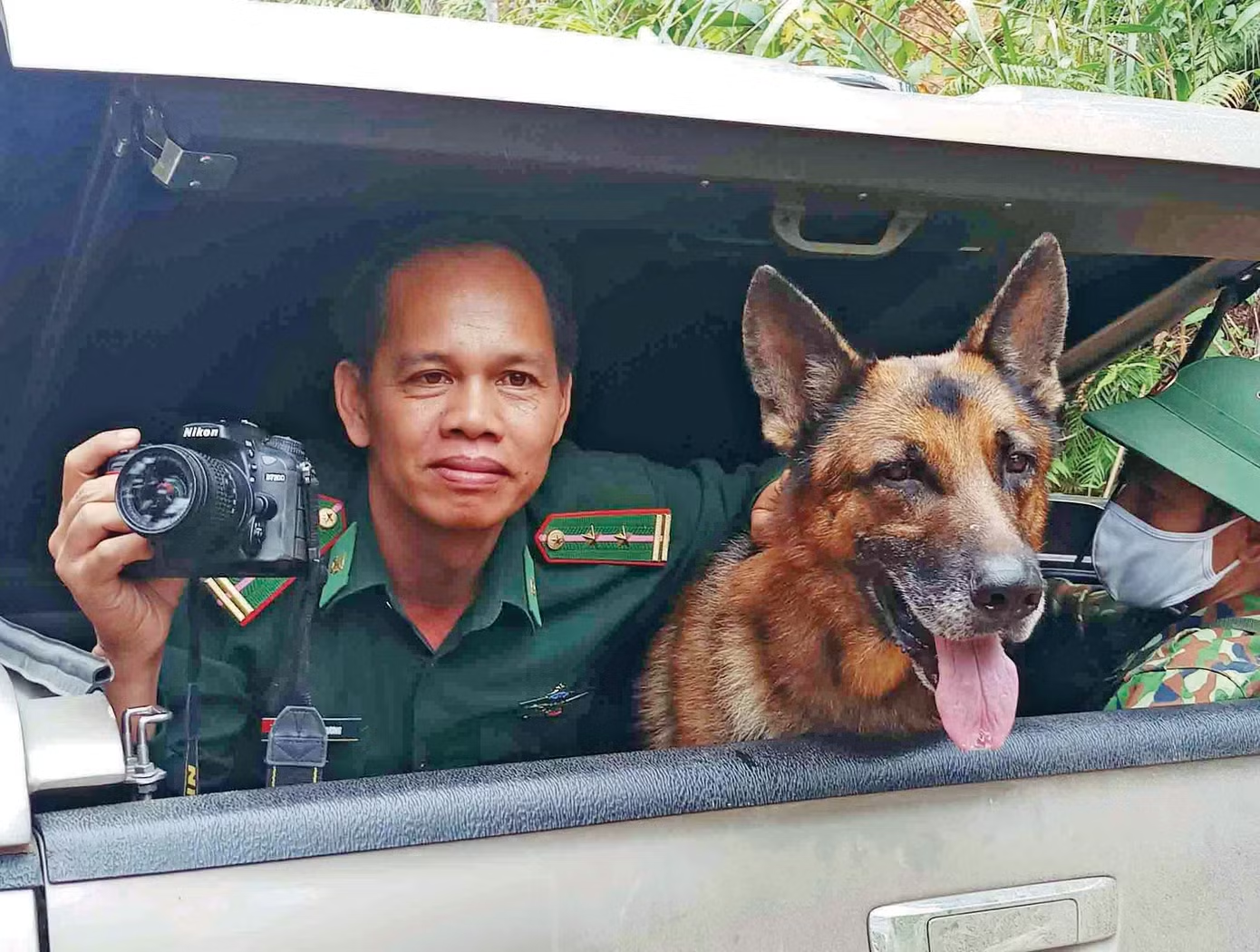
On my first day there, Colonel Phan Van Thi, Deputy Commander and Chief of Staff of the Da Nang City Border Guard, warned me not to go down to the stream alone.
The search and rescue commander repeatedly announced: "Attention, wear life jackets when you go to the scene. When you hear the alarm, run immediately up the cliff; do not stay in the stream below..." That was the announcement, but everyone understood implicitly that there was nowhere to run, only death. Because the embankment was so steep, those in the stream had no escape route. Clinging to the embankment only made the ground collapse further; a single misstep off a rock would send them sinking into the muddy swamp.
As a contributor to Tien Phong newspaper, I began sending news from the scene to the newspaper on November 23rd. The biggest difficulty at this search site, compared to similar incidents that have occurred in other localities, is that motorized vehicles cannot access the deep ravine between the two mountain cliffs.
Over 10 days of reporting, I brought back many valuable images from the scene. Because I was the only journalist on the scene, the story and images I sent to Tien Phong newspaper are exclusive. Through the newspaper, readers will get a close-up view of the danger, the intelligent search dogs, a glimpse into the human connection, and the sense of responsibility of those involved in the search. I don't need to describe the story in many words, because the images speak for themselves.
Source: https://tienphong.vn/lang-nu-o-mien-trung-post1853210.tpo
![[Photo] Opening Ceremony of the 13th National Congress of the Ho Chi Minh Communist Youth Union](https://vphoto.vietnam.vn/thumb/1200x675/vietnam/resource/IMAGE/2026/06/24/1782286753905_ndo_br_1-8510-jpg.webp)
![[Photo] The 13th National Congress of the Youth Union conducts personnel work.](https://vphoto.vietnam.vn/thumb/1200x675/vietnam/resource/IMAGE/2026/06/24/1782299943080_ndo_br_1-6868-jpg.webp)
![[Photo] Overview of the renovation and upgrading of the Ho Chi Minh Museum - Ho Chi Minh City Branch](https://vphoto.vietnam.vn/thumb/1200x675/vietnam/resource/IMAGE/2026/06/24/1782287051250_ndo_br_01-jpg.webp)