

However, behind the glamour of those dazzling photos lies a worrying reality. This "virtual life" is leading many young people into a spiral of ostentatious consumption, overspending, and, more seriously, gradually losing their true self-worth.
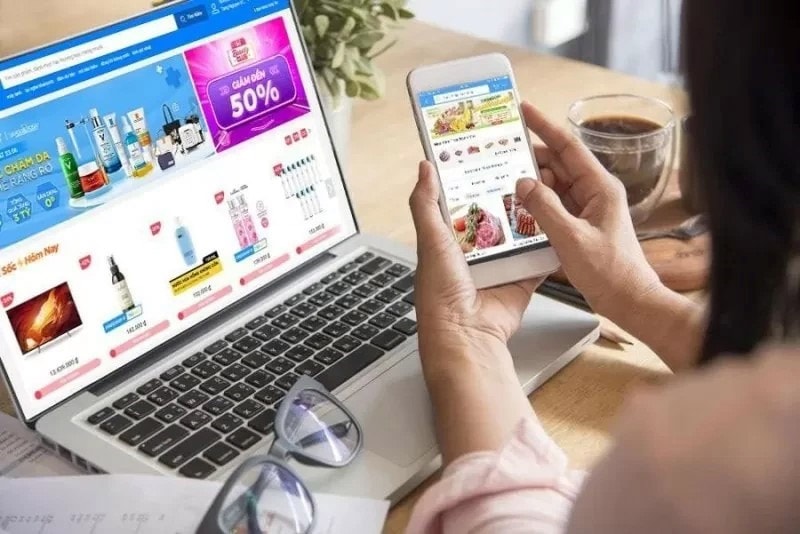
Despite earning only about 10 million VND per month, Dang Phuong Anh (30 years old, residing in Bo De ward) often doubles her monthly expenses thanks to her credit card. Clothes, cosmetics, accessories... are constantly ordered online. Many items are only used once and then discarded, but she continues to buy them as a hard-to-break habit, making her room increasingly cramped.
This situation is no longer isolated. It's not difficult to find images on social media of young people, students, and college graduates wearing designer clothes, carrying the latest smartphones and luxury handbags, dining at expensive restaurants, and then showing off photos with flashy captions. Owning expensive items has now become a tool to assert one's status.
Nguyen Tuan Anh, a student at a university in Hanoi, frankly shared: "I always like the feeling of standing out from the crowd thanks to shoes, glasses, or backpacks from big international brands."
Driven by the desire for attention through "virtual living," many young people have put undue pressure on themselves to constantly showcase their image, wear designer brands, and spend beyond their means. Many even borrow money, buy on installment plans, or become completely dependent on their parents financially.
Economic experts estimate that approximately 90% of young Vietnamese people lack saving habits. The majority cannot distinguish between "essential needs" and "temporary desires." Especially in the context of booming online shopping and consumer credit, slogans like "0% interest" and "spend now, pay later" make young people even more susceptible to uncontrolled spending.
The consequences of wasteful consumption extend beyond just finances. When young people judge themselves by the value of their possessions rather than their actual abilities, they easily lose themselves and become dependent on "illusory" validation. According to Dr. Le Ngoc Mai, a sociologist, this is a manifestation of a hedonistic, selfish, and insensitive lifestyle.
"When young people only focus on themselves without thinking about their family or community, they lose their responsibility to their family and society, especially their responsibility to their parents – who are struggling to bear the financial consequences of their children's uncontrolled consumption," said Dr. Le Ngoc Mai.
The expert also mentioned a deeper, undeniable cause: the role of the family. Many parents, not wanting their children to suffer hardship, pour all their resources into ensuring their children lack nothing. This leads many young people to grow up without understanding the value of money, taking their parents' spending for granted.
To prevent the spread of wasteful consumption and "living in a virtual world" among young people, experts suggest that parents need to take the lead in changing the trend. Parents should be role models of a frugal lifestyle, avoiding extravagant spending. Children, on the other hand, need to be taught that money is the result of hard work. Providing planned allowances or creating weekly budgets with children are simple yet effective methods for teaching financial management. Furthermore, encouraging children to participate in part-time jobs, social activities, volunteer work, or independently plan their travel expenses are also valuable financial lessons, helping them understand the value of labor and appreciate money.
From a broader perspective, schools also need to incorporate personal finance education into their curricula. Without understanding how to manage money, young people, no matter how academically gifted, can easily be overwhelmed by the increasingly sophisticated and relentless cycle of consumerism. Living frugally and avoiding waste is a practical way to contribute to building a civilized and sustainable society in the digital age.
Source: https://hanoimoi.vn/lang-phi-vo-hinh-tu-loi-song-ao-714438.html

![[Photo] Prime Minister Pham Minh Chinh receives the Chinese Ambassador to Vietnam](https://vphoto.vietnam.vn/thumb/1200x675/vietnam/resource/IMAGE/2026/04/05/1775397481797_ndo_br_dsc-5512-jpg.webp)































































![[INFOGRAPHICS] Exploiting children's personal images for profit can result in fines of up to 50 million VND.](https://vphoto.vietnam.vn/thumb/402x226/vietnam/resource/IMAGE/2026/04/06/1775442200854_1775442148.webp)














Comment (0)